








Shop window lighting: the ultimate guide
In the competitive landscape of contemporary retail, window lighting represents far more than a mere functional necessity: it is the first dialogue between the merchant and the potential customer. A well-lit window display doesn’t just showcase merchandise—it tells a story, creates an atmosphere, evokes emotions, and, above all, captures attention in an urban context often saturated with visual stimuli.
Whether it’s lighting for a clothing store window in a historic city center, a refined jewelry boutique, or a cozy bookstore, light becomes the director’s tool through which brand identity is staged and products are highlighted.
In this exceptionally detailed guide—developed in collaboration with LED Point experts—we’ll explore every aspect of lighting retail windows, from technical fundamentals to advanced strategies, including how to select the most suitable LED products for each specific need. We’ll address concrete questions like “How many lux are needed for a window display?” or “How do I light a dark store?”, providing answers grounded in data, real-world experience, and industry best practices.
The strategic importance of window lighting across retail sectors
Before diving into technical solutions, it’s essential to understand what makes an effective store window based on its commercial sector. Light is not universal—it must be tailored to the essence of what’s being sold and the target customer. This is why window lighting is far from a trivial or obvious matter.
Fashion & apparel: creating atmosphere and desire
In a fashion store, window lighting must enhance fabrics, colors, and cuts. The goal is diffused, enveloping illumination that eliminates harsh shadows on garments, while also allowing for spotlights to highlight iconic details or accessories. Color temperature is critical: a neutral white (4000K) is ideal for accurate color rendering, whereas warmer tones (2700–3000K) can create an intimate and premium ambiance.
Jewelry & watchmaking: precision and brilliance
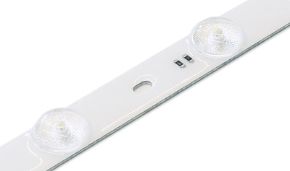
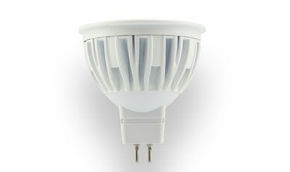
How to light a jewelry store is one of the greatest challenges. Here, light must become a precision instrument. Extremely high illuminance levels (up to 3000 lux) and a Color Rendering Index (CRI) above 90—ideally 95+ are required to make diamonds sparkle and accurately render every nuance of precious metals. Directional LED spotlights with precision lenses are essential for illuminating display cases, while high-density LED strips can create grazing light effects on surfaces.
Electronics & technology: cleanliness and innovation
For tech products, window lighting must convey innovation and precision. Cool white light (5000–6000K) suggests high-tech sophistication and cleanliness. Dynamic lighting—using app-controlled RGB or RGBW LED strips—can simulate device functions or create engaging visual effects.
Food & gastronomy: freshness and invitation
In a delicatessen or pastry shop window, light must make food appear fresh, inviting, and delicious. Warm temperatures (2700–3000K) enhance baked goods, meats, and cheeses, while slightly cooler tones may be used for fish or salads. Heat management is crucial: only LEDs should be used to avoid damaging perishable items.
Bookstores & stationery: warmth and readability
How to light a bookstore window? The goal is twofold: ensure clear readability of titles and covers, and create a welcoming atmosphere that invites entry. The winning combination is ambient diffused lighting paired with directional spotlights on featured displays or new arrivals.
Investing in professional window lighting isn’t an aesthetic expense—it’s a genuine sales driver with a measurable return on investment (ROI). Numerous market studies and retail reports unequivocally quantify how light directly influences purchasing behavior, perceived product value, and in-store conversion rates. Below, we present consolidated statistical data—by sector—that demonstrates why optimal window lighting is one of the most powerful marketing levers available to retailers. Before examining individual sectors, it’s vital to grasp the overall impact: Impact intensity varies by product category. The table below summarizes the most significant findings. *Increase in foot traffic (glances and stops) compared to standard or insufficiently lit windows. Source: Compiled from data by IES, Retail Design Institute, and sector-specific case studies (2019–2023). Combining commercial impact with operational savings makes the financial case even stronger. Consider a €1,000 investment in LED window lighting for a boutique: Conclusion: the initial €1,000 investment isn’t just recovered—it generates an extraordinary revenue multiplier. The data is clear: neglecting retail window lighting means leaving immense, measurable sales potential on the table. Light isn’t a cost—it’s your best silent salesperson, working 24/7.Statistical impact of window lighting
General statistics: the power of light
Sector-specific data: numbers that speak volumes
Retail sector Window traffic increase* Entry conversion rate increase Perceived product value increase Key notes & data Jewelry & watchmaking Up to 60% Up to 70% Up to 35% Light is everything here. CRI >95 and illuminance >2000 lux can boost sales of high-end items by up to 40%. 90% of purchase decisions rely on brilliance and color—both controlled by light. Fashion & apparel 35–50% 40–55% 20–30% Perfect color rendering (CRI>90) reduces returns due to “color mismatch” by up to 25%. Accent lighting on key pieces increases turnover by 15–25%. Electronics & technology 25–40% 30–45% 15–25% Dynamic lighting (RGB, effects) boosts engagement among younger customers by 50%. Cool, precise light (5000K+) conveys innovation and builds brand trust. Gourmet food & luxury groceries 40–55% 50–65% 25–35% Warm light (2700–3000K) on baked goods and meats enhances the perception of “freshness, just-out-of-the-oven,” driving impulse purchases by 30%. Targeted lighting reduces waste by making products more desirable. Bookstores & stationery 20–30% 25–35% 10–20% Uniform, shadow-free lighting (>500 lux) enabling title readability increases entry likelihood by 25%. The inviting atmosphere created by light encourages purchases of “experiential” items (e.g., gift books, premium stationery). Optics & perfumery 30–45% 35–50% 20–30% In optics, neutral, precise light is essential for frame selection. In perfumery, diffused warm light on packaging enhances perceptions of luxury and exclusivity, driving premium product sales. ROI of professional LED window lighting investment
Technical fundamentals: lux, lumens, watts, and CRI – Understanding the numbers to choose the right product
To design effective LED window lighting, you must master photometric terminology. These terms aren’t just technical jargon—they’re practical tools for achieving your desired result.
Lumens (lm): total light output
Lumens measure the total luminous flux emitted by a source in all directions. This metric has replaced watts (which measure power consumption, not light output) as the standard for luminous power. To properly light a window, you need ample lumens—but distributed intelligently.
Lux (lx): light actually reaching the surface
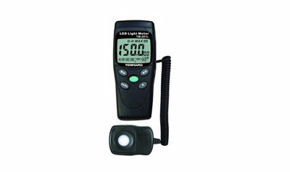
Lux measures illuminance: how many lumens fall on one square meter (1 lx = 1 lm/m²). This is the most critical metric for design. How many lux for a window display are needed? It depends on the sector:
| Retail sector | Recommended illuminance (lux) | Notes |
|---|---|---|
| Jewelry (diamonds/precious metals) | 2,000 – 3,000 lux | Maximum brilliance and contrast required. |
| Watchmaking / Optics | 1,500 – 2,500 lux | Extreme detail and reflections. |
| Luxury Fashion / Apparel | 1,000 – 2,000 lux | Perfect fabric color rendering. |
| Standard Fashion / Apparel | 750 – 1,500 lux | Good visibility and atmosphere. |
| Electronics / Technology | 750 – 1,200 lux | Clean, detailed lighting. |
| Bookstores / Stationery | 500 – 1,000 lux | Text readability and visual comfort. |
| Gourmet Food / Groceries | 800 – 1,500 lux | Freshness and product appeal. |
Watts (W) and luminous efficacy: smart energy use
With LEDs, the lumen-per-watt ratio (lm/W) defines efficiency. A quality LED produces 100–150 lm per watt consumed. Thus, to generate 1,500 lumens, an efficient LED uses only 10–15W—versus 100W for an old halogen. Asking “How many watts?” matters less than asking “How many lumens do I need for my window, and at what efficiency?”
Color Rendering Index (CRI or Ra): color fidelity
CRI measures how naturally colors appear under a light source compared to sunlight (CRI=100). For retail window lighting where color is critical (fashion, jewelry, food), CRI ≥ 90 is required—ideally ≥ 95. Low CRI dulls colors and makes merchandise look lifeless.
Correlated Color Temperature (Kelvin - K): The “warmth” of light
Measured in Kelvin, this defines the tone of white light:
- warm (2700K – 3000K): cozy, intimate, traditional. Ideal for home goods, gastronomy, classic fashion.
- neutral (4000K): natural, objective light. Perfect for fashion, general retail, bookstores.
- cool (5000K – 6500K): dynamic, clinical, technological. Suitable for electronics, steel, vibrant exterior displays.
Practical answers to specific questions: from common scenarios to technical solutions
This section is the operational core of the guide. We address the most frequent questions about lighting retail windows and commercial spaces, with references to appropriate LED Point products.
How to light a dark salon or store?
A dark space requires a layered approach. A single bright central light isn’t enough. Combine:
1. general lighting: to flood the space with light. Use wide-beam LED ceiling panels or suspended fixtures with high lumen output (e.g., 4,000–6,000 lm);
2. accent lighting: to create focal points and contrast. Use track-mounted adjustable LED spots aimed at dark corners or walls;
3. decorative/wall lighting: LED strips on rails or battens to create horizontal light bands on walls, visually “pushing” them back and expanding the space.
How to light a dark window display?
The issue is often not light quantity, but direction and quality.
Diagnosis: check if existing fixtures are dirty, faulty, or have degraded (LED lumen depreciation).
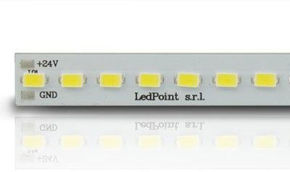
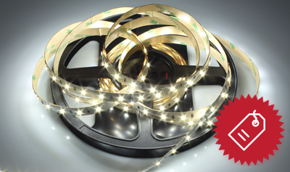
Solution: replace with recessed or surface-mounted LED spotlights of adequate power (e.g., 10–15W with narrow beam angles to focus light). Always add internal window lighting using high-density LED strips (e.g., 60 LEDs/m) mounted on the front upper edge, angled inward to illuminate foreground merchandise.
How to light a store exterior and install outdoor lighting?
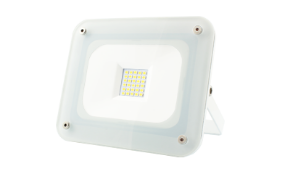
Exterior window lighting serves two purposes: safety and attraction. For entrance lighting: use wide-beam (flood) LED profiles with minimum IP65 rating, mounted above the door or on the wall. For façade lighting: narrow-beam (spot) LED profiles for wall grazing (grazing light that highlights texture) or projectors for wall washing (uniform light coverage). For sidewalks: bollards or wall-mounted fixtures with anti-glare diffusers. Always choose IP65+ rated products for rain and dust resistance.
How to light a market stall or temporary display?
Flexibility and autonomy are key. Ideal solutions:
1. rechargeable battery-powered LED lamps: wire-free, placeable anywhere.
2. portable LED lightboxes: for illuminating posters or backlit graphics.
3. magnetic LED bars: attach to any metal structure and power via USB power bank. Light should be directed onto merchandise, avoiding glare at eye level.
How to light a display case or showcase?
Showcase lighting demands surgical precision. LED strips for windows are the primary solution.
Placement:
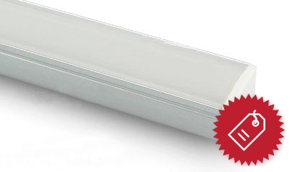
- From above: LED strip mounted on the inner top edge of the case, within an extruded aluminum profile with opal diffuser to soften light and hide individual LEDs. Ideal for general objects;
- From below (countertop): LED strip mounted on the case base, behind a lip that blocks direct view. Creates a levitation effect for sculptural items;
- Side (grazing light): LED strip mounted vertically on one side, “skimming” a textured background. Enhances material and volume. Always use high-CRI (CRI>90) and medium-high density (60–120 LEDs/m) strips. For deep cases, consider adding a miniaturized LED spotlight.
How to design window lighting for a retail space?
Design follows a logical process:
1. Needs analysis: What am I selling? To whom? What brand atmosphere do I want?
2. Required illuminance (lux) calculation: based on sector (see table above);
3. Light source selection: type (spot, strip, panel), LED technology, color temperature, CRI;
4. Layout and placement: determine number and position of fixtures to achieve uniformity or targeted contrast;
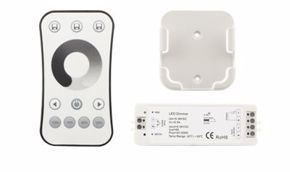
5. Control and dynamism: include dimmers, day/night scenes, or color control (RGB) if needed;
6. Regulatory compliance: adhere to energy and safety standards.
How to display merchandise in a window—and what to put in displays?
Display and lighting are inseparable:
- golden rule: decide what to display and how to arrange it first—then design lighting to enhance it.
- less is more: few well-lit items have greater impact than many in shadow.
- create layers: use pedestals of varying heights. Light each layer separately.
- background: should be neutral or complementary. Can be lit with colored light (using RGB LED strips) to create mood.
- what to display: hero products, new arrivals, seasonal items. The window tells a story—it’s not a warehouse.
- what to put in an interior display case: related products, accessories, impulse buys, or items showcasing craftsmanship.
How to darken store windows (at night or for privacy)?
When closed, a dark window is a missed opportunity—but a lit window with exposed goods can pose security risks. Solutions:
1. electric blackout roller shades or curtains: the safest option;
2. security/atmosphere lighting: leave only very low-intensity decorative lights on (e.g., LED strips dimmed to 10%) illuminating the ceiling or logo;
3. backlit lightboxes: turn off merchandise lighting and illuminate only brand logos or messaging panels.
4. privacy window film: limits outside visibility during the day, but becomes transparent from the outside at night when interior lights are on.
Where to mount and place LED lights for window displays?
Placement is everything.
For LED strips:
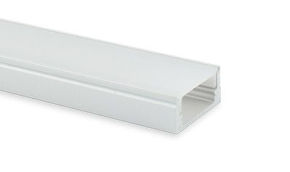
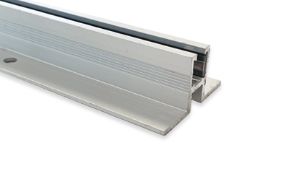
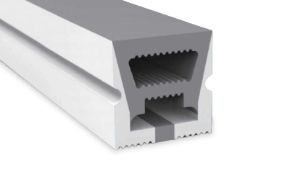
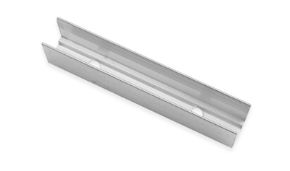
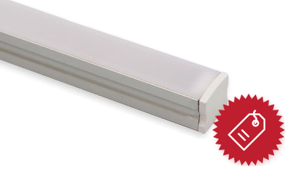
always use extruded aluminum profiles. Mount the profile to the structure (window, shelf, ceiling), then adhere the strip inside. Profiles dissipate heat and include diffusers for uniform light.
For LED spotlights:
- on electrified tracks: maximum flexibility. Mount track to ceiling, then snap and aim spots;
- recessed into drop ceilings: minimalist aesthetic, clean light;
- surface-mounted with arms: to reach specific points. The golden rule for how to position LED lights is: never shine directly into customers’ eyes at entrance height. Light should target merchandise or surfaces to be highlighted.
What’s the best LED for window displays?
There’s no single “best”—only the most suitable. Selection criteria:
1. high efficacy (lm/W): >100 lm/W for optimal performance/consumption ratio;
2. very high CRI: ≥95 for critical applications (jewelry, fashion), ≥90 for others;
3. adequate lumen output: based on required lux levels;
4. rated lifetime (L70/B10): at least 30,000 hours;
6. control compatibility: if dimming is needed, verify compatibility (DALI, 1–10V, phase-cut).
Practical calculations, costs, and final considerations
After thoroughly exploring principles, techniques, and products, it’s time to address the most concrete—and often decisive—aspect of any purchasing decision: calculations, costs, and final evaluations. This section translates everything learned into tangible data, definable budgets, and clear operational choices.
How much does it cost to set up/light a window display?
Window lighting costs vary. Example for a medium-sized window (3m wide × 2m high × 1m deep) for a fashion store:
1. internal strip lighting: 5m high-CRI LED strip + profiles + power supply + connectors: €150–250;
2. accent lighting with 3 track spots: 3m track + 3×15W LED spots: €120–180;
3. display materials (pedestals, fabrics): €100–300;
4. electrical installation labor: €200–400;
Estimated TOTAL: €570 – €1,130.
This is a one-time investment that, with LEDs, pays back in 1–2 years through energy savings (up to 80% vs. halogen) and near-zero maintenance.
Final checklist
Before ordering any product, answer these questions:
1. What’s the primary goal of my window? (Sell, impress, drive entry).
2. What are the 2–3 most important products/items to highlight?
3. What atmosphere do I want to create? (Warm/welcoming, cool/dynamic, neutral/natural).
4. Have I measured the spaces where lights will go?
5. Have I considered how to control the lights (switch, dimmer, timer)?
6. Have I checked for available outlets and electrical capacity?
7. Have I planned for maintenance (cleaning surfaces, accessibility for replacements)?
Window lighting: light that transforms space into experience
In conclusion, window lighting is a discipline that blends technique, art, and psychology. It’s not merely about lighting a store window—it’s about building an emotional bridge with passersby, guiding their gaze, and sparking curiosity and desire. Investments in a well-designed LED system quickly pay off—not just on utility bills, but in brand image, attractiveness, and ultimately, revenue.
Whether you’re solving how to light a dark store or refining an existing window display, the principle remains the same: light is the medium with which you paint your brand’s perception. Choose it with the same care you apply to your finest merchandise.
Explore the full catalog of professional solutions at Ledpoint.it and contact our consulting team for a free evaluation of your project.