







Staircase: how to light it?
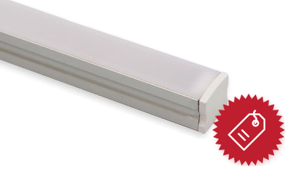
Lighting a staircase represents a unique design challenge, where safety, aesthetics, and atmosphere must converge into a single, harmonious lighting system. It's not simply about making the steps visible, but about transforming a structural and functional element into an integral component of interior design or external architecture. With the advent of LED technology and smart solutions, creative and technical possibilities have multiplied exponentially, offering unprecedented control over light intensity, color, and dynamics. This article aims to provide an up-to-date treatise on the subject, exploring every aspect of staircase lighting: from the fundamental principles of safety and regulations, to the latest trends emerging at the world's major industry trade shows, down to practical solutions and specific products, such as the high-quality ones available on Ledpoint.it, which allow for successful projects, from conception to installation. Before delving into technical and design solutions, it is essential to establish the core principles guiding a correct lighting design for staircases. These principles constitute the backbone of any intervention, ensuring the final result is not only beautiful but, above all, safe, functional, and compliant with regulations. Safety is, without a doubt, the most important parameter in staircase lighting design. Inadequate lighting is directly correlated to the risk of falls and accidents, especially for the elderly, children, or occasional guests unfamiliar with the environment. To ensure clear perception of the depth and edge of the step (nosing), minimum illuminance levels are recommended. In residential environments, an average illuminance of at least 100-150 lux on the tread surfaces of the steps is advised. For a staircase with public or heavy use, such as in a boutique or commercial building, the level can rise to 200 lux or more. Light distribution should be as uniform as possible, avoiding excessive contrasts that create deep shadow areas or dangerous glare. A crucial factor is reducing the risk of glare, both direct and reflected. Light sources placed incorrectly can temporarily blind those ascending or descending. Therefore, it is essential to use fixtures with shielded optics or narrow beams, or to position the sources so they are not in the direct line of sight during normal transit. In many contexts (multi-story buildings, commercial activities, public spaces), the staircase constitutes a fundamental escape route in case of emergency. Safety and emergency lighting must be designed in compliance with precise standards (such as UNI EN 1838 in Italy and similar internationally). These systems must activate automatically in case of a main power grid blackout, guaranteeing a minimum illuminance of 1 lux on the path line (central line of the staircase) for a defined period (usually 1-3 hours). Very low-consumption LED products are ideal for this purpose, and solutions such as luminous handrails or LED step markers can be elegantly integrated with backup batteries to serve this dual function: daily aesthetics and emergency safety. Beyond pure safety, the visual comfort of those using the staircase is essential. Good lighting must naturally guide the gaze and step, creating a pleasant, effortless rhythm. The direction of light plays a key role: grazing or lateral light can enhance material texture but create sharp shadows; more diffuse, overhead light illuminates uniformly but can flatten the perception of volumes. The ideal is often a combination, with wall-mounted LEDs angled at 45 degrees downward to "wash" the steps with light, emphasizing their shape and ensuring comfortable and safe illumination. The market offers a vast repertoire of solutions for lighting staircases. The choice depends on the architectural type of staircase, the desired style, budget, and specific safety and control needs. This category represents one of the most elegant, discreet, and effective solutions, particularly for modern and minimalist staircases. Small profiles recessed into the side wall, positioned at regular intervals aligned with each step or alternate steps. They are oriented downward at an angle (usually 45 degrees) that precisely illuminates the tread surface below without glare. They create a luminous rhythm that visually guides, are easy to maintain (by replacing only the LED module), and keep the walls clean and free of protrusions. This system is ideal for staircases enclosed between two walls or with one side against a wall. Here, flexible LED strip technology finds one of its most refined applications. Ultra-thin aluminum profiles, designed to house LED strips, are installed along the step edge (under-step), on the riser, or along the side fascia. The result is a precise, continuous line of light that defines the staircase geometry, creating a floating or "luminous steps" effect. The profiles, such as the PR-ST01-02-B2 model available at Ledpoint.it, are designed to diffuse light uniformly, eliminating the "dotted" effect of individual LEDs, and can be flush-mounted in plaster for a completely invisible result when off. This solution offers comfortable, glare-free light and is perfect for floating stairs or in contemporary settings. When the goal is to transform the staircase into a sculptural element or a standalone lighting installation, more bold and immersive solutions come into play. A strong trend, emerging forcefully at industry trade shows, is the use of powerful linear LED bars, embedded in the architecture. These "slats" of light can be integrated into staircase walls, along structural lines, creating geometric plays and volumes of light. They illuminate the entire environment through diffused reflection, not just the steps, transforming the stairwell into a standalone space with great emotional impact. This approach requires significant planning during construction or major renovation, but the result in terms of formal purity and atmosphere is unparalleled. A solution with undeniable dual advantages: functionality and lighting. Handrail profiles, like the PR-HR01-0203 from Ledpoint, are specifically designed to integrate one or more LED strips inside. The light can be emitted downward to illuminate the steps, creating a safe guide for the passage of hand and gaze, or upward for atmospheric wall washing. These systems are particularly suitable for staircases with open or glass balustrades, where traditional wall solutions would be complicated. They can also easily integrate emergency lighting systems or presence sensor activation. "Point light" solutions are not obsolete but have evolved profoundly thanks to LED. Classic wall lamps are now reinterpreted with ultra-thin luminaire bodies, materials like aluminum with opal glass, and integrated LED sources with advanced optics. The key to proper use on staircases is selecting models with minimal projection to avoid obstructing passage and with shielded or indirect optics to prevent direct glare. Placed at regular intervals on one or both walls, they provide general ambient illumination rather than pinpoint light on the steps. For monumental stairwells, double-height spaces, or open spiral staircases, a system of pendant lights can become the central design element. These are site-specific installations, composed of multiple luminous elements (cylinders, spheres, panels) suspended at various heights in the void of the stairwell. As reported by a lighting designer for a Milanese store, these structures illuminate the entire vertical space through diffusion, create a visual icon, and solve complex lighting problems (such as narrow and tall staircases up to 12 meters high) where wall or step lights would not be sufficient. The LED revolution has made all the solutions described above possible, offering efficiency, compactness, longevity, and control flexibility unattainable with traditional technologies. Therefore, it is crucial to understand the characteristics of LED products to make informed choices. Flexible LED strips are the heart of many integrated installations. Choosing the right strip is fundamental for the final result. For staircase applications, where strips are often viewed up close or used to illuminate objects at short distance (like the step below), a sufficiently high LED density is important to avoid the "dotted" or "dashed line" effect. COB (Chip on Board) strips or high-density strips (with 240 LEDs/meter or more) are ideal. The luminous flux (expressed in lumens per meter, lm/m) must be adequate for the purpose: for accent under-step lighting 500-800 lm/m may suffice, while for main functional lighting you need to start from 1000-1500 lm/m. Efficiency (lm/W) is a key parameter for energy savings and heat management: values above 100 lm/W indicate high-end products. The choice of color temperature (CCT) drastically influences the atmosphere. For internal residential staircases, warm tones (2700K-3000K) are preferred for a cozy atmosphere. For external staircases or modern commercial environments, a neutral white (4000K) can be chosen, ensuring a sharper, "cleaner" perception. The Color Rendering Index (CRI or Ra) measures the fidelity with which light reveals the natural colors of materials (wood, stone, marble, carpets). To enhance the precious materials of a staircase, it is advisable to use LED strips with a CRI ≥ 90. A professional LED installation is not just made of strips. Often overlooked components determine its stability and longevity over time. The power supply (or driver) transforms the mains voltage (230V) into the operating voltage of the LED strips (usually 12V or 24V). It must be correctly sized, considering a power reserve of about 20% compared to the total installation consumption, to ensure cool operation and longevity. For staircases, where light intensity or, in some cases, color adjustment is desired, a dimmable controller is necessary. There are simple controllers (wall dimmers) or advanced ones (app control, smart home integration) that allow creating light scenes, programming schedules, or connecting to presence sensors. Mounting an LED strip directly onto a surface is an amateur practice that compromises its performance and lifespan. Aluminum profiles, like the entire Ledpoint range, perform vital functions: they dissipate the heat generated by the LEDs, extending their life; provide a rigid and precise mounting surface; and house polycarbonate diffusers (opal, satin, prismatic) that homogenize the light, eliminating glare from individual chips and giving the light line a professional, finished appearance. For staircases, thin profiles with "exposed" diffusers for flush installations or angled profiles for directional lighting are particularly indicated. International lighting trade shows are the showcases where design and technology directions are defined. Participating in these events is crucial for companies and professionals to grasp new business and innovation opportunities. Let's analyze the most relevant trends for staircase lighting that have emerged in recent years. One of the most important and scientifically founded trends is lighting centered on human well-being. HCL aims to synchronize artificial lighting with the natural human circadian rhythm, supporting health, mood, and productivity. For staircases, this translates into systems that automatically adjust color temperature and intensity throughout the day: cool, energizing light (5000K) in the morning in office or hotel staircases, gradually becoming warmer and softer (2700K) towards evening. This dynamic can also be applied in luxury residences, creating a sensory experience that accompanies the home's rhythms. The real frontier is the total integration of lighting systems into building automation or home automation platforms. Wireless protocols such as DALI, Zigbee, Bluetooth Mesh, or Matter allow independent and programmable control of each light point or LED segment. Imagine a staircase where step markers light up sequentially upon detecting presence, following the person's movement, then turn off after a delay to save energy. Or a luminous handrail that changes color to signal an alarm or integrate decorative lighting during a party. These solutions, presented at shows like Light + Building or Hong Kong International Lighting Fair, are becoming increasingly accessible and robust. The push towards sustainability drives innovation. Beyond the intrinsic energy efficiency of LEDs, trade shows highlight a growing focus on durability, repairability, and recycled materials. More and more modular products are seen, where individual components (driver, LED strip) can be replaced instead of the entire fixture, reducing electronic waste. Furthermore, falling prices for high-quality LEDs and increased efficiency (+1.2% estimated impact on market CAGR) make professional solutions more competitive, accelerating the secondary replacement phase for obsolete systems from the early 2010s. The extreme trend of minimalism manifests in the quest for "light without a source". Shows like Euroluce highlight solutions where light seems to materialize from the architecture itself: millimetric-thick luminous slits, surfaces that illuminate uniformly, translucent materials that become light sources. For staircases, this means designing the lighting from the earliest phases of architectural design, integrating niches, cavities, and channels for LED strips so they become an integral part of the concrete, wood, or metal structure, visible only when lit. To turn theory and trends into reality, let's examine concrete scenarios, suggesting implementable solutions with specific products from the Ledpoint catalog, known for its focus on quality and professional solutions. Scenario: Wood or concrete staircase with floating steps, glass or steel cable railing, set in a double-height living room. Objectives: safety, minimal visual impact, scenic effect. Result: during the day, the staircase maintains its linear purity; at night, each step is outlined by a precise blade of light, creating a magical floating effect and guaranteeing maximum safety without any visible elements on the walls. Scenario: Traditional marble or stone staircase in a villa or historic building, with plastered walls. Objectives: uniform functional lighting, enhancement of materials, possible emergency integration. Result: safe, shadow-free main lighting from the downlights; warm atmospheric and orientation light from the handrail, adding an extra layer of safety in case of a blackout. Scenario: Stone or concrete staircase leading to the entrance of a shop, restaurant, or boutique. Objectives: maximum nighttime safety, aesthetic impact reflecting the venue's identity, weather resistance. Result: perfectly illuminated and safe pathway for customers, with a dynamic design element contributing to the venue's image. We conclude with a series of advanced recommendations stemming from design experience, to avoid common mistakes and ensure a long-lasting, satisfactory result. Never improvise. The design phase is crucial. Use lighting calculation software (even basic) to simulate lux levels on the steps with the chosen sources. Draw plans and sections of the staircase with precise indication of every light point, profile, power supply, and cable route. Always provide access points for maintenance (e.g., to replace a power supply) and leave sufficient cable length at junctions. For installations on curved or spiral staircases, flexible aluminum profiles or independently segmented strips (like Free-Cut LEDs) offer the necessary adaptability. Overheating is the main enemy of LED lifespan. Ensure that aluminum profiles are adequate for the power of the chosen strip and that the installation environment allows for minimal air circulation. Never exceed the recommended maximum line length for a single power injection (usually 5-10m for 24V strips) to avoid voltage drops manifested as decreased brightness towards the end of the line. For long installations, plan for power injections from multiple points. Always use cables with an adequate cross-section for the total current. Clearly communicate maintenance operations to the end client. Quality LED strips have a lifespan of 30,000-50,000 hours, but power supplies and controllers may have different lifespans. Choose products with long, documented warranties. For critical installations (large hotel, museum staircases), consider systems with remote diagnostics functionality that signal failures or performance drops. The market trend towards a secondary replacement cycle for LED installations from the early 2010s is an opportunity to offer upgrades to more efficient, controllable, and human-centric technologies. Staircase: fundamentals for correct lighting
Safety and regulations for staircase lighting
Lighting standards and luminance levels
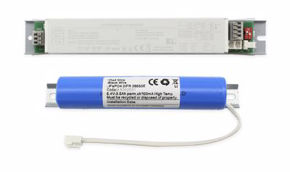
Emergency and escape route lighting
Visual ergonomics and comfort in a staircase
Overview of technical and design solutions for staircases
Integrated lighting in stair treads: step markers and luminous risers
Recessed wall step markers
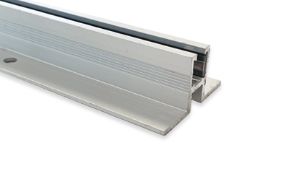
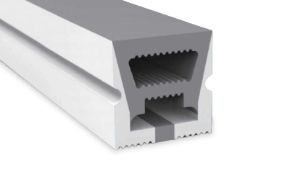
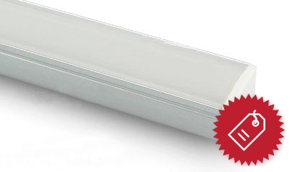
LED profiles for steps (recessed or suspended)
Architectural and atmospheric staircase lighting
Light slots and architectural LED bars
Luminous handrails and balustrades
Revisited traditional lighting: sconces and pendants
Modern LED sconces
Suspension systems for iconic stairwells
Focus on LED technologies and specific products for staircases
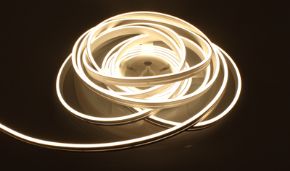
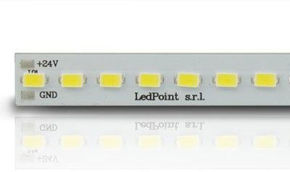
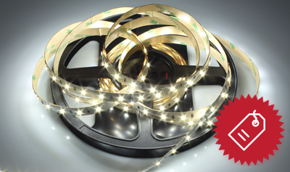
Technical characteristics of LED strips for staircases
LED density, lumens, and efficiency
Color temperature and color rendering index (CRI)
Essential system components
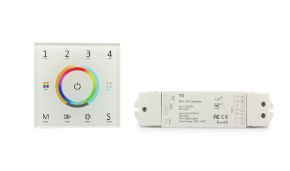
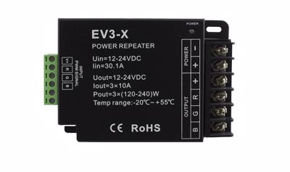
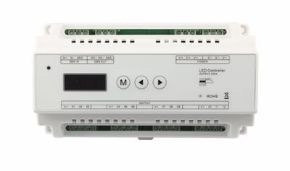
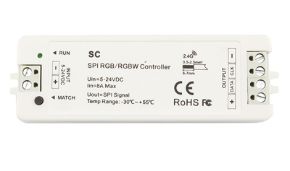
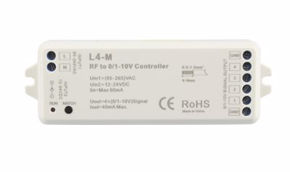
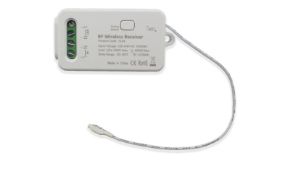
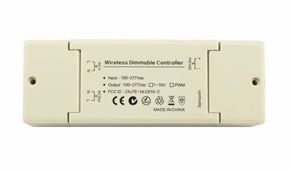
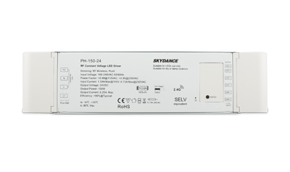
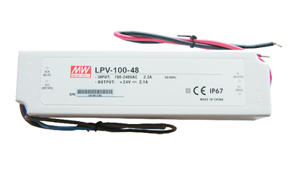
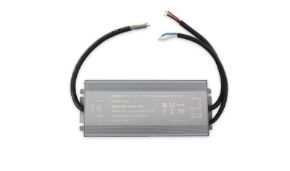
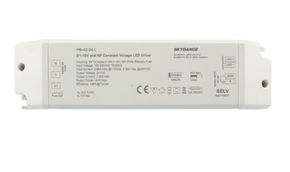
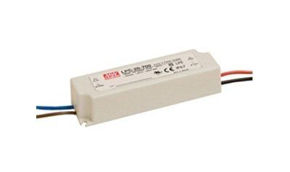
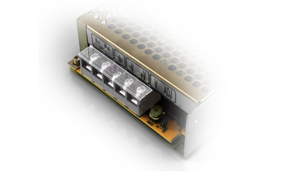
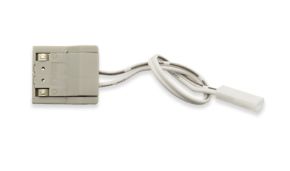
Power supplies and controllers
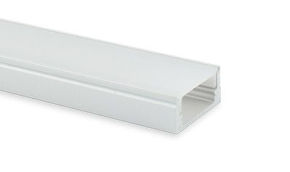
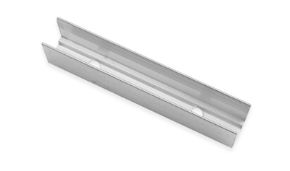
Aluminum profiles and diffusing optics
Global trends and innovations from major industry trade shows
Human Centric Lighting (HCL) and circadian lighting
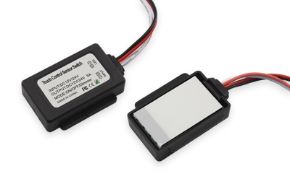
Connectivity and integrated "smart" lighting
Sustainability and circular economy
Invisible design and light-as-architecture
Case studies on staircase lighting design
Modern residential floating staircase in open space
Solution: integrated under-step lighting. Use of a step-edge profile recessed into the structure of each step. Inside, installation of a high-density COB LED strip (e.g., the COB series from Ledpoint) for a continuous, seamless light line. Connection to a 24V dimmable power supply and a presence sensor at the top and bottom of the stairs.Case 2: classic closed stairwell between two walls
Solution: combination of solutions. 1) Recessed wall step markers (using retrofit LED modules or dedicated downlights), positioned 30 cm from the riser of each step. 2) Complement with a luminous handrail using the Handrail Profile PR-HR01-0203 installed on one of the two walls, with a warm white (3000K) high-CRI LED strip. The handrail can be connected to an emergency kit.Case 3: external staircase and access to a commercial venue
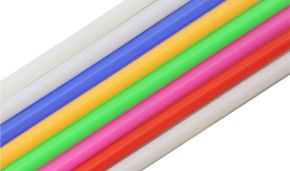
Solution: riser lighting. Use of aluminum profiles for exteriors (with IP67 or higher protection rating) installed vertically on the step risers. Inside, high-power LED strips in neutral white (4000K) for clear, safe light. The entire system can be controlled by a twilight sensor and timer, and integrated with the signage or facade lighting. For a more decorative effect, RGBW LED strips controlled by a programmable controller can be chosen to change color for events or holidays.
Staircase: planning, management, and maintenance
Planning and simulation
Thermal and electrical management
Maintenance and lifespan