






Smart home 2026: a complete guide to Alexa, Google Assistant, and Tuya Controllers
The smart home is no longer the future: it is the present of millions of Italian and European homes. In 2026, transforming your home into an intelligent dwelling has become accessible, convenient, and extraordinarily powerful thanks to the evolution of smart LED controllers, communication protocols, and ecosystems like Tuya Smart, Amazon Alexa, and Google Assistant. This guide will accompany you from the definition of smart home to the selection of the best smart home devices for lighting, through advanced home automation, voice integrations, and an in-depth analysis of the Skydance 2025-2026 catalog, the reference brand for new-generation intelligent LED controllers chosen by Ledpoint. Whether you are planning a renovation, seeking to make an existing system more efficient, or simply want to discover what is meant by smart home and how it works in practice, you will find all the answers in this article: market data, comparative tables, step-by-step guides, and technical insights on every aspect of the modern intelligent home. When we talk about smart home, we refer to a concept that has undergone a radical transformation in the last ten years: from an exclusive luxury for a few to a concrete and accessible solution for the vast majority of families. Understanding precisely what is meant by smart home is the first step to fully exploiting its potential, avoiding terminological confusion and inadequate technological choices. The definition of smart home encompasses technical, practical, and even cultural aspects that are worth exploring in depth. A smart home is a dwelling equipped with interconnected devices, systems, and technologies that communicate with each other through local networks or the internet, allowing automation, monitoring, and remote control of domestic functions such as lighting, heating, security, appliances, and entertainment. The term smarthome has now entered common language to indicate any home that presents at least one of these connectivity and intelligent automation characteristics. The ISO/IEC 25010 standard and the European Commission guidelines on IoT (Internet of Things) describe the smart home as a residential cyber-physical system in which sensors, actuators, and data management platforms collaborate to improve the quality of life of occupants, optimize energy consumption, and increase security levels. This technical definition tells us a lot: a smart home is not simply a home with connected devices, but an integrated ecosystem in which intelligence emerges from the interaction between components. The term "intelligent home" is the Italian translation of smart home and is often used interchangeably. However, in the practice of the Italian construction and plant engineering sector, intelligent home has a slightly broader nuance: it also includes homes with traditional home automation systems (KNX bus, BACnet, C-Bus) that do not necessarily use the cloud or voice assistants. The modern smart home, on the other hand, is distinguished by: The adjective "smart" in English has an interesting history: it originally meant "intelligent" in the sense of "lively, sharp", but in the technological context it has taken on the meaning of "connected, automated, and adaptive". When Apple introduced the "smartphone" in 2007, the term "smart" began to permeate every area of consumer technology: smart TV, smart watch, smart city, and naturally smart home. In the Italian context, the smart home has seen particularly significant penetration in the last three years, aided by the exponential growth of low-cost IoT devices and the widespread diffusion of voice assistants like Amazon Alexa and Google Assistant. According to data from the IoT Observatory of the Polytechnic University of Milan, in 2025 the Italian smart home market reached a value of approximately 850 million euros, with a growth of 23% compared to the previous year, confirming a trend that shows no signs of slowing down. The terms "smart home" and "smart house" are practically synonymous in common language, with a nuance: "smart house" tends to be used in architectural and engineering contexts to indicate a building designed from the outset with intelligent technologies integrated into the structure itself (systems, walls, floors), while "smart home" is the term most used in consumer marketing to indicate any dwelling (apartment, villa, loft) in which smart devices are installed, even in retrofit on existing systems. In this article, the terms are used interchangeably. One of the most frequent doubts among those approaching the world of the intelligent home concerns the relationship between smart home and home automation: are they the same thing? Is the latter a subset of the former? Or vice versa? Clarifying this distinction is fundamental not only for terminological reasons, but especially for making correct technological choices when planning a system. In this paragraph, we will analyze the definitions, historical origins, and practical differences between the two concepts, with a particular focus on the Italian market. Home automation (from the French "domotique", in turn derived from the Latin "domus" = home + "automatique") is the technical-scientific discipline that studies technologies aimed at improving the quality of life in the home and more generally in buildings, through the integration and automation of technological systems present. The UNI 8290 standard defines home automation as "the set of technologies and systems capable of automating and integrating the various technological systems present in a residential building". In practice, traditional home automation includes the automation of: electrical systems (lighting, sockets, switches), heating systems (heating, cooling, ventilation – the so-called HVAC), security systems (intrusion detection, video surveillance, access control), multimedia systems (sound diffusion, TV, home cinema), and passive safety systems (gas, smoke, flood detectors). What does home automation home mean? A home automation home is a dwelling in which at least part of these systems is automated and integrated, allowing centralized and programmable management. Classic home automation is based on proprietary communication buses like KNX (the most widespread European standard), DALI (for professional lighting), BACnet (for commercial buildings), and proprietary systems like BTicino Living Now, Legrand Netatmo, or Siemens Synco. The fundamental distinction lies in three dimensions: technology, cost, and accessibility. Let's examine them in detail through a comparative table: The modern smart home can be considered the democratic evolution of home automation. If traditional home automation dominated the professional market for twenty years with powerful but expensive and complex solutions, the smart home has brought the same vision (the automated home) to a vast audience thanks to accessible costs, simplified installation, and an ecosystem of intuitive apps and voice assistants. Today, the two realities increasingly overlap: professional home automation systems integrate gateways for Alexa and Google, while high-end smart controllers like the Skydance DA series (DALI) support industrial protocols, creating a technological continuum that allows choosing the level of sophistication appropriate for each project. With the expression "smart system" we mean an electrical, lighting, or climate control system that has been equipped (during design or in retrofit) with intelligent components capable of communicating with each other and with the outside world. A smart lighting system, for example, includes: dimmable LED strips or luminaires, a smart controller compatible with the chosen protocol (WiFi, Zigbee, etc.), an optional gateway or hub, and integration with the management app and voice assistants. The distinctive characteristic of a smart system compared to a traditional one is dynamic programmability: it's not just about turning lights on and off, but creating scenes, automations, schedules, and intelligent responses to environmental or behavioral stimuli. The smart home device market has experienced extraordinary proliferation in the last five years: from simple €10 smart plugs to AI-powered security systems costing thousands of euros, the offering is now so vast as to be disorienting for first-time users. In this paragraph, we offer a systematic and professional overview of the main categories of smart home products, with particular attention to intelligent lighting devices that represent the core of LedPoint.it's offering. Smart home devices – also called smart devices – are divided into functional macro-categories. Understanding this taxonomy is useful for planning an integrated and coherent system: This is the most widespread category and the one with the best cost-benefit ratio for those starting to build their smart home. It includes: Heating systems can also be easily managed today, allowing significant savings on consumption: In a smart home, it is also possible to easily manage all security systems through: A futuristic home could not miss the management of all household appliances through: To be able to manage all these tools together, the following come to aid: Smart devices are electronic devices capable of connecting to the internet or a local network, collecting data from the environment, processing it (autonomously or in the cloud) and performing actions or sending notifications. The fundamental characteristic that distinguishes a smart device from a traditional one is the capacity for bidirectional communication: they are not limited to receiving commands, but send information on status, energy consumption, and environmental conditions, enabling intelligent automations and real-time feedback. Understanding how a smart home works in practice (beyond glossy advertisements) is essential for making informed choices and building a system that is stable, expandable, and truly useful in daily life. The architecture of a modern smart home is articulated on multiple levels, each with specific characteristics and implications. This paragraph explores in detail all the layers of the system, from physical communication protocols to the end-user experience. A smart home can be schematized as a three-level structure: This is the layer closest to physical reality: it includes all devices that interact with the physical world, i.e., LED controllers, temperature sensors, locks, cameras, smart plugs. These devices collect data (temperature, brightness, presence) and/or perform actions (turn on the light, open the gate). The quality of devices at this level is decisive for the performance of the entire system: a quality PWM LED controller will avoid annoying flickering; a precise temperature sensor will ensure an efficient HVAC system. Edge devices communicate with each other and with the rest of the system through wireless or wired protocols. The main protocols are: Data collected by devices is sent to cloud servers where it is processed, stored, and made accessible via mobile apps, web interfaces, or voice assistants. The choice of cloud platform is perhaps the most strategic decision in building a smart home: it determines which devices can be used, how easy they are to manage, and how long the service will be guaranteed. To make the functioning of a smart home concrete, let's describe a typical day in a well-configured smart home: This is how the intelligent home works in practice: not a series of disconnected gadgets, but an organic system that responds proactively to occupants' needs. One of the most frequent questions from those approaching the smart home concerns connectivity: how do smart devices connect to each other? How do I connect them to my home router? What happens if the internet goes down? These are legitimate and fundamental questions for designing a system that works reliably. In this paragraph, we explore in depth every connection option, comparing advantages, limitations, and ideal use cases. WiFi connection is the most intuitive method for beginners: almost all home routers transmit on 2.4GHz and 5GHz frequencies, and the majority of entry-level smart home devices connect directly without the need for additional hubs. Skydance WT series controllers use WiFi 2.4GHz to ensure maximum compatibility with any home router. Advantages of WiFi: no additional hub, immediate configuration, long range, simple OTA updates, native integration with Tuya Smart, Alexa, and Google Home. Limitations of WiFi: each device occupies an IP address and "slot" on the network; with many devices (>30-40), standard WiFi networks can become unstable. Mid-range routers generally support 30-50 simultaneous devices; for extended smart home networks, a router with mesh network support is recommended (TP-Link Deco, Eero, Ubiquiti UniFi). Zigbee 3.0 is the reference protocol for professional and semi-professional installations. It operates on 2.4GHz frequency but with very low power (low consumption), creating a self-organizing mesh network in which each mains-powered Zigbee device (not battery-powered) also acts as a signal repeater. Skydance WZ series controllers use Zigbee 3.0 and support networks up to 15 hops between devices, ensuring coverage even in very large homes or those with thick walls. The Skydance WB series uses Bluetooth Mesh, a technology that allows local control of the lighting network with minimal latency, independently of the internet connection. Bluetooth Mesh devices communicate directly with each other without passing through cloud servers, making them ideal for: areas with unstable internet connectivity, environments requiring immediate response to commands (e.g., stages, showrooms), and installations where data privacy is a priority. Remote control (from outside the home) is enabled by adding a WG-B gateway that acts as a bridge between the local Bluetooth Mesh network and the internet. Matter is the standard that will definitively change the smart home market. Developed by the Connectivity Standards Alliance (CSA) with the support of Apple, Amazon, Google, Samsung, and hundreds of other manufacturers, Matter defines a common language that allows devices from different brands to work together without proprietary gateways or complicated configuration. Skydance WM and WT1-M series controllers support Matter natively, guaranteeing compatibility with Apple Home, Amazon Alexa, Google Assistant, and Samsung SmartThings out-of-the-box. The choice of control ecosystem is one of the most important decisions when designing a smart home. Amazon's Alexa, Google Assistant, and Tuya Smart represent the three pillars of the consumer market, each with different strengths, limitations, and development philosophies. Understanding the differences helps choose the solution best suited to one's needs and ensure maximum compatibility with Skydance controllers available on LedPoint.it. Amazon Alexa is the world's most widespread voice assistant with over 500 million Alexa-enabled devices installed globally. To connect Alexa to a smart lighting system based on Skydance WT (WiFi) or WZ (Zigbee) controllers, the process is as follows: Skydance controllers compatible with Alexa support the following types of voice commands: on/off, brightness adjustment (percentage), color temperature adjustment (CCT), color selection (for RGB/RGBW models), activation of preconfigured scenes and automations. Google Home is Google's ecosystem for the smart home, integrated with Google Assistant and available on Android and iOS smartphones, Google Nest smart speakers, and Google Nest Hub intelligent displays. Integration with Skydance controllers via Tuya follows a process analogous to Alexa: With Google Assistant, it is then possible to create automated routines that combine light control, music, weather, and other Google services in a single command. For example: "Ok Google, good morning" can start a routine that turns on the lights, reads the news, shows the weather, and starts the smart coffee machine. Tuya Smart (and its consumer alter ego Smart Life) is the IoT cloud platform that underlies tens of millions of smart home devices worldwide. Skydance has chosen Tuya as the management platform for its entire smart line (WT, WZ, WB, WM series), which guarantees users: What is a Smart Home for? This is a question many ask themselves, especially those skeptical about technologies perceived as superfluous or difficult to manage. The answer is articulated and goes well beyond the simple "you can turn off the light with your voice". The real benefits of a well-designed smart home touch fundamental spheres of daily life: economic savings, home security, living comfort, environmental sustainability, and even the real estate valorization of the home. Energy savings is the most measurable and concrete advantage of a smart home. According to research conducted by ENEA (Italian National Agency for New Technologies, Energy, and Sustainable Economic Development) in 2024, homes equipped with smart lighting systems reduce energy consumption for lighting by 35-65% compared to homes with traditional lighting, thanks to the combination of: Security is the second major advantage of the smart home and often the main purchase driver, especially among owners of single-family homes and second homes. Smart systems offer a significantly higher level of protection compared to traditional alarms: What is a smart home for in terms of daily comfort? The comfort of a smart home manifests in small but significant improvements to daily life: waking up with a light that simulates dawn and reduces alarm clock stress, returning to a home already at the ideal temperature, managing the lighting of every room with a touch or voice, creating light scenes that support the circadian rhythm (warm, low lights in the evening to promote sleep). According to a 2024 Nielsen study, 78% of smart home users report a significant improvement in domestic quality of life after installing the system. An often overlooked aspect is the impact of the smart home on property value. According to data from the National Association of Real Estate Agents (FIAIP) 2024, homes equipped with smart home systems sell with a premium price of 5-12% compared to analogous non-smart homes in the same local market, and sell on average in 18 fewer days. Among the smart devices that most increase perceived value are: smart LED lighting systems, security cameras, intelligent thermostats, and smart locks. One of the most practical questions for those wanting to approach the smart home concerns costs: how much must one invest to have a truly intelligent home? It depends on the size of the dwelling, the complexity of the desired system, the choice between DIY and professional installation, and the quality of the chosen components. In this paragraph, we analyze in detail the different levels of investment with practical examples and return on investment calculations. For those specifically interested in intelligent lighting, we propose a detailed cost analysis for a standard 80sqm apartment with 4 rooms: Estimated ROI: with an annual energy saving of approximately €195 on lighting (see previous section), the system pays for itself in about 6.5 years, to which is added the immediate benefit in terms of comfort, real estate valorization, and reduced environmental impact. How to make your home smart? This is one of those questions that can most easily lead to impulsive purchases of devices that then don't integrate with each other, generating frustration instead of satisfaction. In this paragraph, we offer a methodical and practical guide to transform any dwelling into an efficient smart home, starting from scratch or enhancing an existing system. The method applies both to those who want a DIY approach and to those who prefer to rely on a professional. Before purchasing any device, it is fundamental to ask: what do I want to improve in my domestic life? The most common motivations are: energy savings, greater security, daily convenience, hosting people with motor disabilities, or simply technological pleasure. Objectives guide the choice of devices and protocols. Evaluate the existing electrical system: is it traditional 230V or already predisposed for home automation? Are there conduits for additional cables? Is the electrical panel modern? These factors determine the possibilities for retrofit without invasive construction work. As we saw in paragraph 6, the choice between Alexa, Google Home, Tuya Smart, and Apple HomeKit is strategic. In general, Tuya Smart is the most flexible choice for those using Skydance LED controllers, as it allows advanced automations and integrates perfectly with Alexa and Google. Lighting is the ideal starting point for three reasons: it has the best energy ROI, it is the most visible and gratifying modification, and Skydance smart LED controllers allow enhancing any existing LED system. Choose the right controller (see Skydance section) based on the type of LED strip, necessary channels, and preferred protocol. Once lighting is configured, add opening sensors, cameras, and smart doorbells. These devices integrate into lighting automations, creating powerful scenarios: "when the door opens, turn on the entrance at 100%" or "if the sensor detects an intruder at night, activate strobe light and send notification". The true power of the smart home emerges when automations are configured. In the Tuya Smart app, you can create rules of the type: "IF (trigger) → THEN (action) → BUT ONLY IF (condition)". For example: "IF it's 10 PM AND we are at home → THEN bring all lights to 20% with warm tone → BUT ONLY IF the day is a weekday". A smart home is never "finished": it improves over time, adding devices, refining automations, and exploiting new features made available by firmware updates. Monitoring energy consumption data allows identifying waste and further optimizing the system. Many homes already have LED strips or LED luminaires installed, but controlled by simple traditional dimmers or switches. Smart retrofit is the ideal solution: installing a smart controller like Skydance models between the existing power supply and the LED strip does not require replacing the entire lighting, but only adding an intelligent module. The steps are: Lighting represents the central node of any serious smart home project: it is present in every room, has an immediate impact on atmosphere and quality of life, and is among the most easily optimizable domestic energy consumptions. The combination of high-efficiency LED technology and smart controllers represents today the most advanced solution for creating intelligent, comfortable, and sustainable environments. In this paragraph, we explore technical specifications, practical applications, and considerations for designing a professional-quality smart home LED system. Let's now review the different LED strips that can perform at their best in a smart home. CCT (Correlated Color Temperature) LED strips allow varying the light color temperature between warm white (2700K-3000K) and cool white (5000K-6500K) passing through natural white (4000K). This type of lighting proves particularly effective for human-centric lighting: warm lights in the evening to promote relaxation and melatonin production, cool lights in the morning and during the day to promote concentration and productivity. Skydance V2 and V2-L controllers perfectly manage CCT strips with up to 20A total current. RGB (red, green, blue) and RGBW (with additional white channel) LED strips allow creating millions of different colors and are ideal for: decorative backlighting, lounge and bar environments, home cinema, gaming rooms, and any application where light is an integral part of the decor and mood of the environment. Skydance V3 (RGB), V4 (RGBW), and V5 (RGB+CCT) controllers manage these strips with full Tuya/Alexa/Google compatibility. Addressable pixel or SPI LED strips use chips like WS2812, SK6812, or WS2811 that allow controlling each individual LED independently, creating extraordinary dynamic effects like rainbows, light trails, musical effects, and custom animations. The Skydance SPI series manages over 47 types of pixel chips with up to 40 preset effects. The concept of a smart apartment is rapidly gaining ground in the Italian real estate market: from large cities to smaller centers, real estate developers are increasingly often including smart home solutions in new constructions as a differentiating added value. But what truly makes an apartment "smart"? And how do you design a living space that is genuinely intelligent and not just equipped with a few connected gadgets? A smart apartment is a residential unit designed (or renovated) with the aim of integrating intelligent technologies in an organic, coherent, and scalable way into the architecture of the property. The difference compared to a traditional apartment with additional smart devices lies in the ab initio design of the technological infrastructure: cables predisposed in walls for structured networks, ethernet sockets in every room, conduits for additional cables, adequate electrical panel, and strategic positioning of light points, sockets, and actuators. According to the "Smart Living 2025" report by Scenari Immobiliari, the smart apartment market in Italy is worth approximately €3.2 billion and has recorded growth of 34% compared to 2023. The most requested features are: smart lighting (87% of buyers), video security (79%), smart climate control (71%), connected appliances (45%). The design of a smart apartment follows a systemic approach that integrates three disciplines: interior architecture, electrical engineering, and IoT technology. The fundamental principles to respect are: Among the reference brands for smart LED controllers in the European and Italian market, Skydance occupies a position of absolute importance thanks to the completeness of the catalog, construction quality, and full integration with the Tuya Smart ecosystem and the most widespread voice assistants. The Skydance 2025-2026 catalog offers a complete ecosystem of controllers divided by communication protocols and specific applications, designed to transform any lighting system into an intelligent and professional system. In the following sub-paragraphs, we analyze in detail each series, with technical specifications, ideal applications, and performance comparisons. The V Series represents the heart of control for constant voltage LED strips (12-48VDC) and is distinguished by the ability to manage different electrical loads and types of light, from the simplest monochrome systems to the most sophisticated RGB+CCT configurations. It is the series that every smart lighting designer should know in depth, because it covers practically any application scenario in residential and commercial lighting. The V series includes models from 1 to 5 channels, allowing management of respectively: One of the most appreciated aspects by designers is the ability to manage high currents. The V1-L and V1-T models support currents up to 15A or 20A per channel, allowing powering of very long LED strip runs without resorting to additional signal amplifiers. This translates into cleaner installations, with fewer components and potential points of failure. By way of example: a 20A V1-L controller can manage up to approximately 48 meters of 24V, 10W/m LED strip, i.e., an entire apartment layout with a single controller. A fundamental technical characteristic of the Skydance V Series is the user-selectable PWM frequency. The most advanced models allow setting the modulation frequency between 500Hz, 2kHz, 8kHz, and 16kHz via DIP switch or software configuration. Why is this important? At low frequencies (500Hz), some users perceive slight visual flickering at low brightness levels; cameras and video cameras detect banding (horizontal bands) in recordings. For environments where video recordings are made (studios, showrooms, content creation spaces), it is essential to set frequencies of 8kHz or 16kHz to completely eliminate banding. This flexibility makes the V series suitable for both consumer and professional use. For installations requiring multiple controllers in sync (e.g., LED strips in a long corridor or in an open space), the V Series supports the auto-transmission of the control signal function up to 30 meters. This allows multiple controllers to receive the same dimming/color signal and operate in perfect sync without the need for additional wiring between them: the signal is transmitted in cascade from one controller to the next via the RF control cable or the PWM signal itself. An elegant and economical solution for distributed installations. The Smart Series of Skydance represents the natural evolution of the V Series controllers: it integrates wireless connectivity modules that make each controller a complete IoT device, manageable via cloud, app, and voice assistants. This series is divided into four families based on the adopted communication protocol, each optimized for a different application scenario. WT series controllers integrate a 2.4GHz WiFi module that allows direct connection to the home router without additional gateways. Natively compatible with the Tuya Smart platform, they integrate with Alexa, Google Home, and SmartThings in a few minutes. A particularly interesting feature of some WT models (e.g., V1-L(WT)) is the WiFi-RF converter function: the WiFi controller can act as a bridge and command other standard RF receivers in the Skydance catalog via the Tuya app, without the latter needing WiFi modules. This allows creating hybrid systems where a single smart controller controls a group of analog RF receivers, optimizing installation costs. Ideal applications for the WT series: apartments, small offices, retrofit of existing systems, DIY installations, environments where home WiFi connection is sufficient. WZ series controllers adopt the Zigbee 3.0 protocol, the reference standard for professional and semi-professional installations requiring high reliability and scalability. They require a WG-Z gateway that acts as a hub between the Zigbee network and the internet (and therefore with the Tuya app), but offer significant benefits in return. The Zigbee network created by WZ controllers can extend up to 15 hops between devices: with each controller also acting as a signal repeater, coverage can reach large buildings without blind spots. Compatibility with Philips Hue and other third-party Zigbee systems (via compatible hubs like Amazon Echo 4th gen or IKEA Dirigera) opens possibilities for advanced integration in mixed ecosystems. Ideal applications for the WZ series: two-story homes, villas, offices, environments with concrete or metal structures that obstruct WiFi, installations where stability is critical, professional projects with many light points. The WB series uses Bluetooth Mesh technology to create an ultra-fast local control network, with minimal latency and total independence from the internet connection for basic operation. Bluetooth Mesh devices self-organize into a network and transmit commands from node to node, allowing control of lighting in very extensive areas. Remote control (from outside the home) is enabled by adding a WG-B gateway that connects the Mesh network to the internet. Ideal applications for the WB series: showrooms, stages, live environments, installations where privacy is a priority (no data to cloud without gateway), homes in areas with unstable internet connectivity, temporary or mobile installations. The true technological novelty of the Skydance 2025-2026 catalog is the WM series and WT1-M models, the first Skydance LED controllers with native support for the Matter protocol. These devices guarantee cross-platform compatibility without proprietary gateways with: Apple Home, Amazon Alexa, Google Home, and Samsung SmartThings. The user purchases a WM controller, configures it once, and from that moment it is accessible from any Matter-compatible ecosystem, without having to choose "which side" to take. The importance of Matter for the future of the smart home market cannot be underestimated: for the first time in the history of consumer home automation, interoperability is guaranteed at an industrial standard level, it does not depend on the commercial goodwill of individual brands. A Matter-certified device will remain compatible with all Matter ecosystems even when brands update their platforms. The S and SS Series of Skydance specializes in controlling 230V loads, opening smart home possibilities even for those using dimmable recessed LED spotlights, traditional dimmable bulbs, halogen lights, and any other mains voltage load. This series is particularly relevant for retrofitting apartments where completely replacing the system with low-voltage LED strips is not practicable. The S1-B and S1-L models are phase-cut AC Triac dimmers configurable via DIP switch to operate in Leading Edge mode (leading edge phase cut, ideal for resistive loads and some LED bulbs) or Trailing Edge mode (trailing edge phase cut, ideal for capacitive loads and the majority of modern LED bulbs). This duality makes them compatible with a wide range of loads, eliminating compatibility problems typical of traditional phase-cut dimmers. They manage loads from 360W (S1-B) to 480W (S1-L) and allow setting a minimum brightness to avoid flickering at low levels, a common problem with lower quality LED bulbs. S1-A amplifiers are designed to extend the power capacity of an existing Triac dimmer, bringing the manageable load up to 600W. They are connected downstream of the main dimmer and receive its control signal, amplifying the current to the additional load. They are the ideal solution when you want to dim groups of spotlights in large environments (meeting rooms, open spaces, waiting rooms) without replacing the master dimmer. The SS Series modules are smart relays for loads up to 15A, ideal for all applications requiring on/off automation without dimming: power sockets, fans, appliances, lighting with non-dimmable bulbs. They are installed in the junction boxes of the existing electrical system and configured in the Tuya Smart app, instantly becoming remotely controllable and integrable into smart home automations. The D Series brings the Skydance catalog into the territory of professional entertainment and spectacle installations, where the DMX512 protocol has been the industrial standard for over thirty years. Theaters, concerts, clubs, discos, luxury showrooms, museums: these are the environments where the D Series expresses its maximum potential, allowing precise control of hundreds of LED channels with maximum resolution and reliability. Skydance D series decoders are available in configurations from 3, 4, 12, and up to 24 channels (D24 and D24-XE models), with integrated digital display for direct setting of the DMX512 address without additional tools. The 16-bit dimming resolution (65,536 levels) guarantees imperceptible gradations even at the lowest brightness levels, eliminating the typical "step" effect of 8-bit dimmers in slow fades. Supported PWM frequencies reach up to 32kHz, making these decoders suitable for high-frame-rate television recordings without any banding effect. D series decoders support the RDM (Remote Device Management) protocol, a bidirectional extension of DMX512 that allows communication in both directions between the control console and the decoders. This translates into extraordinary operational possibilities: remotely setting the DMX addresses of all decoders from the stage with a single operation, receiving feedback on power consumption and operating status of each decoder, and diagnosing faults in real time during complex installations. For system integrators and lighting designers, RDM support drastically reduces installation and maintenance times. The DA Series of Skydance is based on the DALI (Digital Addressable Lighting Interface) standard, the most widespread professional lighting protocol in commercial, office, and industrial environments in Europe. The IEC 62386 standard, which defines DALI, guarantees interoperability between devices from different brands, making DALI the choice of election for any lighting project that envisages a long operational life and the possibility of replacing components from different suppliers over time. Skydance DA series controllers comply with IEC 62386 protocols and support DT6 (monochrome) and DT8 (RGBW and CCT) type devices. DALI-2 compliance (the updated version of the standard, introduced in 2014) guarantees a higher level of interoperability than original DALI, with better compatibility between devices from different manufacturers and support for advanced features like scene control, extended diagnostics, and fault reporting. One of the most innovative solutions in the Skydance catalog are the DA-M converters, devices that transform WiFi/RF or Zigbee signals into DALI protocol, allowing management of existing DALI lamps and drivers via the Tuya Smart app and voice assistants. This bridge between the two worlds is of enormous practical importance: it allows bringing modern smart home functionalities (voice control, cloud automations, Alexa integration) into installations with existing DALI drivers, without the need to replace the entire infrastructure. It is the ideal solution for retrofitting offices, hotels, and commercial structures with already installed DALI systems. The Masters Touch panels in the Skydance DALI catalog are wall panels that act simultaneously as DALI master (power and manage the DALI bus) and as touch-screen user interface for local lighting control. They allow setting DALI addresses, creating scenes, and controlling brightness and color of individual fixtures or groups of luminaires with an intuitive interface that requires no external software or PC. The ES/EH Series of Skydance introduces specialized solutions into the catalog for lighting automation based on human presence detection, with a particular focus on two specific high-value practical applications: intelligent stair lighting and motion detection for automations in open spaces. ES32 and ES24 controllers are specialized systems for managing sequential lighting of stair steps, an application that combines aesthetic elegance with practical safety functionality. The operation is elegant: when a PIR or laser sensor detects the presence of a person at the beginning of the stairs, the step LEDs turn on in sequence one at a time from bottom to top (or top to bottom, depending on walking direction), creating a "cascading light" effect that illuminates the path safely and scenically. The ES32 model manages up to 32 steps, while the extended model manages up to 72 steps, covering the longest stairs. Sequence speed, turn-off delay, and brightness are all configurable. EH-R and EH-M sensors use 5.8GHz microwave technology instead of traditional PIR (passive infrared), offering significant advantages in terms of sensitivity and reliability. Microwave sensors are not affected by ambient temperature (unlike PIRs which can have false negatives in warm environments), detect motion even through thin walls and partitions, and have a wider detection angle. They can directly control the load (loads up to a certain power) or send RF signals to other receivers in the Skydance system, integrating perfectly into smart lighting control. The SPI Series completes the Skydance catalog with a range of controllers dedicated to addressable "pixel" LED strips, where each LED or group of LEDs is controllable completely independently from the others. This technology opens a universe of creative possibilities that goes well beyond simple lighting: dynamic effects, animations, musical synchronization, LED displays, and luminous art installations are all applications where the SPI Series excels. One of the strengths of the Skydance SPI series is its compatibility with over 47 types of addressable LED chips: WS2811, WS2812, WS2812B, WS2813, SK6812, SK9822, APA102, and dozens of others. This universal compatibility allows using the controller with LED strips from any manufacturer, without compatibility problems or need for complicated configurations. The chip type is set once in the controller configuration. Skydance SPI controllers include up to 40 preset effect modes: color chases, color flows, horse races, flashes, fades, fire effects, water effects, and many others. Effect selection and parameter adjustment (speed, direction, colors) occurs via RF remote or via the Tuya app in WT-SPI models. Some models include a built-in microphone for musical synchronization: LEDs react in real time to the intensity and rhythm of the music, creating dynamic visual effects perfect for entertainment environments, home cinema, and parties. After this in-depth journey through all aspects of the smart home, from theoretical definition to technical specifications of Skydance controllers, from practical applications to real costs, we can draw some fundamental conclusions that help contextualize this technology in the current landscape. The smart home in 2026 is no longer a futuristic promise: it is an accessible, mature, and convenient reality for the vast majority of homes and budgets. The arrival of Matter as a universal standard has eliminated the main barrier to adoption (fragmentation of ecosystems) and has paved the way for modular and interoperable systems that adapt to the needs of every user. Smart lighting represents the ideal entry point: maximum energy ROI, maximum visibility of change, maximum integration with voice assistants, and full scalability towards more complex systems. The Skydance catalog offers a solution for every level of complexity and every type of application. Choosing Skydance means choosing a complete, updated ecosystem, with full compatibility with the main smart home platforms and a construction quality that translates into reliable and long-lasting installations over time. Whether you are designing your first smart home or expanding an existing system, we are available to guide you in choosing the right components, in designing the system, and in optimally configuring the system. The intelligent home of the future starts today, with an LED strip and a smart controller. Smart home: discovering home automation
What is a smart home?
What is meant by the term intelligent home?
What does smart home mean? Cultural meaning
Indicator 2024 Value 2025 Value Growth % Total smart home market ~€690M ~€850M +23% Homes with at least 1 smart device 22% 28% +6 pp Voice assistant users (home) 9.2 million 11.5 million +25% Smart LED controllers sold (Italy) 1.4 million 1.9 million +36% Penetration of smart security systems 8% 11% +38%
What is a smart house? Difference between smart home and smart house
Smart home and home automation: how do they differ?
What is meant by home automation?
What is the difference between a home automation home and a smart home?
Characteristic Traditional home automation home Modern smart home Communication protocol KNX, DALI, BACnet, proprietary buses WiFi, Zigbee, Z-Wave, Bluetooth, Matter, Thread Installation Requires certified designer and installer Often plug&play or DIY Average cost for 80sqm apartment €8,000 – €30,000+ €500 – €5,000 Modifiability Limited, requires specialized technician High, configurable by end user Cloud integration Optional, often added later Native and fundamental Voice assistants Limited or via additional gateways Native (Alexa, Google, Siri, Tuya) Firmware updates Rare, via technician Automatic OTA via app Backward compatibility High (KNX has been backward compatible since 1990) Variable, improving with Matter Reliability Very high (local, no cloud) Dependent on internet connection Main target Large buildings, villas, offices Apartments, small businesses, retrofit
What is the relationship between home automation and smart home?
What is a smart system? The new generation of home automation
What are smart home devices?
The main categories of domestic smart devices
Smart Lighting
Climate control and thermal comfort
Security and surveillance
Appliances and small devices
Hubs, gateways, and central controllers
Category Market share % YoY growth rate Smart lighting (bulbs + controllers) 34% +31% Security and surveillance 24% +18% Smart climate control 19% +22% Smart plugs and automation 12% +27% Hubs and gateways 6% +15% Connected appliances 5% +9%
What are smart devices?
How does a smart home work?
The multi-level architecture of a modern smart home
Level 1 – The edge: physical devices
Level 2 – The local network (LAN) and gateways
Level 3 – The cloud and user interfaces
How does a smart home work in daily life?
How to connect a smart home
WiFi: the most immediate solution
Zigbee 3.0
Protocol Frequency Range Hub required Max devices Latency Consumption WiFi 2.4GHz 2.4GHz ~50m indoor No Limited by router 50-200ms High Zigbee 3.0 2.4GHz ~20m per hop Yes (gateway) 65,000+ 10-50ms Very low Bluetooth Mesh 2.4GHz ~10-30m per hop Optional 32,767 5-20ms Very low Z-Wave 868MHz (EU) ~30m indoor Yes (hub) 232 10-100ms Low Thread (Matter) 2.4GHz ~20m per hop Border Router 250+ <10ms Very low
Bluetooth Mesh
Matter: the future of interoperability
Alexa, Google Assistant, and Tuya
How to connect Alexa to home automation and controllers
How to create a home automation home with Google Home
Tuya Smart: the platform that connects everything
Functionality Alexa Google Home Tuya Smart Apple HomeKit Matter Voice control Excellent Excellent Limited Good Via hub Mobile app Good Excellent Excellent Excellent Varies Advanced automations Good Excellent Excellent Fair In development Local privacy Low Low Medium High High Skydance compatibility ✓ Native ✓ Native ✓ Native ✓ via Matter/WM ✓ WM/WT1-M series Number of skills/actions 100,000+ 50,000+ N/A N/A N/A Works offline No No Partial Partial (local) Yes (Thread)
Advantages of the smart home
Energy savings
Estimates based on average Italian energy tariffs 2025 (€0.28/kWh)Consumption item Before (€/year) After smart home (€/year) Savings Lighting €280 €85 -70% Heating (with smart thermostat) €1,200 €840 -30% Device standby (with smart plug) €120 €40 -67% TOTAL €1,600 €965 -40%
Advanced home security
Comfort and quality of life
Real estate valorization
How much does a smart home cost?
Investment levels
Level Indicative budget What it includes Ideal for Starter €50 – €200 2-5 smart devices (e.g., 2 smart bulbs + 1 smart plug + 1 smart speaker) Those who want to try smart home without commitment Basic €200 – €800 Smart lighting for 2-3 rooms + 1 hub + smart thermostat Studio/one-bedroom apartment Intermediate €800 – €2,500 Complete lighting, basic security, smart climate control, advanced automations 80-120sqm apartment Advanced €2,500 – €8,000 Complete smart home with professional installation, custom LED strip system, integrated security, KNX gateway Villa or large apartment Premium/Professional €8,000 – €50,000+ Complete professional KNX/DALI home automation, full automation, dedicated system integrator Luxury villas, commercial buildings
The specific cost of a smart LED lighting system
Component Description Quantity Unit cost (€) Total cost (€) High-efficiency LED strip 24V, 14W/m, CRI90+ 24m €12/m €288 24V LED power supplies 100W, class II 4 €35 €140 Skydance V2-L controller (WT) 2-channel CCT, WiFi, Tuya 4 €38 €152 Aluminum profiles with cover Recessed profile, 2m 12 €18 €216 Smart speaker (voice hub) Amazon Echo Dot or Google Nest Mini 2 €35 €70 Professional installation 8 hours electrician 1 €400 €400 TOTAL €1,266 How to transform your home into a smart home
How to create a home automation home
Define objectives
Take inventory of the existing system
Choose the main ecosystem
Plan smart lighting
Add security and sensors
Configure automations and scenes
Optimize over time
How to make the home smart with an existing LED system
Smart home LED: intelligent lighting and Energy Savings
Types of smart LED strips and their applications
CCT LED strips (dynamic white)
RGB and RGBW LED strips
Pixel LED strips (SPI addressable)
Critical technical parameters for choosing the smart LED controller
Parameter What it is Why it's important Recommended values Maximum current per channel Maximum amperage manageable by the controller for each output channel Determines the maximum strip length manageable without amplifiers 8A min, 15-20A for long installations PWM frequency Switching speed of the dimming signal Low frequencies (<1kHz) cause visible flickering, especially in video recordings Minimum 2kHz, 8-16kHz for video environments Dimming resolution Number of manageable brightness levels Low resolution (8-bit = 256 levels) creates visible jumps at low levels Minimum 8-bit, preferable 12-16 bit Operating voltage Supported DC input voltage Must correspond to the voltage of the power supply and LED strip 12-24V for home use, 48V for pro Communication protocol WiFi, Zigbee, BT, etc. Determines compatibility with the chosen ecosystem WiFi for simplicity, Zigbee for reliability
Smart apartments: how are they designed?
Smart apartments: what are they?
How to design a smart apartment
Skydance smart home: the controllers
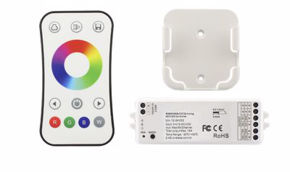
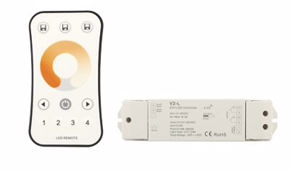
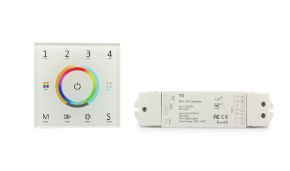
V series (voltage): constant voltage receivers
Modularity of the V Series
Model Channels Type of light managed Typical application Max current V1 1 Monochrome (DIM) Functional lighting, uniform false ceilings 5A – 20A (varies by model) V2 2 Dynamic White (CCT) Living rooms, bedrooms, offices, kitchens 5A – 15A per channel V3 3 RGB Lounge environments, decorative, bars, restaurants 5A – 10A per channel V4 4 RGBW Home cinema, gaming rooms, commercial spaces 5A – 10A per channel V5 5 RGB + CCT Premium installations, showrooms, spas 5A – 8A per channel
High performance: currents and management of long loads
Selectable PWM frequency
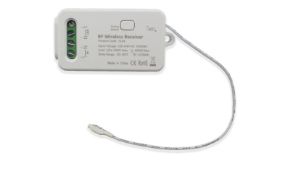
Multi-controller synchronization
Smart Series (WT, WZ, WB, WM)
WT Series – WiFi 2.4GHz: the Plug&Play solution
WZ Series – Zigbee 3.0: reliability and Mesh for complex installations
WB Series – Bluetooth Mesh: local speed and cloud independence
WM / Matter Series: the future of interoperability
Skydance Smart Series Protocol Gateway required Works offline? Max devices per network Compatibility WT (WiFi) WiFi 2.4GHz No No Depends on router Tuya, Alexa, Google, SmartThings WZ (Zigbee) Zigbee 3.0 Yes (WG-Z) Yes (local) 65,000+ Tuya, Alexa, Google, Philips Hue WB (Bluetooth) Bluetooth Mesh Optional (WG-B) Yes (total) 32,767 Tuya (with gateway), dedicated app WM/WT1-M (Matter) Matter (WiFi/Thread) No (border router) Yes (Thread local) 250+ Apple Home, Alexa, Google, SmartThings
S and SS Series (Switch & Triac): AC dimming and 230V smart switches
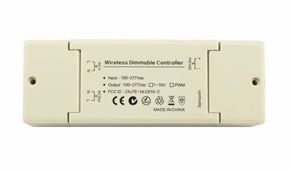
AC Triac dimmers S1-B and S1-L
S1-A amplifiers
SS Series – Smart switch: relays for on/off automation
D Series (DMX512 & RDM): professional controllers for large installations
Multi-channel DMX decoders
RDM protocol – Remote device management
DA Series (DALI / DALI-2): the standard for technical and commercial lighting
Certified DALI-2 controllers
DA-M converters: bridge between smart world and professional home automation
Touch masters: wall panels for local control
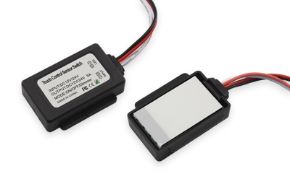
ES/EH Series (Sensors): stair automation and motion detection
ES32 and ES24: sequential stair lighting
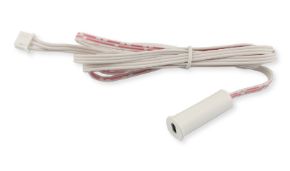
EH-R and EH-M: high-sensitivity microwave sensors
SPI Series: digital pixel control for spectacular dynamic effects
Universal compatibility with main pixel chips
Preset effects and musical synchronization
Series Protocol/Technology Main application Smart compatibility Installation level V (V1-V5) RF / Analog 12-48VDC LED strips, all types Via WT converter Consumer / Pro WT (WiFi) WiFi 2.4GHz / Tuya Residential smart home Alexa, Google, SmartThings Consumer / DIY WZ (Zigbee) Zigbee 3.0 Complex mesh installations Alexa, Google, Hue Semi-pro WB (Bluetooth) Bluetooth Mesh Local control, high speed Tuya (with gateway) Consumer / Pro WM / Matter Matter (WiFi/Thread) Cross-platform interoperability Apple, Alexa, Google, SmartThings Consumer / Future-proof S / SS (Triac) Triac / 230V Relay Dimmers and switches for AC loads Tuya (smart models) Consumer / Pro D (DMX512) DMX512 / RDM Entertainment, theaters, installations Via DMX-IP bridge Professional DA (DALI-2) DALI / DALI-2 Offices, commercial, technical Tuya (via DA-M bridge) Professional ES / EH (Sensors) PIR / Microwave / Laser Stairs, corridors, presence detection Integrated RF Consumer / Pro SPI (Pixel) SPI (WS2812, SK6812, etc.) Pixel effects, luminous art Tuya (WT-SPI) Consumer / Creative The smart home in 2026 is an accessible and convenient reality