






Ship of the future: trends 2025–2026
Ships and Lights: today, the industry is sailing towards a radically transformed future, where lighting ceases to be a simple service to become a true centralized digital system of a vessel. Between 2025 and 2026, the convergence of stringent environmental regulations, the demand for hyper-personalized onboard experiences, and technological evolution will push LED lighting to the top of the design priorities for shipyards, owners, and designers.
This article, born from the direct experience of Ledpoint.it in the marine sector and observations from trade shows, explores in depth how LED lighting is redefining onboard aesthetics, efficiency, and safety, driving the transition towards a smarter, more sustainable, and more sensory ship. From COB technology strips that draw perfect lines of light in luxury interiors, to robust modules for cruise ship safety, and IoT solutions that interact with the onboard ecosystem: here is the map to navigate the next revolution in marine lighting.
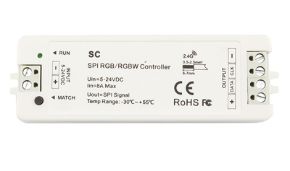
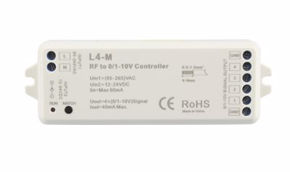
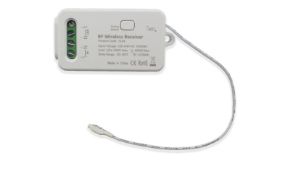
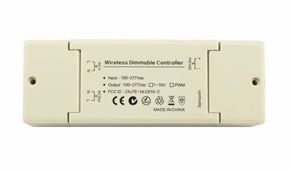
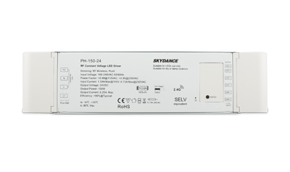
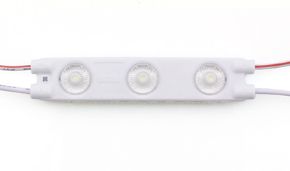
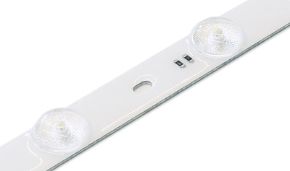
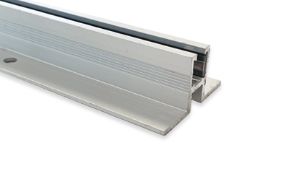
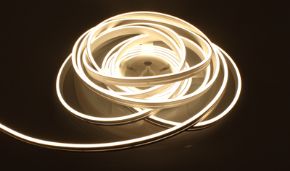
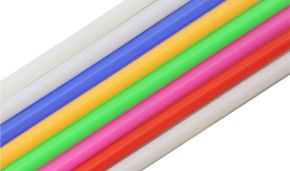
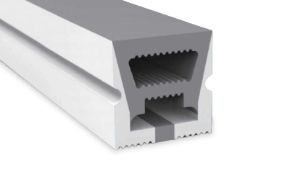
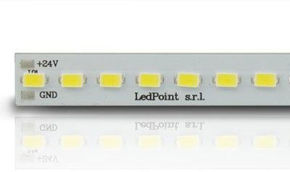
The global marine LED lighting market is in a phase of vigorous growth, driven by two main forces: the mandated energy transition and the evolution of end-user expectations. According to industry analysis, the marine lighting market is set to reach $2.5 billion by 2030, with a significant CAGR in the 2025-2026 period. This trend is not spontaneous but fueled by increasingly pressing international regulations and market demands in shipbuilding and outfitting. The International Maritime Organization (IMO) has set ambitious targets for reducing greenhouse gas emissions from maritime transport, aiming for a 40% cut in carbon intensity by 2030 and total decarbonization within this century. In this context, a ship's onboard systems are under scrutiny, and lighting, traditionally energy-intensive with halogen or fluorescent technologies, represents an immediate opportunity for savings. Replacing a traditional system with high-efficiency LEDs can reduce energy consumption for lighting by up to 80%, a tangible contribution to the ship's Energy Efficiency Existing Ship Index (EEXI) and Carbon Intensity Indicator (CII) goals. Beyond the regulatory push, the market is shaped by profound socio-economic trends. In the superyacht and recreational boating segment, there is a clear demand for "quiet luxury" and experiential design in ship design. Owners are not simply buying a means of transport, but an exclusive space for living, working, and entertainment. Ship lighting, in this scenario, is called upon to do much more than illuminate: it must create atmosphere, ensure well-being, tell the yacht's brand story, and seamlessly integrate with premium architecture and materials. Simultaneously, in the commercial and cruise ship segment, the focus is on durability, operational safety, and reducing maintenance costs. LEDs, with their long service life (which can exceed 30,000 hours) and resistance to vibration and shock, drastically reduce downtime and replacement costs, especially in hard-to-access areas. The ship of the future must therefore be designed with a holistic approach, where the lighting system is conceived from the outset as a strategic element for achieving sustainability, comfort, and operational efficiency objectives. The journey of marine lighting has moved from incandescent and halogen lamps, warm but inefficient and fragile, to fluorescent tubes, more efficient but prone to degradation from vibrations and containing mercury. Today, LED technology represents the undisputed standard, but it too is rapidly evolving. The first generation of ship LEDs focused on the direct replacement ("retrofit") of traditional light sources, replicating their shapes and fittings. The current generation, which will dominate 2025-2026, is instead natively digital and integrated. We no longer talk about individual light points, but about a connected and intelligent lighting system, where every strip, module, or spotlight is a node in a network that can be controlled, monitored, and automated. One of the most significant applications of this evolution is human centric lighting (HCL) or circadian lighting. Scientific research has extensively demonstrated how the spectrum and intensity of light influence the human circadian rhythm, melatonin production, mood, and concentration. On a ship, where natural horizons can be absent for days and work schedules are often irregular (especially for the crew), recreating the natural light cycle becomes a powerful tool for well-being. An advanced HCL system uses Tunable White LEDs (with color temperature adjustable from 1800K to 6500K) which, guided by an astronomical clock, simulate the evolution of sunlight throughout the day. In the morning, in cabins and crew areas, the light will be cool and bright (5000-6500K) to promote awakening and alertness. In the evening, in lounges and suites, the light will gradually warm (2700-3000K), preparing the body for rest. This capacity for biological adaptation is no longer a luxury option, but an increasingly requested feature to improve the quality of life onboard and crew performance. The interiors of top-tier vessels are embracing an aesthetic that blends technological minimalism, natural materials, and warm tactile textures. Neutral color palettes (beige, soft grays, sage green) dominate, paired with solid woods, satin metals, and natural stone. In this rarefied context, lighting plays a paradoxical role: it must be extremely powerful in its functions but as invisible as possible in its physical presence. By disappearing, light becomes the element that shapes and defines the space, creating volumes, emphasizing textures, and guiding the emotional experience. The trend towards "invisibility" translates into sophisticated technical solutions. Next-generation LED strips, extremely thin (often only a few millimeters wide) and with a very high diode density, are installed in extruded aluminum profiles that are then concealed by discreet wood battens, recessed in skirting boards, or behind suspended panels. This creates a wash light or grazing light effect, where the wall or ceiling seems to emit light uniformly and without an identifiable source. In luxury bathrooms, thin lines of light can outline the perimeter of infinity mirrors or illuminate shower stalls from imperceptible gaps, transforming the environment into a spa suspended on the sea. COB (Chip-on-Board) LED technology is particularly suited for this purpose: thanks to the high chip density (500-1000 per meter), it completely eliminates the "dotted" or "beaded" effect of traditional SMD LED strips, creating a continuous and perfectly homogeneous line of light, essential for the highest aesthetic standards. Where the design becomes curvilinear and sculptural, LED Neon Flex comes into play. This product revolutionizes the concept of traditional neon: it is flexible, safe (low voltage), shock-resistant, and consumes a fraction of the energy. On ships, Neon Flex becomes the ideal tool for creating custom illuminated logos, dynamic architectural lines that follow the curved walls of interiors, or decorative ceiling elements reminiscent of constellations. It can be shaped into any form, allowing designers to use light as a true luminous "stroke" in the environment. Its uniform diffusion and availability in millions of colors (including calibrated whites) make it perfect for creating dramatic focal points in social areas or for providing high-impact accent lighting in cruise ship atriums. LED strips are the real "workhorses" of modern marine lighting, thanks to their versatility, compactness, and ease of installation. However, not all LED strips are suitable for the marine environment, which is one of the harshest for any electronic component. High humidity, corrosive salt, thermal excursions, vibrations, and UV exposure require extremely high construction specifications. To ensure reliability and longevity, a marine-grade LED strip must have precise characteristics: The applications are endless, but here are some concrete examples divided by area: Similarly, for a garden or the terrace of a seaside villa, the same principles apply: IP67/68 LED strips can be installed along pathways (in dedicated profiles), under steps, to border flower beds, or to create suggestive accent lighting on trees or furniture, transforming the outdoor space into an extension of the onboard experience. If strips are the luminous skin of the ship, LED modules (or light engines) are its joints and load-bearing structures. These are discrete LED components, often circular, square, or linear in shape, designed to be integrated directly into furnishings or architectural structures. Their installation requires more careful planning than strips but offers superlative integration and finishing results. One of the most critical and regulated aspects of marine lighting is safety. The SOLAS Convention (Safety Of Life At Sea) and IMO regulations prescribe very precise requirements for emergency lighting, escape route signaling lights, and signage panels. LED modules offer the ideal solution: they can be housed in marine-certified fixtures (with CE, UL Marine, RINA, DNV, Lloyd's Register markings) that guarantee the required autonomy, brightness, and duration. An LED module for emergency lighting on a ship must maintain sufficient illumination for a minimum of 3 hours after a power failure, a performance that traditional technologies struggle to guarantee with the same efficiency and reliability as LEDs. In luxury design, LED modules find use in "custom" applications. Ultra-low-profile modules (a few millimeters thick) can be recessed into glass or wooden table tops, creating a light-from-within-the-material effect. They can be integrated into bookshelf shelves to illuminate displayed objects, or inside galley cabinets, providing perfect task lighting on work surfaces without any visible bulk. This approach, combined with motion sensors, also maximizes energy efficiency: light turns on only when and where needed, further contributing to the sustainability goals of the ship of the future. The pinnacle of marine lighting evolution is its full integration into the ship's digital ecosystem. A smart lighting system is not simply a set of lights controllable via an app, but a network of intelligent nodes that communicate with each other and with other onboard systems, reacting autonomously and proactively to environmental conditions and occupants' needs. The choice of communication protocol is strategic and depends on the scale and complexity of the installation: True intelligence manifests in automation. Presence sensors can turn lights on only when someone enters a service room, turning them off automatically after exit. Ambient light sensors adjust light intensity in interior spaces based on natural light filtering through portholes, maximizing energy savings. On exterior decks, spotlights can adjust their intensity based on moonlight or foggy conditions. A central system can create pre-set scenarios at a touch: "All Hands Meeting" fully illuminates the conference room; "Cinema" turns off ambient lights and activates low courtesy lighting; "Good Night" progressively turns off all public lights, activating only safety lights. This capacity for contextual and personalized response is the heart of the smart ship. Sustainability in marine lighting goes far beyond energy savings in the use phase. It is a concept that embraces the entire product life cycle, from design to disposal, and has become a powerful driver of choice for owners and shipyards attentive to their environmental footprint and reputation. Leading manufacturers are adopting circular economy principles. This means designing modular and repairable products, using recycled materials (e.g., recycled aluminum for heat sinks) or recyclable ones, and eliminating hazardous substances (complying with RoHS and REACH). LCA (Life Cycle Assessment) analysis is increasingly requested to quantify the total environmental impact of a product. The long lifespan of LEDs (up to 30,000-100,000 hours) is in itself a huge environmental advantage, drastically reducing replacement frequency, waste production (WEEE), and material consumption. A complete retrofit on a cruise ship or commercial fleet can lead to maintenance savings on the order of tens of thousands of euros per year, in addition to the aforementioned energy savings. For designers, shipyards, and owners, here is a concise checklist to use when evaluating LED lighting solutions: Ledpoint.it positions itself as a technological partner of reference for the marine sector, not as a simple component supplier. Participation in sector trade shows like Metstrade provides a privileged observatory on trends and a direct channel with the protagonists of the design and shipbuilding world. Our offer for the ship of the future is articulated on three pillars: The trends of 2025-2026 depict a future where lighting on a ship will be completely indistinguishable from architecture, deeply connected with human well-being and operational systems, and radically efficient. LED technology, in its most advanced forms like COB and Neon Flex, is the raw material of this transformation. The coming years will see the establishment of even more disruptive technologies, such as MicroLEDs for unprecedented control granularity, and the use of organic and bio-based materials. Lighting will increasingly become a human-machine interface, capable of communicating information about the ship's status or visually guiding people in an emergency. To successfully navigate this future, collaboration between designers, shipyards, and technology suppliers will not be an option, but a necessity. Ship: global industry overview
Market drivers: beyond regulations
Ship and lighting: from functional to experiential
Human Centric Lighting (HCL) onboard: well-being becomes the priority
Trends 2025–2026 in marine interior design
Invisible and architectural lighting
Neon flex: the fluid elegance of curves
LED strips: advanced applications for ships
Essential technical specifications
Practical application fields on a ship
Ship area Strip LED application Recommended product/Specifications Benefit Cabins and Suites Indirect crown lighting around the bed, night light in wardrobes, perimeter ceiling lighting. COB Tunable White LED Strip 24V IP20 (for interiors) or IP65, dimmable, CRI >90. Creates atmosphere, saves space, maximizes visual comfort. Bathrooms Mirror lighting, atmospheric light in the shower, night-time floor lighting. White LED Strip 24V IP67/68, with opal diffuser for soft light. Safety, functionality, elegant design, and water resistance. Stairs and Walkways Step lighting, luminous handrails, pathway marking. Single-color or RGBW LED Strip 24V IP67, installed in profiles with anti-slip diffuser. Fundamental safety, visual guidance, modern design. Exterior Deck and Bar Areas Lighting under seats, under table edges (toe-kick), in railings. RGBW LED Strip 24V IP68, with weatherproof controller. Creation of mood for entertainment, captivating design, nighttime safety. Ships and LED modules: functionality, safety, and integration
Compliant emergency and safety lighting
Invisible integration in furnishings
Smart technology and IoT: connected and predictive lighting on ships
Control protocols and system integration
Automation and smart scenarios
Sustainability and circular economy also on ships...
Life cycle and green materials
Practical guide: checklist for choosing LED solutions
Towards 2030: the Ledpoint ship