











LED sensor: efficient lighting
In the landscape of modern lighting, the integration of sensors represents a technological revolution that transforms simple lighting systems into advanced, efficient, and fully automated systems. This comprehensive guide explores in detail every aspect of sensors compatible with LED strips and LED lighting systems, offering a complete overview of available technologies, operating principles, integration methods, and best practices for installation. The goal is to provide a complete technical resource for professionals, installers, and enthusiasts who wish to optimize their lighting systems through sensory automation.
The evolution of lighting sensors has kept pace with the development of LED technology, creating synergies that allow for levels of energy efficiency, comfort, and safety previously unimaginable. A correctly integrated sensor not only reduces energy consumption but extends the life of LEDs, improves user experience, and increases the safety of environments. In this context, understanding the differences between a standard motion sensor and an occupancy sensor, or between a basic dusk-to-dawn sensor and an adjustable one, becomes fundamental to designing systems that respond exactly to specific needs.
Through this exhaustive guide, we will examine every category of sensor available on the market, analyze communication protocols, provide detailed technical instructions for installation, and present real-world use cases. The discussion ranges from the basic concepts of sensor electronics to advanced configurations for integrated home automation systems, with particular attention to the solutions proposed by Ledpoint for the perfect integration between LED strips and sensory systems.
Sensor: main characteristics
Sensors for lighting operate by converting environmental physical phenomena into usable electrical signals for control systems. This section delves into the principles governing the operation of different types of sensors, with particular reference to applications for LED systems.
Energy transduction in sensors
The fundamental concept behind any sensor is energy transduction: the conversion of one form of energy (light, heat, motion) into another (electrical signals). In light sensors and brightness sensors, the exploited phenomenon is the photoelectric effect, where incident photons on semiconductor materials generate electron-hole pairs, producing a measurable current proportional to light intensity. In infrared sensors and PIR sensors (Passive Infrared), instead, they measure the infrared radiation emitted by warm bodies, with typical sensitivity in the 8-14 micrometer band, corresponding to the thermal radiation of the human body.
Temperature sensors generally operate on thermoresistive or thermoelectric principles. NTC (Negative Temperature Coefficient) thermistors show an electrical resistance that decreases as temperature increases, while thermocouples generate a voltage proportional to the temperature difference between two junctions of different metals. For humidity sensors, the most common technologies are capacitive, where a hygroscopic dielectric material varies its dielectric constant based on absorbed moisture, thus modifying the capacitance of the capacitor it is part of.
Electronic architecture of modern sensors
A modern sensor for lighting is never a simple transducer but a complex system integrating multiple electronic components. The typical architecture includes: the primary transducer that converts the physical phenomenon into a weak electrical signal, a signal conditioning stage with operational amplifiers and low-pass filters to reduce noise and linearization circuits, an analog-to-digital converter (ADC) to transform the analog signal into processable digital data, and finally a microcontroller that implements processing algorithms, activation logic, and communication protocols.
In Wi-Fi sensors and more advanced devices, the architecture is enriched with wireless communication modules, network protocol stacks, and in some cases edge computing capabilities that allow processing directly on the device. The current trend is towards increasingly integrated sensors that combine multiple functionalities: a modern dusk-to-dawn motion sensor can simultaneously integrate PIR detection, a photoresistor for ambient brightness measurement, and in some cases also a thermometer and hygrometer, thus becoming a multifunctional sensory node.
Technical parameters of a sensor
Choosing the appropriate sensor for a specific application requires a deep understanding of the technical parameters that define its performance. These parameters constitute the common language through which professionals and installers evaluate a device's suitability for a given application context.
Sensitivity and operating range
The sensitivity of a sensor defines the minimum variation of the measured parameter able to generate a significant variation in the output signal. For a motion sensor, sensitivity can be expressed in terms of minimum detectable movement speed or minimum variation of infrared radiation. For a brightness sensor, it is measured in minimum detectable lux, with typical values ranging from 0.1 lux for professional applications to 1-5 lux for consumer devices. The operating range defines the minimum and maximum values the sensor can measure without saturating or losing linearity: for a temperature sensor destined for outdoor applications, the range should cover at least from -20°C to +60°C, while for indoor environments, a narrower range may be sufficient.
Response times and duty cycles
Response time is the delay between the variation of the measured phenomenon and the corresponding variation in the sensor's output signal. In motion sensors for alarms, fast response times (on the order of 100-500 ms) are critical to ensure safety. In occupancy sensors for lighting control, however, slightly longer times (1-2 seconds) may be acceptable. The duty cycle is particularly important for battery-powered sensors, like some Wi-Fi sensors or door sensors: it defines the percentage of time the device is active relative to total time, directly influencing autonomy.
Immunity to false positives and specificity
Immunity to false positives is a crucial characteristic for any sensor intended for real-world applications. An outdoor motion sensor must discriminate between the movement of an intruder and that of a branch moved by the wind or a small animal. Techniques to improve this specificity include using dual technology (PIR combined with microwave radar), pattern recognition algorithms that analyze the thermal signature of movement, and temporal logic that ignores activations that are too brief or too frequent. Similarly, an outdoor dusk-to-dawn sensor must distinguish between the gradual variation of brightness between day and night and sudden brightness drops caused by passing clouds or temporary shadows.
Motion sensor: technology and applications
Motion sensors represent the most widespread and versatile category for lighting automation. There are different detection technologies, each with specific characteristics, advantages, and limits that determine their suitability for different application contexts.
PIR sensors (passive infrared)
PIR sensors are the most common technology for motion detection in lighting and security applications. The operating principle is based on detecting variations in infrared radiation in the surrounding environment. Every object with a temperature above absolute zero emits infrared radiation, and the human body emits predominantly in the 8-14 micrometer band. A typical PIR sensor incorporates one or more pyroelectric materials, which generate an electrical voltage when absorbing infrared radiation, covered by a Fresnel lens window made of plastic material that focuses the radiation and divides the field of view into discrete zones.
The activation logic of a PIR sensor is based on detecting variations in the infrared radiation pattern between adjacent zones. When a person moves through the sensor's field, their warm body sequentially crosses different zones, generating an alternating signal that the electronic circuit interprets as movement. Key parameters of a PIR sensor include: detection angle (typically 90°-180° for domestic applications, up to 360° for dome sensors), maximum range (from 5-6 meters for indoors up to 20-30 meters for outdoors), and delay time after activation (adjustable between 5 seconds and 30 minutes in most models).
The main advantages of PIR sensors include low energy consumption, reliability in detecting people, and contained cost. The main limitations are the relative ease of evasion by intruders moving very slowly (since the sensor detects variations, not absolute presence), possible activation by non-human heat sources (like active radiators or direct sunlight on dark objects), and reduced effectiveness in environments with very high temperatures where thermal contrast decreases.
Microwave radar (MW)
Sensors with microwave radar operate on the principle of the Doppler effect: they emit electromagnetic waves in the microwave band (typically 5.8 GHz or 10.525 GHz) and analyze the frequency of the reflected wave. When the wave encounters a moving object, the frequency of the reflected wave varies in proportion to the object's speed (Doppler effect). This frequency variation is detected and interpreted as movement.
Compared to PIR sensors, microwave radars offer several advantages: they can detect movement through non-metallic materials (wood, glass, plastic, thin walls), are insensitive to ambient temperature variations, and can detect even very slow movements. However, they also present significant disadvantages: they generally consume more energy, are more expensive, and can be subject to interference with other devices operating in the same frequency band. Furthermore, the ability to penetrate materials can become a disadvantage in residential applications, where the sensor might detect movement in adjacent rooms not intended for monitoring.
Dual-Tec technology (PIR + MW)
Dual-tec motion sensors combine PIR and microwave radar technologies in a single device, leveraging the advantages of both while mitigating their limits. The activation logic in a dual-tec sensor generally requires that both technologies detect movement simultaneously (AND logic), drastically reducing false positives. Alternatively, some models use sequential logic, where the microwave radar acts as a "wake-up" for the PIR when it detects potential movement, reducing overall energy consumption.
Dual-tec sensors are particularly indicated for high-security applications such as alarm motion sensors, for environments subject to variable conditions that could confuse single sensors, and for professional applications where reducing false alarms is a priority. The higher cost compared to single sensors is generally justified by significantly greater reliability, especially in critical environments.
Ultrasonic sensors
Ultrasonic sensors operate on a principle similar to microwave radar but use ultrasonic sound waves (typically 25-40 kHz, above the human hearing threshold). They emit ultrasonic pulses and analyze the received echo. The presence of moving objects modifies the echo pattern through the Doppler effect or variations in the return time.
This technology is particularly effective for detecting very slow or minimal movements and can detect presence without actual movement in some contexts. However, ultrasonic sensors are sensitive to air currents and the movement of curtains or other light objects, can be influenced by external ultrasonic sources (like some industrial equipment), and generally have limited range. For these reasons, they find application mainly in specific contexts like door automation, parking lots, or in combination with other technologies.
Motion sensors for specific applications
There are some motion sensors designed for specific applications, let's see which ones.
Outdoor motion sensor
The outdoor motion sensor has specific characteristics differentiated from indoor models. First, they must be built with materials and protections that withstand weather conditions: a protection rating of at least IP65 is essential, while for marine or particularly aggressive environments IP67 or IP68 may be necessary. The housing must resist thermal excursions, humidity, UV rays, and in some regions also salt spray.
The detection performance of an outdoor motion sensor must be optimized for a complex and variable environment. The range is generally greater than indoor models (typically 12-30 meters), but must be compensated by intelligent algorithms that distinguish between human movement and that of small and medium-sized animals. Many modern outdoor motion sensors offer separate sensitivity adjustments for different zones of the field of view, allowing to "mask" areas prone to false positives like trees moved by wind or adjacent public roads.
Installing an outdoor motion sensor requires additional considerations: positioning at an optimal height (typically 2.5-3 meters to maximize range and angular coverage), orientation relative to expected movement paths, avoidance of heat or cold sources that could interfere with PIR sensors (like air conditioners, vents, or reflective surfaces), and consideration of possible accumulation of snow, leaves, or spider webs that could obstruct the sensor.
Motion sensors with integrated alarm
Motion sensors with alarm combine detection functionality with the ability to generate acoustic, optical, or remote notification signals in case of intrusion. These devices are specifically designed for security and anti-theft applications and present differentiated characteristics compared to simple lighting sensors.
A high-quality motion sensor for alarm must guarantee high immunity to false alarms, as these undermine system reliability and generate costs and inconvenience. Techniques to reduce false alarms include: movement pattern analysis algorithms that distinguish between human and non-human movements, confirmation logic requiring multiple or sequential activations before generating an alarm, and integration with other sensors (like magnetic contacts for doors and windows) in a complex alarm logic. Motion sensors with integrated cameras represent the evolution of this category, combining detection with visual documentation capabilities of the event.
Communication in a modern alarm system can occur through different protocols: traditional wired systems, radio frequency (with proprietary protocols or standards like Z-Wave, Zigbee), Wi-Fi sensors that connect directly to the home network, or cellular systems for applications without fixed internet access. The choice depends on factors such as required reliability, range, communication security, and integration with other home automation systems.
Wi-Fi motion sensor for home automation integration
Wi-Fi motion sensors represent the frontier of integration between lighting automation and home automation. Unlike traditional sensors that only communicate with the devices they are directly connected to, Wi-Fi sensors connect to the home or business network, becoming intelligent nodes in a broader ecosystem.
The distinctive characteristics of a high-quality Wi-Fi sensor include: low energy consumption (with autonomy ranging from months to years depending on transmission frequency), support for efficient communication protocols like MQTT that minimize network overhead, integration with popular home automation platforms (Home Assistant, Domoticz, openHAB), and the possibility to create complex automations involving multiple peripherals. For example, a single Wi-Fi motion sensor placed in a hallway can activate not only the hallway lights but also pre-illuminate the room the person is heading towards, adjust the thermostat, and deactivate the alarm in case of authorized movement.
Configuring a Wi-Fi sensor generally requires using a dedicated mobile app or integration directly through the home automation platform. Typically configurable parameters include: sensitivity, delay time after activation, nighttime inactivity period, brightness threshold for activation (if integrated photoresistor), and notification logic. Communication security is a critical aspect: high-end sensors implement end-to-end encryption, two-factor authentication, and regular firmware updates to mitigate vulnerabilities.
Dusk-to-Dawn and brightness sensor
Light sensors, also known as dusk-to-dawn sensors or brightness sensors, represent a fundamental category for efficient lighting automation. Their task is to measure ambient light intensity and activate or adjust artificial lights when it falls below a predefined threshold.
Photoresistors (LDR - Light Dependent Resistor)
Photoresistors, or LDRs, are the most common type of brightness sensor for automated lighting applications. The operating principle is based on the photoconductivity of some semiconductor materials (typically cadmium sulfide, CdS, or cadmium selenide, CdSe) whose electrical resistance decreases as incident light intensity increases. This resistance variation can be measured through a simple voltage divider and converted into a control signal.
The main characteristics of a photoresistor include: dark resistance (which can vary from hundreds of kΩ to several MΩ), resistance under illumination (typically from a few hundred Ω to a few kΩ depending on the model and light intensity), response time (generally on the order of tens or hundreds of milliseconds to rise and slower to fall), and the spectral sensitivity curve (CdS LDRs have peak sensitivity around 550 nm, corresponding to green, while CdSe ones extend more into red and infrared).
The advantages of photoresistors include extremely low cost, simple circuit integration, and a wide dynamic range that can cover several orders of magnitude of illumination. The main disadvantages are the non-linearity of the response (resistance approximately logarithmic relative to illumination), relatively slow response compared to other sensor types, and possible degradation over time especially if exposed to high light intensities.
Photodiodes and phototransistors
Photodiodes and phototransistors offer a more precise and faster alternative to photoresistors for applications requiring greater accuracy or response speed. Photodiodes operate in the photovoltaic or photoconductive generation regime: when a photon with sufficient energy hits the p-n junction, it generates an electron-hole pair that can be measured as current (photoconductive mode) or voltage (photovoltaic mode).
Phototransistors combine the properties of a photodiode with the amplification of a bipolar transistor: the current generated by light is amplified by the transistor's gain, producing much greater sensitivity. Phototransistors are available in both NPN and PNP configurations, with or without an exposed base connection that allows additional sensitivity control.
Compared to photoresistors, photodiodes and phototransistors offer much faster response times (up to nanoseconds for fast photodiodes), greater linearity, and long-term stability. However, they require more complex circuitry (stabilized power supply, operational amplifiers for signal conditioning), generally have a more limited dynamic range, and cost significantly more. For these reasons, in lighting automation they find application mainly in high-end devices or in particular contexts where speed and precision are critical.
Integrated (IC) brightness sensors
Modern brightness sensors in integrated circuit (IC) format represent the most advanced solution, combining the photoelectric sensor with conditioning electronics, A/D conversion, and digital interface in a single package. These devices offer performance and functionalities well beyond those of simple discrete components.
The typical characteristics of an integrated brightness sensor include: digital interface (I2C, SPI, or UART) that simplifies integration with microcontrollers, extended measurement range (often from 0.01 lux to several tens of thousands of lux), spectral response approximating the human eye's sensitivity curve (photopic) thanks to specific filters, capability for separate measurement of different wavelengths (RGB, infrared) in some advanced models, and integrated functionalities like programmable interrupts that activate the microcontroller only when illumination exceeds certain thresholds, reducing overall energy consumption.
Examples of popular ICs for brightness measurement include sensors from the TSL256x and TSL2591 series by AMS, the BH1750 by ROHM, and the APDS-9301 by Broadcom. These devices, although more expensive than simple LDRs, are becoming increasingly common in medium-to-high-end lighting automation applications thanks to their precision, stability, and ease of integration into digital systems.
Dusk-to-Dawn sensor: applications and configurations
The outdoor dusk-to-dawn sensor is specifically designed to withstand weather conditions and provide reliable control of outdoor lighting. In addition to weather resistance characteristics similar to those of outdoor motion sensors (at least IP65 rating, UV resistance, wide temperature range), they present particularities related to their light measurement function.
A quality outdoor light sensor must minimize the influence of direct light from the sources it controls: if the sensor is illuminated by the same light it commands, a positive feedback loop is created leading to instability (the light turns on, illuminates the sensor, which turns it off, then it turns on again, etc.). Techniques to mitigate this problem include: positioning the sensor away from the controlled sources and oriented towards the sky rather than the ground, using deflectors or shades, and algorithms that introduce hysteresis or delay times to avoid rapid cycling.
Calibrating the threshold of an outdoor dusk-to-dawn sensor is a critical operation that depends on the specific application. For security lighting, the threshold is typically set to a relatively high value (10-20 lux) so that lights turn on when it begins to get dark but not completely dark. For decorative or ambient lighting, the threshold can be set lower (2-5 lux) for a more suggestive effect. Some advanced models offer dual thresholds with hysteresis to avoid frequent on/off cycles in borderline brightness conditions.
Combined dusk-to-dawn and motion sensors
Combined dusk-to-dawn and motion sensors represent a particularly efficient solution that maximizes energy savings while maintaining comfort and safety. These devices integrate both a motion detector (typically PIR) and a brightness sensor in a single housing, with control logic that can be configured in different ways.
The most common logic in dusk-to-dawn motion sensors is: "turn on lights only if it's dark and there's movement". This AND logic ensures lights don't turn on during the day even if they detect movement, saving energy. Some models offer more sophisticated logic like: during the day, completely ignore movement; during twilight, turn on lights upon motion detection but with reduced intensity; during full night, turn on at full intensity and keep on for a longer time after the last detected movement.
High-end dusk-to-dawn and motion sensors offer separate adjustments for different time bands, the possibility to set different brightness thresholds for different hours of the day or night, and in some cases integration with astronomical algorithms that calculate sunset and sunrise times based on geographic location, automatically adapting to seasonal variations in day length.
Threshold adjustment and advanced calibration
Adjusting the threshold of a dusk-to-dawn sensor is a critical parameter that significantly influences system performance. Adjustment methods range from simple mechanical potentiometers to fully programmable digital systems.
In sensors with mechanical adjustment, a potentiometer allows varying the threshold typically between 2 and 2000 lux. Calibration is generally performed at dusk, adjusting until the lights turn on at the desired moment. The limits of this approach include thermal drift of the electronic component, mechanical wear of the potentiometer, and the impossibility of differentiated adjustments for different hours of the day.
Digital sensors offer much more advanced possibilities: threshold adjustment with 0.1 lux precision, the ability to set timed response curves (e.g., higher threshold in the early evening to turn lights on earlier, lower in the middle of the night to maintain minimal safety lighting), auto-calibration that measures the natural brightness pattern for a few days and automatically adapts thresholds, and automatic compensation of sensor aging through auto-correction algorithms.
Occupancy and proximity sensor
Occupancy sensors represent an evolution of simple motion sensors, with the ability to detect not only movement but static presence of people or objects. This distinction is crucial for applications where lighting must remain on even when people are stationary (e.g., in offices, meeting rooms, public restrooms).
Microwave sensor for presence detection
Microwave sensors can be configured to detect not only movement but static presence through the analysis of imperceptible micro-movements like breathing or small postural adjustments. The technology is based on the principle of Continuous Wave (CW) radar with phase analysis: instead of detecting only the Doppler shift caused by rapid movement, they analyze the minimal phase variations of the reflected signal caused by micro-movements.
High-quality microwave occupancy sensors can discriminate between human micro-movements and those of inanimate objects (like curtains moved by drafts) through pattern recognition algorithms that analyze the frequency and amplitude of variations. The typical frequency of human breathing at rest (12-20 breaths per minute, corresponding to 0.2-0.33 Hz) and the characteristic pattern of unconscious postural movements provide an identifiable signature.
The advantages of this technology include the ability to detect presence through light walls and furniture (useful for ceiling installations that need to detect presence in adjacent rooms separated by partitions), insensitivity to ambient thermal conditions, and high reliability in distinguishing human presence from other sources of micro-movements. The main disadvantages are higher cost compared to PIR sensors, generally higher energy consumption, and possible interference with other sensitive electronic devices.
Ultrasonic sensor for presence detection
Ultrasonic sensors can also be used for presence detection, albeit with slightly different mechanisms compared to movement detection. In presence mode, the sensor continuously emits (or at very close intervals) ultrasonic pulses and analyzes not only the Doppler effect but also subtler variations in the environment's reverberation pattern.
The presence of a person in a room modifies the room's acoustics: the human body absorbs and reflects sound waves in a characteristic way, modifying the overall echo pattern. Advanced sensors analyze these variations to infer presence even without detectable movement. Some models use room acoustic field analysis techniques, mapping reflections from fixed objects and detecting changes when additional objects (people) are introduced.
Ultrasonic occupancy sensors are particularly effective in enclosed environments with regular geometries, where the reverberation pattern is more predictable and variations are more easily distinguishable from background noise. They find application mainly in open-plan offices, classrooms, and other commercial environments where people may remain stationary for prolonged periods. Limitations include sensitivity to air currents and movement of light objects, and generally limited range compared to other technologies.
Capacitive proximity sensors
Capacitive proximity sensors detect the presence of objects through variation in electrical capacitance between electrodes. When an object (especially a human body which has a high dielectric constant) approaches the electrodes, it modifies the system's capacitance, a variation that can be measured with appropriate circuits.
This technology is particularly suitable for short-range applications, such as control of desk lights, bedside lamps, or under-cabinet kitchen lighting. Capacitive proximity sensors can be configured to detect presence at distances from a few millimeters to several centimeters, with the possibility to discriminate between different materials through analysis of dielectric characteristics.
The main advantages include absence of moving mechanical parts (greater reliability), the possibility of integration into flat surfaces (the sensor can be hidden behind glass, plastic, or wood panels), and very low energy consumption in standby mode. Disadvantages include sensitivity to humidity and temperature variations that affect the air's dielectric properties, and possible interference with other nearby electric fields.
Application of occupancy sensor
The occupancy sensor can be used in many and different situations, for different purposes...
Offices and work environments
In professional contexts, the occupancy sensor offers maximum potential for energy savings and comfort. Studies have shown that in many offices, lights remain unnecessarily on for 30-50% of the time, especially in areas like meeting rooms, corridors, and temporarily abandoned individual workstations. Correctly configured occupancy sensors can reduce this waste by up to 90%.
The optimal configuration for an office generally involves a combination of occupancy sensors for individual workstations and enclosed rooms, and motion sensors for common areas and corridors. Critical parameters include: delay time after last detection (typically 5-15 minutes for offices, shorter for passage areas), sensitivity to micro-movements (must be sufficient to detect a person reading or writing at a computer but not so high as to keep lights on for plant or curtain movements), and integration with natural light regulation (automatic dimming of artificial lights in the presence of sufficient natural light).
The most advanced systems for offices integrate occupancy sensors with Building Management Systems (BMS) that collect data on space usage, optimize HVAC system operation based on actual occupancy, and provide analytics for facility management. These systems can identify usage patterns, suggest space reorganizations, and even predict future occupancy based on historical data.
Residential environments
In residential settings, occupancy sensors find application in specific contexts where comfort and safety are priorities. Bathrooms are a classic example: an occupancy sensor can keep lighting on while the room is occupied (even if the person is stationary), automatically turning it off after a configured time from the last detection. This eliminates the problem of lights left on and increases comfort, especially at night when a manual switch might be difficult to locate.
Other residential applications include: kitchens (under-cabinet lighting that automatically turns on when someone approaches the work surface), bedrooms (night lights that turn on upon detection of presence during night hours, often with reduced intensity to not disturb sleep), and stairs (lighting that anticipates a person's movement along the path). In these contexts, sensor discretion is particularly important: many users prefer completely hidden or minimally invasive sensors from an aesthetic point of view.
Integration with home automation systems allows advanced scenarios: when an occupancy sensor in the living room detects prolonged absence, it can not only turn off lights but also lower the thermostat, put multimedia equipment on standby, and activate any security devices. Upon detection of presence, it can restore previously set comfort conditions, creating a responsive and personalized environment.
Commercial and retail sector
In retail, occupancy sensors serve to optimize customer experience and maximize energy efficiency. Typical applications include: shop windows that illuminate when a potential customer approaches, aisles between shelves that illuminate progressively following the customer's path, and demonstration areas where lighting intensifies when someone stops to look at a product.
Beyond lighting control, occupancy sensors in commercial environments collect valuable data on customer behavior: dwell times in specific areas, preferred paths, points of interest. This data, analyzed appropriately, can guide merchandising decisions, store layout, and sales strategies. Privacy is a critical aspect in these applications: professional systems are designed to collect anonymous aggregate data without identifying specific individuals.
In large commercial spaces like shopping malls or airports, occupancy sensors are often integrated into zoned lighting management systems that allow maintaining a minimum safety lighting level in unoccupied areas, progressively increasing it as people approach. This "adaptive lighting" approach can reduce energy consumption by up to 70-80% compared to traditional lighting always on at full power.
Sensor integration with LED strips
Effective integration of sensors with LED strips and lighting systems requires understanding the different connection options and available communication protocols. The optimal choice depends on factors such as system complexity, distance between components, need for bidirectional communication, and integration with other home automation systems.
Traditional analog connections
Analog connections represent the simplest and most direct method to integrate sensors with LED systems. The 0-10V protocol is an established industrial standard: the sensor provides a variable voltage signal between 0 and 10V DC, where 0V typically corresponds to minimum output (lights off or at minimum) and 10V to maximum output (lights on at 100%). Many basic dusk-to-dawn sensors and motion sensors use this protocol for its simplicity and reliability.
The main advantage of 0-10V is universal compatibility: practically all dimmable LED drivers and controllers for LED strips support this protocol. The disadvantage is lack of bidirectionality (the sensor sends signals but doesn't receive information from the lighting), sensitivity to voltage drops over long cables, and limited resolution (generally equivalent to 8-10 bits, sufficient for most applications but not for ultra-fine control). Installation typically requires two wires in addition to power: one for signal and one for common.
The PWM (Pulse Width Modulation) is another common analog option: instead of varying voltage amplitude, constant voltage is maintained but the duty cycle of a square wave is varied (typically at fixed frequency between 100 Hz and 25 kHz). Many integrated LED controllers accept PWM signal directly, especially those for RGB/RGBW LED strips. Sensors that output PWM are often more energy efficient and less sensitive to electrical noise compared to 0-10V ones, but share the same limitation of non-bidirectionality.
Digital protocols for professional systems
Digital protocols offer advanced capabilities not available with analog connections, including bidirectional communication, individual device addressing, remote diagnostics, and software configuration. The DALI (Digital Addressable Lighting Interface) protocol is the international standard (IEC 62386) for professional digital lighting control.
DALI allows individually addressing up to 64 devices (LED ballasts, sensors, switches) on a single bidirectional two-wire bus, with distances up to 300 meters without repeaters. DALI sensors can not only send commands but also receive information from the lighting (status, current level, operating hours, temperature), and can be reconfigured via software without wiring changes. The protocol supports direct commands, preset scenes, and logical groups that transcend the physical arrangement of devices.
DMX512 is another widely used digital protocol especially in theatrical, architectural, and entertainment applications. Originally developed for stage lighting control, it has also been adopted for complex architectural lighting thanks to its high speed (up to 512 channels controlled at 44 Hz) and reliability. DMX sensors are less common but exist for special applications where the sensor must integrate into an existing DMX system, typically through a gateway that converts the sensor signal into DMX commands.
Wireless protocols for flexibility
Wireless protocols completely eliminate the need for control wiring between sensors and lighting, offering maximum installation and reconfiguration flexibility. Zigbee and Z-Wave are the two most widespread mesh protocols for residential and light-commercial automation. Both create self-organizing mesh networks where each device can repeat the signal for others, extending range well beyond that of a single node.
Wi-Fi sensors connect directly to the existing IP network, eliminating the need for dedicated hubs but generally consuming more energy than Zigbee/Z-Wave. Bluetooth Mesh and Thread protocols are emerging as promising alternatives, especially with growing support from large ecosystems like Apple HomeKit, Google Home, and Amazon Alexa. For industrial applications, WirelessHART and ISA100.11a offer robustness and reliability in difficult environments.
The choice of wireless protocol depends on many factors: required coverage, number of devices, acceptable latency, energy consumption (critical for battery sensors), security, and integration with existing ecosystems. Generally, for residential applications with fewer than 50 devices, Zigbee or Z-Wave offer the best compromise; for integration with specific consumer ecosystems, Wi-Fi sensors compatible with the chosen ecosystem; for large-scale commercial applications, professional protocols like EnOcean (energy harvesting) or KNX RF.
Controllers and gateways for integration
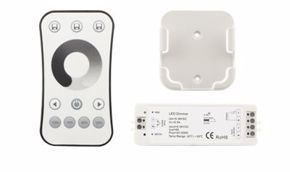
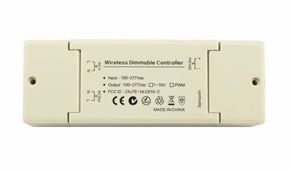
Dedicated controllers represent the simplest solution for integrating sensors with LED strips, especially in small and medium-scale installations. These devices accept input from one or more sensors and generate the appropriate output for LED strips, autonomously managing control logic without the need for complex programming.
A typical controller for LED strips with motion sensor includes: inputs for signal from the sensor (typically dry contact or 0-10V/PWM signal), output for LED strips (constant current or constant voltage depending on LED type), power for the sensor (if necessary), and controls to adjust parameters like delay time, sensitivity, and lighting level. Advanced models offer multiple inputs to combine different sensors (e.g., dusk-to-dawn + motion), multiple outputs to control separate zones, and scene functionalities that allow setting different behaviors for different hours of the day or days of the week.
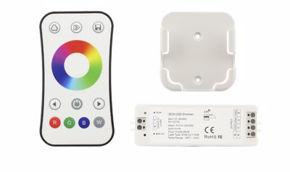
High-end controllers often integrate additional functionalities such as: smooth dimming that avoids abrupt on/off switching, thermal and overcurrent protections, memory that preserves settings in case of power interruption, and configuration interface via mobile app or web. For RGB/RGBW applications, controllers include color mixing logic that converts simple inputs (on/off, level) into complex color combinations, often with the possibility to set pre-defined color scenes activatable by sensors.
Gateways for integration into home automation systems
Gateways translate between different protocols, allowing integration of sensors and lighting into broader home automation ecosystems. A typical gateway might convert signals from Wi-Fi or Zigbee sensors into DALI commands for professional lighting, or translate proprietary protocols into open standards like MQTT for integration into home automation platforms like Home Assistant or openHAB.
Advanced gateway functionalities include: centralized management of all devices with unified interface, creation of complex automations involving multiple device types (lighting, climate control, security, multimedia), data collection and analysis on usage and energy consumption, and remote notifications via email or mobile app. Some gateways offer edge computing capabilities, executing automations locally even in case of internet connectivity loss, thus ensuring operational continuity and greater privacy compared to completely cloud-based solutions.
The choice of gateway depends mainly on the existing or planned ecosystem. For homes dominated by Apple devices, a HomeKit gateway; for integration with Alexa, a gateway supporting appropriate skills; for maximum flexibility and local control, a gateway supporting open protocols and integrating with open-source platforms. Professional gateways for building automation typically support protocols like BACnet, Modbus, or KNX alongside specific lighting protocols.
All-in-One Solutions with Integrated Sensor
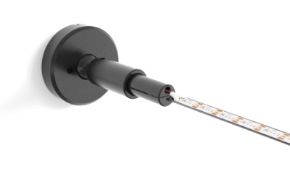
All-in-one solutions integrate the sensor directly into controllers for LED strips or even into the LED strips themselves, offering maximum installation simplicity and cleaner aesthetics. An example is the LED strip with integrated motion sensor, where the PIR sensor and controller are incorporated into the first section of the strip, requiring only power and possibly basic configuration.
These solutions are particularly suited for retrofit applications or where aesthetics are a priority, as they minimize the number of visible components. However, they also present limitations: the sensor position is fixed relative to the LEDs, which might not be optimal for detection; processing power and functionalities are generally more limited compared to solutions with separate components; and updating or replacing individual components is more difficult.
More advanced models of LED strip motion sensor integrate additional technologies like wireless connectivity (Bluetooth or Wi-Fi) for app configuration, microphone for local voice control, and even speakers for audio notifications. Some commercial solutions even integrate security cameras in combination with lighting, offering a complete solution for home security and automation.
Sensor installation, configuration and maintenance
Correct installation is fundamental to ensure optimal performance, long-term reliability, and safety of lighting systems with sensors. This chapter details procedures and technical considerations for professional installations in different application contexts.
Optimal sensor placement
Sensor placement affects their performance more than any other factor. For PIR motion sensors, the optimal installation height varies based on application: for residential interiors, 2.2-2.5 meters is generally ideal, allowing good coverage without being too visually invasive; for outdoors and security applications, 2.5-3.5 meters offers the best compromise between range and protection from tampering; for commercial ceiling applications, the ceiling height itself (typically 2.7-4 meters) determines the position.
Orientation is equally important: motion sensors should be oriented perpendicular to the main direction of expected movement, as PIR sensitivity is maximum when the target moves across detection zones rather than directly towards the sensor. For corridors and narrow passages, orientation along the corridor axis is preferable. For open areas, a 45° angle relative to the main wall often offers the best coverage.
For dusk-to-dawn sensors, placement must maximize exposure to natural light while minimizing the influence of controlled artificial light. Ideal is a north-facing exposure (in the northern hemisphere) to receive diffused light without direct sun that could cause erratic readings. The sensor should be protected from direct light from the sources it controls, possibly using shades or screens. For street or outdoor area applications, outdoor light sensors are often equipped with special lenses that limit the field of view to avoid the influence of nearby streetlights.
Environmental considerations and interferences
Environmental conditions can significantly influence sensor performance. For PIR sensors, rapid temperature variations (like turning on a nearby air conditioner or heater) can cause false positives, as they create thermal gradients that the sensor interprets as movement. Similarly, direct sunlight hitting dark objects can heat them rapidly, simulating a warm moving body.
Vibration sources (machinery, heavy nearby traffic) can influence both mechanical and microwave sensors, especially if mounted on structures that transmit vibrations. Strong electromagnetic fields (electric motors, transformers, welding equipment) can interfere with sensor electronics, causing malfunctions or false triggers. For Wi-Fi sensors and wireless devices, interference with other networks or devices in the same band can degrade communication reliability.
Mitigation strategies include: selecting locations away from heat, vibration, and interference sources; using mounting materials that damp vibrations; orienting the sensor to minimize exposure to interference sources; electromagnetic shielding for installations in industrial environments; and, for wireless systems, selecting less congested channels and using protocols with robust interference management mechanisms (like frequency hopping).
Sensor wiring
Wiring for lighting systems with sensors must satisfy both functional and safety requirements. For analog signals (0-10V, PWM), the use of shielded twisted pair cables is generally recommended to minimize electromagnetic noise pickup, especially if the cable runs parallel to power lines or near interference sources. The conductor gauge must be adequate for cable length and signal current to minimize voltage drops.
For digital systems like DALI, specifications require unshielded twisted pair cables with characteristic impedance of about 120Ω, minimum gauge 0.5mm² for lengths up to 300m. Polarity is not important for DALI, simplifying installation. Power cables for sensors must be sized for maximum absorbed current, considering any absorption peaks during wireless transmission or activation of active components.
Protection against power surges is critical especially for outdoor sensors and outdoor dusk-to-dawn sensors, which are exposed to lightning and voltage spikes on the electrical grid. Protection devices (SPD - Surge Protection Devices) should be installed on both power and signal lines, preferably in coordinated configuration with multi-stage protections. For installations in humid or outdoor environments, all joints and connections must be adequately sealed with gaskets or silicone materials to achieve the required IP rating.
Configuration and calibration
Initial configuration of a lighting system with sensors typically follows a structured procedure ensuring optimal performance. The first step is generally configuration of temporal parameters: delay time after last detection (hold time), which determines how long lights remain on after movement ceases; lockout time, which imposes a minimum period between consecutive activations to avoid rapid cycling; and for dusk-to-dawn sensors any advance or delay times for on/off switching to avoid fluctuations in borderline brightness conditions.
The second step is sensitivity adjustment: for motion sensors, this controls the minimum detectable target size or maximum range; for dusk-to-dawn sensors, the brightness threshold for activation. Many modern sensors offer separate adjustments for different hours of the day (day/night sensitivity), allowing for example greater sensitivity at night when less casual movement is expected. Some models also include detection pattern adjustment, allowing to "mask" specific zones of the field of view where false positives frequently occur.
Advanced configuration includes definition of logical groups (when multiple sensors control the same or related lights), lighting scenes (different light levels or colors for different conditions or hours), and integration with other systems (alarm, climate control, multimedia). Professional systems often allow configuration via software with a graphical interface showing sensor status in real time and allowing remote testing of configurations.
Automatic and manual calibration
Sensor calibration is essential to ensure measurement accuracy and consistency. Many modern sensors include auto-calibration procedures executed at first power-on or periodically. For a dusk-to-dawn sensor, auto-calibration typically measures the natural light pattern for 24-48 hours to determine maximum and minimum levels, automatically adapting the threshold. For occupancy sensors, auto-calibration can map the empty environment to create a baseline against which to compare subsequent measurements.
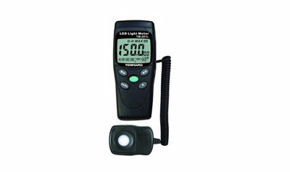
Manual calibration is necessary when auto-calibration is not available or doesn't provide satisfactory results. For brightness sensors, manual calibration typically requires a reference luxmeter: illuminance is measured at the point where the sensor is installed with the luxmeter, and the sensor is adjusted until its reading matches. For temperature sensors, a reference contact or infrared thermometer is used; for humidity sensors, a calibrated reference hygrometer.
Recalibration frequency depends on sensor stability and environmental conditions. High-quality sensors in controlled environments can maintain calibration for years; inexpensive sensors in aggressive environments (high temperatures, humidity, vibrations) may require recalibration every 6-12 months. Some sensors include drift indicators that signal when performance has significantly deviated from the original calibration.
Installation testing and validation
After installation and configuration, comprehensive testing validates that the system functions as expected under all operating conditions. Testing should include: verification of response under different light conditions (full daylight, twilight, complete darkness); motion detection testing with different speeds and trajectories; verification of delay times and other timings; testing under maximum load (all lights on simultaneously); and failover testing (what happens in case of power or communication interruption).
For complex or critical systems, an extended monitoring period (7-30 days) is recommended during which all activation events are recorded to identify undesirable patterns or false positives. Many modern systems offer logging functionalities allowing this analysis without additional instrumentation. Data collected during the monitoring period can be used to refine configuration, further optimizing performance.
The final installation documentation should include: updated schematic diagrams with all modifications made during installation; configuration logs of all devices; test results; and end-user instructions explaining basic operation and troubleshooting of common problems. For professional installations, this documentation is often part of the maintenance contract.
Future trends and sensor innovations
The future of lighting sensors sees a convergence towards increasingly multifunctional and intelligent devices, capable not only of detecting environmental parameters but also of interpreting them through artificial intelligence algorithms to provide contextually appropriate responses.
Multiparametric environmental sensors
The trend towards sensors integrating multiple functionalities into a single device is accelerating. Modern environmental sensors can combine in a package of a few cubic millimeters: temperature sensor, humidity sensor, brightness sensor, barometric pressure sensor, CO2 sensor, volatile organic compound (VOC) sensor, and even particulate matter sensors (PM2.5, PM10). This integration allows a holistic understanding of environmental quality with a single device, simplifying installation and reducing costs.
Advances in MEMS (Micro-Electro-Mechanical Systems) technology are driving this miniaturization, allowing fabrication of complex sensory structures on a micrometric scale. MEMS sensors for lighting can now be integrated directly into LED chips or driver packages, creating intrinsically "sensitive" lighting without additional visible components. This chip-level integration allows more accurate measurements (e.g., the LED chip's own temperature rather than nearby ambient temperature) and faster responses.
Beyond physical parameters, future sensors will increasingly integrate biological and chemical detection capabilities. Miniaturized spectroscopic sensors could analyze air composition in real time, detecting not only CO2 and VOCs but also specific health-related markers (like formaldehyde, radon, or biological compounds). Optical sensors could monitor occupants' physiological parameters (heart rate, breathing) through remote photoplethysmography techniques, opening possibilities for wellbeing and healthcare applications.
Edge AI for sensors
Integration of artificial intelligence capabilities directly into sensors (edge AI) represents a revolution in sensory processing. Instead of sending raw data to a central system for analysis, sensors with integrated AI can process data locally, extract significant features, and make autonomous decisions based on pre-trained models.
For motion sensors and occupancy sensors, edge AI allows much more sophisticated discrimination between movement types: not just "person vs. animal" but also "person walking vs. running", "adult vs. child", or even recognition of specific behaviors (falling, suspicious behavior). This drastically reduces false positives while increasing information utility. Sensors can learn an environment's typical patterns and automatically adapt their sensitivity: e.g., reduce sensitivity during peak hours in an office to avoid continuous activations, increase it during the night when every movement is significant.
AI also enables predictive behaviors: by analyzing historical occupancy and movement patterns, a system can predict when an area will likely be occupied and prepare lighting in advance, improving comfort without energy waste. Combined with meteorological and calendar data, it can adapt dusk-to-dawn sensor thresholds based on forecasts (e.g., turn lights on earlier if a storm is predicted to darken the sky earlier than usual).
Sensors for Human-Centric Lighting (HCL)
Human-Centric Lighting (HCL) represents a holistic approach that considers not only lighting for vision but also its biological and psychological effects on people. Sensors play a crucial role in HCL systems, allowing dynamic adaptation of lighting to occupants' physiological needs.
Advanced HCL systems use a combination of occupancy sensors, brightness sensors, and circadian clocks to regulate not only intensity but also color temperature of light in sync with the natural circadian rhythm. During the day, cool and intense light that suppresses melatonin and promotes vigilance; in the evening, warm and soft light that favors relaxation and sleep preparation. Sensors measure not only artificial light but also present natural light, automatically compensating to maintain appropriate total light dosage for the time of day.
Future innovations will include non-invasive biomedical sensors monitoring physiological parameters related to light effect (like pupil size, heart rate, heart rate variability) and dynamically regulating lighting to optimize wellbeing and productivity. In environments like hospitals or nursing homes, these systems could accelerate healing and improve sleep quality; in offices and schools, increase concentration and reduce visual fatigue.
Emerging technologies and innovative materials
Printed electronics technologies are revolutionizing sensor fabrication, allowing production of sensory devices on flexible, transparent, or conformable substrates at much lower costs compared to traditional technologies. Printed sensors can be integrated directly into building materials, furnishings, or even clothing, creating pervasively sensitive environments.
For lighting, this means the possibility of LED strips with motion sensor where the sensor is printed directly on the flexible substrate of the strip itself, completely eliminating discrete components. Printed brightness sensors can be applied as films on windows to measure incoming natural light, or integrated into ceiling light diffusers to measure reflected light. Printed capacitive proximity sensors can transform entire surfaces (walls, tables) into lighting control interfaces.
Innovative materials like graphene, carbon nanotubes, and 2D materials offer unique sensory properties: extremely high sensitivity, optical transparency, mechanical flexibility, and stability in aggressive environmental conditions. Graphene light sensors can detect single photons; graphene temperature sensors have microsecond response times; 2D material-based humidity sensors can distinguish between different types of water vapor (free vapor vs. bound water).
Energy harvesting for autonomous sensors
Energy harvesting (collecting energy from the environment) is making possible completely autonomous sensors that don't require batteries or power wiring. Energy harvesting technologies convert available environmental energy forms (light, heat, vibration, radio waves) into electrical energy to power sensors and ultra-low-consumption transmitters.
For lighting sensors, indoor photovoltaics is particularly promising: solar cells optimized for artificial light can generate sufficient energy from the very lights they control to power sensors and wireless communication. Thermal energy harvesting (thermoelectric) converts temperature differences between the sensor and environment into electrical energy; in lighting applications, heat generated by the LEDs themselves can be a source. Vibration energy harvesting is suitable for sensors in environments with machinery or traffic; piezoelectric harvesting from pressure can power sensors in floors or stairs where people walk.
Advances in conversion efficiency and energy management (ultra-low-power design, deep sleep techniques, wake-up radio) are enabling increasingly advanced functionalities in energy-harvested sensors. An energy-harvested motion sensor can now operate for years without maintenance, transmitting data only when it detects significant events. This eliminates battery costs and environmental impact, and allows installations in previously inaccessible or impractical locations.
Quantum and photonic sensors
At the forefront of sensor research are quantum and photonic technologies promising sensitivity and precision orders of magnitude superior to conventional sensors. Quantum sensors exploit phenomena like entanglement, superposition, and quantum interference to measure physical parameters with precision fundamentally limited only by quantum mechanics laws.
Quantum magnetometers (SERF - Spin Exchange Relaxation Free) can detect extremely weak magnetic fields, allowing localization of people through the weak magnetic fields of their bodies or the electronic devices they carry, without any privacy invasiveness. Quantum temperature sensors can measure variations of thousandths of a degree, allowing detection of presence through body heat even through obstacles and at great distances.
Integrated photonic sensors use light confined in on-chip waveguides to measure environmental parameters. Photonic humidity sensors can detect single water molecules; photonic pressure sensors can measure pressure variations equivalent to the weight of a virus; photonic spectroscopic sensors can analyze air chemical composition with parts-per-trillion resolution. Although currently expensive and complex, these technologies are rapidly becoming more accessible and could revolutionize sensor systems for lighting in the coming decades.
Sensor:
The integration of sensors into LED lighting systems has radically transformed the way we design, install, and use artificial lighting. From simple automatic switches, sensors have evolved into intelligent and multifunctional systems that simultaneously optimize energy efficiency, comfort, safety, and wellbeing. Choosing the appropriate sensor - whether it's an outdoor motion sensor, an adjustable dusk-to-dawn sensor, a high-precision occupancy sensor, or a multifunctional environmental sensor - depends on a deep understanding of available technologies, their performance characteristics, and the specific requirements of the application.
The article has explored in detail every aspect of sensors for LED lighting, from physical and technological basics to practical applications, from installation procedures to future trends. We've seen how different sensor types - motion, brightness, presence, temperature, humidity - can be combined to create adaptive lighting systems that respond intelligently to environmental conditions and occupants' needs. We've examined communication protocols, controllers, and integration strategies that allow these systems to function in a coordinated and efficient manner.
Looking to the future, sensor evolution continues to accelerate, driven by artificial intelligence integration, miniaturization of MEMS technologies, development of innovative materials, and convergence with other technologies like energy harvesting and integrated photonics. These advances promise to make sensor-based lighting systems even more efficient, discreet, and capable, opening new possibilities for creating illuminated environments that not only we see but that interact with us in meaningful and positive ways. For professionals, installers, and end users, understanding these technologies is no longer optional but a necessity to fully exploit the potential of intelligent LED lighting.