



























Roads: why led products are used today
Roads: whether private or public, they are often poorly lit, but street lighting represents one of the fundamental aspects of safety and energy efficiency in our cities. In recent decades, we have witnessed a radical transformation in street lighting technologies, with the migration from traditional sodium and metal halide lamps to increasingly advanced LED solutions.
This article explores in depth the technical, economic, and environmental reasons that have made LEDs the predominant choice for street lighting, analyzing in detail practical applications, available products, and future trends in the sector. The goal is to provide a comprehensive and updated guide for professionals, public administrators, and technicians in the field.
Roads and leds: a paradigm shift
The adoption of LED technology for public and private road lighting has not been a simple evolution, but a true technological revolution. This change has affected all aspects of lighting design, from the choice of light sources to the intelligent management of systems. In this chapter, we will examine the deep-seated reasons for this transition, analyzing the limitations of traditional technologies and the revolutionary advantages offered by professional LED modules and strips.
Roads, historical context: from traditional lamps to led technology
To fully understand the impact of LED technology on our roads, it is necessary to historically contextualize the evolution of public lighting. For decades, municipal administrations and highway management authorities have relied on technologies now obsolete in many respects.
Pre-led technologies on roads: limitations and issues
High-pressure sodium (HPS) and metal halide (MH) lamps dominated the street lighting landscape for much of the 20th century. However, these technologies had numerous intrinsic disadvantages, starting with limited luminous efficacy, rarely exceeding 100 lumens per watt in real operating conditions. Luminous flux depreciation was another significant problem: after just 10,000-15,000 hours of operation, these lamps lost up to 30% of their initial brightness, compromising road safety. Color rendering, especially in the case of sodium lamps, was particularly poor, with a color rendering index (CRI) often below 25, which completely altered color perception and reduced the ability to distinguish important details during nighttime driving.
The first leds for street lighting: a technological challenge
The first attempts to apply LED technology to street lighting date back to the early 2000s, but they encountered significant technical difficulties. First-generation LEDs suffered from overheating problems, modest efficiency, and prohibitive costs. The main challenge was overcoming thermal barriers: unlike traditional lamps, LEDs produce heat in the semiconductor chip itself, and this heat must be dissipated efficiently to ensure component longevity. The development of increasingly advanced heat sinks and more efficient driving circuits (drivers) gradually allowed these limits to be overcome, paving the way for the mass adoption of LEDs for roads.
Technical advantages of leds for road lighting
The technical advantages of LEDs in road lighting are numerous and interconnected. This section analyzes each of these aspects in detail, demonstrating how LED technology represents not only an alternative but a substantial improvement from every technical point of view.
Superior energy efficiency: numbers and comparisons
Energy efficiency is the main economic driver for the adoption of LEDs in street lighting. Modern LED modules for road applications achieve efficiencies exceeding 150 lumens per watt, with the most advanced models approaching 200 lumens per watt. Comparing these values with the 50-100 lumens per watt of traditional technologies, one immediately understands the scale of potential energy savings. For a medium-sized municipality with 10,000 light points, switching to LED public lighting on roads can translate into annual savings of hundreds of thousands of kilowatt-hours, with obvious economic and environmental benefits. This aspect is particularly crucial in the current context of energy transition and rising energy costs.
Longevity and reliability: reduced road maintenance
The operational lifespan of LEDs for roads represents another decisive advantage. While traditional lamps required replacements every 2-4 years (10,000-20,000 hours), professional LED modules guarantee nominal lifespans of 30,000-100,000 hours, equivalent to 10-20 years of service under normal operating conditions. This extraordinary longevity translates into a drastic reduction in road maintenance costs, which often represent the most significant expense item in managing public lighting. Fewer intervention needs also mean less inconvenience for citizens, reduced risk for road workers, and optimization of technical resources for municipalities and management authorities.
Light quality and road safety
The quality of light emitted by LEDs represents a substantial improvement for road safety. LEDs for street lighting generally offer a higher color temperature (4000K-5000K compared to 2000K-2200K for sodium lamps) and a superior color rendering index (CRI >70 vs. CRI <25). These technical characteristics translate into concrete benefits for road users: better detail perception, reduced glare, improved color recognition (fundamental for identifying signage, vehicles, and pedestrians). Independent studies have shown that higher quality lighting can contribute to reducing nighttime road accidents by 20-30%, especially in adverse weather conditions.
Practical applications: led products for every road need
The versatility of LED technology is manifested in the wide range of products specifically designed for road lighting. In this section, we will examine the different types of products available on the market, with particular attention to those offered by LEDPoint.it, highlighting their technical characteristics and optimal application fields.
Professional led modules for public street lighting
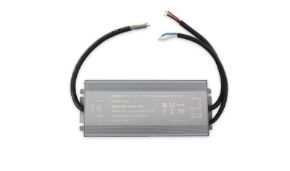
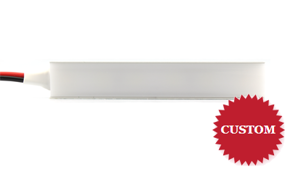
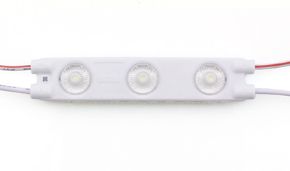
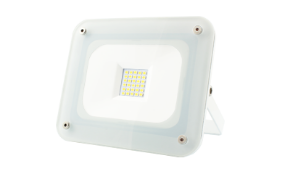
LED modules represent the most advanced and complete solution for lighting public roads and highways. These systems integrate all necessary components into a single luminaire: high-power LED chips, precision optics for luminous flux control, advanced thermal heat sinks, and high-quality electronic drivers. The professional modules offered by Ledpoint are designed according to the strictest technical standards (UNI 11248 for street lighting, ENEC, CE) and offer excellent technical characteristics. The possibility to adjust the luminous flux through 0-10V or DALI dimming systems represents a further advantage, allowing lighting to be adapted to real-time needs, with additional energy savings.
LED strips for special road applications
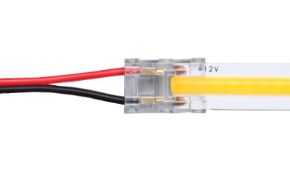
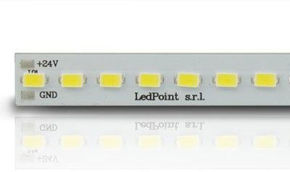
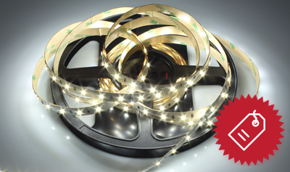
High-resistance LED strips are finding increasingly widespread applications in street lighting, especially in contexts requiring flexible and creative solutions. New generation LED strips offer IP67 or higher protection ratings, resistance to atmospheric agents and temperature swings, and lengths that can reach several meters without drops in brightness. Typical applications include lighting for underpasses, tunnels, pedestrian walkways, architectural elements along roads, and safety signaling. The installation flexibility of LED strips makes them particularly suitable for contexts where traditional luminaires would be difficult or expensive to install.
Neon flex: versatility and design for urban furniture
Neon flex represents the modern evolution of neon tubes, combining the aesthetic flexibility of traditional neon with the technical advantages of LEDs. In the context of street lighting, neon flex finds application in numerous contexts: decorative lighting of bridges and viaducts, signaling of pedestrian and cycle paths, demarcation of safety areas, enhancement of architectural elements. The neon flex products offered by Ledpoint are characterized by high mechanical and environmental resistance, long life (up to 50,000 hours), and customization possibilities in terms of lengths, colors, and light intensity. Integrating neon flex into street lighting projects contributes not only to functionality but also to the aesthetics and visual identity of urban spaces.
Economic considerations of LEDs on roads: cost-benefit analysis
The decision to invest in converting street lighting to LEDs must be based on a solid economic analysis. This section provides tools and methodologies for evaluating returns on investment, taking into account all relevant economic factors.
Total cost of ownership (TCO): a 360° view
The economic evaluation of adopting LEDs for roads must consider the Total Cost of Ownership (TCO), which includes not only the initial investment but all costs over the entire life cycle of the system. The TCO for LED systems is 40-60% lower than for traditional technologies, despite the higher initial investment. This difference is explained by the reduction in energy consumption (up to 70%), the drastic decrease in replacements (from every 2-4 years to every 10-15 years), and the reduction in ordinary and extraordinary maintenance costs. For a medium-to-large project, the payback period (time needed to recover the investment through savings) is typically between 3 and 6 years, followed by many years of net savings.
Incentives and funding for the LED transition
The transition to LED street lighting is supported by numerous incentive programs at the national, regional, and European levels. Such programs can cover a significant percentage of the initial investment, further reducing the payback period. Among the available financial instruments are Thermal Accounts for Public Administration, PNRR funds dedicated to energy efficiency, white certificates (TEE) for energy efficiency projects, and subsidized rate financing offered by various banking institutions.
Roads and lighting: what do regulations indicate?
The installation of LED systems for road lighting must respect a complex and articulated regulatory framework. This section provides a comprehensive overview of the main technical and safety regulations.
The UNI 11248 standard: fundamental requirements
The UNI 11248 "Street lighting - Performance requirements" standard represents the main technical reference for street lighting design in Italy. This standard establishes precise parameters for each road category, defining minimum levels of average illuminance, uniformity, permitted glare, and color rendering index. The LED products for street lighting offered by LEDPoint are designed and certified to comply with the requirements of UNI 11248, guaranteeing not only efficiency but also the regulatory compliance of the installed systems.
Quality and safety certifications
In addition to compliance with UNI 11248, LED products for road applications must possess a series of mandatory and voluntary certifications. CE (Conformité Européenne) certifications attest to compliance with the essential safety requirements established by applicable European directives. Voluntary certifications such as ENEC (European Norms Electrical Certification) and ISO 9001 for quality management systems represent further guarantees of reliability and construction quality. All products for street lighting available on LEDPoint are equipped with the necessary CE certification, accompanied by complete and transparent technical documentation.
Future trends: intelligent street lighting
The evolution of LED technology is increasingly integrating with smart city and intelligent lighting solutions. This chapter explores the most advanced and innovative trends in the street lighting sector.
IoT systems for remote plant management
Modern LED street lighting systems can be equipped with wireless communication modules (LoRaWAN, NB-IoT, RF mesh) that allow remote management and real-time monitoring of each individual light point. These IoT solutions represent the future of public lighting, enabling dynamic adjustment of lighting levels based on traffic conditions, weather conditions, times, and specific events. Remote management systems also allow for the immediate identification of failures or anomalies, optimizing maintenance interventions and reducing downtime. The integration of LED modules into broader smart city platforms opens unprecedented possibilities for optimization and innovative services for citizens.
Integration with renewables and energy storage systems
An increasingly marked trend in street lighting is the direct integration with photovoltaic systems and energy storage systems. These hybrid solutions allow light points to be powered completely autonomously from the electrical grid, with obvious benefits in terms of resilience and environmental sustainability. LEDs, thanks to their high efficiency and ability to operate at relatively low voltages (12V, 24V, 48V), are particularly well-suited for integration with stand-alone photovoltaic systems. This technological synergy represents an optimal solution for lighting roads in areas not served by the electrical grid, or as a backup system in case of blackouts.
Case studies: real-world examples of LED conversion
The concrete experience of completed projects represents the most effective demonstration of the advantages of LED technology for street lighting. In this section, we present some significant case studies, with quantitative data and qualitative assessments.
Municipality of Milan: public lighting renovation
The public lighting renovation project of the Municipality of Milan represents one of the most significant interventions at the European level. The replacement of 140,000 light points with LED modules generated energy savings of 65%, equivalent to approximately 50 million kWh annually. Beyond economic benefits, the project significantly improved light quality on Milanese streets, with an increase in the color rendering index from 25 to 70 and better illumination uniformity. The integration of a tele-management system based on LoRaWAN technology allowed real-time monitoring of each light point's status and dynamic adjustment of lighting levels, achieving additional savings of 15-20%.
Brenner highway: intelligent lighting
The Brenner Highway has implemented an intelligent LED street lighting system along 40 km of roadway. The installed LED modules are equipped with traffic sensors that automatically regulate light intensity based on vehicle volume, ranging from 100% during peak hours to 30% during low-traffic hours. This dynamic approach allowed for further optimization of energy consumption, bringing overall savings to 75% compared to the previous system. The system also includes predictive maintenance functionalities, which analyze operational data to predict potential failures before they occur, guaranteeing availability exceeding 99.9%.
Guide to choosing LED products for roads
Selecting the most suitable LED products for a street lighting project requires in-depth technical evaluation. This section provides a practical guide to selection, based on objective criteria and measurable technical parameters.
Fundamental technical parameters to consider
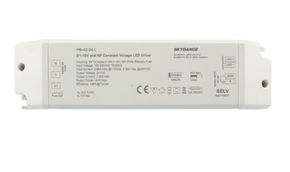
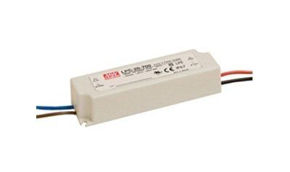
The choice of LEDs for roads must be based on a rigorous technical evaluation of numerous parameters. Luminous efficacy (lumens/watt) directly determines energy consumption: values below 130 lm/W are no longer acceptable for professional road applications. The color temperature (CCT) should be between 4000K and 5000K to guarantee an optimal balance between color rendering, visual comfort, and minimization of light pollution. The color rendering index (CRI) should be at least 70, preferably above 80 for main roads. The total luminous flux must be sized according to the road category per UNI 11248. The quality of the electronic driver is fundamental for system longevity: drivers with a power factor >0.95, THD <10%, and complete protections (surge protection, overtemperature, short circuit) should be preferred.
Installation and maintenance advice
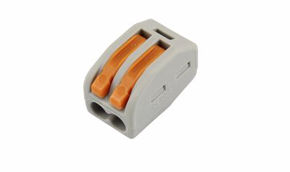
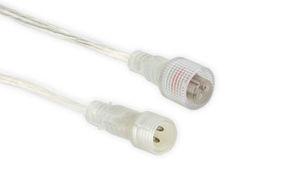
Correct installation of LED systems for street lighting is essential to guarantee their performance and longevity over time. It is crucial to respect the manufacturer's instructions regarding thermal conditions: LED modules must be installed to ensure proper heat dissipation, avoiding dust accumulation or obstructions to heat sink fins. Electrical connections must be made with cables of adequate cross-section and mechanical protections, especially in environments exposed to weather. Regarding maintenance, LED systems require minimal but regular interventions: periodic cleaning of optics (every 6-12 months), verification of electrical parameters, checking the condition of heat sinks. Predictive maintenance based on operational data represents the most advanced and efficient approach.
Roads: the future is LED
The transition to LED street lighting represents one of the most significant technological transformations in the field of public lighting in recent decades. The data is clear: LEDs offer incontestable advantages from an energy, economic, technical, and environmental perspective. The experience accumulated in thousands of projects in Italy and around the world demonstrates that the return on investment is rapid and substantial, while the benefits for the community are tangible and lasting.
However, LED technology does not represent an endpoint, but rather an enabling platform for further innovations: integration with IoT systems, power supply from renewable sources, interaction with intelligent mobility infrastructures. Ledpoint continues to invest in research and development to offer increasingly advanced and integrated solutions, contributing to building safer roads, more livable cities, and a more sustainable future.