



Rides and amusement parks: entertainment lighting
Imagine amusement park rides at sunset. The silhouettes of the attractions stand out against the fading sky—inert and silent. Now, flip the switch. A river of colored light explodes, tracing trajectories in the dark, drawing attention, and creating an atmosphere of celebration and magic. This is not just spectacle—it’s the result of precise lighting engineering, where waterproof profiles, polyurethane neon flex, and IP67 LED strips play a fundamental role. In this article, we’ll explore in depth how entertainment lighting is no longer mere decoration but the pulsating nervous system of a modern amusement park—essential for safety, commercial appeal, and immersive visitor experience. We’ll analyze data, regulations, technologies, and the most advanced solutions designed to withstand the extreme environment of a moving ride. Before diving into specific products for ride installations, it’s crucial to understand the scale of this phenomenon. Traveling fairs and amusement parks represent a global business generating billions of euros annually and attracting hundreds of millions of visitors each year. In this context, lighting transcends its basic visual function to become a critical success factor across multiple dimensions. The sector based on rides and attractions is constantly evolving. From simple village gatherings to massive theme parks, the demand for thrilling yet safe experiences underpins everything. Lighting plays a decisive role in shaping these experiences. To understand why investing in high-quality entertainment lighting for amusement park rides is essential, let’s start with data that illustrates the vast audience involved. These figures raise a critical question: how does a fair or individual ride stand out in such a crowded market? Lighting is the first answer. It serves as the visual calling card that draws families and young people from hundreds of meters away, transforming a metal structure into an invitation to play and wonder. Lighting in amusement rides and fairs serves interconnected yet essential functions. We can group them into three main areas: safety, commercial appeal (atmosphere), and operational functionality. Every lighting installation—from the smallest indicator to the most complex synchronized light show—addresses at least one of these needs. Safety is non-negotiable. In a crowded environment with fast-moving machinery, moving parts, and people of all ages, proper lighting is the first line of passive safety. Waiting areas, walkways, access stairs, and boarding/disembarking zones must be perfectly illuminated to prevent trips, falls, and crowd compression. Here, color effects aren’t needed—instead, neutral white, diffuse light with a high Color Rendering Index (CRI >80) is essential to clearly distinguish obstacles, steps, and level changes. Linear LED profiles with opal diffusers and IP67 or higher protection ratings are ideal. They can be integrated into handrails, platforms, or guardrails, providing a continuous, safe guide. On fairground rides, lights become language. A traffic-light system (red = stopped, green = ready) for ride access, a flashing sequence indicating a malfunction, or LED modules marking off-limits areas are examples of how entertainment lighting communicates critical information. High-brightness RGB LED modules, controlled by a central unit, are often used to create instantly recognizable color codes—even from a distance or in noisy environments. Strict regulations (such as EN 60598-2-17 for playground lighting and the broader EN 1838 for emergency lighting) require autonomous systems that activate during blackouts. Low-power LED strips powered by batteries, integrated into profiles along evacuation routes, offer an efficient and discreet technical solution. If safety is the necessary condition, then visual appeal is what drives commercial success: entertainment lighting is the art of storytelling and evoking emotion through light. Color choices on rides are never random. Each hue conveys an emotion and suits a specific ride type: At night, the metal structure of rides disappears. What remains visible is its “light drawing.” By strategically illuminating arms, gondolas, roofs, or bases, forms and motion are emphasized. Angular or curved LED profiles follow the attraction’s geometric lines, creating a sharp, luminous outline (“edge lighting” effect) that makes the ride recognizable and iconic—even from great distances. An amusement park is a hostile environment for any electronic component: continuous vibrations, thermal shocks, humidity, rain, UV radiation, accidental impacts, and frequent handling during assembly/disassembly. Entertainment lighting on rides must be engineered to withstand all these stresses. That’s why products like waterproof profiles and polyurethane (PU) neon flex aren’t optional—they’re the mandatory choice for maximum reliability. Profiles aren’t just housings—they’re engineered systems serving multiple functions. Heat dissipation: extruded aluminum absorbs heat from LED chips and dissipates it into the environment, drastically extending LED lifespan (up to 50,000+ hours) and maintaining stable light output. - Ferris wheel outlines: rigid or flexible circular-section profiles follow the wheel’s rings. Neon flex is a revolution. It replaces fragile, hazardous traditional glass neon tubes with a flexible, robust polyurethane tube housing an LED strip inside. Extreme flexibility: can be bent to very tight radii, enabling curves, spirals, complex lettering, and wrapping around irregular structures—indispensable for decorating ornate rides like historic carousels. - Luminous signs and logos: “BINGO”, “CIRCUS”, or the ride’s name—neon flex supports any font. Flexible LED strips are the heart of many lighting systems that define ride aesthetics. IP67 protection is achieved via a silicone jacket covering the printed circuit board (PCB) and components. For professional ride use, consumer-grade products won’t suffice. High technical specifications are required: Installing lighting on a ride means complying with a complex web of regulations ensuring public safety and system conformity. Choosing certified IP67 profiles and quality PU neon flex isn’t just a technical decision—it’s a regulatory necessity. Using unsuitable components can invalidate the ride’s certification, leading to severe civil and criminal liability in case of accidents. Let’s now examine how the described technologies translate into practical applications for major ride categories. The quintessential icon—the beacon of the fair. Its lighting has two goals: defining its circular shape and creating a city-wide visual spectacle. - Outer rings: rigid curved LED profiles or thick-diameter (e.g., 14mm) IP68 neon flex along structural rings. Color: RGB+W for dynamic effects (fade, wave chasing). The realm of controlled chaos and adrenaline. Lighting must be aggressive, dynamic, and contribute to a “stadium” or “racetrack” vibe. - Track perimeter and barriers: angular LED profiles with impact-resistant (reinforced PC) opal diffusers, IP67-rated, with RGB LEDs. Programmed with red/yellow “chasing” effects to simulate speed and race starts. The traditional ride, often richly decorated. Lighting should enhance gilding, paintings, and the elegant motion of horses. - Canopy and underskirt: the focal point. Use a continuous ring of warm-white (2700K–3000K) or amber PU neon flex for a vintage feel, or RGB+W for colorful shows. Neon flex is ideal for following the canopy’s elaborate curves. Here, the atmosphere must be playful, gentle, and reassuring. Colors are pastel or bright—but never aggressive. - Track/base outline: low-profile LED channels with opal diffusers and fixed-color LEDs (e.g., blue, red, green) or RGB programmed for slow transitions. Professional entertainment lighting systems require scheduled maintenance. Choosing high-quality products—like commercial-grade aluminum LED profiles and PU neon flex—dramatically reduces interventions, but doesn’t eliminate them. Periodic maintenance checklist (pre/post season & weekly): Entertainment lighting for amusement rides and fairs has undergone a quantum leap—evolving from simple decoration to an integrated systemic component. It’s no longer about “adding some lights,” but about designing a complete sensory experience that begins with safety and culminates in spectacle. LED technologies—particularly waterproof aluminum profiles, polyurethane neon flex, and high-protection IP67 LED strips—now offer unprecedented reliability, efficiency, and versatility. They enable the boldest visual effects while enduring the rigors of road life and seasonal fairs. Investing in a professional lighting design, meticulously detailed and built with certified-quality products, isn’t an expense—it’s a value multiplier. It enhances safety by reducing risks, amplifies commercial appeal by attracting more visitors, creates a memorable visual identity for the fair, and ultimately transforms an evening of fun into an indelible memory of light and color. In the world of entertainment—where night is the main stage—those who master light, command the scene.Rides and amusement parks: introduction to lighting for entertainment venues
The market for traveling and permanent attractions: shining a light on rides
Attendance statistics and economic Impact
Category Estimated annual visitors (EU) Related sector revenue (EU) Italy-specific notes Large permanent amusement parks Over 100 million €7–8 billion (direct revenue from tickets, merchandising, and F&B within parks). Total economic value (including tourism impact) exceeds €25 billion. In Italy, parks like Mirabilandia, Gardaland, Cinecittà World, and Etnaland collectively generate over €450 million in annual direct revenue. Post-pandemic growth has been 20–30%, driven significantly by evening/night events, where lighting plays a decisive role (>40% of attraction appeal). Traveling fairs and mobile amusement parks Approx. 50–70 million €1.5–2 billion (aggregate operator revenue, including ride income, food, and games). Backbone of local entertainment. In Italy, ANESV estimates direct annual business revenue for sector operators at €500–700 million. A major patronal festival (e.g., Sant’Ambrogio in Milan or Festa del Redentore in Venice with its attached fair) can generate €2–5 million in just a few days. Lighting accounts for 15–20% of the initial investment when setting up a new ride. Themed events with rides (Christmas markets, festivals) Approx. 30 million €800 million – €1.2 billion (total event revenue, partially attributable to rides and attractions). Heavily reliant on lighting to create atmosphere. Rome’s Christmas Luna Park at EUR attracts over 1.5 million visitors in six weeks. In Milan, events like “Oh Bej! Oh Bej!” or Christmas markets with rides generate an economic impact of over €100 million. The lighting budget for such events can reach 30–40% of total setup costs to deliver the “wow” effect that justifies attendance. Essential functions of ride lighting: beyond beauty
Ride safety: seeing and being seen for carefree fun
Pathway and boarding area lighting
Status and alarm signaling
Emergency and escape route lighting
Commercial appeal: creating atmosphere to draw crowds
The role of ride colors in visitor psychology
Defining attraction shapes and silhouettes
Materials and technologies for ride durability
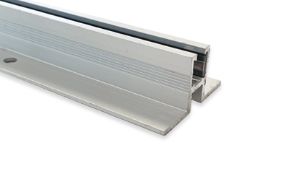
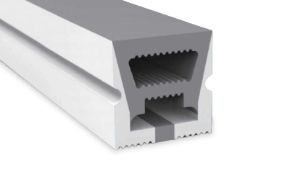
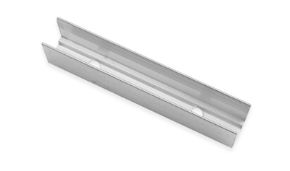
Extruded aluminum waterproof LED profiles: the structural backbone
Technical features and advantages
Mechanical protection: shields LED strips from impacts, scratches, compression, and dust—critical in public-access or foot-traffic areas.
IP67, IP68, IP69K ratings: these codes indicate waterproofing. IP67 means “temporarily submersible (30 minutes at 1 meter)”, IP68 “continuous immersion”, and IP69K “resistant to high-pressure, high-temperature water jets”. For outdoor rides, IP67 is strictly required.
Optics and diffusion: profiles include opal or clear polycarbonate (PC) diffusers. Opal ensures uniform light without visible hotspots—essential for a seamless, professional linear effect.Practical ride applications
- Access stairs and railings: linear profiles with high-impact-resistant diffusers.
- Carousel underskirts: profiles installed beneath the canopy to create a luminous ring defining the silhouette.
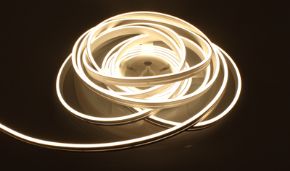
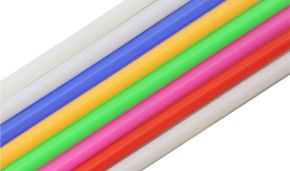
- Integrated signage: arrow- or text-shaped profiles to mark entrances.Polyurethane neon flex: flexible classic neon effect
Why polyurethane (PU) is the winning choice
Impact and vibration resistance: PU is a tough material that won’t break upon impact or under motion stress.
UV stability: high-quality formulations resist yellowing and brittleness after years of sun exposure, maintaining consistent light transmission.
Airtight sealing and IP67/68 rating: the tube is sealed at both ends, making the entire system waterproof.
Practical fairground applications
- Wrapping decorations: spirals or flourishes around ride poles.
- Special effects inside cabins: to create a “cockpit” atmosphere in spaceship pods or eerie effects in haunted houses.IP67 LED strips: the most common choice for rides
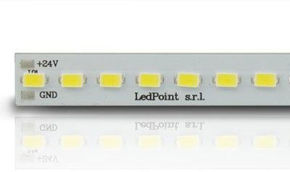
Specifications and product selection
Regulations and safety standards for rides: the compliance framework
Table 2: overview of key regulations for ride lightingStandard / Directive Scope of application Implications for LED products Machinery Directive 2006/42/EC All rides as "machines" Integrated lighting must be declared in the machine’s documentation. Components must be suitable for the operating environment (vibration, humidity). EN 60598-1 / EN 60598-2-17 General lighting equipment / Specific requirements for playground and amusement lighting Defines requirements for mechanical strength, protection against electric shock, heat/flame resistance, and IP rating. Products must bear CE marking and preferably be certified by a notified body. EN 60335 (Series) Safety of household and similar electrical appliances May apply to public-access areas regarding surface temperatures and protection. Low Voltage Directive 2014/35/EU All electrical products operating between 50–1000V AC or 75–1500V DC LED drivers, strips, and controllers must comply. CEI Electrical Installation Standards (e.g., CEI 64-8) Fixed or temporary electrical installations at fairs Defines criteria for wiring, differential and magnetic-thermal protection, cable sizing, and grounding. Case studies: installations on key ride types
1. The ferris wheel
Recommended technical solution:
- Spokes: high-power IP67 LED strips installed in aluminum profiles fixed to spokes. Individually animated for starburst or spiral effects.
- Gondolas: soft internal lighting with low-power, warm-white (3000K) LED strips for visual comfort. External gondola outlines with mini LED profiles.
- Control: advanced DMX system or dedicated controller synchronized with music for evening shows.2. Bumper cars
Recommended technical solution:
- Support columns: RGB PU neon flex wrapped in spirals or vertical lines.
- Cars: IP67 LED strips installed underneath (“underglow”) and inside cabins, controlled by small wireless receivers on each vehicle. Colors can change based on score or car status (hit, winner).
- Scoreboard: high-brightness LED backlighting.3. Carousel / Merry-go-round
Recommended technical solution:
- Entrance frames: linear LED profiles to draw attention to entry points.
- Figure illumination (horses, carriages): concealed directional spotlights to highlight decorative details. Low-power LED strips in saddle compartments or along harnesses.
- Central pole and columns: wrapped with spiral neon flex.4. Children’s attractions (trains, planes, spinning teacups)
Recommended technical solution:
- Vehicles (trains, cars): integrated mini IP67 LED strips (often 12V for safety) to light headlights and windows. Very simple effects.
- Elevated structures: if present, outlined with neon flex to define their shape.Maintenance: preserving the magic over time
Rides and lights: the safety and entertainment of tomorrow