









































LED RGB : qu’est-ce que c’est ?
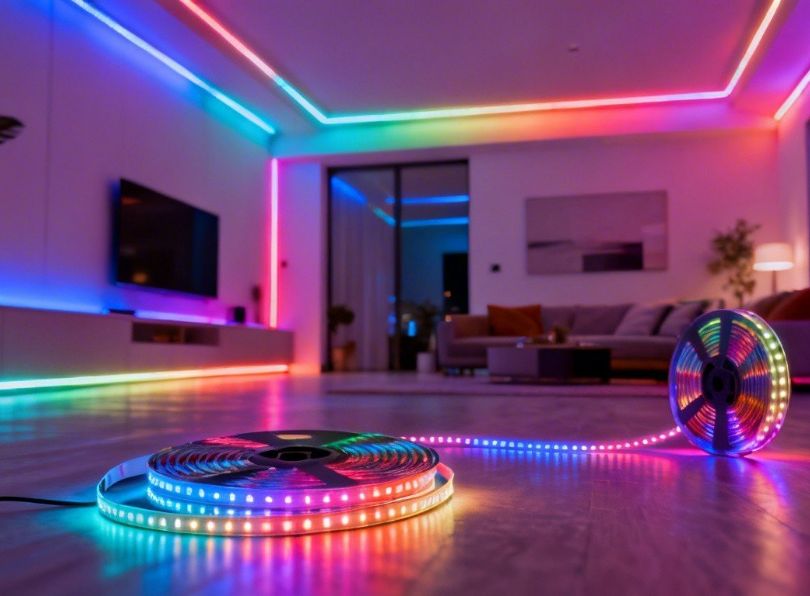
Dans le monde de l'éclairage moderne, les LED RGB représentent l'une des innovations les plus fascinantes et polyvalentes. Ces dispositifs ne sont pas de simples sources de lumière, mais de véritables outils de communication visuelle, de design et de technologie. Comprendre profondément ce que sont et comment fonctionnent les LED RGB est fondamental pour exploiter pleinement leur potentiel. Dans cet article, nous explorerons chaque aspect de cette technologie, des bases de la physique des couleurs aux applications les plus avancées, en passant par les données de marché, les tableaux techniques et les comparaisons avec d'autres modèles de couleur.
Nous analyserons la signification du sigle RGB, son fonctionnement en tant que modèle additif, comment ces dispositifs se connectent et quelles sont les différences substantielles avec d'autres espaces couleur comme le CMJN, dans un voyage à travers la science et la technologie des LED colorées.
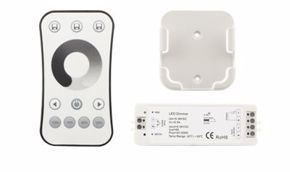
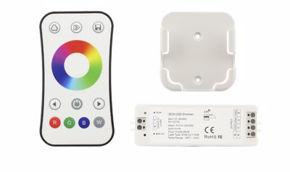
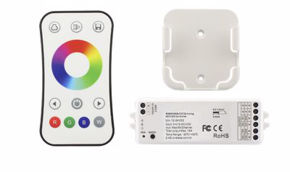
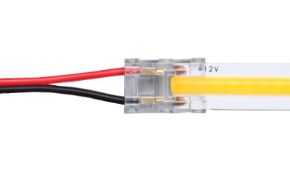
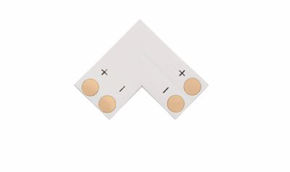
Lorsque nous parlons de LED RGB, nous faisons référence à un type spécifique de diode électroluminescente capable de produire une large gamme de couleurs. Contrairement aux LED traditionnelles qui émettent une seule longueur d'onde (donc une couleur fixe, comme le rouge, le vert ou le bleu), la LED RGB intègre trois puces distinctes dans un seul boîtier. Cette caractéristique permet de générer de la lumière pratiquement de n'importe quelle couleur, en combinant de manière variable l'intensité des trois sources primaires. Le sigle RGB est l'acronyme des mots anglais red, green, blue (rouge, vert, bleu). Ce sont les trois couleurs primaires de la synthèse additive, le processus par lequel on crée toutes les autres couleurs en additionnant des lumières de différentes longueurs d'onde. À quoi sert le RGB ? Sa fonction principale est de reproduire la couleur sur des supports numériques et d'éclairage. Le modèle de couleur RGB est basé sur l'émission directe de lumière, contrairement à la peinture ou à l'impression qui fonctionnent par soustraction (absorption) de lumière. Lorsque nous mélangeons la lumière rouge, verte et bleue à intensité maximale, le résultat est la lumière blanche. Ce principe est à la base du fonctionnement de tous les écrans que nous utilisons quotidiennement, des moniteurs d'ordinateur aux téléviseurs, et naturellement des bandes LED RGB. Pour comprendre pleinement ce que sont les LED RGB, il est essentiel de saisir le concept de modèle additif. Dans la nature, nous voyons les objets parce qu'ils réfléchissent la lumière. Un objet apparaît rouge parce qu'il absorbe toutes les autres longueurs d'onde (vert et bleu) et réfléchit principalement le rouge. Dans le modèle additif, au contraire, nous partons du noir (absence de lumière) et ajoutons de la lumière colorée pour obtenir les couleurs. Par conséquent, comment fonctionne le système RGB ? Il fonctionne en superposant des faisceaux de lumière rouge, verte et bleue. L'œil humain, grâce à ses récepteurs (cônes), perçoit le mélange résultant comme une couleur spécifique. La définition de RGB est donc intrinsèquement liée à la perception humaine et à la technologie des écrans. Les implications de ce modèle sont immenses : de la photographie numérique au web design, jusqu'à l'éclairage architectural. Le modèle de couleur RGB n'est pas seulement une technologie, mais un véritable standard international pour la représentation et la reproduction numérique des images. Ses racines plongent dans la physique de la lumière et dans les études sur la perception visuelle humaine. Qui a inventé le RGB ? Bien que le concept de synthèse additive fût déjà connu de physiciens comme James Clerk Maxwell au XIXe siècle (qui en 1861 réalisa la première photographie en couleur en utilisant des filtres rouge, vert et bleu), son application systématique est le fruit de l'évolution technologique des XXe et XXIe siècles. Aujourd'hui, l'espace couleur RGB est le cœur battant de tout dispositif électronique émettant de la lumière. Qu'est-ce que le format de couleur RGB ? En informatique et en graphisme numérique, chaque couleur est représentée par un triplet de nombres indiquant l'intensité des composantes rouge, verte et bleue. Habituellement, ces valeurs sont exprimées dans un intervalle allant de 0 à 255 par canal, où 0 représente l'absence de cette couleur et 255 l'intensité maximale. Par exemple, le rouge pur est (255,0,0), le vert pur (0,255,0) et le bleu pur (0,0,255). Cette représentation permet de définir avec précision plus de 16 millions de couleurs différentes (256 x 256 x 256 = 16 777 216). Combien de couleurs RGB existent ? Techniquement, avec ce codage sur 24 bits (8 bits par canal), il existe 16 777 216 combinaisons possibles. Très souvent, on se demande comment obtenir le jaune en RGB : le jaune, n'étant pas une couleur primaire dans la synthèse additive, s'obtient en additionnant le rouge et le vert à intensité maximale : (255,255,0) tandis que le blanc s'obtient en additionnant les trois composantes à intensité maximale : (255,255,255). Tableau 1 : exemples de couleurs et valeurs RGB correspondantes. L'une des questions les plus fréquentes que nous recevons est : quelle est la différence entre le codage RGB et CMJN ? Si le RGB est le langage des dispositifs qui émettent de la lumière (écrans, téléviseurs, projecteurs, LED), le CMJN est le langage de l'impression. Comprendre cette différence est crucial pour quiconque travaille avec des images numériques destinées à l'impression ou pour ceux qui s'occupent d'éclairage et de design. Que signifie le sigle CMJN ? CMJN signifie cyan, magenta, jaune et key (noir). C'est un modèle de couleur soustractif : les couleurs sont créées en soustrayant de la lumière au papier blanc par l'application d'encres. Comme nous l'avons vu, le modèle RGB est basé sur l'addition de lumières tandis que le CMJN est basé sur la soustraction de lumière par des pigments. La conséquence pratique la plus importante est la gamme chromatique différente. La différence entre RGB et CMJN réside dans l'espace couleur. L'espace couleur RGB est généralement beaucoup plus large (surtout dans les tons vifs et fluorescents) par rapport au CMJN. Cela signifie que de nombreuses couleurs que nous voyons brillamment sur un écran (comme un bleu électrique vif) ne sont pas reproductibles fidèlement avec les encres d'impression. Que se passe-t-il si l'on imprime en RGB ? Les fichiers destinés à l'impression doivent être convertis en CMJN, sinon les couleurs apparaîtront ternes et différentes de ce qui a été vu à l'écran. Un logiciel d'impression interprétera les valeurs RGB comme les plus proches possibles dans le modèle CMJN, causant souvent une perte de vivacité. Tableau 2 : différences clés entre les modèles de couleur RGB et CMJN. Une LED RGB n'est rien d'autre que l'application pratique du modèle de couleur LED RGB. À l'intérieur d'une seule puce LED sont intégrés trois semi-conducteurs distincts : un pour le rouge, un pour le vert et un pour le bleu. En contrôlant l'intensité du courant traversant chaque puce, nous pouvons doser la quantité de lumière émise par chacune des trois couleurs. Le résultat est la perception d'une couleur unique, fruit de la fusion optique des trois lumières. Ce processus se produit en fractions de seconde, permettant de créer des effets dynamiques et des transitions chromatiques fluides. Comment connecter une LED RGB ? Il existe deux configurations principales pour le raccordement électrique des LED RGB : l'anode commune et la cathode commune. Dans une LED à anode commune, les trois puces partagent la borne positive (+), tandis que chaque couleur a sa propre borne négative (-) à connecter à la masse via une résistance et un contrôle. Dans la cathode commune, au contraire, la borne négative est partagée et les positives sont séparées. Le choix dépend du type de driver ou de contrôleur utilisé. Il est fondamental de connaître cette différence pour un câblage correct, surtout lors de projets DIY avec des bandes LED ou des microcontrôleurs comme Arduino. Comment connecter une bande LED RGB ? Le raccordement se fait en soudant ou en utilisant des connecteurs rapides sur les plots de la bande, identifiés par les lettres + (alimentation commune), R, G et B. Il est essentiel de respecter la correspondance des couleurs des fils avec les canaux du contrôleur pour obtenir une reproduction chromatique correcte. Pour gérer une installation d'éclairage à lumière LED RGB, un écosystème de composants est nécessaire. Outre la bande LED elle-même, il faut : La luminosité d'une LED RGB dépend de plusieurs facteurs : la puissance des puces individuelles, l'efficacité lumineuse et la qualité des matériaux. En général, les LED SMD 5050 sont parmi les plus courantes pour les bandes RGB, car leurs dimensions (5,0 mm x 5,0 mm) permettent d'héberger trois puces distinctes (une par couleur) dans le même boîtier, garantissant un bon rendement lumineux. Cependant, pour des applications nécessitant des performances très élevées, on utilise des LED RGB haute puissance ou des modules COB (Chip-on-Board) RGB. Les LED les plus lumineuses actuellement sur le marché appartiennent à la catégorie des LED de puissance, souvent montées sur des dissipateurs thermiques pour gérer l'énergie thermique produite. L'utilisation des LED RGB est désormais omniprésente. Du gaming à l'éclairage architectural, de l'industrie automobile à la signalétique, la capacité de créer des ambiances et de communiquer des informations par la couleur a rendu cette technologie indispensable. Selon un récent rapport de MarketsandMarkets, le marché mondial de l'éclairage LED, avec une part significative représentée par la variante RGB, devrait passer de 75,3 milliards de dollars en 2020 à 160 milliards d'ici 2026, avec un taux de croissance annuel composé (TCAC) d'environ 13 %. Cette croissance est tirée par l'efficacité énergétique, la longue durée de vie et la flexibilité chromatique offerte par la technologie RGB. Dans le secteur du gaming, les "boîtiers RGB", c'est-à-dire des cabinets pour ordinateur équipés de ventilateurs, bandes et composants internes éclairés par des LED RGB, sont en vogue depuis un certain temps. Cela permet aux utilisateurs de personnaliser l'esthétique de leur configuration, en synchronisant les effets lumineux avec la musique ou avec les événements de jeu. Sur les PC, la LED RGB est devenue un standard esthétique et fonctionnel. Cartes mères, cartes graphiques, mémoire RAM et même alimentations intègrent des LED RGB programmables, souvent contrôlables via logiciel pour créer des scénographies lumineuses uniques. Le passage du RGB statique à l'ARGB (RGB adressable) a permis un contrôle individuel sur chaque LED, ouvrant la porte à des effets complexes comme des vagues et des cascades de couleur. Au-delà de l'éclairage fonctionnel, les LED RGB sont largement utilisées pour l'éclairage d'accentuation et d'ambiance. Dans les hôtels, restaurants et habitations privées, les bandes LED RGB sont installées dans les faux plafonds, derrière les meubles ou sous les marches pour créer des effets scénographiques et modifier la perception de l'espace. La possibilité de changer de couleur avec une simple télécommande ou via une application permet d'adapter l'éclairage à l'humeur ou à l'événement. Dans ce contexte, via le câble RGB (souvent un câble à 4 conducteurs), la bande LED est connectée au contrôleur, transmettant à la fois l'alimentation (+12V ou +24V) et les signaux de contrôle pour les trois canaux de couleur. Nous répondons maintenant de manière synthétique mais exhaustive aux questions les plus fréquentes que nous recevons chaque jour. La technologie LED RGB représente aujourd'hui la solution la plus flexible et créative dans le domaine de l'éclairage et de la visualisation numérique. De la compréhension du modèle de couleur additif à ses applications complexes dans l'architecture et le gaming, nous avons vu comment ces petits composants électroniques sont capables de transformer radicalement les environnements et les expériences visuelles. Leur efficacité énergétique, associée à la longévité et à la capacité d'exprimer une gamme chromatique quasi infinie, en fait le choix privilégié des concepteurs, techniciens et passionnés. Nous pouvons affirmer que les LED colorées ne sont pas seulement une fantaisie esthétique, mais un outil puissant pour la communication, le bien-être (avec la chromothérapie) et l'efficacité. Sur Ledpoint.it, il est possible de trouver la plus large sélection de produits, accessoires et solutions pour réaliser tout projet d'éclairage RGB, soutenu par un conseil technique professionnel et compétent. Cet article a été élaboré avec le soutien de l'intelligence artificielle, puis relu, corrigé et validé par l'équipe technique de Ledpoint.it, ce qui garantit sa fiabilité et sa conformité aux sources officielles.Que sont les LED RGB ?
Définition de RGB
Le concept de modèle additif dans les LED RGB
Le modèle de couleur RGB : un bref aperçu
Représentation numérique : comment lire un code RGB
Tableau des combinaisons de couleurs primaires RGB
Couleur Rouge (R) Vert (G) Bleu (B) Code RGB (0-255) Noir 0 0 0 rgb(0,0,0) Rouge 255 0 0 rgb(255,0,0) Vert 0 255 0 rgb(0,255,0) Bleu 0 0 255 rgb(0,0,255) Jaune 255 255 0 rgb(255,255,0) Cyan 0 255 255 rgb(0,255,255) Magenta 255 0 255 rgb(255,0,255) Blanc 255 255 255 rgb(255,255,255) RGB vs CMJN : deux mondes comparés
Différences fondamentales entre les modèles : additif vs soustractif
Tableau comparatif : RGB et CMJN
Caractéristique Modèle RGB Modèle CMJN Signification Rouge, vert, bleu Cyan, magenta, jaune, key (noir) Nature Additif (synthèse de lumières) Soustractif (synthèse de pigments) Support physique Écrans, téléviseurs, projecteurs, LED Impression sur papier, tissus, matériaux Couleur de départ Noir (écran éteint) Blanc (papier) Blanc Somme de R+V+B (255,255,255) Absence d'encre (0,0,0,0) Noir Absence de lumière (0,0,0) Combinaison de C+M+J ou encre K (ex. 0,0,0,100) Comment fonctionnent les LED RGB ?
Types de LED RGB : anode commune et cathode commune
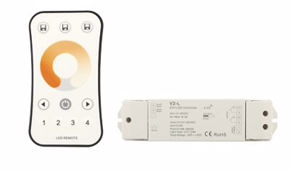
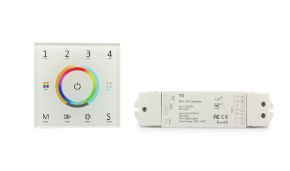
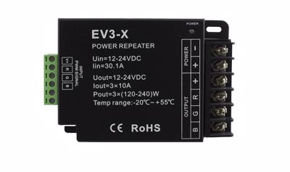
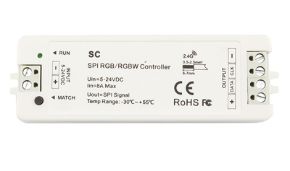
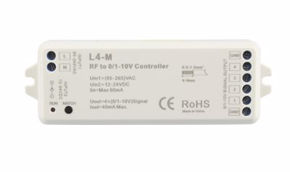
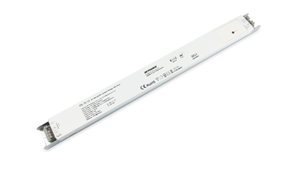
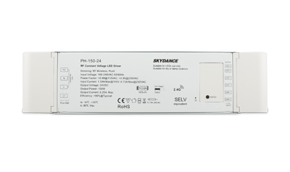
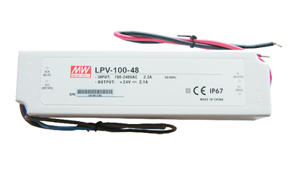
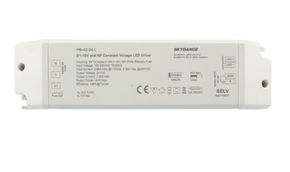
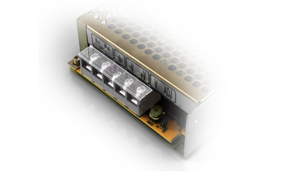
Composants pour le contrôle : contrôleurs, télécommandes et alimentations
Quelles sont les LED les plus lumineuses ?
Tendances dans le monde des LED RGB
Dans le gaming et le PC modding
Éclairage architectural et d'intérieur
En bref...
Pourquoi choisir la technologie LED RGB