







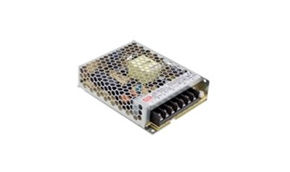
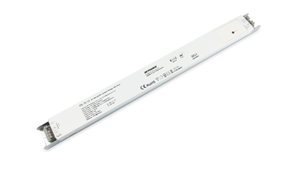
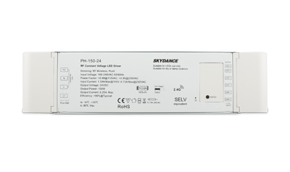
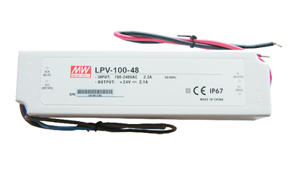


Power supply: how to choose it
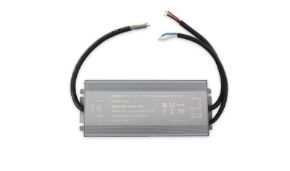
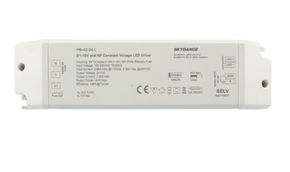
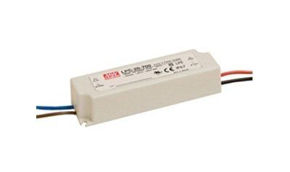
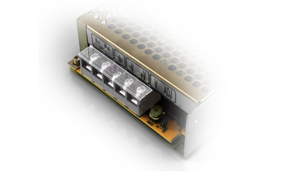
Today we want to help you understand how to select the perfect power supply for your LED strips. We will review all types, from 220V/230V dimmers to DALI and 0-10V systems. We will provide you with a technical and practical guide to avoid common mistakes and ensure maximum efficiency and longevity for your lighting installation. When designing a LED strip installation, attention often focuses on the light strip itself: its color, LED density, light quality. However, there is a component equally fundamental, if not more so, that determines the success or failure of the entire system: the power supply. This device, often underestimated, is the beating heart of LED lighting, responsible not only for providing power but for doing so in a stable, safe, and efficient manner. Choosing the wrong power supply can lead to a series of problems: annoying flickering, drastic reduction in LED lifespan, dangerous overheating, and lighting performance well below expectations. In this guide, we will explore every aspect, every parameter, and every option available on the market to help you select the ideal power supply for every possible application, from the home living room to commercial shops, from offices to industrial environments. The choice of power supply is never a marginal detail. It is a technical decision that impacts light quality, energy consumption, safety of people and environments, and the overall economic investment. A quality power supply, correctly sized, is insurance on the longevity and performance of your LED system. Conversely, a poor or inadequate power supply is the weak link in an otherwise perfect chain, destined to cause malfunctions and costly premature replacements. We will therefore immerse ourselves in the world of LED strip power supplies, meticulously examining the different product types, output signals, dimming technologies, electrical parameters, and practical considerations for installation. Whether you are a professional installer, a passionate hobbyist, or a private individual wanting to light their home competently, this guide will provide you with all the necessary knowledge to make a conscious, technical, and winning choice. Before delving into technical specifics, it is crucial to fully understand the physical and electrical role of the power supply in a LED strip system. LED strips, in the vast majority of cases, operate on low direct current (DC) voltage, typically 12V or 24V. The Italian and European electrical grid, however, supplies alternating current (AC) at 220V-230V. The power supply, also called a transformer or LED driver (although the latter term has a more specific connotation we will explore), is the bridge between these two worlds. Its primary task is therefore AC/DC conversion: it takes the AC mains voltage, reduces and rectifies it, transforming it into a stable, continuous voltage suitable for the operation of the light-emitting diodes. But its function goes far beyond simple conversion. A good power supply must also: This is the first major fork in the road when choosing the type of power supply. Understanding it is essential to correctly match the power source to the LED strip. These are by far the most common and used for standard LED strips. These power supplies maintain a fixed and strictly constant output voltage (e.g., 12V DC or 24V DC), regardless of the connected load (within the declared power limits). LED strips designed to work with this type of power supply have inside them current-limiting resistors or, in more advanced models, small integrated current regulators in series with groups of LEDs. In practice, the strip is built to "self-regulate" and draw the correct current when the nominal voltage is applied. The choice is simple: if your LED strip is rated for 12V, you will need a 12V constant voltage power supply. If it's 24V, you will need a 24V constant voltage power supply. The golden rule is: the voltage of the power supply and that of the LED strip must match perfectly. Installation is simple and allows you to connect multiple strips in parallel to the same power supply, provided the sum of the powers does not exceed the transformer's capacity. These are specific for particular types of LED strips or high-power LED modules that do not have integrated limiting resistors. These power supplies maintain a fixed and constant output current value (e.g., 350mA, 700mA, 1050mA), while the output voltage can vary within a certain range (e.g., 12-24V DC) to adapt to the characteristic voltage drop of the LEDs. LED strips designed for constant current are usually of the "LEDs in series" type and require the current flowing through them to be precisely controlled to ensure uniform illumination and to prevent burnout. A classic example is high-end COB (Chip on Board) strips or some LED modules for professional architectural lighting. In this case, the rule is: the nominal current of the power supply must exactly match the current required by the LED strip. Connecting a constant current strip to a constant voltage power supply (or vice versa) will almost certainly lead to its immediate destruction. This type of installation requires greater attention, often under the design of a lighting designer. Now that we have established the basic principles, we can examine in detail the different categories of power supplies available on the market, such as those present in LED Point's catalog, each with specific characteristics, advantages, and fields of application. This category represents an integrated and particularly convenient solution for those who want intensity control directly from the main power line. This is not just a simple power supply, but a combined device that integrates both AC/DC power supply function and regulation (dimmer) function. Dimming occurs on the AC input side (at 220-230V), usually through TRIAC technology (the same used by common dimmers for halogen or incandescent lamps). This means you can use a normal wall dimmer (rotary or touch) compatible with resistive/inductive loads, or, in more advanced models, the dimmer is integrated into the body of the power supply itself and is controlled via cable with a remote button or potentiometer. Advantages: the solution is often more economical compared to buying a standard power supply + a separate DC dimmer. Installation can be simplified, especially in renovations where an old wall dimmer is already present. Immediate compatibility with many standard home automation systems that act on the 220V line. Disadvantages and considerations: the quality of TRIAC dimming on LED loads is not always perfect, especially at low brightness levels, where slight flickering or a limited regulation range may occur. It is essential to verify the specific compatibility between the dimmable power supply and the wall dimmer you intend to use, as well as with the LED strip itself (which must be dimmable). It requires that the dimmer wiring (if external) reaches the power supply installation point, which is often placed upstream of the strip (e.g., in the false ceiling). Generally, this solution is recommended only for outdoor environments. The ultra-thin power supply, as the name suggests, stands out for its extremely reduced profile, often less than 20mm thick. This innovative design responds to the need for installations in cramped and limited spaces where a traditional, thicker power supply could not fit. Typical applications: installations in plasterboard ceilings with reduced cavities. Behind recessed furniture, wall-mounted TVs, kitchen cabinets. Inside small-profile lighting channels. In any context where aesthetics and minimal footprint are primary requirements. Technical characteristics: to achieve such compact dimensions, these power supplies often use high-quality components and high-frequency circuits. They can be slightly more expensive for the same power compared to standard models. Heat dissipation, critical in such tight spaces, is designed very efficiently, often through full use of the metal frame as a heatsink. The power available in this format may be limited (usually up to 100-150W) for thermal reasons. This type is designed for the end user, DIY enthusiasts, or temporary installations where simplicity and speed of setup are everything. The power supply comes complete with an input cable with a Schuko plug (Italian) and, often, an output cable with a pre-soldered or prepared connector (like a DC jack, a screw connector, or a snap connector compatible with quick-connect LED strips). Practical advantages: no professional electrical wiring work required on the primary side (230V). You just need a power outlet nearby. Installation in seconds: plug the power cord into the outlet and connect the connector to the LED strip. Ideal for lighting a display case, shelf, furniture, or creating ambient lighting in a living room without construction work. Easily removable and repositionable. Limitations: cable length is predefined and may not be suitable for all installations. The aesthetics of visible cables may not be ideal for fine, permanent installations. Generally available in medium-low power ranges (up to 60-100W). The "RX" designation on a power supply indicates the presence of a wireless control signal receiver integrated directly into the unit. This opens the door to a world of wireless remote control, perfect for installations where wiring a traditional dimming signal (like 0-10V) would be complex or unsightly. Common transmission technologies: RF (radio frequency) uses radio frequencies (e.g., 433 MHz or 2.4 GHz) to communicate with a remote control. Offers considerable range (up to 20-30 meters in open spaces, less through thick walls). Does not require a direct line of sight between remote and receiver. Wi-Fi: the power supply connects directly to the home Wi-Fi network. Control is done through a dedicated app on a smartphone, tablet, or via voice assistants (Amazon Alexa, Google Assistant, Apple HomeKit). Allows remote control (from anywhere in the world) and integration into complex home automation scenarios (e.g., "When I get home, turn on the kitchen lights to 50%"). Bluetooth / Bluetooth mesh: direct control from a smartphone without needing a central hub. Range is limited to the surrounding environment (about 10 meters). Bluetooth Mesh allows creating a network between multiple devices to extend the range. Advantages of RX control: absolute installation flexibility. Place the power supply where it's most convenient (near the outlet, in the ceiling) and control the light from any point in the room, or the world. Reduction of control cables: eliminates the need to run the dimmer signal cable (e.g., 0-10V) from the control point to the power supply installation point. Multi-control and scenarios: with a good system, a single remote or a single app can manage multiple power supplies/light groups independently. Easy retrofit: ideal for modernizing an existing system without having to break walls for new cables. Practical considerations: potential interference. RF signals can be subject to interference from other devices on the same frequency. Wi-Fi systems depend on the stability of the home network. Remote control batteries: for RF systems, you must remember to replace the remote batteries. Initial setup: Wi-Fi and Bluetooth systems require an initial pairing/configuration procedure via an app, which for some less experienced users can be a small barrier. 0-10V analog control protocols represent an established and reliable standard in the world of professional lighting, particularly appreciated for its conceptual simplicity and robustness. Although the terminology may seem unambiguous, there are subtle but important variants that are essential to understand for perfect integration. It is the most common. In this system, a control signal in variable direct current voltage between 0 Volts and 10 Volts is sent from the dimmer switch (or controller) to the control input of the power supply. The relationship is direct: 0V corresponds to lights off (or minimum brightness, depending on implementation), 10V corresponds to maximum brightness (100%). Intermediate values (e.g., 5V) command 50% brightness. The signal power is very low (typically a few milliamps), so it can be transmitted on small-gauge cables (e.g., 0.5 mm² or 0.75 mm²). Standard wiring requires two dedicated wires in addition to the power wires: one for the signal (usually purple or gray according to standards) and one for the common signal ground (often black or white). This is a variant of the standard, defined by the IEC 60929 norm. The key difference is in the behavior at the extremes. In a 1-10V system, the shutdown command occurs when the signal drops below 1 Volt. The range from 1V to 10V controls brightness from an adjustable minimum (usually around 1%) to 100%. This creates a small "dead band" (from 0V to ~0.8V) dedicated to shutdown, which can offer greater stability and prevent unwanted turn-ons due to small electrical disturbances on the control cable. To turn off the lights, the controller brings the signal to less than 1V, not necessarily to 0V. The "0/1-10V" designation often indicates a power supply that is compatible with both standards. It uses intelligent input circuits capable of correctly interpreting both a signal that goes to 0V for shutdown (0-10V standard) and one that drops below 1V (1-10V standard). This flexibility makes it the safest choice when you are not sure of the type of controller you will use or when operating in contexts with devices from different brands. It has become the de facto standard in high-quality products to ensure maximum interoperability. Wiring is simple but requires attention, as there are different configuration modes. 2-wire configuration: the most common way. Two wires connect the controller output to the power supply control input (CV+, CV-). In this configuration, the power supply also provides a reference voltage (usually 10V) to the controller. The disadvantage is that voltage drop over a long cable can slightly alter the signal. 3 or 4-wire configuration: used in larger systems or for greater precision. Separates the controller power circuit (which takes power from the mains or another source) from the pure signal circuit to the power supplies. This eliminates the effects of voltage drop and allows connecting many more power supplies to a single controller without signal degradation. It is the professional choice for medium-large commercial or hotel installations. DALI (Digital Addressable Lighting Interface) is not simply an alternative to 0-10V: it is a paradigmatic leap towards fully digital, bidirectional, and individually addressable control of each light point in an installation. Managed by the IEC 62386 standard, DALI transforms lighting from a "dumb" system into an intelligent network of communicating devices. A DALI system is composed of: DALI controller (or Gateway): the brain of the system. It can be a dedicated control panel, an interface for building management systems (BMS), or a bridge that converts protocols like KNX or BACnet into DALI commands. DALI device (Power Supplies/Drivers): each DALI-compatible power supply has an integrated microprocessor and an assignable unique address. It can receive commands (on/off, set to X%, choose scene) and send back information (status, power consumption, operating hours, fault signaling). DALI bus: a simple pair of wires (non-polarized) on which digital data packets travel. Unlike 0-10V, the same bus can control up to 64 individually addressed devices (or 16 groups, or 16 scenes). The voltage on the bus is low (about 16V) and the current is limited. The DALI protocol allows for advantages that would otherwise be unthinkable. Let's discover why. Individual addressing and dynamic groups: you can command individual power supplies from a single panel. Devices can be assigned to logical groups (e.g., "North Facade", "First Floor Offices") in a totally flexible way via software, without having to physically rewire anything. Bidirectional communication: the power supply can signal a fault, overtemperature, or send real-time consumption data. This is revolutionary for predictive maintenance and energy management. Extremely stable and precise regulation: the digital signal is immune to electromagnetic interference and voltage drop on cables, ensuring smooth and 100% repeatable regulation. Complex Lighting Scenes: it is possible to store up to 16 pre-set "scenes" in the controller (e.g., "Meeting", "Presentation", "Cleaning") recallable with a single command. Integration with BMS and Home Automation: it is the most widespread and integrated lighting protocol in smart building management systems. Considerations: the cost per light point is higher than an analog system. Requires initial programming by qualified personnel for address assignment and group configuration. It is the mandatory choice for corporate offices, hotels, museums, high-end retail, and all projects where control, future flexibility, and diagnostics are priorities. The "Clear" definition refers to a specific constructive characteristic of the isolation transformer inside the power supply. In traditional power supplies, the transformer core is typically made of ferrite, a ferro-magnetic ceramic material colored black or dark gray. In "Clear" or "Transformerless" power supplies (in a specific constructive sense), the circuit uses high-frequency switching topologies that can do without the large ferrite transformer or use a much smaller one, wound on a "clear" (transparent) core of different materials. Reduced footprint: the absence of the bulky transformer allows for particularly compact and lightweight power supplies. Modern design: often the casing is in high-quality white or transparent plastic, with a more "technological" and less industrial appearance. Silence: ferrite transformers, if of low quality or under heavy loads, can emit a low-frequency hum (magnetostrictive noise). Clear power supplies are virtually silent. Potentially greater efficiency: high-frequency topologies can achieve very high efficiencies (>90%). They are the perfect choice for installations in high-end residential environments or design commercial spaces where the power supply might be partially visible or installed in "clean" environments (e.g., inside a design furniture piece, in an open niche, near living areas). They are often chosen for their discreet appearance and guarantee of total silence. It is important to verify that they still guarantee the safety galvanic isolation, which in these models is achieved with advanced circuit techniques and very high-quality components. The TRIAC (Triode for Alternating Current) is a semiconductor component that acts as an electronic switch for alternating current. In dimmers for traditional lamps, it controls brightness by "cutting" portions of the sinusoidal waveform of the mains voltage. Leading edge dimming (forward phase-cut): the TRIAC activates after a certain delay from the start of each positive/negative half-wave of the voltage, "cutting" its first part. Current starts flowing only from that point onward. It is the classic technology for resistive loads (incandescent, halogen). Trailing edge dimming (reverse phase-cut): the TRIAC activates at the beginning of the half-wave but turns off before it is completed, "cutting" its tail. This technology, often implemented with MOS transistors (MOSFET), is much more suitable for capacitive loads like LED switching power supplies. It offers a softer start, less noise, and reduces interference problems. LED switching power supplies present non-linear impedance. When connected to a TRIAC dimmer, they can cause: Flickering: at low dimming levels, the "clipped" voltage supplied by the dimmer might not be sufficient to start and keep the power supply circuit stable, causing visible trembling. Acoustic noise (buzz): internal components (especially coils and capacitors) can vibrate at the dimmer's switching frequency. Limited regulation range: the light might not turn off completely or start regulating only after the knob is already at 20-30%. Flashing at turn-on/off. The solution: for quality TRIAC dimming, it is essential to use power supplies expressly declared "TRIAC-dimmable" or "Leading/Trailing Edge dimmable". These integrate compensation circuits (startup and hold-up circuits, "bleeder resistors") that simulate a minimal resistive load, stabilizing the dimmer's operation and ensuring smooth, silent regulation over a wide range. The choice of the wall dimmer is equally crucial: it's better to choose brand-name models, specific for low-wattage LED loads, preferably trailing edge. Efficiency is the ratio between output power (useful for LEDs) and power drawn from the grid. An efficiency of 90% means that to provide 90W to the LEDs, the power supply draws 100W from the outlet, dissipating 10W as heat. Always look for power supplies with efficiency ≥85%, better if >90% (especially for powers above 50W). High efficiency means: lower electricity bill, less heating, greater reliability and lifespan of the component. The best models reach 94-95%. Indicates resistance to dust and water. It is fundamental for the installation environment. IP20: for dry interiors only (false ceilings, furniture, closed electrical panels). The most common. IP65: dust-tight and protected against water jets from any direction. Can be installed in kitchens, bathrooms (not in direct contact with water), outdoors under eaves or in damp areas. The casing is sealed with gaskets. IP67: waterproof against temporary immersion (up to 1 meter for 30 minutes). For ground-level installations, in gardens, or situations with risk of flooding. Measures how effectively the power supply uses the current drawn from the grid. A low PF (e.g., 0.5) indicates it draws a lot of reactive current, which does no useful work but overloads the grid. A high PF (≥0.9) is an indicator of design quality and lower impact on the electrical grid. For installations of a certain size (especially professional/commercial), it is often a mandatory requirement by norms and to optimize energy costs. The lifespan of a quality power supply is linked to the durability of its electrolytic capacitors. Look for models that specify a lifespan at full load and at a certain temperature (e.g., 50,000 hours at 50°C). Operating temperature is crucial: for every 10°C increase, capacitor life halves. Choosing an oversized power supply (with margin) makes it work cooler, prolonging its life. A 3-5 year warranty is a sign of the manufacturer's seriousness. A good power supply must have low levels of conducted and radiated electromagnetic noise (within CE regulatory limits) to not disturb radios, TVs, audio equipment. Ripple is a small residual undulation of the output voltage/current. Too high ripple can cause imperceptible flickering and stress the LEDs, reducing their life. The technical sheets of the best products report the maximum ripple value (e.g., < 5% of the nominal voltage). Erring in sizing is the most common and costly mistake. Follow this foolproof procedure: P_tot (W) = Power per meter (W/m) * Total length (m) [for LED strips] The power supply should never operate at 100% of its capacity. Working at the limit generates excessive heat, drastically reduces lifespan and increases the risk of failure. Apply a 20-30% margin to the calculated power. Among standard commercial values (30W, 50W, 75W, 100W, 150W, 200W, etc.), choose the one immediately above your calculation. In our example, we will choose a 150W power supply. Verify that the output voltage (12V or 24V) matches EXACTLY that of all the strips and modules to be connected. In a mixed project, you might need two separate power supplies (e.g., one 24V for the strips and one CC for the module). If the distance between the power supply and the first connection point of the strip is more than 3-4 meters, the voltage drop on the power cable can become significant, especially at 12V. Solutions: Use a 24V power supply (which for the same power carries half the current, halving the voltage drop). Increase the cross-section of the connection cables (e.g., use 1.5 mm² or 2.5 mm² cable instead of 0.75 mm²). Position the power supply as close as possible to the load, or use multiple distributed power supplies along the path. Not all power supplies are equal. Here's what to look for beyond price: Efficiency (η): explicit, preferably with a graph showing it at different loads. >90% is excellent. Power factor (PF): value at full load. >0.90 is excellent, >0.95 is outstanding (often on models with active correction, PFC). Operating Temperature (Ta): the ambient temperature range in which the power supply guarantees full performance (e.g., -25°C ~ +50°C). The wider, the better. Lifespan (lifetime): specified in hours, at a certain temperature (e.g., "50,000 h @ Tc = 50°C"). The higher, the better. Protections: the list must include: Short Circuit (SCP), Over Load (OLP), Over Voltage (OVP), Over Temperature (OTP). Safety certifications: CE marks (mandatory), but also RoHS (lead-free), REACH, ENEC, UL (for US market) are signs of quality control. Warranty: a 2-5 year warranty indicates the manufacturer's confidence in the product's durability. A quality power supply is also recognized physically: Greater weight (indicates use of robust components and adequate heat sinks). Aluminum heat sinks thick and well fastened. Flexible connection cables with adequate cross-section. All terminals are of quality, with flat-head screws that don't cut the copper. The silkscreen on the board is precise, components are well soldered and not wobbly. LED power supply is constantly being updated with the arrival of new products and new technologies. Below are some of the latest news. A rapidly growing trend in commercial and high-end residential. Uses network cable (Cat.5e/6/6a) to provide both power (up to 90W with the PoE++ IEEE 802.3bt standard) and control data to each light point. Each fixture or strip needs a small PoE driver that decodes power and signal. The advantages are enormous: cable reduction (a single ethernet cable for power and control), very low safety voltage power (48V), individual IP control of each light point, native integration with IT networks and building automation systems. Advanced technique that combines two regulation methods in the same driver: analog dimming (0-10V) or digital (DALI) for coarse regulation + Pulse Width Modulation (PWM) at very high frequency (>20kHz, imperceptible) for fine regulation at low levels. This overcomes the limits of pure analog dimming, ensuring smooth, flicker-free regulation from 1% to 100% brightness, even with LEDs that typically have difficulty dimming at very low intensities. Becoming increasingly common for safety and emergency lighting. In case of a blackout, the power supply automatically switches to battery power, keeping the lights on (often at reduced power) for the time required by regulations (1-3 hours). They integrate perfectly without needing separate circuits. The trend is towards smaller, more efficient power supplies with higher specific power (W per cm³). Some latest-generation models are so compact they can be integrated directly into the extruded profiles for LED strips, completely eliminating the need for a separate power supply box for linear installations up to 30-50W. After exploring every technology, weighing every pro and con, we have understood that the power supply is not an accessory, but the stable foundation on which to build the quality, longevity, and efficiency of your lighting project. Whether you are lighting a living room bookshelf or designing the architectural lighting for a luxury hotel, the principles remain the same: electrical compatibility, adequate sizing, construction quality, and choice of the right control interface. Investing time in the selection and a small surplus in the quality of the power supply will pay off abundantly over time, with flicker-free light, optimized consumption, maximum safety, and a longevity that will exceed every expectation. Choosing LED Point as a supplier means having at your side not only high-end, tested products but also the technical expertise to support you in every phase, from design to installation. Your journey towards perfect lighting begins with the right choice, today.Power supply: the importance of the right choice
What a power supply does and why it's essential
The key difference: constant voltage vs. constant current power supply
Constant voltage power supply (CV)
Constant current power supply (CC)
Detailed analysis of power supply types on the market
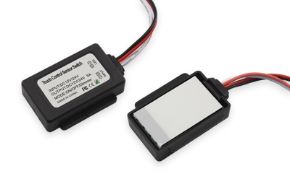
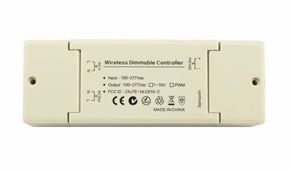
Dimmer 220V / 230V
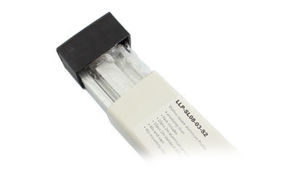
Ultra-thin (slim) power supply
Plug & play power supply (with quick-connect cable)
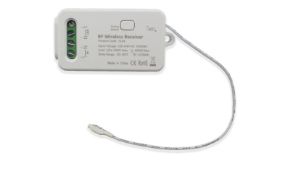
Power supply and output signal: RX and the universe of wireless control
The analog world: 0/1-10V, 0-10V and 1-10V - Subtle differences and practical applications
0-10V: the standard protocol
1-10V: the variant with "dead travel"
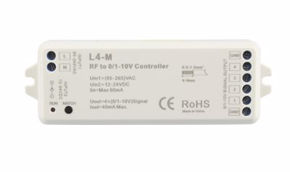
0/1-10V: the hybrid and intelligent version
Wiring and practical configurations
DALI: the digital protocol for professional lighting
Architecture and functioning
Unbeatable advantages for professional projects
"Clear" power supplies: when aesthetics is a design requirement
Aesthetic and practical advantages
Ideal field of application
TRIAC: the 220V network dimmer - LED compatibility
The concept of "phase-cut"
The challenge of compatibility with LEDs
Beyond power: the other critical parameters for choice
Efficiency (η - Eta)
Protection class (IP)
Power factor (PF)
Lifespan and warranty
Electrical noise (EMI) and ripple
Power supply sizing: the formula
Step 1: calculate total load power (P_tot)
Or: P_tot (W) = Power per module (W) * Number of modules
Complex Practical Example: Kitchen lighting project. You have 4m of strip under cabinets (14.4 W/m) + 2m of strip inside the hood (9.6 W/m) + 1 over-counter linear module at 25W.
Calculation: (4m * 14.4W/m) + (2m * 9.6W/m) + 25W = 57.6W + 19.2W + 25W = 101.8 Total Watts.Step 2: apply the 20-30% safety margin
P_minimum_power_supply = P_tot * 1.25 (or 1.30)
Continuing the example: 101.8W * 1.25 = 127.25 minimum Watts required.Step 3: choose the commercial value and correct voltage
Step 4: consider distance and voltage drop
How to evaluate the quality of a power supply: reading the technical sheet
Parameters to look for
Construction and components
The future of LED power supply: trends and innovations
Power over Ethernet (PoE) for lighting
Hybrid dimming
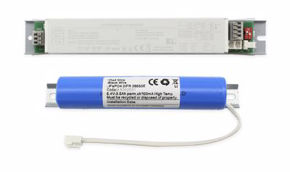
Power supplies with integrated backup battery
Miniaturization and integration
Power supply: a conscious choice for perfect lighting