








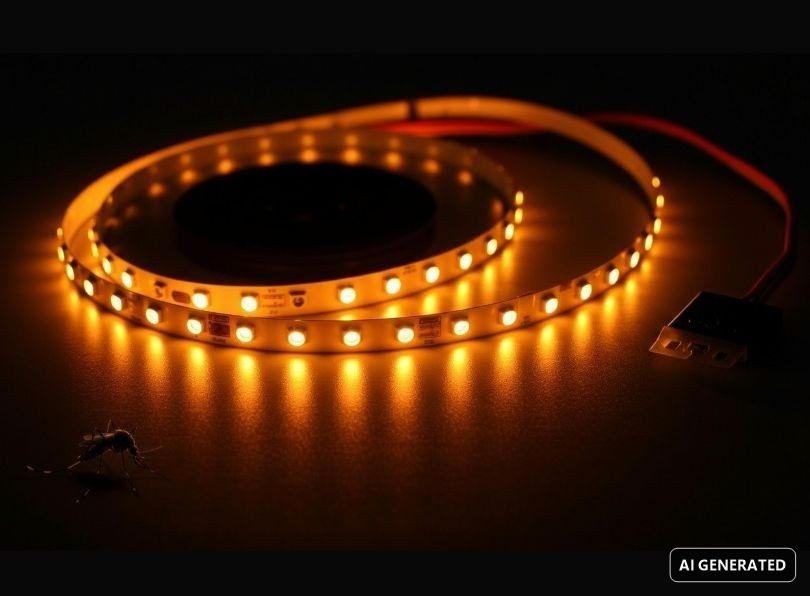
La relation entre les moustiques et la lumière est bien plus complexe qu'il n'y paraît à première vue. Il ne s'agit pas simplement de "lumière allumée = moustiques présents", comme beaucoup le pensent instinctivement. La réalité scientifique est que les insectes répondent de manière très spécifique à certaines longueurs d'onde du spectre électromagnétique visible et ultraviolet, et que certains spectres les attirent de manière irrésistible tandis que d'autres les laissent pratiquement indifférents ou même les repoussent. Comprendre cette distinction est fondamental pour adopter des stratégies d'éclairage réellement efficaces.
Selon l'Organisation Mondiale de la Santé (OMS), les moustiques sont responsables de plus de 700 000 décès par an dans le monde, transmettant des maladies telles que le paludisme, la dengue, le chikungunya et le Zika. En Italie, la diffusion du Moustique tigre (Aedes albopictus) représente un problème croissant même dans les régions septentrionales. La prévention avec des systèmes d'éclairage appropriés n'est pas seulement un confort : c'est une question de santé publique.
Dans cet article, nous explorerons en profondeur la physique de la vision des insectes, les caractéristiques biologiques qui rendent les moustiques plus ou moins sensibles à certains spectres lumineux, et tout ce qu'il faut savoir sur les lampes anti-moustiques, les LED anti-insectes, les solutions d'éclairage à spectre réduit comme les LED ambre. Nous aborderons également l'efficacité réelle des lampes UV pour moustiques, les avantages et inconvénients des anti-moustiques électriques, et les stratégies d'installation les plus intelligentes pour protéger chaque environnement, de l'appartement urbain à la villa avec jardin, de l'établissement public au camping professionnel.
Moustiques et lumière : comment voient les insectes ?
Pour comprendre la relation entre les moustiques et la lumière, il est nécessaire de partir d'un fait fondamental souvent négligé : les insectes ne voient pas le monde comme nous, êtres humains. Leur système visuel a évolué de manière radicalement différente, optimisé pour répondre à des signaux lumineux complètement différents de ceux qui intéressent la vision humaine. Comprendre cette différence est la clé pour choisir la lumière anti-moustique la plus efficace et pour comprendre pourquoi certaines LED attirent les insectes et d'autres non.
Le spectre électromagnétique visible et ultraviolet
Le spectre électromagnétique comprend toutes les radiations, de celles à longueur d'onde très courte (rayons gamma, rayons X) à celles à longueur d'onde très longue (ondes radio). La lumière visible pour l'œil humain occupe une bande très restreinte de ce spectre, comprise approximativement entre 380 et 780 nanomètres (nm). En dessous de 380 nm commence la région ultraviolette (UV), invisible à l'homme mais visible à de nombreux insectes. Au-dessus de 780 nm commence l'infrarouge, également invisible à l'œil humain.
Les insectes, dans leur extraordinaire diversité évolutive, ont développé des photopigments oculaires sensibles à des régions spectrales souvent très différentes de celles des humains. En particulier, la plupart des espèces d'insectes présentent des photopigments maximalement sensibles dans trois grandes bandes, voyons lesquelles.
- Ultraviolet (UV) : 300-380 nm — Région invisible à l'homme, mais primaire pour de nombreux insectes nocturnes et diurnes.
- Bleu-Vert : 430-530 nm — Zone de haute sensibilité pour les papillons de nuit, coléoptères, mouches et moustiques.
- Jaune-Vert : 530-580 nm — Zone de sensibilité moyenne, variable selon les espèces.
Ce qu'il est fondamental de noter est que la majorité des insectes ne possède pas de photopigments sensibles au rouge (au-delà d'environ 650 nm). Pour eux, la lumière rouge est pratiquement invisible, comme s'il faisait nuit. C'est la base scientifique de la recommandation d'utiliser des lumières chaudes et ambrées pour ne pas attirer les insectes.
Les yeux composés des insectes
Les insectes possèdent des yeux composés, des structures extraordinairement complexes formées de centaines ou de milliers d'unités élémentaires appelées ommatidies. Chaque ommatidie perçoit une petite portion du champ visuel, et le cerveau de l'insecte assemble toutes les informations en une image globale en "mosaïque". Ce système est exceptionnellement sensible aux mouvements rapides et aux sources de lumière, même de faible intensité.
Les yeux composés présentent, chez de nombreuses espèces nocturnes, une structure particulièrement efficace pour collecter la lumière dans des conditions de faible éclairage. Chez les papillons de nuit, par exemple, la pupille de l'ommatidie peut s'expandre considérablement la nuit, rendant ces insectes extraordinairement sensibles même à des lumières de très faible intensité. Cela explique pourquoi une seule ampoule dans l'obscurité de la nuit peut attirer des centaines d'insectes depuis une grande distance.
Pourquoi les insectes sont-ils attirés par la lumière : la phototaxie
Le comportement d'orientation des insectes vers la lumière s'appelle la phototaxie positive. Ce phénomène a fait l'objet de nombreuses hypothèses scientifiques au fil des décennies. Parmi les plus accréditées figurent :
- Théorie de l'orientation lunaire : les insectes nocturnes utilisent la lune (ou les étoiles) comme point de référence fixe pour naviguer en maintenant un angle constant avec la source lumineuse. Lorsqu'ils rencontrent une source lumineuse artificielle beaucoup plus proche, le système se "trompe" et amène l'insecte à tourner en spirale autour de la source ;
- Théorie de l'infrarouge comme signal de voie libre : certains chercheurs émettent l'hypothèse que les insectes utilisent la lumière UV/bleue comme signal pour identifier des passages libres (trous dans le feuillage, sorties de cavités) par lesquels s'échapper. Une lumière intense à ces fréquences signalerait un espace ouvert ;
- Théorie de l'éblouissement photo : la lumière intense peut simplement submerger le système visuel de l'insecte, l'empêchant de s'orienter normalement et le conduisant à se déplacer de manière chaotique vers la source.
Quel que soit le mécanisme précis, et il s'agit presque certainement d'une combinaison des trois, le résultat pratique est le même : une lumière riche en UV et en bleu est extraordinairement attrayante pour la plupart des insectes nocturnes, tandis qu'une lumière chaude, riche en rouge et orange, avec peu ou pas d'UV et peu de bleu, s'avère beaucoup moins intéressante.
La courbe de sensibilité spectrale des insectes vs. l'œil humain
Le tableau suivant compare les longueurs d'onde de sensibilité maximale de l'œil humain avec celles des principaux insectes parasites ou nuisibles :
| Espèce | Pic UV (nm) | Pic bleu-vert (nm) | Pic jaune-vert (nm) | Sensibilité au rouge (>650nm) |
|---|---|---|---|---|
| Œil humain | — | 420-440 (bleu) | 530-540 (vert) | Oui (jusqu'à ~700 nm) |
| Papillons de nuit (Lépidoptères nocturnes) | 330-360 | 440-480 | 520-560 | Non (ou minimale) |
| Moustiques (Aedes, Culex) | 330-360 | 460-490 | 530-550 | Non |
| Mouches communes (Musca domestica) | 340-360 | 440-470 | 530-540 | Non (ou minimale) |
| Abeilles (Apis mellifera) | 330-350 | 430-450 | 535-545 | Non (le rouge = noir) |
| Coléoptères nocturnes | 340-380 | 470-510 | 520-560 | Minimale |
| Grillons (Acheta domesticus) | 330-360 | 450-490 | 520-550 | Non |
Comme on peut le constater clairement dans le tableau, aucune des principales espèces d'insectes parasites n'est sensible au rouge. Cette donnée, apparemment simple, a des implications énormes pour le choix de l'éclairage. Une LED qui émet principalement dans la bande des rouges et des oranges (au-dessus de 590 nm) est fonctionnellement invisible pour presque tous les insectes considérés.
Intensité lumineuse et attraction : la cause n'est pas seulement la couleur
Outre la couleur (longueur d'onde), l'intensité lumineuse joue également un rôle important dans l'attraction des insectes. Une lumière ambrée très intense peut quand même attirer certains insectes (bien qu'en mesure beaucoup moindre qu'une lumière bleue de même intensité), tandis qu'une lumière bleue de très faible intensité aura des effets relativement limités. En pratique, la meilleure stratégie combine :
- un spectre d'émission avec des longueurs d'onde au-delà de 550-590 nm (ambre, orange, rouge).
- une intensité réduite au nécessaire, de préférence réglée via des gradateurs.
- des capteurs de présence ou de mouvement pour limiter le temps d'allumage.
Cette combinaison représente l'approche la plus rationnelle et pratique au problème moustiques et lumière dans tout contexte résidentiel, commercial ou professionnel.
Moustiques et lumière : la relation complexe entre phototaxie et attracteurs primaires
Lorsqu'on parle de moustiques et de lumière, il est fondamental de démystifier immédiatement un mythe très répandu : les moustiques, contrairement aux papillons de nuit et aux coléoptères, ne sont pas principalement attirés par la lumière. Leur comportement est guidé par une hiérarchie de stimuli beaucoup plus complexe, dans laquelle la lumière occupe un rôle secondaire par rapport à d'autres attracteurs biologiques. Cette distinction est essentielle pour comprendre pourquoi certains systèmes anti-moustiques basés uniquement sur la lumière UV sont partiellement efficaces, et comment intégrer le choix lumineux avec d'autres stratégies.
Les attracteurs primaires des moustiques
Les femelles de moustiques (les seules qui piquent, car elles ont besoin de sang pour le développement des œufs) utilisent un système de localisation des victimes extraordinairement sophistiqué, basé sur une hiérarchie de stimuli chimiques, physiques et thermiques :
Dioxyde de carbone (CO2)
L'attracteur principal des moustiques est le dioxyde de carbone que les êtres humains (et les animaux) expirent avec leur respiration. Les moustiques possèdent des récepteurs olfactifs hautement sensibles au CO2, capables de détecter sa présence à des distances supérieures à 50 mètres. Le nuage de CO2 qui se forme dans l'air est le premier signal qui guide le moustique vers sa victime.
Chaleur corporelle et convection thermique
À distance plus rapprochée (moins de 10 mètres), les moustiques perçoivent la chaleur corporelle irradiée par la peau. Les thermorécepteurs des antennes sont extrêmement sensibles même à de petites différences de température. Une personne qui vient de faire de l'exercice ou qui se trouve dans un environnement chaud est significativement plus attrayante pour les moustiques précisément à cause de l'augmentation de la température cutanée.
Composés organiques volatils (COV)
La sueur humaine contient des dizaines de composés organiques volatils que les moustiques reconnaissent comme signal de présence d'une victime : acide lactique, ammoniac, acide urique, octénol et bien d'autres. La composition spécifique de ces composés varie d'un individu à l'autre, ce qui explique pourquoi certaines personnes sont choisies par les moustiques beaucoup plus que d'autres. Des études publiées dans des revues comme Plos One ont démontré que cette variabilité est en partie génétiquement déterminée.
Acide lactique et température de la peau
L'acide lactique produit pendant le métabolisme musculaire, combiné à l'octénol présent dans la sueur, constitue l'une des combinaisons chimiques les plus attrayantes pour les moustiques. Cela explique pourquoi ceux qui pratiquent un sport ou se trouvent dans des environnements étouffants sont piqués beaucoup plus fréquemment.
Le rôle secondaire de la lumière pour les moustiques
Établi que le CO2, la chaleur et les COV sont les attracteurs primaires, la lumière reste néanmoins un facteur secondaire mais non négligeable dans le comportement des moustiques, entrons maintenant dans le détail
Phototaxie chez les moustiques
Des recherches menées dans des universités américaines (dont l'Université de Californie à Riverside) ont démontré que les moustiques utilisent des longueurs d'onde spécifiques de la lumière pour réguler leurs rythmes circadiens et comme aide à l'orientation en l'absence de stimuli chimiques. En particulier :
- lumière verte (480-560 nm) : génère une phototaxie positive chez les moustiques Aedes aegypti (l'espèce qui transmet la dengue et le Zika). C'est la longueur d'onde la plus attrayante pour cette espèce ;
- lumière bleue (400-480 nm) : également attrayante, mais dans une mesure légèrement inférieure par rapport au vert chez les moustiques communs italiens ;
- lumière ultraviolette (280-380 nm) : attrayante pour de nombreux autres insectes, mais avec des effets variables chez les moustiques. Les moustiques tigres (Aedes albopictus), répandus en Italie, montrent une sensibilité UV supérieure à la moyenne ;
- lumière jaune/ambre (550-620 nm) : pratiquement aucune réponse positive. Dans certaines expériences, la lumière ambrée a montré un effet légèrement répulsif ;
- lumière rouge (>640 nm) : absence quasi totale de réponse. Le moustique se comporte comme en l'absence de lumière.
La question du moustique tigre et de la lumière bleue
Le moustique tigre (Aedes albopictus), espèce invasive originaire d'Asie tropicale désormais largement répandue dans toute l'Italie, présente certaines caractéristiques particulières concernant la relation avec la lumière. Contrairement à de nombreuses autres espèces de moustiques principalement nocturnes, le moustique tigre est actif principalement pendant les heures diurnes et crépusculaires. Cela le rend :
- moins dépendant de la lumière artificielle pour l'orientation par rapport aux espèces nocturnes ;
- plus sensible à la lumière bleue de la bande 420-480 nm typique des LED froides diurnes ;
- potentiellement attiré également par un éclairage à LED dans des environnements intérieurs pendant les heures diurnes.
Moustiques et lumière allumée la nuit : ce qui se passe vraiment
Beaucoup de gens se demandent : les moustiques sont-ils attirés par la lumière allumée ? La réponse correcte est : cela dépend de quelle lumière. Une lumière blanche froide (LED 6500K, néon fluorescent, ampoule halogène) avec un contenu élevé en bleu et UV est bel et bien un attracteur secondaire pour les moustiques, surtout en l'absence d'un hôte humain à proximité. Une lumière ambrée ou chaude à 2700K ou moins, en revanche, n'exerce pratiquement aucune attraction sur les moustiques.
Ce qui se passe réellement dans une situation estivale italienne typique : une famille dîne en terrasse avec les lumières blanches allumées. Les moustiques à proximité sont attirés vers la terrasse à la fois par le CO2 produit par les personnes, leur chaleur corporelle et les COV de la sueur, ainsi que par la lumière blanche qui sert de signal localisateur supplémentaire. Si l'on remplaçait ces lumières par des bandes LED ambrées, on éliminerait l'un des facteurs d'attraction, pas tout le problème mais une partie significative de celui-ci.
Qu'est-ce qui attire les moustiques dans la maison
Pour compléter le tableau, voici la liste complète des attracteurs des moustiques en milieu domestique, par ordre décroissant d'importance :
- personnes et animaux présents (CO2, chaleur, COV) : l'attracteur principal. Tant qu'il y a des personnes, il y aura des moustiques attirés ;
- portes et fenêtres ouvertes : l'entrée physique des moustiques dans la maison ;
- eau stagnante à proximité : l'habitat de reproduction, une stagnation d'eau grande comme une cuillère à café suffit pour les cycles reproductifs du moustique tigre ;
- éclairage riche en UV et bleu visible de l'extérieur : signal lumineux qui attire de l'extérieur les moustiques vers l'entrée des habitations ;
- odeurs alimentaires (fruits mûrs, boissons sucrées) : attracteur mineur mais présent ;
- humidité élevée : les moustiques préfèrent les environnements humides ;
- dioxyde de carbone atmosphérique : augmente avec la densité de personnes présentes.
La stratégie d'éclairage anti-moustique agit spécifiquement sur le point 4, mais doit être vue comme l'un des éléments d'une approche intégrée qui comprend également des moustiquaires physiques, des répulsifs, l'élimination des stagnations d'eau et, dans des cas spécifiques, des traitements insecticides.
Moustiques et lumière : aperçu global
Nous présentons ici quelques données significatives sur le marché mondial et italien des produits anti-moustiques et de l'éclairage insect-friendly. Ces chiffres aident à comprendre l'ampleur du phénomène/problème et les tendances en cours dans le secteur.
Données sur le marché mondial anti-moustiques
| Indicateur | Valeur | Source / Année |
|---|---|---|
| Marché mondial produits anti-moustiques | ~4,5 milliards USD | Grand View Research, 2024 |
| Taux de croissance annuel (CAGR) | ~5,8% (2024-2030) | Grand View Research, 2024 |
| Part de marché produits électroniques anti-insectes | ~22% du total | MarketsandMarkets, 2023 |
| Marché européen éclairage extérieur LED | ~8,2 milliards € | Mordor Intelligence, 2024 |
| Croissance segment LED insect-friendly | +12% annuel (estimation) | Analyse sectorielle, 2024 |
| Communes italiennes avec plan de lutte contre le moustique tigre | >2 000 | ISS, 2023 |
| Dépense moyenne italienne pour produits anti-moustiques/an | ~45-60 € par ménage | Federdistribuzione/IRI, 2023 |
| Économie potentielle avec LED ambrées vs LED blanc froid (énergie) | ~15-25% à lumens égaux | Analyse technique Ledpoint.it |
Diffusion du moustique Tigre en Italie
| Région | Niveau d'infestation | Tendance |
|---|---|---|
| Émilie-Romagne | Très élevé | Stable (historiquement première région touchée) |
| Vénétie | Très élevé | En augmentation |
| Lombardie | Élevé | En augmentation |
| Toscane | Élevé | Stable |
| Latium | Moyen-élevé | En augmentation |
| Campanie | Moyen | En augmentation |
| Sicile | Moyen | En augmentation significative |
| Piémont | Moyen | En augmentation |
| Ligurie | Élevé (zones côtières) | Stable |
| Sardaigne | Faible-moyen | En augmentation récente |
Les données mettent en évidence un tableau clair : le moustique tigre est désormais solidement installé dans presque toute la péninsule et sa progression vers le Nord et les zones montagneuses est en cours. Cela rend la protection contre les moustiques non plus un problème saisonnier limité aux régions méridionales, mais une nécessité répandue sur tout le territoire national de mai à octobre.
Dans ce contexte, l'éclairage se configure de plus en plus comme une solution non seulement de confort, mais d'intérêt sanitaire pour réduire l'exposition aux piqûres d'un insecte vecteur de maladies. La diffusion de cas de dengue en Italie en 2023-2024 (transmise par le moustique tigre) a encore accru la conscience de l'importance de la protection contre les insectes.
Quel spectre lumineux repousse les insectes ?
Le contexte biologique étant défini, il est maintenant temps de répondre avec précision à la question centrale de cet article : quelle lumière repousse les moustiques et, plus généralement, quelles longueurs d'onde du spectre lumineux rendent une source de lumière moins attrayante pour les insectes ? La réponse, soutenue par un solide corpus de recherche scientifique, est claire et peut se traduire en indications pratiques immédiates pour le choix des lampes.
La physique du spectre d'émission des LED
Les LED (Light Emitting Diodes) modernes n'émettent pas de lumière "blanche" de manière naturelle. La lumière blanche produite par les LED s'obtient de deux manières principales :
LED blue-chip + phosphore jaune (méthode la plus courante)
La méthode la plus répandue consiste à utiliser une puce LED qui émet dans le bleu (pic autour de 450-460 nm) et à la recouvrir d'un phosphore jaune qui absorbe une partie de la lumière bleue et la réémet sous forme de lumière jaune-vert. La combinaison de bleu résiduel et de jaune-vert produit à la perception humaine une lumière "blanche". Le problème est que ce type de LED conserve toujours un pic significatif dans la bande du bleu (environ 440-460 nm), justement celle la plus attrayante pour les insectes. Plus la température de couleur est "froide" (ex. 6500K), plus ce pic bleu est intense.
LED pc amber (phosphore converti ambre)
Les LED pc amber (Phosphor Converted Amber) utilisent une puce bleue à haute énergie recouverte d'un phosphore qui convertit la quasi-totalité de la lumière en une bande ambre-orange centrée autour de 590-610 nm. Le résultat est une lumière à la tonalité caractéristique dorée/ambrée, avec une présence résiduelle de bleu extrêmement réduite. Ces LED sont considérées comme les meilleures pour l'éclairage anti-insectes.
LED ambrée monochromatique
Les LED ambrées monochromatiques émettent à une longueur d'onde très spécifique, autour de 590-595 nm, sans aucun pic dans le bleu. Le rendu des couleurs (CRI) est très faible, tout apparaît jaunâtre, mais l'efficacité comme dissuasif pour les insectes est maximale. Elles sont utilisées dans des applications où l'absence d'insectes est prioritaire par rapport à la qualité de la lumière, comme dans les fermes, les campings, les établissements alimentaires.
La relation entre température de couleur (CCT) et attraction des insectes
La température de couleur corrélée (CCT), mesurée en Kelvin (K), est le paramètre le plus pratique pour s'orienter dans le choix d'une lampe anti-moustique. Voici le guide complet :
| Température (K) | Définition | Contenu de bleu | Attraction insectes | Notes |
|---|---|---|---|---|
| 6500K | Blanc daylight | Très élevé | ★★★★★ (maximale) | LED pour intérieurs/bureaux. À éviter absolument à l'extérieur |
| 5000K | Blanc froid | Élevé | ★★★★☆ | Encore très attrayant pour les insectes |
| 4000K | Blanc neutre | Modéré | ★★★☆☆ | Non recommandé pour l'extérieur en été |
| 3000K | Blanc chaud | Faible | ★★☆☆☆ | Acceptable, mais non optimal |
| 2700K | Blanc très chaud | Très faible | ★☆☆☆☆ | Excellent : peu d'attrait pour les insectes |
| 2200K | Extra chaud (similaire à une bougie) | Minimal | ☆☆☆☆☆ | Excellent : quasi aucune attraction pour les insectes |
| Ambre / PC Amber | Spectre 590-620 nm | Quasi absent | ☆☆☆☆☆ | Le meilleur en absolu pour ne pas attirer les insectes |
| Orange pur | 605-615 nm monochromatique | Absent | ☆☆☆☆☆ | Efficacité maximale anti-insectes, CRI très faible |
Études scientifiques à l'appui
La base scientifique de la recommandation d'utiliser des lumières chaudes/ambrées pour ne pas attirer les insectes est solide et découle de décennies de recherche entomologique. Parmi les contributions les plus significatives :
Étude de l'Université d'Exeter (2015)
Une importante étude menée par l'Université d'Exeter (Royaume-Uni) et publiée dans la revue Philosophical Transactions of the Royal Society B a analysé l'attractivité de différentes sources lumineuses pour 8 espèces d'insectes nocturnes. L'étude a confirmé que les LED blanches chaudes et l'éclairage au sodium basse pression (également appelé "lampes jaunes") attiraient significativement moins d'insectes que les LED blanches froides, les lampes fluorescentes et les lampes à vapeur de mercure.
Recherche de l'University of Southern Queensland (2017)
Une étude australienne a mesuré l'attraction de moustiques vers différentes sources lumineuses dans des conditions contrôlées. Les résultats ont montré que les pièges éclairés avec une lumière verte (520 nm) capturaient presque le double de moustiques par rapport à ceux éclairés avec une lumière blanche froide, confirmant la sensibilité particulière des moustiques à la bande vert-bleu. Inversement, les lampes à émission prédominante au-delà de 570 nm ne montraient aucun effet attractif significatif.
Recherche du Journal of Medical Entomology (2019)
Une revue systématique publiée dans le Journal of Medical Entomology a analysé 47 études sur l'utilisation de la lumière pour le contrôle des moustiques vecteurs. Les conclusions principales :
- la lumière UV augmente la capture dans les pièges lumineux pour de nombreuses espèces d'insectes, mais n'est pas le principal attracteur pour les moustiques en présence de stimuli chimiques ;
- les lumières à émission prédominante dans la bande 400-500 nm augmentent l'attraction des moustiques ;
- les lumières à émission prédominante au-delà de 560 nm ne montrent pas d'effets attractifs significatifs.
Quelle lumière éloigne les moustiques : synthèse
Sur la base des preuves scientifiques, la réponse à la question "quelle lumière éloigne les moustiques" peut être synthétisée en ces points opérationnels :
- choisir des LED avec une température de couleur 2200K-2700K pour tout éclairage extérieur estival ;
- privilégier les LED Amber ou PC Amber pour les zones où l'on souhaite une protection maximale contre les insectes (jardins, vérandas, piscines) ;
- éviter complètement les LED blanches froides (4000K-6500K) dans les zones extérieures pendant la saison estivale ;
- combiner le choix du spectre avec des capteurs de mouvement pour réduire le temps d'allumage ;
- réduire l'intensité lumineuse au nécessaire avec des gradateurs : une lumière moins intense, même si elle est froide, attire moins d'insectes qu'une lumière très intense.
Température de couleur des LED et Insectes
Le choix de la température de couleur des LED pour ne pas attirer les insectes change significativement selon le contexte d'utilisation : un jardin résidentiel a des besoins différents d'un restaurant avec terrasse, un camping d'un entrepôt alimentaire, une villa avec piscine d'un hôpital. Voyons comment s'orienter dans chaque cas.
Éclairage résidentiel extérieur (jardins, terrasses, balcons)
C'est le contexte le plus courant et celui dans lequel le problème moustiques et lumière est perçu avec la plus grande intensité. La soirée d'été en terrasse ou dans le jardin est le moment typique où le choix de l'éclairage fait la différence entre une expérience agréable et une expérience tourmentée.
Recommandations pour l'usage résidentiel extérieur
- Bandes LED 2700K pour l'éclairage périmétrique du jardin, des allées, des pergolas : la tonalité chaude crée une atmosphère intime et accueillante tout en minimisant l'attraction des insectes.
- Bandes LED ambrées ou oranges pour les zones de séjour (tables de jardin, espaces détente, piscines) : protection maximale contre les insectes combinée à une atmosphère lumineuse agréable et caractéristique.
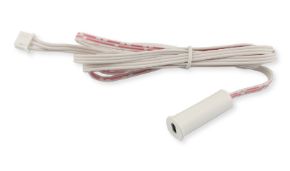
- Capteurs PIR pour l'éclairage des chemins : la lumière ne s'allume qu'au passage, restant éteinte le reste du temps et éliminant l'attraction des insectes aux heures où personne ne passe.
Restauration et établissements avec terrasses
Pour les restaurants, bars et établissements avec espaces extérieurs, le problème des insectes a des implications directes sur la qualité de l'expérience client et sur le respect des normes d'hygiène. Dans ces environnements, le choix de la lumière anti-moustique doit conjuguer efficacité anti-insectes et rendu esthétique des plats et des environnements.
Recommandations pour la restauration
- LED 2700K avec CRI élevé (≥90) pour l'éclairage des tables : le rendu chromatique élevé valorise les plats et les environnements tout en maintenant une température chaude qui attire peu les insectes.
- LED pc amber pour l'éclairage ambiant et décoratif : l'effet esthétique doré/ambré s'associe parfaitement aux environnements rustiques, méditerranéens ou romantiques.
- Électro-insecticides professionnels UV positionnés aux angles de l'établissement, loin des tables : attirent et capturent les insectes dans des points spécifiques, protégeant les zones de séjour.
Campings et structures d'agritourisme
Dans les campings et les agritourismes, la protection contre les insectes est l'une des priorités de confort déclarées par les clients. La gestion de l'éclairage dans ces contextes doit tenir compte de vastes espaces ouverts, de sources de lumière visibles à grande distance et souvent de la présence d'un écosystème naturel à respecter.
Recommandations pour les campings et agritourismes
- LED ambrées pures pour l'éclairage des chemins et des espaces communs : protection maximale contre les insectes et impact minimal sur l'écosystème nocturne environnant.
- Éclairage à 2700K avec intensité réduite pour les zones de séjour couvertes.
- Systèmes solaires anti-moustiques avec LED ambrées pour les zones non atteintes par le réseau électrique.
Industrie alimentaire et pharmaceutique
Dans les entrepôts alimentaires, les cuisines professionnelles, les installations de transformation et les industries pharmaceutiques, la présence d'insectes n'est pas seulement une question de confort mais de conformité normative (HACCP, GMP). Dans ces environnements, l'éclairage anti-insectes doit être géré avec une précision absolue.
Recommandations pour usage industriel alimentaire
- LED 2700K pour les zones de travail, avec CRI élevé pour garantir la perception visuelle correcte des produits.
- Électro-insecticides UV professionnels (lampes insecticides) positionnés à l'entrée des locaux et dans les zones de réception des marchandises.
- Blindage UV des sources lumineuses internes : les lampes sans émission UV n'attirent pas les insectes de l'extérieur.
- Systèmes de contrôle de l'accès aux insectes via des moustiquaires électriques professionnelles et des barrières d'air.
Observatoires astronomiques et zones d'observation de la faune nocturne
Dans ces contextes, la réduction de la pollution lumineuse et la protection de la faune nocturne sont les priorités absolues. La lumière rouge pure (au-delà de 640 nm) est le standard adopté au niveau international tant pour préserver la vision nocturne des astronomes amateurs que pour ne pas déranger les papillons de nuit, les oiseaux nocturnes et les chauves-souris.
| Contexte d'utilisation | CCT recommandée | Technologie LED | Accessoires recommandés | Priorité |
|---|---|---|---|---|
| Jardin/Terrasse résidentiel | 2200-2700K | COB chaud ou pc amber | Capteur PIR, gradateur | Confort + esthétique |
| Restaurant/Terrasse | 2700K (CRI≥90) | COB + amber décoratif | Électro-insecticides UV angulaires | Esthétique + hygiène |
| Camping/Agritourisme | Amber pur | Amber monochromatique | Capteurs, panneaux solaires | Protection maximale |
| Industrie alimentaire | 2700K + UV screened | LED avec diffuseur UV-block | Électro-insecticides professionnels | Conformité normative |
| Observatoire/Nature | Rouge >640nm | LED rouge monochromatique | — | Impact zéro écosystème |
| Piscine extérieure | 2700K ou Amber | IP67 waterproof | Gradateur + minuterie | Confort + sécurité |
LED ambrées et pc amber : la solution définitive contre les Insectes
Parmi toutes les solutions d'éclairage disponibles pour réduire l'attraction des insectes, les LED ambrées et pc amber représentent le choix le plus efficace scientifiquement documenté. Comprendre la différence entre les différents types de LED ambrées et leurs caractéristiques techniques permet de faire le bon choix pour chaque application.
LED amber monochromatique : efficacité maximale, rendu chromatique minimal
Les LED amber monochromatiques émettent de la lumière dans une bande très étroite du spectre, centrée autour de 590-595 nm. Cela signifie que pratiquement toute l'énergie lumineuse est concentrée dans une zone spectrale complètement invisible (ou presque) pour la majorité des insectes. Les avantages sont :
- efficacité maximale anti-insectes : pratiquement aucun insecte ne répond positivement à cette longueur d'onde ;
- zéro émission UV : aucun composant UV dans le spectre d'émission ;
- impact minimal sur l'écosystème nocturne : papillons de nuit, chauves-souris et autres animaux nocturnes ne sont pas dérangés.
Les inconvénients sont liés au faible rendu chromatique (CRI très bas, souvent inférieur à 20) : sous cette lumière, les couleurs apparaissent monotones jaunâtres, avec les rouges et les verts presque indistinguables. Pour cette raison, les LED amber monochromatiques sont préférées dans des contextes où la qualité visuelle de la lumière est secondaire par rapport à l'efficacité anti-insectes : chemins, parkings, zones agricoles, campings.
LED pc amber : le compromis entre visibilité et dissuasion
Les LED pc amber (Phosphor Converted Amber) représentent une évolution technologique significative par rapport aux LED amber monochromatiques. Dans ces dispositifs, la puce LED émet de la lumière bleue qui est ensuite convertie presque entièrement par un phosphore spécial en lumière ambrée avec un spectre plus large (environ 580-650 nm). Le résultat est :
- spectre d'émission plus large par rapport à la LED amber monochromatique, avec un pic principal dans l'ambre ;
- rendu chromatique (CRI) nettement meilleur : valeurs entre 60 et 80, parfois supérieures, contre des valeurs inférieures à 20 pour la LED amber pure ;
- émission résiduelle de bleu quasi négligeable : bien que non complètement absente comme dans la LED monochromatique, le pic bleu est réduit au minimum ;
- efficacité lumineuse supérieure : les LED pc amber ont tendance à avoir une meilleure efficacité lm/W par rapport aux LED Amber monochromatiques.
La LED pc amber est aujourd'hui considérée comme le gold standard de l'éclairage professionnel insect-friendly. Elle est adoptée dans l'éclairage public, portuaire, aéroportuaire et dans toutes les applications où l'on souhaite maximiser l'efficacité anti-insectes tout en maintenant une qualité lumineuse acceptable pour l'œil humain.
Bandes LED à 2700K : le compromis pour l'usage résidentiel
Pour ceux qui ne souhaitent pas sacrifier complètement le rendu chromatique mais veulent néanmoins réduire significativement l'attraction des insectes, les bandes LED à 2700K représentent un excellent compromis. Avec un CRI souvent supérieur à 90, ces bandes produisent une lumière blanche chaude, similaire à celle des lampes halogènes traditionnelles, avec un contenu de bleu nettement réduit par rapport aux LED plus froides.
Comparaison technique : amber vs pc amber vs 2700K
| Paramètre | LED amber (590nm) | LED pc amber | LED 2700K COB | LED 2200K |
|---|---|---|---|---|
| Efficacité anti-insectes | ★★★★★ | ★★★★★ | ★★★★☆ | ★★★★☆ |
| Rendu chromatique (CRI) | <20 | 60-80 | 90-98 | 85-95 |
| Émission UV | Zéro | Minimale | Minimale | Minimale |
| Pic bleu (nm) | Absent | <5% spectre | ~15% spectre | ~10% spectre |
| Qualité visuelle | Faible (monochromatique) | Moyenne-bonne | Très élevée | Élevée |
| Usage idéal | Agriculture, campings, industrie | Extérieur résidentiel, restauration | Résidentiel, hôtels | Résidentiel premium |
| Produit Ledpoint.it | F52-ORA-060812 | FA2-ORA-480OR2 | F52-270-480OR2-W10 | U52-270W-480OR2-W3 |
Guide par espèce : comment chaque insecte répond au spectre lumineux
Les différentes espèces d'insectes présentent des différences significatives dans la sensibilité à la lumière et dans le comportement phototaxique. Un guide anti-moustique efficace ne peut ignorer ces différences : ce qui fonctionne pour éloigner les papillons de nuit pourrait ne pas avoir le même effet sur les mouches domestiques, et la stratégie optimale pour un jardin dans une zone montagneuse fréquentée par des coléoptères nocturnes est différente de celle pour un appartement urbain aux prises avec le moustique tigre. Analysons ici les principales espèces insecte par insecte.
Papillons de nuit et papillons nocturnes (Lépidoptères Nocturnes)
Les papillons de nuit sont probablement les insectes les plus fortement attirés par la lumière artificielle. Le phénomène est tellement connu que dans de nombreuses langues existe une expression équivalente à "être attiré par la lumière comme un papillon de nuit". Cette attraction extrême s'explique par la sensibilité particulière des photopigments des papillons de nuit à la bande UV (330-360 nm) et à la bande bleue (440-480 nm).
Données clés sur les papillons de nuit et la lumière
- Spectre d'attraction maximale : UV (330-360 nm) et bleu (440-480 nm). Une lampe à forte émission UV peut attirer des centaines de papillons de nuit depuis des centaines de mètres de distance.
- Spectre d'attraction minimale/répulsif : rouge (>640 nm) et ambre (590-620 nm). Les papillons de nuit ne voient pas bien ces longueurs d'onde.
- Comportement caractéristique : orientation obsessionnelle autour de la source lumineuse (gyrotaxie), qui les amène à rester autour de la lumière jusqu'à la mort par épuisement ou collision.
- Espèces communes en Italie : Pyrale du houblon (Hops looper), Pyrale du chêne, diverses espèces de la famille des Noctuidae (noctuelles).
Stratégie lumineuse optimale contre les papillons de nuit
Pour réduire drastiquement la présence de papillons de nuit autour de l'habitation, il suffit de remplacer toute source lumineuse extérieure par des LED 2700K ou ambrées. La réduction d'attraction par rapport aux LED blanches froides peut atteindre 80-90% selon certaines études. C'est le groupe d'insectes pour lequel le choix du spectre lumineux a l'effet le plus immédiat et mesurable.
Moustiques (Diptères : Culicidae)
Comme déjà discuté en détail dans les sections précédentes, les moustiques présentent un comportement plus complexe que les papillons de nuit dans la relation avec la lumière. Ci-dessous un récapitulatif par espèce.
Moustique Commun (Culex pipiens)
Le moustique commun italien est principalement nocturne. Bien que la lumière ne soit pas son principal attracteur, il répond positivement aux bandes bleue et verte (460-540 nm) aux heures nocturnes lorsque les signaux chimiques sont absents. La lumière chaude à 2700K réduit l'attraction de 40-60% par rapport à la lumière blanche froide.
Moustique Tigre (Aedes albopictus)
Actif pendant la journée, surtout aux heures matinales et après-midi. Moins sensible à la lumière artificielle nocturne par rapport au moustique commun, mais attiré par la lumière bleue émise par les écrans de smartphones et d'ordinateurs pendant les heures diurnes. Dans les tests en laboratoire, la lumière avec des longueurs d'onde entre 400 et 500 nm stimule des comportements d'approche même de jour.
Moustique du Paludisme (Anopheles gambiae)
Espèce non commune en Italie (présente en Afrique subsaharienne), mais objet de beaucoup de recherche scientifique. Des études menées au Kenya ont démontré que ces moustiques montrent une phototaxie positive particulièrement vers la lumière bleu-vert (480-530 nm) aux heures crépusculaires. La lumière ambrée a montré des effets de réduction de l'attraction de 70-80% par rapport à la lumière blanche dans les tests sur le terrain.
Mouches domestiques et mouches Calliphoridés (Diptères : Muscidae, Calliphoridae)
Les mouches domestiques et les "mouches vertes" (calliphoridés) sont des insectes principalement diurnes, mais restent actives également aux heures du soir s'il y a des sources de lumière. Elles sont fortement attirées par la lumière UV et bleue, ce qui explique le succès des pièges UV professionnels dans les cuisines et les environnements alimentaires.
Données clés sur les mouches et la lumière
- Spectre d'attraction maximale : UV (320-370 nm) et bleu (420-460 nm). Les lampes UV sont l'outil standard dans les pièges professionnels pour mouches.
- Spectre d'attraction minimale : ambre et jaune (570-620 nm), rouge (>640 nm).
- Distance d'attraction : les mouches perçoivent la lumière UV depuis des distances supérieures à 5-10 mètres dans des conditions de faible éclairage ambiant.
Coléoptères nocturnes (Coleoptera)
Les coléoptères nocturnes comprennent des espèces très diverses : hannetons, lucanes, carabes, scarabées. Beaucoup d'entre eux sont attirés par la lumière artificielle avec une intensité variable. Le mécanisme de désorientation semble lié à l'interférence avec les systèmes de navigation astronomique (lune, étoiles) typiques de ces insectes.
Données clés sur les coléoptères et la lumière
- Spectre d'attraction maximale : UV et vert-bleu (470-510 nm) pour la majorité des espèces.
- Spectre d'attraction minimale : rouge et orange profond (>600 nm).
- Curiosité : les scarabées bousiers utilisent la Voie Lactée pour s'orienter. La lumière artificielle les désoriente complètement, les rendant vulnérables et proie facile des prédateurs.
Abeilles et bourdons (Apidae)
Les abeilles sont des insectes diurnes et ne sortent normalement pas de la ruche la nuit. Cependant, en présence de lumière artificielle intense, spécialement pendant les périodes de pleine lune, elles peuvent s'activer aux heures nocturnes, avec des effets négatifs sur leur santé et leur productivité. La lumière artificielle peut également perturber les cycles de sommeil des abeilles, influençant négativement la pollinisation.
Données clés sur les abeilles et la lumière
- Vision trichromatique : UV (330 nm), bleu (440 nm), vert (540 nm). Les abeilles ne voient pas le rouge (pour elles il apparaît noir).
- Spectre d'attraction maximale : UV, violet, bleu. Dans la nature, ces fréquences signalent la présence de nectar et de pollen.
- Spectre d'attraction minimale/non perçu : rouge pur (>640 nm), invisible aux yeux des abeilles.
Pour ceux qui ont des ruches à proximité, l'éclairage nocturne à LED rouge ou ambrée est le choix le plus respectueux pour ne pas déranger les colonies d'abeilles, un aspect d'importance croissante compte tenu de la crise mondiale de la pollinisation.
Guêpes et frelons (Vespidae)
Guêpes et frelons sont des insectes sociaux principalement diurnes, mais peuvent être attirés par la lumière aux heures du soir, spécialement en présence de sources de nourriture. Leur réponse à la lumière artificielle est médiée principalement par les photorécepteurs UV et bleu, similaires à ceux des abeilles.
Comportement vespéral des guêpes et frelons
Aux premières heures de la nuit, guêpes et frelons peuvent être attirés par des lumières blanches à proximité de sources de nourriture ou de boissons sucrées. La lumière chaude (2700K ou ambrée) réduit significativement cette attraction, bien que la présence de nourriture reste le principal attracteur pour ces espèces.
Grillons et sauterelles (Orthoptera)
Moins problématiques que les diptères (moustiques et mouches), les grillons et sauterelles nocturnes peuvent néanmoins devenir une présence gênante, spécialement dans les périodes de forte densité estivale. Ils sont attirés par la lumière bleu-vert (450-550 nm) mais avec une intensité inférieure par rapport aux papillons de nuit.
Tableau récapitulatif complet par espèce
| Espèce | Activité | Plus attiré par | Moins attiré par | Réduction avec 2700K | Réduction avec Amber |
|---|---|---|---|---|---|
| Papillons de nuit | Nocturne | UV, bleu (400-480nm) | Rouge, ambre | ~70-80% | ~90% |
| Moustique commun | Nocturne | Vert, bleu (460-540nm) | Jaune, ambre, rouge | ~40-60% | ~70-80% |
| Moustique tigre | Diurne | Bleu (400-500nm) | Ambre, Rouge | ~30-50% | ~60-70% |
| Mouches domestiques | Diurne/vespérale | UV, bleu (320-460nm) | Chaud, ambre | ~50-65% | ~75-85% |
| Mouches calliphoridés | Diurne | UV, bleu | Ambre, rouge | ~55-70% | ~80-90% |
| Coléoptères nocturnes | Nocturne | UV, vert-bleu (470-510nm) | Rouge, orange | ~60-70% | ~85% |
| Abeilles | Diurne | UV, bleu, violet | Rouge (invisible) | ~50-60% | ~75-85% |
| Guêpes/Frelons | Diurne/vespérale | Blanc, bleu | Rouge, ambre | ~40-55% | ~65-75% |
| Grillons nocturnes | Nocturne | Bleu-vert (450-550nm) | Rouge, ambre | ~45-60% | ~70-80% |
Les pourcentages de réduction indiqués dans le tableau sont des estimations basées sur des études en conditions semi-contrôlées et peuvent varier significativement selon les conditions environnementales, la présence d'autres attracteurs (CO2, chaleur, COV) et la densité de population des insectes dans la zone.
Lampes anti-moustiques : typologies, mécanismes et comparaison
Sur le marché existent de nombreuses typologies de lampes anti-moustiques, chacune basée sur des mécanismes d'action différents et avec une efficacité variable selon l'espèce cible et les conditions environnementales. Comprendre les différences entre ces dispositifs, de l'anti-moustique électrique classique aux modernes lampes LED anti-moustiques, des moustiquaires électriques aux diffuseurs photocatalytiques, est essentiel pour faire le choix le plus approprié. Dans cette section nous offrirons une analyse approfondie et comparative de toutes les principales catégories de produit.
Électro-insecticides à décharge électrique (le classique "tue-moustique")
Les électro-insecticides à décharge électrique, communément appelés "tue-moustiques", "brûle-moustiques" ou "grille-moustiques", sont les dispositifs anti-insectes les plus connus et historiquement les plus répandus. Leur fonctionnement est relativement simple :
- une ou plusieurs lampes UV (généralement fluorescentes, plus rarement à LED UV) émettent de la lumière dans la bande ultraviolette, attirant les insectes ;
- les insectes attirés s'approchent du dispositif et entrent en contact avec une grille métallique à haute tension (normalement 2000-3000 Volts) ;
- le contact avec la grille provoque une décharge électrique qui tue instantanément l'insecte.
Efficacité des électro-insecticides à décharge
L'efficacité de ces dispositifs est bien documentée pour de nombreuses espèces d'insectes phytophages et pour les mouches, mais notoirement limitée pour les moustiques spécifiquement. Comme nous l'avons discuté, les moustiques sont attirés principalement par le CO2 et la chaleur, et secondairement par la lumière UV. Des études menées aux USA dans les années 90 ont démontré que les électro-insecticides à décharge capturent principalement des papillons de nuit, des coléoptères et d'autres insectes non ciblés, avec un pourcentage de moustiques capturés souvent inférieur à 10% du total des insectes capturés.
Avantages et inconvénients des électro-insecticides à décharge
| Avantages | Inconvénients |
|---|---|
| Élimination physique des insectes capturés | Faible efficacité spécifique contre les moustiques |
| Aucun usage de substances chimiques | Bruit gênant lors de la décharge |
| Couverture de zone raisonnable | Peut attirer des insectes de l'extérieur vers la zone protégée |
| Entretien simple | Capture de nombreux insectes utiles (papillons de nuit, coléoptères) |
| Disponible en version intérieur et extérieur | La grille doit être nettoyée régulièrement |
Électro-insecticides à aspiration (pièges à ventilateur)
Les anti-moustiques à ventilateur (pièges à aspiration) représentent une évolution par rapport aux dispositifs à décharge. Dans ces dispositifs, la lumière UV attire les insectes vers un ventilateur qui les aspire dans un filet ou dans un conteneur, où ils meurent par déshydratation. L'avantage par rapport à la décharge électrique est l'absence de bruit et la non-dispersion de fragments d'insectes dans l'air.
Certaines versions avancées combinent la lumière UV avec la diffusion de CO2 (le principal attracteur des moustiques) via des systèmes de réaction chimique ou des bouteilles. Ces dispositifs, dits "pièges photocatalytiques" ou "aspirateurs de moustiques CO2", sont significativement plus efficaces contre les moustiques par rapport aux simples pièges à lumière UV.
Lampes insecticides professionnelles (mouches électriques)
Les lampes insecticides professionnelles, dites aussi mouches électriques, sont conçues spécifiquement pour usage en environnements alimentaires (cuisines, entrepôts, supermarchés, restaurants). Elles utilisent des lampes UV actiniques (lampes actiniques) calibrées sur la fréquence d'attraction maximale pour les mouches et autres insectes diptères. Certaines versions utilisent des cartes adhésives au lieu de la décharge électrique, évitant la dispersion de fragments d'insectes.
Caractéristiques des lampes insecticides professionnelles :
- Lampes UV-A à 365 nm, fréquence optimale pour l'attraction des mouches domestiques.
- Puissance variable de 20W à plus de 80W selon la surface à protéger.
- Construction en acier inoxydable pour usage alimentaire.
- Classification IP pour usage en environnements humides.
- Périodicité de remplacement des lampes UV tous les 6-12 mois (les lampes UV perdent en efficacité avec le temps même si elles restent allumées).
Lampes LED anti-moustiques : la nouvelle génération
Les lampes LED anti-moustiques de nouvelle génération combinent différentes technologies pour maximiser l'efficacité contre les insectes :
LED UV-A pour attraction
Les LED UV-A (365-380 nm) remplacent les lampes fluorescentes UV traditionnelles dans les pièges à insectes modernes. Les avantages par rapport aux lampes fluorescentes UV incluent :
- durée de vie opérationnelle bien supérieure (50 000 heures contre 6 000-8 000 heures des lampes fluorescentes UV) ;
- aucune dégradation de l'émission UV dans le temps (les lampes fluorescentes UV perdent 20-30% d'émission tous les 6-12 mois) ;
- dimensions réduites et design compact ;
- consommation énergétique moindre à irradiance UV égale.
LED ambrée/chaude pour dissuasion
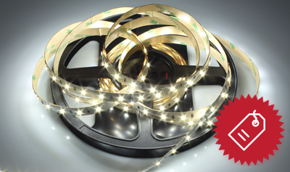
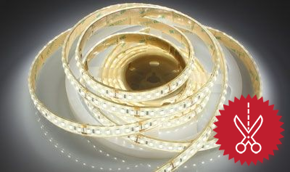
Distinctes des lampes UV attractives, les bandes LED anti-moustiques à spectre chaud/ambré agissent comme dissuasif passif : elles n'attirent pas les insectes, réduisant la probabilité que les moustiques s'approchent de la zone éclairée. C'est l'approche proposée par Ledpoint.it avec ses bandes LED à 2700K et ses bandes LED orange/ambrées.
Systèmes photocatalytiques
Les systèmes photocatalytiques anti-moustiques sont des dispositifs qui utilisent la réaction chimique entre la lumière UV et le dioxyde de titane (TiO2) pour générer du CO2, de l'eau et de la chaleur, simulant de manière artificielle la présence d'un être humain. Cet "appel biologique" attire les moustiques vers le dispositif, qui les capture via un système d'aspiration.
Ce sont les dispositifs les plus efficaces spécifiquement contre les moustiques, mais ils présentent des coûts élevés (de centaines à milliers d'euros) et nécessitent un positionnement et un entretien corrects pour être efficaces.
Moustiquaires électriques professionnelles
Les moustiquaires électriques professionnelles représentent une catégorie spécifique d'électro-insecticides conçus pour couvrir des zones très vastes (jusqu'à 500-1000 m²) dans des contextes professionnels. Elles intègrent :
- multiples tubes UV-A haute puissance ;
- grille à haute tension ou système d'aspiration ;
- enveloppe résistante aux intempéries (IP55 ou supérieur).
- minuterie programmable pour optimiser l'allumage aux heures de pointe.
Comparaison générale entre tous les systèmes
| Système | Mécanisme | Efficacité vs moustiques | Efficacité vs mouches | Couverture | Coût indicatif |
|---|---|---|---|---|---|
| Électro-insecticide UV décharge | Attraction UV + décharge | ★★☆☆☆ | ★★★★☆ | 30-150 m² | 20-200 € |
| Piège UV + aspiration | Attraction UV + ventilateur | ★★★☆☆ | ★★★★☆ | 50-200 m² | 50-300 € |
| Photocatalytique CO2 | CO2 + chaleur + UV | ★★★★★ | ★★★☆☆ | 100-500 m² | 200-1500 € |
| Bande LED 2700K | Dissuasion spectrale | ★★★★☆ | ★★★☆☆ | Zone entière éclairée | 20-200 €/10m |
| Bande LED amber | Dissuasion spectrale max | ★★★★★ | ★★★★☆ | Zone entière éclairée | 25-250 €/10m |
| Lampe insecticide prof. | UV-A + décharge/adhésif | ★★☆☆☆ | ★★★★★ | 80-300 m² | 100-600 € |
| Moustiquaire électrique prof. | UV + décharge/aspiration | ★★★☆☆ | ★★★★★ | 200-1000 m² | 300-2000 € |
Lampes UV pour moustiques : fonctionnent-elles vraiment ?
La question "les lampes UV sont-elles efficaces contre les moustiques ?" est l'une des plus fréquentes dans le secteur de la protection anti-moustique, et la réponse est bien plus nuancée que la publicité des dispositifs tend à le suggérer. Analyser honnêtement l'efficacité des lampes UV pour moustiques nécessite de séparer le marketing de la science, et de comprendre exactement dans quelles conditions ces dispositifs fonctionnent et dans quelles conditions non.
Le mythe de l'efficacité totale des lampes UV contre les moustiques
Les lampes UV (communément appelées "lampes actiniques", "néons UV", "lampes bleues anti-moustiques" ou "lampes UV moustiques") ont été pendant des décennies le produit phare du marché anti-moustique. Leur popularité est compréhensible : le fonctionnement semble logique, les moustiques sont attirés par la lumière, la lumière UV attire les insectes, donc une lampe UV devrait capturer les moustiques.
Cependant, cette chaîne logique présente une erreur fondamentale au premier passage : les moustiques NE sont PAS attirés principalement par la lumière UV. Comme nous l'avons analysé dans la Section 3, les moustiques utilisent le CO2, la chaleur et les COV comme attracteurs primaires, et répondent bien plus à la lumière bleu-vert (460-540 nm) qu'à l'UV proprement dit.
Données scientifiques sur l'efficacité des pièges UV contre les moustiques
Une étude classique publiée dans l'American Entomologist en 1996 par Frick et Tallamy a analysé la composition des insectes capturés par un piège UV sur une année entière. Résultat : sur plus de 13 000 insectes capturés, moins de 0,22% étaient des moustiques. La grande majorité étaient des papillons de nuit, des coléoptères et d'autres insectes non ciblés.
Des études plus récentes ont confirmé cette donnée, avec de légères variations liées aux espèces locales et aux conditions environnementales. La conclusion générale est que les pièges UV standards capturent très peu de moustiques par rapport au total des insectes capturés, mais peuvent avoir un effet local de réduction de la densité d'insectes volants dans une zone spécifique.
Quand les lampes UV fonctionnent
Elles fonctionnent bien pour :
- mouches domestiques et calliphoridés : les lampes UV à 365 nm sont des outils efficaces et scientifiquement validés pour la capture de ces insectes en environnements fermés ;
- papillons de nuit et coléoptères nocturnes : très efficaces, la lumière UV attire ces insectes de manière puissante ;
- réduction générale de la densité d'insectes volants dans des zones fermées ou semi-fermées.
Elles ont une efficacité limitée pour :
- moustiques en présence de personnes : lorsqu'il y a des personnes dans la zone, le CO2 et la chaleur corporelle attirent les moustiques bien plus que n'importe quelle lampe UV ;
- environnements ouverts avec vent : la portée de la lumière UV est limitée par rapport au panache de CO2 qu'une personne émet ;
- moustique tigre : actif de jour, répond mal aux lampes UV nocturnes.
La lampe UV actinique : spécifications techniques
Les lampes actiniques, terme technique pour les lampes à émission dans le proche UV, entre 315 et 400 nm, sont classifiées selon leur longueur d'onde dominante :
- UV-A (315-400 nm) : les plus communes dans les pièges à insectes. Sûres pour l'usage en environnements avec des personnes (ne nuisent pas à la peau ou aux yeux avec une brève exposition). Efficaces pour les mouches et de nombreux insectes nocturnes ;
- UV-B (280-315 nm) : non utilisées dans les pièges à insectes pour des raisons de sécurité (peuvent causer des brûlures). Utilisées dans des usages médicaux et industriels spécifiques ;
- UV-C (100-280 nm) : germicides. Utilisées pour la stérilisation d'environnements et de surfaces. N'attirent pas les insectes ; non adaptées pour cet usage.
Néons UV, LED UV et lampes actiniques : différences pratiques
| Technologie | Longueur d'onde | Durée de vie opérationnelle | Dégradation dans le temps | Consommation | Coût |
|---|---|---|---|---|---|
| Néon fluorescent UV (tube T8/T5) | 365 nm (pic) | 6 000-8 000 heures | 20-30% tous les 6 mois | 18-58W | 3-15 € par tube |
| LED UV-A | 365-380 nm | 30 000-50 000 heures | Minimal (<5%/an) | 1-10W | 5-40 € par module |
| Lampe actinique BL (Black Light) | 350-380 nm | 5 000-7 000 heures | Significatif après 6 mois | 15-40W | 5-20 € par tube |
L'anti-moustique électrique fait-il du mal ? Sécurité des lampes UV
Une question commune est : l'anti-moustique électrique fait-il du mal aux êtres humains ? La réponse est non, si l'on parle des dispositifs avec lampes UV-A disponibles sur le marché grand public :
- les lampes UV-A (315-400 nm) ne causent pas de brûlures avec une brève exposition normale ;
- la tension de la grille électrique (2000-3000V) est dangereuse mais le système est conçu pour rendre impossible le contact accidentel avec les mains ;
- l'émission d'ozone est minimale ou absente dans les dispositifs modernes conformes aux normes CE ;
- elles n'émettent pas de substances chimiques ou de vapeurs toxiques.
Certaines précautions sont néanmoins recommandées : ne pas utiliser les dispositifs à moins de 1 mètre des personnes pour des périodes prolongées, ne pas regarder directement la lampe UV, positionner les dispositifs hors de portée des enfants. Pour les environnements où se trouvent de jeunes enfants, les bandes LED anti-moustiques à spectre chaud/ambré représentent une alternative plus sûre et tout aussi valable pour l'usage dans les pièces de la maison.
Guide de choix selon le besoin spécifique
| Besoin | Produit recommandé | Raison |
|---|---|---|
| Max efficacité anti-moustique + usage extérieur | FA2-ORA-480OR2 | Orange COB, zéro bleu, effet uniforme |
| Anti-moustique + haute qualité lumineuse | F52-270-480OR2-W10 | 2700K COB, 135 lm/W, CRI élevé |
| Usage extérieur avec pluie/humidité | U52-270W-480OR2-W3 | IP67 silicone extrudé, 2700K |
| Anti-moustique + ambiance spéciale | F52-ORA-060812 | Orange 605-615nm, effet sunset |
| Usage intensif en extérieur (industrie) | L52-ORAW-264N12 | Orange IP67 silicone solide 12V |
| Compromis qualité/dissuasion | L52-GLDW-264N12 | Jaune doré IP67, meilleur rendu chromatique |
| Environnements humides (piscines, zones marines) | B52-30s-060822 | 3000K IP65 Parylene, résistance vapeurs |
Installation et positionnement des bandes LED anti-moustiques : guide pratique
Même le meilleur produit peut s'avérer inefficace s'il est installé de manière incorrecte. Le positionnement des bandes LED anti-moustiques et des éventuels anti-moustiques électriques requiert attention à plusieurs facteurs : la géométrie de l'espace, la distance des personnes, la présence d'autres sources de lumière, les conditions de câblage et le montage mécanique. Cette section fournit un guide pratique complet à l'installation, du projet à la mise en œuvre.
Conception de l'installation : comment commencer
Avant d'acheter tout produit, il est fondamental de concevoir l'installation de manière adéquate. Les étapes à suivre sont :
- mesurer les surfaces à éclairer : calculer la longueur totale des bandes LED nécessaires (en mètres linéaires). Ajouter toujours 10% de marge pour les connexions et les découpes ;
- déterminer la puissance installée : multiplier la longueur totale par la puissance spécifique de la bande choisie (W/mètre). Ajouter 20% pour le dimensionnement de l'alimentation.
- identifier le point d'alimentation : où se trouve la prise électrique la plus proche ? Peut-on installer l'alimentation dans un compartiment technique ou dans une boîte de dérivation ?
- choisir le type de câblage : câbles blindés ou non blindés ? Section du câble adaptée à la longueur du parcours (la chute de tension sur des câbles longs peut causer des scintillements) ;
- identifier les points de découpe : les bandes LED ne se coupent qu'en points prédéfinis (tous les 25-50 mm dans les COB). Planifier les découpes à l'avance.
Positionnement optimal des bandes LED
Pour la dissuasion des insectes (bandes 2700K et ambrées)
- Périmètre du jardin ou de la terrasse : positionner les bandes le long des bords de la zone à protéger crée une "barrière lumineuse chaude" visuellement agréable et peu attrayante pour les insectes.
- Sous les pergolas et les auvents : la lumière projetée vers le bas éclaire l'espace sans être visible de loin, réduisant l'attraction des insectes à distance.
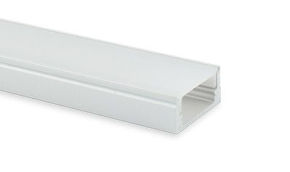
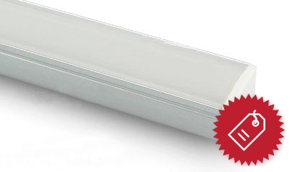
- Cachée à la vue directe : utiliser des profilés en aluminium avec diffuseur opale pour cacher la source lumineuse à la vue directe, maintenant la lumière diffusée sur l'environnement. Cela a aussi l'effet de réduire l'attraction des insectes par rapport à une source lumineuse ponctuelle et intense.
Pour les lampes anti-moustiques UV (électro-insecticides)
- Loin des zones de séjour des personnes : une lampe anti-moustique doit attirer les insectes vers elle et loin des personnes, non à côté d'elles.
- À une hauteur de 1,5-2 mètres : la hauteur optimale pour la capture des insectes volants. Trop haute réduit l'efficacité ; trop basse attire les insectes au sol.
- Aux angles du périmètre : non au centre de l'espace fréquenté par les personnes, mais aux angles ou aux marges de la zone.
- Éviter la lumière concurrente : si près de la lampe UV il y a d'autres sources de lumière blanche intense, l'efficacité de la lampe UV est drastiquement réduite.
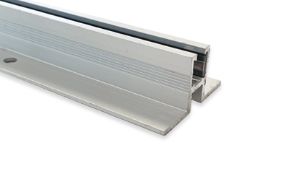
Profilés en aluminium : dissipateurs thermiques et support mécanique
Les profilés en aluminium sont un accessoire fondamental pour toute installation professionnelle de bandes LED. Ils remplissent deux fonctions essentielles, découvrons lesquelles
Dissipation de la chaleur
Les bandes LED haute puissance (spécialement les COB) génèrent de la chaleur pendant le fonctionnement. Si cette chaleur n'est pas dissipée adéquatement, la température des puces LED augmente, réduisant la durée de vie opérationnelle (chaque augmentation de 10°C de température divise par deux la durée de vie des LED) et causant des scintillements et de l'instabilité. Les profilés en aluminium, grâce à leur haute conductivité thermique, conduisent la chaleur loin des puces LED et la dissipent dans l'environnement.
Support mécanique et protection
Les profilés en aluminium protègent mécaniquement la bande LED contre les chocs, la poussière (si dotés de diffuseur) et l'humidité (si scellés). Ils donnent aussi un aspect professionnel et fini à l'installation.
Profilés recommandés par Ledpoint.it
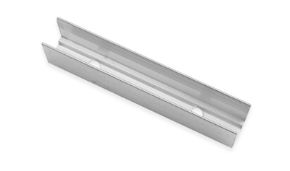
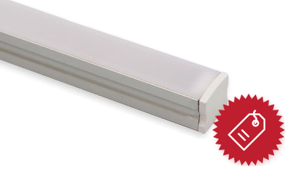
- PR-AN02 (profilé angulaire) : idéal pour installations aux angles entre mur et plafond, sur les bords de pergolas, le long des mains courantes. Crée un effet lumineux indirect très élégant.
- PR-SL07 (profilé slim) : profilé à faible saillie pour installations où l'espace est limité. Idéal pour le bord de marches, sous les rampes, dans des cadres architecturaux.
Entretien des bandes LED anti-moustiques
Les bandes LED, contrairement aux lampes traditionnelles, ne nécessitent pas de remplacements périodiques de la source lumineuse pendant de nombreuses années de fonctionnement (la durée de vie typique est 50 000+ heures). L'entretien se limite à :
- nettoyage périodique (tous les 3-6 mois pour usage extérieur) : nettoyer les profilés en aluminium et les surfaces des bandes avec un chiffon doux sec ou légèrement humide. Ne pas utiliser de solvants ;
- vérification des connexions : contrôler que les connexions entre les segments de bande et vers l'alimentation sont intactes et n'ont pas subi d'oxydation (spécialement en environnements extérieurs) ;
- vérification de l'alimentation : contrôler que l'alimentation ne présente pas de surchauffe anormale ;
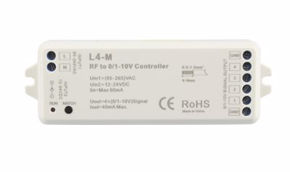
- mise à jour du firmware (pour contrôleurs smart) : si l'on utilise le contrôleur V1-M-WT avec l'application Tuya, mettre à jour périodiquement le firmware via l'application pour obtenir de nouvelles fonctionnalités et corrections de sécurité.
Usage intérieur vs extérieur : stratégies différenciées pour la protection contre les insectes
La stratégie d'éclairage anti-moustique optimale diffère significativement entre environnements intérieurs et extérieurs. Les problèmes à affronter sont différents, les insectes cibles sont différents, et les solutions les plus efficaces changent en conséquence. Une gestion intelligente de la lumière dans les deux contextes, lampe anti-moustique d'intérieur et lampe anti-moustique d'extérieur, peut réduire drastiquement le désagrément causé par les insectes dans tout type d'habitation ou structure.
Protection depuis l'intérieur : comment réduire les moustiques dans la maison
À l'intérieur des habitations, le problème moustiques se manifeste principalement de deux manières :
- moustiques entrés de l'extérieur à travers fenêtres ou portes ouvertes, attirés par la lumière intérieure ;
- moustiques déjà présents dans l'environnement domestique qui cherchent les personnes pendant la nuit.
Stratégie lumineuse pour l'intérieur
La clé est de réduire la visibilité de la lumière intérieure depuis l'extérieur. Une pièce avec des lumières blanches froides (6500K) visibles de l'extérieur à travers une fenêtre ouverte est un puissant attracteur pour les moustiques aux heures nocturnes. En remplaçant ces lumières par des LED à 2700K ou par des bandes LED ambrées, on réduit significativement cet effet.
Pour la chambre à coucher en particulier, où les moustiques de nuit peuvent rendre le sommeil impossible, les solutions les plus efficaces combinées sont :
- bandes LED 2700K pour l'éclairage général ou vespéral de la pièce ;
- moustiquaire physique à la fenêtre (solution mécanique non lumineuse) ;
- si l'on utilise des lampes anti-moustiques UV dans la chambre, les positionner dans l'angle le plus éloigné du lit, et les éteindre après environ une heure (les lampes UV attirent les moustiques vers elles, mais la nuit avec les personnes dans le lit le CO2 corporel entre en compétition).
Lampes anti-moustiques d'intérieur : les options
- Anti-moustiques d'intérieur à UV + aspiration : silencieux et sans décharge électrique bruyante. Idéaux pour chambres à coucher. Dimensions compactes pour usage sur table de chevet ou bureau.
- Plug-in anti-moustiques électriques : se branchent directement dans la prise électrique. Combinent UV et décharge ou aspiration. Efficaces pour pièces individuelles.
- Bandes LED 2700K pour éclairage vespéral : n'éliminent pas les moustiques mais réduisent l'entrée depuis l'extérieur. Idéales comme éclairage principal ou secondaire de la chambre.
Protection depuis l'extérieur : comment réduire les moustiques dans le jardin
Les espaces extérieurs représentent le contexte le plus exigeant pour le contrôle des moustiques via la lumière. Dans un jardin ouvert, le moustique peut arriver de toute direction suivant le panache de CO2 des personnes présentes. La lumière a un rôle secondaire comme attracteur, mais peut être déterminante comme dissuasif : une lampe anti-moustique d'extérieur avec le spectre incorrect (blanc froid) non seulement n'aide pas, mais aggrave la situation en attirant davantage d'insectes des environs.
Stratégie pour l'extérieur
- Remplacer tout l'éclairage extérieur par des LED 2700K ou ambrées : c'est l'étape la plus impactante. Éliminer les ampoules blanches froides des spots, des douilles de jardin, des lanternes et les remplacer par des LED à spectre chaud.
- Ajouter des bandes LED orange/ambrées dans les zones de séjour (tables d'extérieur, zones détente, bord de piscine) : la lumière ambrée crée une atmosphère magnifique et décourage activement les insectes.
- Positionner des électro-insecticides UV aux angles du jardin, loin des zones de séjour : attirent les insectes vers eux et loin des personnes.
- Utiliser des capteurs de mouvement pour les chemins : la lumière reste éteinte entre un passage et l'autre.
Lampes anti-moustiques solaires : solutions pour zones non câblées
Pour des zones du jardin non atteintes par le réseau électrique, les lampes anti-moustiques solaires offrent une solution autonome. Les modèles les plus modernes combinent :
- panneau solaire pour la recharge de la batterie pendant la journée ;
- LED à spectre ambré/chaud pour l'éclairage nocturne (excellent dissuasif pour insectes) ;
- dans certains modèles : système UV + aspiration pour la capture active des insectes.
Solutions solaires anti-moustiques sont particulièrement adaptées pour :
- coins du jardin éloignés de la maison ;
- chemins et allées ;
- campings et zones rurales ;
- zones de bord de piscine non couvertes.
Lanternes anti-moustiques : esthétique et fonctionnalité
Les lanternes anti-moustiques sont des dispositifs qui combinent la fonction d'éclairage décoratif avec celle de dissuasion ou capture des insectes. Elles existent en deux variantes principales :
- lanternes décoratives LED ambrées : fonctionnent simplement comme source de lumière ambrée/chaude, dissuasif passif. Ne capturent pas d'insectes, mais ne les attirent pas non plus. Effet esthétique excellent ;
- lanternes anti-moustiques actives : combinent une LED externe ambrée/chaude pour l'éclairage avec une LED UV interne cachée + système de capture (grille ou aspiration). La LED UV interne attire les moustiques vers la grille sans attirer d'insectes de l'extérieur.
Capteurs de mouvement, minuteries et automatisation dans l'éclairage anti-moustique
Le choix du spectre lumineux est le facteur le plus important dans l'éclairage anti-moustique, mais le contrôle intelligent de l'allumage via capteurs, minuteries et systèmes d'automatisation peut en multiplier l'efficacité. Une lumière, même si à spectre ambré, allumée toute la nuit attire plus d'insectes qu'une lumière blanche froide qui ne s'allume que quelques secondes au passage d'une personne. Voyons comment optimiser la gestion temporelle de l'éclairage anti-moustique.
Pourquoi le temps d'allumage est important
La relation entre temps d'allumage et attraction des insectes est linéaire : plus longtemps une lumière reste allumée, plus elle attire d'insectes. Cela vaut tant pour les lumières chaudes que pour les froides, bien qu'avec des intensités très différentes. Une lumière ambrée allumée pendant 8 heures consécutives peut attirer plus d'insectes qu'une lumière blanche froide qui ne s'allume que 5 minutes.
Pour cette raison, la stratégie d'éclairage anti-moustique la plus efficace combine :
- spectre chaud/ambré (réduction de l'attraction par unité de temps) ;
- intensité réduite via gradateur (réduction supplémentaire de l'attraction par unité de temps) ;
- contrôle du temps d'allumage via capteurs et minuteries (réduction du temps total d'exposition lumineuse).
Capteurs PIR : le système le plus efficace
Les capteurs PIR (Passive InfraRed) détectent la présence de personnes à travers la variation de la chaleur corporelle irradiée dans l'infrarouge. Lorsqu'une personne entre dans le champ de détection le capteur active la bande LED, lorsque la personne s'éloigne (ou reste immobile plus longtemps que le temps préétabli), la lumière s'éteint automatiquement.
Avantages des capteurs PIR dans l'éclairage anti-moustique
- La lumière reste éteinte la majeure partie du temps → attraction minimale des insectes.
- S'allume seulement quand nécessaire → confort maximal pour les personnes présentes.
- Économie d'énergie significative (60-80% par rapport à l'éclairage continu).
Applications idéales pour les capteurs PIR
- Allées d'accès au jardin ou à la maison.
- Escaliers extérieurs.
- Parkings et abris voitures.
- Chemins internes à des campings ou agritourismes.
Minuteries astronomiques : automatiser selon le coucher du soleil
Les minuteries astronomiques sont des dispositifs (ou fonctions des contrôleurs smart) qui calculent automatiquement l'heure du coucher et du lever du soleil selon la position géographique et la date, allumant et éteignant les lumières en conséquence. Cela permet de :
- allumer les lumières extérieures exactement au coucher du soleil (non avant, quand les insectes sont moins actifs) ;
- les éteindre automatiquement après minuit ou à l'aube (réduisant le temps total d'exposition lumineuse) ;
- réguler l'intensité selon l'heure (plus lumineuse aux premières heures de la nuit, plus tamisée après 23h).
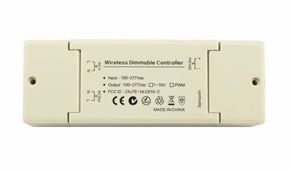
Le contrôleur daylight SK-ES-D offre ces fonctionnalités via l'application Tuya Smart, qui dispose d'un calendrier astronomique intégré pour toutes les communes italiennes. Avec quelques tapotements sur le smartphone, il est possible de configurer des automatisations complexes qui optimisent continuellement l'éclairage en fonction de la saison et des heures de la journée.
Automatisations avancées avec l'application Tuya Smart
L'écosystème Tuya Smart (compatible avec le contrôleur SK-ES-D) permet de créer des automatisations très sophistiquées. Ci-dessous vous trouverez quelques configurations optimales pour l'éclairage anti-moustique.
Configuration "soirée d'été" (recommandée pour jardins résidentiels)
- Au coucher du soleil astronomique : allumage automatique des bandes LED ambrées à 100%.
- À 22h00 : réduction automatique à 50%.
- À 23h30 : réduction automatique à 20%.
- À 1h00 ou à l'aube : extinction automatique.
Configuration "Nuit Silencieuse" (pour zones rurales avec forte densité d'insectes)
- Éclairage uniquement via capteurs PIR : la lumière s'allume pendant 3 minutes à chaque passage détecté, puis s'éteint automatiquement.
- Intensité à 40% (suffisante pour marcher en sécurité, insuffisante pour attirer des insectes de loin).
- En dehors des horaires d'activité possible (ex. après 2h00 du matin) : les capteurs PIR sont désactivés et la lumière reste complètement éteinte.
Intégration avec assistants vocaux
La compatibilité du contrôleur SK-ES-D avec Amazon Alexa et Google Home permet le contrôle vocal de l'éclairage anti-moustique
- "Alexa, règle les lumières du jardin à 30%" — réduction immédiate de l'intensité.
- "Ok Google, éteins les lumières du jardin" — extinction immédiate de tout l'éclairage extérieur.
- "Alexa, active le mode dîner en extérieur" — un scénario préétabli avec intensité optimale et spectre correct.
Comparaison entre toutes les méthodes anti-moustiques : quel système est vraiment efficace ?
Sur le marché existent des dizaines de catégories de produits qui promettent de tenir les moustiques à distance : des classiques spirales aux plus modernes pièges photocatalytiques, des répulsifs chimiques aux ultrasons, des installations à pyréthrines aux systèmes lumineux avancés. Dans cette section nous effectuerons une comparaison honnête et basée sur les preuves scientifiques entre tous les principaux méthodes anti-moustiques, identifiant les points forts et faibles de chacun et définissant la combinaison optimale pour chaque contexte.
Méthodes chimiques
Répulsifs topiques (DEET, Icaridine, IR3535)
Les répulsifs appliqués directement sur la peau (DEET, Icaridine/Picaridine, IR3535) sont parmi les méthodes les plus efficaces pour la protection individuelle. Ils agissent en "masquant" les molécules attractives (CO2, COV) aux organes sensoriels des moustiques. Le DEET en concentrations de 20-30% est considéré comme le gold standard pour la protection dans des zones à forte densité de moustiques. Inconvénient : ils doivent être réappliqués régulièrement et ne protègent pas l'environnement environnant.
Spirales (spirales à moustiques) et diffuseurs électriques de pyréthrines
Les classiques spirales brûlantes (spirales à moustiques) et les diffuseurs électriques de pyréthrines (répulsifs liquides ou à plaquettes) libèrent dans l'air des substances qui interfèrent avec le système nerveux des moustiques, les rendant confuses et orientées vers la fuite. Elles sont efficaces dans des environnements fermés ou semi-fermés (sous un gazebo, en terrasse couverte) mais bien moins dans des espaces ouverts où la substance est diluée par l'air. Les diffuseurs à plaquettes électriques sont la version moderne et contrôlée des spirales à moustiques.
Traitements insecticides environnementaux
La nébulisation d'insecticides à base de pyréthrinoïdes synthétiques dans l'environnement (jardin, haies) est la méthode la plus puissante pour réduire drastiquement la population de moustiques dans une zone spécifique. Cependant elle présente des inconvénients environnementaux significatifs : tue indistinctement aussi des insectes utiles (abeilles, papillons, coléoptères), peut contaminer cours d'eau et sol, requiert des professionnels habilités pour la correcte application.
Méthodes physiques
Moustiquaires physiques
La moustiquaire physique, appliquée aux fenêtres et portes, est la méthode la plus simple, économique, écologique et absolument efficace pour empêcher l'entrée des moustiques dans les environnements intérieurs. Elle n'émet pas de substances chimiques, ne consomme pas d'énergie, n'a pas d'effets sur l'écosystème. Sa seule limite est qu'elle protège seulement les espaces intérieurs fermés.
Élimination des stagnations d'eau
Éliminer tous les possibles sites de reproduction des moustiques à proximité (sous-pots, bidons, gouttières bouchées, flaques) est la mesure de prévention avec le meilleur rapport efficacité/coût. Une seule action de maintenance préventive peut éliminer des milliers de potentielles nouvelles moustiques avant même qu'elles ne se développent. Le moustique tigre peut compléter son cycle reproductif dans une cuillère à café d'eau stagnante.
Méthodes biologiques
Larvicides biologiques (Bacillus thuringiensis israelensis - Bti)
Le Bacillus thuringiensis israelensis (Bti) est une bactérie du sol qui produit des toxines sélectivement létales pour les larves de moustiques, simulies et autres diptères nématocères. Complètement inoffensif pour les vertébrés, abeilles, coléoptères et autres insectes, c'est le larvicide biologique le plus utilisé dans les programmes de contrôle des moustiques de nombreuses communes italiennes. Disponible en granulés ou comprimés à ajouter aux bassins d'eau, étangs et regards.
Méthodes électroniques et lumineuses
Ultrasons anti-moustiques
Les dispositifs à ultrasons qui affirment tenir à distance les moustiques n'ont démontré aucune efficacité dans des études scientifiques contrôlées. La thèse selon laquelle les ultrasons simuleraient le son émis par les mâles des moustiques (que les femelles attirées par le sang éviteraient) n'est pas soutenue par des données expérimentales reproductibles. Catégorie à éviter.
Bracelets et pendentifs répulsifs
Les bracelets imprégnés de substances répulsives (citronnelle, géraniol, huiles essentielles) offrent une protection très limitée et localisée. Ils peuvent réduire légèrement les piqûres sur le poignet où ils sont portés, mais ne protègent pas le reste du corps. Efficacité bien inférieure par rapport aux répulsifs topiques.
Éclairage LED anti-moustique (spectre chaud/amber)
Comme nous l'avons analysé en détail, le choix d'un spectre lumineux chaud (2700K) ou ambré (590-620 nm) réduit significativement l'attraction des insectes par rapport aux LED blanches froides. N'élimine pas les moustiques déjà présents, mais réduit l'entrée de nouveaux moustiques dans la zone éclairée. Efficacité : moyenne-élevée comme dissuasif ; nulle comme éliminateur.
Tableau répulsifs complet
| Méthode | Efficacité vs moustiques | Impact environnemental | Coût | Praticité | Base scientifique |
|---|---|---|---|---|---|
| DEET/Icaridine (topique) | ★★★★★ | Faible (sur personne) | €€ | Moyenne (à réappliquer) | Solide |
| Moustiquaire physique | ★★★★★ (intérieur) | Zéro | € | Élevée | Solide |
| Élimination stagnations | ★★★★★ (prévention) | Positif | Zéro | Élevée | Solide |
| Bti (larvicide biologique) | ★★★★☆ (prévention) | Très faible | € | Élevée | Solide |
| Pyréthrines diffuseurs | ★★★★☆ | Faible-moyen | €€ | Élevée | Solide |
| LED amber/2700K | ★★★☆☆ (dissuasif) | Zéro | €€€ (investissement) | Très élevée | Bonne |
| Électro-insecticide UV | ★★☆☆☆ (moustiques) | Faible | €€ | Élevée | Moyenne (limitée pour moustiques) |
| Photocatalytique CO2 | ★★★★★ | Très faible | €€€€ | Élevée | Solide |
| Insecticide chimique environnement | ★★★★★ | Élevé | €€€ | Faible | Solide |
| Ultrasons | ☆☆☆☆☆ | Zéro | €€ | Élevée | Nulle |
| Bracelets répulsifs | ★☆☆☆☆ | Faible | € | Élevée | Faible |
La stratégie intégrée optimale
La conclusion la plus importante de cette comparaison est qu'aucune méthode unique n'est suffisante par elle-même pour éliminer complètement le problème des moustiques. La stratégie la plus efficace est celle qui combine plusieurs approches de manière synergique.
1. Prévention à la source : éliminer les stagnations d'eau + traiter les points critiques avec Bti.
2. Barrière physique : moustiquaires aux fenêtres et aux portes.
3. Éclairage dissuasif : bandes LED 2700K ou ambrées pour l'éclairage extérieur.
4. Capture active : pièges photocatalytiques ou électro-insecticides positionnés loin des zones de séjour.
5. Protection individuelle : répulsifs topiques DEET/Icaridine dans les situations à forte exposition.
En adoptant toutes les 5 défenses simultanément, l'efficacité globale dépasse 95% dans tout contexte résidentiel ou semi-professionnel.
Sécurité, normes et certifications pour lampes anti-moustiques et bandes LED
Le choix de produits certifiés et conformes aux normes en vigueur est essentiel non seulement pour la sécurité des personnes, mais aussi pour garantir les performances déclarées et la durée dans le temps. Dans cette section nous analysons les principales normes européennes et italiennes relatives aux lampes anti-moustiques, aux anti-moustiques électriques et aux bandes LED, avec une attention particulière aux certifications qu'il est indispensable de vérifier avant d'acheter.
Marquage CE : l'exigence minimale
Tout dispositif électrique vendu dans l'Union Européenne, y compris anti-moustiques électriques, lampes UV, bandes LED et alimentations, doit être obligatoirement doté du marquage CE. Ce marquage certifie que le produit a été soumis aux vérifications nécessaires pour en démontrer la conformité aux directives européennes applicables :
- directive LVD (basse tension) 2014/35/UE : pour la sécurité électrique des dispositifs alimentés à des tensions entre 50V AC et 1000V AC (ou 75V DC et 1500V DC) ;
- directive CEM 2014/30/UE : pour la compatibilité électromagnétique (le dispositif ne doit pas interférer avec d'autres appareils électroniques) ;
- directive RoHS 2011/65/UE : pour la restriction dans l'usage de substances dangereuses (plomb, mercure, cadmium, etc.) ;
- directive Écoconception 2009/125/CE : pour l'efficacité énergétique des produits d'éclairage.
Classification IP : protection contre l'eau et la poussière
Le code IP (Ingress Protection) définit le degré de protection d'une enveloppe électrique contre la pénétration de corps solides (premier chiffre) et liquides (deuxième chiffre). Pour les applications extérieures de bandes LED anti-moustiques, il est fondamental de choisir des produits avec le degré IP adéquat
| Classification IP | Protection contre la poussière | Protection contre l'eau | Usage recommandé |
|---|---|---|---|
| IP20 | Corps >12mm | Aucune | Usage intérieur sec |
| IP44 | Corps >1mm | Éclaboussures de toute direction | Usage extérieur partiellement couvert |
| IP65 | Étanche à la poussière | Jets d'eau de toute direction | Usage extérieur exposé à la pluie |
| IP67 | Étanche à la poussière | Immersion jusqu'à 1 mètre pendant 30 minutes | Usage extérieur intensif, bord de piscine |
| IP68 | Étanche à la poussière | Immersion continue au-delà de 1 mètre | Usage sous-marin, fontaines |
Sécurité des anti-moustiques électriques UV
Les anti-moustiques électriques avec grille à haute tension sont des dispositifs potentiellement dangereux s'ils ne respectent pas les normes de sécurité. Les exigences minimales de sécurité imposées par la norme CE incluent :
- protection mécanique de la grille : la grille à haute tension doit être inaccessible avec les doigts (doigt de test standard avec ouvertures <12 mm selon la norme EN 60335).
- interrupteur de sécurité : le dispositif doit être doté d'un système qui empêche l'activation de la grille lorsque le conteneur est ouvert pour la maintenance.
- signalisation visuelle : indication lumineuse de l'état de fonctionnement.
- câble d'alimentation certifié : adapté à l'environnement d'installation (intérieur ou extérieur).
Sécurité des lampes UV-A
Les lampes UV-A (315-400 nm) utilisées dans les pièges anti-insectes sont généralement sûres pour usage normal, mais requièrent quelques précautions :
- éviter l'exposition directe aux yeux : le rayonnement UV-A ne cause pas de dommage aigu comme l'UV-B, mais l'exposition chronique peut contribuer au vieillissement de la cornée ;
- ne pas utiliser dans des environnements avec de jeunes enfants sans protections physiques adéquates : les enfants sont plus vulnérables à l'exposition UV et peuvent ne pas percevoir le risque ;
- élimination des lampes UV usagées : les lampes fluorescentes UV contiennent du mercure et doivent être éliminées comme DEEE (Déchets d'Équipements Électriques et Électroniques) dans les points de collecte désignés.
Normes HACCP pour l'industrie alimentaire
Dans les environnements de production et transformation alimentaire, les lampes insecticides (mouches électriques) doivent respecter les exigences du système HACCP (Hazard Analysis and Critical Control Points) :
- présence d'un diffuseur de collecte des insectes capturés pour éviter les contaminations de la zone de travail ;
- positionnement à distance de sécurité des points de manipulation des aliments ;
- entretien documenté avec enregistrement des remplacements des lampes UV ;
- utilisation de lampes UV avec diffuseur en polycarbonate incassable pour prévenir la contamination en cas de rupture ;
- conformité à la norme EN 14999 pour les dispositifs à lampe électrique pour le contrôle des insectes volants.
Impact environnemental et biodiversité
Un aspect souvent négligé dans le choix des lampes anti-moustiques est l'impact sur l'écosystème local. Les lampes UV et les lampes blanches froides n'attirent pas seulement les moustiques : elles attirent des papillons de nuit (importants pollinisateurs nocturnes), des coléoptères (fondamentaux pour la décomposition de la matière organique), et d'autres insectes utiles à l'écosystème. La capture indiscriminée de ces insectes par les électro-insecticides peut avoir des effets négatifs sur la biodiversité locale, spécialement dans des zones rurales et à proximité de zones naturelles.
Les bandes LED à spectre ambré/chaud, au contraire, n'attirent et ne capturent aucun insecte, elles se limitent à ne pas attirer. Cela les rend le choix le plus durable et compatible avec la biodiversité locale, en plus d'être efficace comme dissuasif. Pour ceux qui ont à cœur l'écosystème de leur jardin, le choix de l'éclairage ambré/chaud est aussi un acte de responsabilité environnementale.
Les questions les plus courantes sur moustiques et lumière
Nous recueillons ici les questions les plus fréquentes que l'on se pose souvent concernant le thème moustiques et lumière, en répondant de manière précise et mise à jour sur la base des découvertes scientifiques actuelles.
Quel type de lumière dérange les moustiques ?
La lumière qui dérange le plus les moustiques est celle avec des longueurs d'onde supérieures à 550 nm, en particulier la lumière jaune, ambrée (590-620 nm) et rouge (au-delà de 640 nm). Les moustiques ne possèdent pas de photopigments sensibles à ces longueurs d'onde, de sorte qu'ils les perçoivent avec grande difficulté ou ne les perçoivent pas du tout. Au contraire, la lumière bleue (430-480 nm) et verte (480-540 nm) sont les plus attrayantes pour les moustiques. Une lumière ambrée à 2200-2700K est donc le meilleur choix pour déranger les moustiques (ou mieux : ne pas les attirer).
Quelle couleur de lumière n'attire pas les moustiques ?
La couleur de lumière qui n'attire pas les moustiques est le jaune-ambré-orange (longueurs d'onde 550-640 nm) et le rouge (au-delà de 640 nm). Les LED avec température de couleur 2200K (similaire à la flamme d'une bougie) ou 2700K (blanc très chaud) émettent principalement dans cette bande et se révèlent pratiquement non attractives pour les moustiques. La lumière ambrée pure (comme celle des LED pc Amber ou des LED orange spécifiques comme celles disponibles sur Ledpoint.it) offre la protection maximale.
Quelle est la meilleure lampe anti-moustique ?
Il n'existe pas de réponse unique, car cela dépend de l'objectif : si vous voulez éliminer activement les moustiques déjà présents, les pièges photocatalytiques CO2 sont les plus efficaces. Si vous voulez ne pas en attirer de nouveaux avec l'éclairage, les bandes LED ambrées ou 2700K de Ledpoint.it sont le meilleur choix. Pour un usage combiné (attraction+capture), les dispositifs UV avec aspiration ou grille représentent un bon compromis. La meilleure lampe anti-moustique pour l'usage domestique quotidien est une bande LED COB 2700K associée à un contrôleur gradateur pour régler l'intensité aux heures nocturnes.
Comment fonctionnent les lampes anti-moustiques ?
Il existe deux grandes catégories de lampes anti-moustiques qui fonctionnent de manière opposée :
1) les lampes qui attirent et capturent (électro-insecticides UV) : émettent de la lumière UV-A qui attire les insectes vers elles, où ils sont éliminés par une décharge électrique, un ventilateur aspirant ou une surface adhésive.
2) les lampes qui n'attirent pas (bandes LED amber/2700K) : émettent un spectre lumineux chaud que les insectes ne perçoivent pas comme attractif, servant de dissuasif passif. La première catégorie élimine les insectes capturés ; la seconde évite qu'ils ne s'approchent de la zone éclairée. Les bandes LED amber appartiennent à la seconde catégorie.
La lampe anti-moustique fonctionne-t-elle aussi de jour ?
Pour les lampes UV attractives (électro-insecticides) : elles ont une faible efficacité pendant la journée, car la lumière solaire est plusieurs fois plus intense que la lumière UV artificielle et "masque" complètement le signal lumineux de la lampe. Pour cette raison, les électro-insecticides fonctionnent presque exclusivement aux heures nocturnes. Pour les bandes LED amber/2700K : leur effet dissuasif est valable tant de jour que de nuit, car elles n'émettent pas dans les pics spectraux d'attraction des insectes indépendamment de l'éclairage ambiant.
Les moustiques sont-ils attirés par la lumière bleue ?
Oui, les moustiques sont attirés par la lumière bleue (430-490 nm), bien qu'en mesure inférieure par rapport à d'autres insectes comme les papillons de nuit. La recherche scientifique a démontré que la lumière dans les bandes vert-bleu (460-540 nm) génère une phototaxie positive chez les moustiques. Pour cette raison, les LED blanches froides (6500K) et les LED blanches neutres (4000K), qui émettent une quantité significative de lumière dans cette bande, sont à éviter dans l'éclairage extérieur estival. Les LED à lumière jaune anti-moustique (2700K ou ambrées) sont la réponse correcte à cette problématique.
Les lampes LED anti-moustiques sont-elles efficaces ?
Cela dépend du type. Les lampes LED UV-A dans les pièges à insectes sont efficaces principalement pour les mouches et les papillons de nuit, moins spécifiquement pour les moustiques. Les bandes LED à spectre ambré/2700K sont efficaces comme dissuasif passif : elles n'éliminent pas les moustiques déjà présents, mais réduisent significativement (40-80% selon les conditions) la probabilité que de nouveaux moustiques soient attirés par la zone éclairée. Des études scientifiques confirment que la réduction de l'émission dans la bande bleu-UV du spectre se traduit par une moindre présence d'insectes dans la zone éclairée.
Où positionner la lampe anti-moustique ?
Le positionnement dépend du type de lampe. Pour les électro-insecticides UV : les positionner aux angles du périmètre de la zone à protéger, à 1,5-2 mètres de hauteur, loin des zones de séjour des personnes (le dispositif attire les insectes vers lui). Pour les bandes LED amber/2700K : les installer le long des périmètres, sous les pergolas, dans les points d'éclairage principal, elles créent une "barrière lumineuse chaude" qui n'attire pas les insectes de l'extérieur. Dans les deux cas, éviter de positionner des dispositifs UV près de sources de lumière intense concurrente qui en réduirait l'efficacité.
Quel est le système anti-moustique le plus efficace ?
Le système anti-moustique le plus efficace en absolu est celui intégré qui combine : prévention (élimination des stagnations d'eau + traitement Bti), barrière physique (moustiquaires), éclairage dissuasif (LED amber/2700K), capture active (pièges photocatalytiques pour grands espaces) et protection individuelle (répulsifs topiques). Le seul système le plus efficace sans combinaisons est le piège photocatalytique CO2 qui simule un hôte humain, mais son coût élevé le rend adapté principalement à des usages professionnels. Pour usage résidentiel, la combinaison moustiquaires + LED ambrées + répulsif topique offre une efficacité globale supérieure à 90%.
Les moustiques préfèrent-ils certains types de sang ?
Oui, les moustiques montrent des préférences significatives. Des études scientifiques ont démontré que les personnes avec groupe sanguin 0 sont piquées environ deux fois plus que celles avec groupe A. De plus, les personnes qui produisent de plus grandes quantités d'acide lactique, d'acide urique et d'ammoniac dans la sueur se révèlent plus attractives. La génétique explique 60-85% de la variabilité individuelle dans l'attraction des moustiques. Aussi la température corporelle plus élevée, la consommation d'alcool et la grossesse augmentent l'attractivité pour les moustiques. Cela explique pourquoi dans une même famille certaines personnes sont piquées beaucoup plus fréquemment que d'autres.
Comment trouver un moustique dans une pièce la nuit ?
Le moyen le plus efficace pour trouver et tuer un moustique dans la chambre la nuit est : allumer une petite lampe sur la table de chevet avec lumière blanche chaude (non froide) et éteindre toutes les autres lumières de la pièce. Le moustique, attiré par la chaleur corporelle et le CO2 que vous expirez, s'approchera. Gardez à portée de main une tapette à moustiques ou un spray insecticide. En alternative, positionnez une lampe de table UV ou un piège UV dans l'angle opposé de la pièce : le moustique sera attiré par la lumière UV loin de vous, facilitant sa capture.
Pourquoi les moustiques fuient-ils la citronnelle ?
La citronnelle (Cymbopogon nardus) contient des composés chimiques (citronellol, géraniol, citronellal) qui interfèrent avec les récepteurs olfactifs des moustiques, "masquant" les signaux attractifs comme le CO2 et les COV de la sueur. En substance, la citronnelle ne tue pas les moustiques ni ne les éloigne directement : elle les rend "aveugles" aux signaux de la présence humaine. L'efficacité de la citronnelle comme répulsif est réelle mais limitée dans le temps et la distance : elle fonctionne bien à proximité de la source, mais se dilue rapidement dans l'air libre. Elle doit être continuellement renouvelée. Les produits à base de DEET ou d'Icaridine offrent une protection bien plus durable et fiable.
Donc : quelle est la stratégie optimale contre les moustiques avec la lumière ?
Après avoir examiné la physique du spectre électromagnétique, la biologie visuelle des insectes, l'efficacité des différentes solutions disponibles sur le marché et les produits spécifiques, nous pouvons formuler quelques conclusions claires et opérationnelles qui synthétisent tout ce qu'il est nécessaire de savoir pour se protéger efficacement des insectes à travers le choix intelligent de l'éclairage.
Les principes fondamentaux à retenir
Il y a 4 principes fondamentaux à toujours garder à l'esprit pour s'orienter au mieux dans le choix de l'éclairage, récapitulons-les...
1. Le choix du spectre est déterminant : toutes les lumières ne sont pas égales pour les insectes. Une LED blanche froide (6500K) émet abondamment dans la bande bleue (430-480 nm), qui est la plus attrayante pour la plupart des insectes nocturnes et pour de nombreuses espèces de moustiques. Une LED ambrée (590-620 nm) ou une LED à 2700K émet presque exclusivement dans des bandes spectrales que les insectes ne perçoivent pas ou perçoivent avec grande difficulté.
2. Les moustiques ne sont pas principalement attirés par la lumière UV : c'est le mythe le plus important à démystifier. Les moustiques sont attirés principalement par le CO2, la chaleur corporelle et les composés organiques volatils de la sueur. La lumière est un attracteur secondaire, mais son spectre compte : le bleu-vert (460-540 nm) attire les moustiques, l'ambre ne les attire pas.
3. L'éclairage LED ambré/chaud est un dissuasif passif, non un éliminateur actif : ne vous attendez pas à ce qu'installer une bande LED 2700K élimine les moustiques déjà présents dans l'environnement. Sa fonction est de prévenir l'arrivée de nouveaux moustiques attirés par l'éclairage. Pour éliminer ceux déjà présents, d'autres outils sont nécessaires (répulsifs, moustiquaires, etc.).
4. Le contrôle intelligent du temps d'allumage multiplie l'efficacité : un gradateur ou un capteur de mouvement peut réduire davantage l'attraction des insectes, en plus d'économiser de l'énergie. La meilleure lumière est celle qui s'allume seulement quand il faut et avec l'intensité minimale nécessaire.
Le plan d'action en 7 étapes
- Remplacer tout l'éclairage extérieur estival par des LED à température de couleur ≤2700K. Cette étape seule réduit l'attraction des insectes de 40-60%.
- Installer des bandes LED orange ou ambrées dans les zones de séjour en extérieur (terrasses, pergolas, bords de piscine). Produit recommandé : FA2-ORA-480OR2 ou F52-ORA-060812.
- Ajouter un contrôleur gradateur pour régler l'intensité aux heures nocturnes. Produit recommandé : SK-ES-D-WT avec application Tuya Smart.
- Installer des capteurs PIR sur les chemins pour maintenir l'éclairage éteint entre un passage et l'autre. Produit recommandé : capteur PIR ER-AV.
- Éliminer toutes les stagnations d'eau à proximité de la maison (sous-pots, gouttières, bidons).
- Installer des moustiquaires physiques aux fenêtres et aux portes.
- Positionner un piège UV ou photocatalytique aux angles du jardin, loin des zones de séjour, pour la capture active.
Pourquoi choisir les produits Ledpoint.it
Ledpoint.it est le point de référence en Italie pour l'éclairage LED professionnel de qualité. Les produits du catalogue se distinguent par :
- qualité des puces LED : usage exclusif de puces de premier niveau pour efficacité lumineuse, stabilité chromatique et longue durée ;
- complétude du catalogue : de la bande au profilé, de l'alimentation au contrôleur, tout le nécessaire pour une installation complète chez un seul fournisseur ;
- support technique qualifié : une équipe d'experts disponible pour répondre à toute question technique sur dimensionnement, choix du produit, installation et entretien ;
- gamme spécifique pour l'éclairage anti-insectes : bandes LED COB à 2700K, bandes LED orange (605-615 nm) et bandes LED jaunes, conçues spécifiquement pour répondre à l'intérêt croissant du marché pour l'éclairage insect-friendly ;
- certifications CE et garanties : tous les produits respectent les normes européennes en vigueur et sont couverts par garantie.
Visitez le catalogue complet sur www.ledpoint.it pour découvrir toutes les solutions disponibles pour l'éclairage anti-moustique professionnel et résidentiel.
L'avenir de l'éclairage anti-moustique
La recherche dans le secteur de l'éclairage insect-friendly est en constante évolution. Parmi les tendances les plus intéressantes des prochaines années :
- LED à spectre sélectif avancé : puces LED conçues pour émettre exactement dans les bandes spectrales les moins attrayantes pour des espèces spécifiques d'insectes cibles, avec un rendu chromatique toujours meilleur ;
- éclairage adaptatif avec capteurs entomologiques : systèmes qui détectent en temps réel la présence d'insectes dans la zone et modulent automatiquement le spectre et l'intensité lumineuse ;
- Intégration avec des systèmes IoT (Internet of Things) : éclairage connecté qui apprend les habitudes des occupants et des insectes locaux, optimisant automatiquement les paramètres d'éclairage en fonction de la saison, de la météo et de l'heure ;
- standards normatifs "insect-friendly" : on prévoit l'adoption de standards européens spécifiques pour la réduction de l'impact de l'éclairage artificiel sur la faune nocturne, qui indirectement promouvoiront l'adoption de LED à spectre chaud/ambré.
Dans ce contexte en rapide évolution, Ledpoint.it se positionne comme partenaire technique de référence pour tous ceux qui veulent rester à l'avant-garde dans l'éclairage LED de qualité, combinant efficacité énergétique, esthétique et respect de l'environnement et de la faune locale.