








Luminous efficiency and energy efficiency
The distinction between luminous efficacy and energy efficiency in LED lighting is crucial. Today we want to provide installers, lighting designers, and facility managers with the theoretical and practical tools to correctly select light sources, optimize consumption, and guarantee the photometric performance required by projects. Through a detailed analysis of photometric quantities, calculation formulas, and technological parameters, we will clarify every aspect of the luminous efficacy of LED lamps.
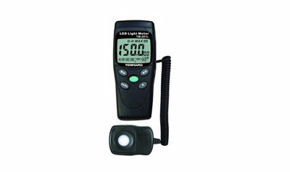
Luminous efficacy is the key parameter that quantifies a light source's ability to convert absorbed electrical energy into visible light. It represents the primary indicator for evaluating the performance and cost-effectiveness of a lighting system, directly influencing the energy costs and environmental impact of installations. In this section, we will explore its physical meaning, units of measurement, and the relevant regulatory context in detail. Luminous efficacy, expressed in lumens per watt (lm/W), is defined as the ratio between the total luminous flux emitted (Φ) and the absorbed electrical power (P). It should not be confused with energy efficiency, which is a broader concept related to overall energy consumption. The basic formula is: η = Φ / P. A value of 100 lm/W indicates that for every watt of electrical power consumed, the source produces 100 lumens of luminous flux. This parameter therefore measures the "ability" of the lamp or LED module to transform electrons into photons perceptible by the human eye, taking into account the standard photopic sensitivity curve V(λ). The general formula η = Φ / P can be broken down for more refined analysis. Considering losses, it can be written as: η = (η_e * η_q * η_e * η_opt) * (683 lm/W), where η_e is the electron injection efficiency, η_q is the internal quantum efficiency of the chip, η_e is the light extraction efficiency from the semiconductor, and η_opt is the optical efficiency of the phosphor system and primary optics. The factor 683 lm/W is the photometric equivalent of radiation at the wavelength of maximum eye sensitivity (555 nm). For white LEDs, which use conversion phosphors, luminous efficacy is typically lower than this theoretical maximum due to Stokes conversion losses and a spectrum not perfectly matched to the V(λ) curve. The lumen (lm) is the unit of measurement for luminous flux, which quantifies the luminous power perceived by the human eye, weighted according to the photopic spectral sensitivity curve. The watt (W) measures the absorbed electrical power. Therefore, lm/W measures how much "light useful for the eye" is obtained per unit of electrical energy spent. It is fundamental to understand that the lumen is a photometric, not a radiometric, measure: two sources with identical radiant power (in watts) but different spectra will have a different luminous flux in lumens, because the eye is more sensitive to yellow-green (555 nm) than to deep blue or red. Fundamental note: the values in the table refer to quality commercial products. The luminous efficacy of a complete LED system (lamp or luminaire) is lower than that of the single chip due to losses from the electronic driver, secondary optics, and heatsink. A high luminous efficacy LED significantly reduces operating costs: a 10,000-lumen luminaire with 100 lm/W efficacy consumes 100W; with 150 lm/W efficacy it consumes only 67W, saving 33W per luminaire, which becomes enormous over thousands of hours and hundreds of luminaires. Calculating luminous efficacy requires precise measurement of two quantities: total luminous flux and input electrical power. For professionals, it is essential to know both laboratory methods (integrating sphere) and practical estimates for field evaluation. The accuracy of the calculation depends on the quality of the instruments and standardized environmental conditions. For a field estimate calculation, you need: 1) a calibrated luxmeter, 2) a true-RMS wattmeter (to measure real absorbed power, considering the power factor), 3) an environment with low reflectance surfaces. The most common indirect method uses the relationship between illuminance (lux) and flux (lumen) under far-field conditions. In a dark room or at night, place the luxmeter at a known distance (d) from the source, sufficiently large compared to the source's size (at least 5 times the maximum dimension). Measure the illuminance (E) in lux on the sensor, perpendicular to the emission direction. The approximate luminous flux is calculated with: Φ ≈ E * 4πd² (for an isotropic source). This is an approximation that ignores the real polar diagram. Power P is measured directly with the wattmeter. Therefore: η = (E * 4πd²) / P. For directional sources (LED spotlights), the formula is more complex and requires integration of the luminous intensity (cd) over the entire solid angle. Suppose we have an LED floodlight. We turn it on to thermal steady-state (after 30 minutes). The wattmeter measures P = 48.5 W. In a dark room, at a distance d = 5 meters, the luxmeter measures E = 125 lux at the center of the light cone, along the optical axis. If the manufacturer states a beam angle of 60°, we can estimate the flux. For an approximately uniform beam within a cone, the relation is: Φ ≈ E_average * Illuminated area at distance d. The area at 5m with a half-angle of 30° is A = π*(d*tan(30°))² ≈ 3.1416*(5*0.577)² ≈ 26.2 m². E_average over the circle area is about 0.7-0.8 of the central value, let's take 0.75: E_average ≈ 94 lux. So Φ ≈ 94 lux * 26.2 m² ≈ 2460 lumens. The estimated luminous efficacy is η = 2460 lm / 48.5 W ≈ 50.7 lm/W. This is the efficiency of the complete system (LED+driver+optics+lens). If the LED module datasheet states 120 lm/W, the difference (≈60 lm/W lost) is due to the efficiency of the optics (~85%), driver (~90%), and thermal losses, bringing the system efficacy to ~120 * 0.85 * 0.90 * (thermal factor 0.8) ≈ 73 lm/W. Our lower measurement suggests non-ideal operating conditions or additional losses. This example shows the importance of measuring the complete system, not just the chip. Accurate and standardized measurement of total luminous flux is performed with an integrating sphere (Ulbricht Sphere). This instrument, coated internally with a highly reflective, low-absorbance diffusing surface (e.g., BaSO₄), collects and homogenizes light emitted in all directions. A photodetector, calibrated with reference sources (standard lamps), measures the illuminance on the inner wall, proportional to the total luminous flux introduced into the sphere. Technical standards (such as CIE 84, EN 13032-1) define rigorous procedures to correct systematic errors like self-absorption of the source and geometric overlaps. Accredited laboratories provide measurement reports with an expanded uncertainty typically of 2-5%. For LEDs, it is crucial to measure at thermal steady-state, as flux and luminous efficacy vary with junction temperature (Tj). In this section, we systematically and technically address the most common questions asked by designers and installers, providing quantitative answers based on physical data. Illuminance (E) is calculated as the luminous flux (Φ) incident on a surface, divided by the area (A) of that surface: E = Φ / A. The unit is lux (lx), where 1 lx = 1 lm/m². For a point source at distance d, with luminous intensity I (in candela, cd) in the direction of the surface, and if the surface is perpendicular to the light direction, the cosine law applies: E = I / d². If the surface is tilted at an angle θ from the perpendicular, E = (I * cosθ) / d². For example, a lamp with I = 500 cd provides at 2 meters distance, on a perpendicular surface, an illuminance E = 500 / 2² = 125 lux. If the surface is tilted by 60° (cos60°=0.5), E = (500 * 0.5) / 4 = 62.5 lux. This is fundamental for the lighting design of offices, streets, showrooms. 1 Lux is very dim lighting. For an idea: the full light of the moon on a clear night is about 0.25-1 lux. A poorly lit corridor might be at 50-100 lux. A well-lit office requires 300-500 lux on the desk. Direct sunlight at noon can exceed 100,000 lux. So, 1 lux is the minimum threshold to vaguely perceive obstacles, but insufficient for any activity requiring visual acuity. The formula is straightforward: Luminous flux (lm) = Absorbed power (W) * Luminous efficacy (lm/W). Example: an LED lamp of 15W with declared efficacy of 90 lm/W will produce approximately Φ = 15 W * 90 lm/W = 1350 lumens. Caution: the absorbed power must be the real, measured one, not the "equivalent" to an incandescent bulb, which is a mere commercial indication. Inverting the formula, you can estimate the power needed to achieve a given flux: P (W) = Φ (lm) / η (lm/W). To have 5000 lumens with a 120 lm/W system, you need approximately P = 5000 / 120 ≈ 41.7 W. 10,000 lumens is a very high flux, typical of floodlights for large areas, sports halls, or high-bay industrial lighting. To quantify illuminance, it depends on how the flux is distributed. Concentrated in a narrow beam (e.g., 30°) it will produce a very intense peak illuminance on a small area (hundreds of lux at tens of meters). Diffused uniformly over a 100 m² surface, it would produce an average illuminance of 10,000 lm / 100 m² = 100 lux, suitable for a warehouse. 2000 lumens are typical of a good indoor LED lamp (equivalent to an old 150W halogen or 200W incandescent). In a 20 m² room (e.g., living room), distributed uniformly (with a diffusing ceiling fixture), it would give about 100 lux average, a comfortable value for relaxing activities. On a 2 m² desk, a 2000-lumen direct luminaire can provide over 500 lux, ideal for reading and working. 3000 lumens is a significant flux, equivalent to that of a powerful outdoor LED floodlight or an LED ceiling fixture for a medium-sized commercial environment (e.g., a 15-20 m² shop). It is the flux emitted by a 50W discharge lamp (HQI) or an old 200-250W incandescent lamp. With suitable optics, it can illuminate a 50 m² garden with 60 lux average, sufficient for security and ambient lighting. These are Correlated Color Temperatures (CCT), measured in Kelvin (K), and describe the hue of white light. There is no universal answer; it depends on the application. For offices and work environments, recent studies suggest that 4000K improves concentration, alertness, and mood during the day, reducing drowsiness. Some regulations (e.g., UNI EN 12464-1) recommend neutral light for offices. For residential environments, hotels, and restaurants, 3000K (or 2700K) is generally preferred to create a relaxed and welcoming atmosphere. In retail, 3000K enhances woods, warm fabrics, foods; 4000K is better for modern clothing, electronics, minimalist environments. A recent trend is "Human Centric Lighting" which involves systems with variable CCT, 4000K during the day and 3000K in the evening, to respect the circadian rhythm. LEDs offer greater energy savings mainly for three physical reasons: The Color Rendering Index (CRI or Ra) is an index (from 0 to 100) that measures the fidelity with which a light source reveals the real colors of objects, compared to a reference source (black body or daylight at the same CCT). A CRI of 100 means perfect reproduction. CRI > 80 is considered good for general applications. CRI > 90 is required for critical applications: museums, art galleries, luxury clothing stores, surgery, where color discrimination is essential. Low-quality LEDs can have low CRI (<70), making colors dull and altered (e.g., difficulty distinguishing similar shades of blue or red). There are special indices like R9 (red saturation), crucial for rendering skin tones, woods, and red fabrics. A high luminous efficacy LED may have a slightly lower CRI than a LED optimized for color rendering, due to the trade-off in phosphor efficiency. The average lifespan of LEDs is expressed as L70 or L80/B50, i.e., the number of hours after which 50% of the lamps in a sample maintain at least 70% (or 80%) of the initial luminous flux. For quality products, this value is typically between 25,000 and 50,000 hours (correct answer: b). Under ideal operating conditions (good heat dissipation, moderate ambient temperature, quality driver), high-end LED modules can exceed 100,000 hours (L70). However, the system life is often limited by the electronic driver, whose lifespan (influenced by electrolytic capacitors) can be 30,000-70,000 hours. A lifespan of 50,000 hours means, with 12 hours of daily use, over 11 years of service. The key to achieving this lifespan is controlling the junction temperature (Tj): every 10°C increase above the nominal Tj can halve the expected life of the LED chip. Currently (2024), LED lamps hold the record for luminous efficacy in general lighting. In particular, high-end cool white (5000-6000K) COB (Chip-on-Board) LED modules can achieve system efficacies (including driver) of 180-220 lm/W under optimal test conditions (low current, excellent heat dissipation). For special applications, solid-state LEDs based on lasers or new technologies like perovskite LEDs promise even higher efficacies in the lab (>200 lm/W with excellent color rendering), but are not yet commercially available on a large scale. For street and industrial lighting, LED systems with high-efficiency optics and drivers are the undisputed choice, having supplanted discharge technologies (HPS, MH) thanks to the best compromise between efficacy, lifespan, light control, and light quality (CRI). The luminous efficacy declared in datasheets is measured under ideal laboratory conditions. In real-world operation, numerous factors reduce it. Understanding them is essential for designing and maintaining efficient installations. The single most critical factor is the junction temperature (Tj) of the LED chip. As Tj increases, internal quantum efficiency decreases (thermal droop), and luminous flux drops. For many white LEDs, the reduction is about 0.3-0.5% for every °C increase in Tj above the nominal temperature. A poorly heat-sunk LED module operating at Tj=110°C instead of Tj=85°C can lose 10-15% of its flux and thus luminous efficacy. Furthermore, the temperature increase accelerates the degradation of phosphors and encapsulation materials, further reducing efficacy over time. A well-designed heatsink, with low junction-to-ambient thermal resistance (Rth j-a), is crucial for maintaining high performance. The driver converts mains voltage (AC) to constant current (DC) suitable for the LED. Its efficiency (η_driver = Pout_led / Pin_AC) typically ranges between 85% and 95% for quality products. A driver with 85% efficiency dissipates as heat 15% of the input power, which does not contribute to light. Therefore, the luminous efficacy of the complete system (lamp) is: η_system = η_led * η_driver * η_optics. If the LED module has η_led = 200 lm/W (measured in DC), the driver has η=90%, and the optics/reflector has an efficiency of 85%, then η_system = 200 * 0.90 * 0.85 = 153 lm/W. Drivers with low power factor (PF) (<0.9) can also cause additional losses in the grid and are not allowed by many regulations. The light generated by the chip must be extracted, possibly converted by phosphors, and directed. Every interface (air-silica, silica-air, lens-diffuser) causes Fresnel reflection losses (about 4% per interface). Low-quality lenses and diffusers can absorb or scatter light in undesired directions. Phosphors for conversion to white have a conversion efficiency (Luminous Efficacy of Radiation, LER) that rarely exceeds 350 optical lm/W, limiting the maximum theoretical efficacy of the white LED. The primary (in contact with the chip) and secondary optics must be designed with high transmittance materials (e.g., optical polycarbonate, glass, silicone) to minimize losses. Luminous efficacy is not constant over time. With aging, the flux decreases (lumen depreciation) due to several mechanisms: phosphor degradation (yellowing, loss of efficiency), opacification of encapsulation materials, degradation of metal junctions in the chip. The flux maintenance curve (lumen maintenance curve) typically follows an exponential law. The IESNA LM-80 standard defines the method for measuring degradation, and TM-21 extrapolates data to estimate useful life. A quality product maintains L90 (>90% of flux) for 36,000 hours or more. This means that the actual luminous efficacy after 5 years of continuous operation could be 10% lower than the initial one. Energy efficiency, in the lighting field, is a systemic concept that evaluates the overall optimization of the energy consumption of a lighting application or installation to achieve the desired photometric result. It is not a direct physical quantity like luminous efficacy, but a performance principle involving multiple factors: source efficacy (lm/W), luminaire efficacy (photometric performance index), control strategy (dimming, sensors), space design (surface reflectances), and proper maintenance. The ultimate goal is to minimize primary energy consumption (expressed in kWh/year) while meeting or exceeding illuminance standards (lux), visual comfort, and safety. A high energy efficiency project therefore uses efficient products (like LEDs) but integrates them into an intelligent system that avoids waste, for example by turning off or dimming light when not needed or maximizing the use of natural light. In summary, the fundamental difference lies in the scale and nature of the evaluation. Luminous efficacy (lm/W) is an intrinsic product parameter that measures the ability of a specific source (e.g., an LED module) to convert electrical watts into luminous lumens. It is a laboratory datum, specific and repeatable. Energy efficiency is instead a system and performance indicator that evaluates the end-use of energy in a real and complex context. A lamp can have excellent luminous efficacy (e.g., 200 lm/W), but if installed in a luminaire with poor optics, managed without controls, and in a dark environment, the energy efficiency of the installation will be mediocre. Therefore, luminous efficacy is a fundamental component, but not the only one, for achieving high energy efficiency. Selecting the right light source requires balancing luminous efficacy, light quality (CRI, CCT), lifespan, initial and total costs (TCO). For professionals, we recommend: In conclusion, luminous efficacy (lm/W) remains the main metric for evaluating the cost-effectiveness of a source, but must be interpreted in the context of all other photometric, qualitative, and reliability parameters. The latest generation LEDs offer unprecedented values, making drastic reductions in global energy consumption for lighting possible, provided they are selected and applied with technical competence. Luminous efficacy: what is it?
What exactly is meant by luminous efficacy?
In-depth: the luminous efficacy formula and its variants
The unit of measurement: lumens per watt (lm/W) explained
Comparative table: historical luminous efficacy of technologies
Technology Typical luminous efficacy (lm/W) Typical power equivalent to 1000 lumens Notes Standard Incandescent Lamp 10-15 lm/W 67-100 W Low efficacy, high thermal dispersion (>90%). Halogen Lamp 15-25 lm/W 40-67 W Slight improvement over incandescent. Compact Fluorescent Lamp (CFL) 45-75 lm/W 13-22 W Medium efficacy, presence of mercury. Discharge Lamp (HID, HPS) 80-150 lm/W 7-12 W High efficacy but poor color rendering (for HPS). Current generation LED (2024) 100-220 lm/W* 4.5-10 W *System efficacy (driver + optics). Maximum commercial efficacy for cool white LEDs. Laboratory LED (record) Up to 300+ lm/W ~3.3 W Chip-level efficacy, under optimal test conditions. How to calculate luminous efficacy: methodologies and tools
Practical calculation method for professionals
Concrete calculation example
Professional instrumentation: the integrating sphere (Ulbricht Sphere)
Frequently asked questions about luminous efficacy
Questions about calculation and measurement
How is illuminance (Lux) calculated?
What does 1 Lux correspond to in practical terms?
How to calculate Lumens from Watts knowing the luminous efficacy?
Questions about specific flux values and color temperature
How much do 10,000 lumens light up? And 2000 lumens?
What do 3000 lumens correspond to?
What's the difference between 2700K, 3000K, 4000K, and 6000K?
2700K: very warm white, leaning towards yellow/orange. Similar to the light of an incandescent lamp. Intimate, cozy atmosphere, ideal for restaurants, hotels, living rooms.
3000K: warm white. Slightly more neutral than 2700K, but still warm. Standard for lighting clothing stores, food (enhances warm colors), receptions.
4000K: neutral white. Known as "natural white". Balance between warm and cool spectral components. Recommended for offices, schools, laboratories, hospitals, where concentration and neutral color perception are required.
6000K: cool white. Hue with a noticeable bluish component. Similar to daylight on a clear day (sun + blue sky). Used in industrial environments, workshops, garages, stadiums, because perceived as more "brilliant" and stimulating, but can appear clinical and cold in residential interiors. For chips of the same efficacy, 6000K LEDs typically have slightly higher luminous efficacy (lm/W) (5-15%) compared to 3000K, because conversion phosphors for warm white absorb more energy. However, the choice should not be based solely on efficacy, but on the visual, psychological, and regulatory needs of the environment.Is 3000K or 4000K light better?
Why do LEDs have greater energy savings?
1. High electron-photon conversion efficiency: in LEDs, electron-hole recombination in the semiconductor directly emits photons (light) with an internal quantum efficiency that can exceed 80%. In incandescent lamps, the filament must be heated to ~2700°C to emit visible light, but over 90% of the energy is dissipated as infrared heat.
2. Intrinsic directionality: the LED emits light in a hemisphere (about 180°), unlike traditional sources that emit isotropically (360°). This reduces the need for reflectors and losses due to absorption, directing more light directly where needed.
3. High system efficiency at steady-state: LED electronic drivers have efficiencies >90% (compared to magnetic ballasts for fluorescents with 70-85% efficiencies). Furthermore, LEDs have no startup time and reach maximum flux instantly, eliminating waste during startup.
Combining these factors, a high-quality LED system can reduce energy consumption by 80% or more compared to an equivalent incandescent system, and by 40-50% compared to older generation fluorescent systems.What does CRI (Ra) mean in LEDs?
What is the average lifespan of an LED bulb?
What is the most efficient lamp currently?
Factors influencing luminous efficacy in LED systems
Operating temperature and thermal dissipation
Efficiency of the electronic driver
Optics and light extraction losses
Degradation over time (lumen maintenance)
Definition of energy efficiency in lighting
Key difference: energy efficiency vs. luminous efficacy
Luminous efficacy and energy efficiency: choosing an LED strip professionally