








Plant light: the future of growing
The search for the perfect grow light is radically transforming the way we cultivate, driven by technological innovations that promise to revolutionize the growth of indoor plants and beyond. In this landscape, LED lighting emerges not as a simple alternative, but as the foundational pillar of more sustainable, efficient, and controlled cultivation, both for houseplants and vegetables.
This article explores in depth how specialized LED strips, smart controllers, and cutting-edge profiles are redefining the boundaries of cultivation, providing scientific data, comparative analyses, and a practical guide to optimize every growth stage. We will discover how to choose the ideal artificial light for plants, how to select low-light indoor plants, and how to transform any space into a fertile environment.
Grow lights: from sunlight to LED technology
Successful cultivation, especially in low-light indoor environments, has always represented a challenge. Today, it faces new solutions: the growth of urban gardening, the need to purify air in homes and offices, and the desire to cultivate year-round. The answer to these needs lies in the ability to control and optimize the most critical parameter: light for plants. LED lighting for plants is no longer a niche experiment, but the enabling technology for a new agricultural paradigm, accessible to everyone. This transition represents a quantum leap, allowing anyone to cultivate successfully, from a plant pot with integrated grow light on the windowsill to sophisticated terrarium lighting for plants. What is the best grow light? The best light for plants is one that provides the full spectrum necessary for photosynthesis and photomorphogenesis. Historically, this was only sunlight, but today full-spectrum or specific-spectrum LED grow lights (with red and blue light for plants) can be superior because they deliver exactly the necessary wavelengths without waste, with greater efficiency and less heat. How do I replace sunlight for plants? Replacing sunlight for plants requires a light source that replicates its key characteristics: intensity (PPFD), spectrum (from UV to far-red), and photoperiod. Modern solar-spectrum grow lights or LED lamps that replicate sunlight for plants are the most effective, as they can be adjusted to provide the exact quantity and quality of light needed at each growth stage, becoming the perfect artificial light for houseplants. What artificial light is good for plants? The artificial light that benefits plants is one that emits in the PAR band (Photosynthetically Active Radiation, 400-700 nm). LED grow lights are the best because they are efficient, long-lasting, produce little heat, and can be designed with specific spectra (for example, for succulents or for flowering). T5 fluorescent lights can also work well for low-light indoor plants, but LEDs are the most advanced choice. Which lamp replaces the sun? The lamp that most effectively replaces the sun is a high-spectrum (full spectrum) and high-intensity LED grow light (with a PPFD value appropriate for the plant). For optimal results, look for solar-spectrum grow lights that offer a high CRI (Color Rendering Index) and a balanced spectrum, capable of simulating the entire range of natural light, becoming the best indoor grow light. To fully understand the revolution of artificial grow lights, it is essential to start with photobiology. Plants do not "see" light as humans do; they perceive it through specialized photoreceptors (phytochromes, cryptochromes, phototropins) that respond to specific wavelengths. Each pigment absorbs light energy in specific bands, triggering distinct physiological responses. Sunlight, although complete, is variable and often insufficient indoors. This is why choosing low-light houseplants (such as Pothos or Sansevieria) is one strategy, but providing targeted artificial light for indoor plants is the definitive solution. Photosynthetically Active Radiation (PAR) defines the range of wavelengths (from 400 to 700 nm) that plants can use for photosynthesis. However, the concept of PAR as the sole metric is now outdated. Advanced research focuses on quantum photosynthetic efficiency (Quantum Yield) for each individual wavelength. Studies show that leaves use photons in the red spectrum (660 nm) with an efficiency exceeding 90%, while those in the blue spectrum (450 nm) achieve around 85%. High-end LED strips, such as the Full Spectrum and Horticulture series, are designed to maximize these parameters, offering the best light for plant growth. Plants also use light as a signal to regulate development and morphology (photomorphogenesis). This is the area where fine-tuning of the LED spectrum shows its greatest potential. Blue light for plants (430-460 nm) promotes a compact habit, leaf thickening, and stomatal opening, essential for robust vegetative growth and perfect for keeping office plants without natural light healthy. Red light (660 nm) stimulates stem elongation and leaf expansion. The addition of green light (500-600 nm) has proven crucial for penetrating the lower leaf canopy. Dimmable and programmable LED strips allow you to "orchestrate" these effects, a possibility nonexistent with traditional technologies. Frequently asked questions about grow lights
Lighting, photobiology, and low-light indoor plants
Photosynthesis and PAR: the starting point for good plant lighting
Beyond photosynthesis: photomorphogenesis and action spectrum
Designing a grow light system with LEDs: from spectrum to controllers
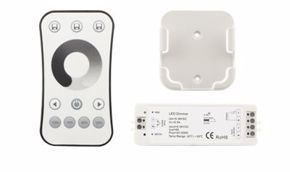
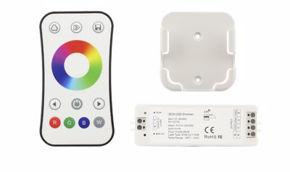
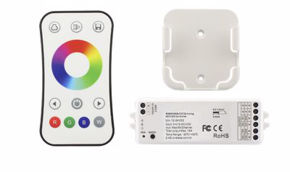
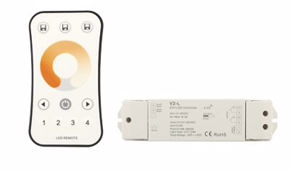
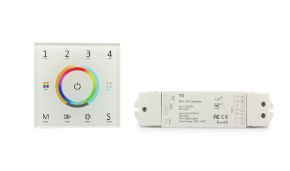
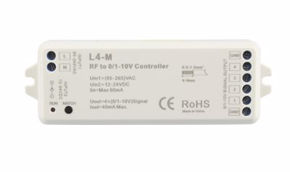
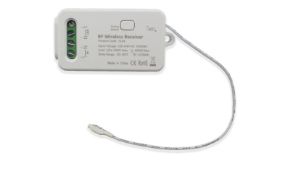
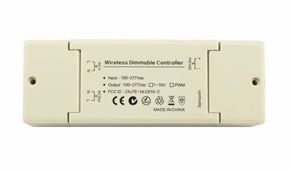
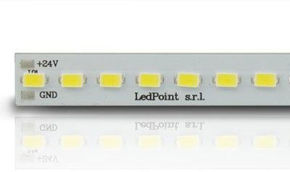
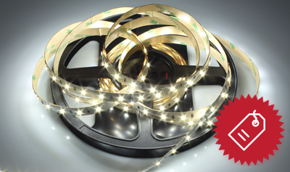
Choosing and installing a grow light system for home use requires careful planning. It involves integrating hardware components (strips, profiles, heat sinks) with control software, creating a dynamic lighting ecosystem for your indoor plants. The heart of the system is the LED strips. The choice should be based on objective parameters and plant requirements. 1. Full spectrum (warm white/cool white): offers good color rendering and a natural appearance. Ideal for vegetative stages and living areas where human vision is also important. Perfect as a complement for bathroom plants with low light. Demonstrative data based on comparative studies of cultivation in controlled environments. Actual results vary based on species, specific spectrum, and environmental conditions. Photosynthetic Photon Flux (PPF): measures the total number of PAR photons emitted by the source per second (μmol/s). The true revolution lies in automation. Controllers transform a static grow light into a dynamic tool. Professional LED controllers allow programming complex "light recipes": you can set a daily cycle that gradually varies intensity and color, simulating dawn and dusk, perfect for terrarium lighting for plants or for intelligently managing office plants with low light. Selecting LEDs for grow lights: an important choice
Spectrum types for every need
2. Growth spectrum (horticulture spectrum): combines white chips with monochromatic chips (red, blue). A typical spectrum might be: 30% white, 50% red 660nm, 15% blue 450nm. This ensures maximum photosynthetic impulse (PPF) and precise control. It is the best choice for dedicated indoor grow lights.
3. Independently channel-modulable spectrum (tunable spectrum): the ultimate expression. Allows continuous spectrum variation: more blue for vegetative growth, more red for flowering. Ideal for the serious enthusiast of light for growing plants.Table: growth improvement with LED strips vs. traditional lighting
Plant type Light condition LED system (PPFD: 300 μmol/m²/s) Fluorescent lamp (PPFD: 150 μmol/m²/s) Growth variation with LED Basil (aromatic plant) Indoor, 16h photoperiod Fresh mass: 220g at 30 days Fresh mass: 150g at 30 days +46% biomass Pothos (low-light indoor plant) Office without direct light New leaves: 8 in 60 days New leaves: 3 in 60 days +167% leaf growth Lettuce (microgreens) Vertical cultivation Uniform height/color, 14-day cycle Irregular height, 18-day cycle Cycle -22%, superior quality Phalaenopsis Orchid Flowering stimulation Flowering induced in 8 weeks No flowering (only leaf growth) Successful flowering vs. none Echeveria (succulents) Maintaining color and compactness Vibrant colors, compact form Stretching (etiolation), fading Optimal morphology preserved Critical parameters: PPF, PPFD, efficiency
Photosynthetic Photon Flux Density (PPFD): measures the PAR photons reaching the plant per second (μmol/m²/s). This is the crucial operational parameter. Optimal PPFD values vary:
- for low-light indoor plants (Pothos, Sansevieria): 50-150 μmol/m²/s.
- for leafy plants and herbs: 200-400 μmol/m²/s.
- for fruiting or flowering plants: 400-600+ μmol/m²/s.
High-efficiency strips (>2.8 μmol/J) enable reaching these targets with reduced energy consumption.The role of controllers and automation
Practical applications: from home to vertical farm
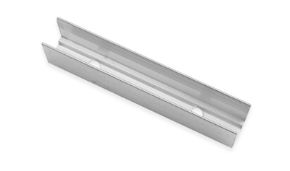
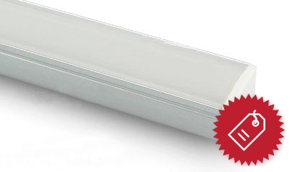
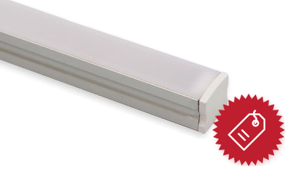
Artificial grow light technologies find application in a wide range of scenarios. Here, LED lighting is often the sole or primary light source. Control is total. For home applications, uniformity of light distribution (PPFD uniformity) becomes critical. Using long LED strips combined with profiles allows uniform illumination of a shelf of low-light houseplants or a green corner. For indoor grow lights on smaller scales, elegant solutions exist such as plant pots with integrated grow lights, or suspension systems. For succulents, which require abundant light, a high-PPFD LED grow light for succulents is essential to prevent etiolation. Terrarium lighting for plants: Terrariums, often enclosed and placed indoors, require powerful but cool light. Low-profile LED strips are ideal for integration into the lid, providing the appropriate spectrum for ferns and mosses without overheating the environment. Aquarium plant lighting: Requirements are similar but in a submerged environment. Moisture-resistant lamps with spectra that favor photosynthesis in aquatic plants are needed, often with a strong red and blue component. Office plants without light / with low light: LED strips can be discreetly integrated into furniture, shelves, or cabinets to create "green corners" in dim offices. By choosing low-light office plants (such as Zamioculcas or Peace Lily) and pairing them with gentle but consistent artificial light for houseplants, you ensure their survival and well-being. Domestic and indoor cultivation
Specialized lighting: terrariums, aquariums, and offices
Grow lights: toward precision cultivation in every environment
The integration of intelligent LED systems is leading domestic and professional cultivation toward an era of precision. It is not just about replacing a light source, but adopting a new approach based on data and efficiency. The possibility of cultivating locally and year-round any plant, from basil on the balcony to orchids in the living room, and the increased well-being of our indoor plants, outline a future in which gardening will be accessible to everyone, regardless of available natural light. Understanding light for plants, from its spectrum to its intensity, is the key to this green and technological future.