







Light bulbs and LED bulbs: what's the difference?
Are you still anchored to the obsolete concept of light bulbs, or have you already moved towards LED bulbs? Are you wasting money and creative potential with traditional lighting systems that limit your expressiveness? The truth nobody tells you is that light bulbs, both incandescent and LED, represent the past of lighting. The future, the one that transforms homes, shops, restaurants, and offices into magical environments, is called LED strips.
In this explosive guide, we will reveal why LED strips are not simply an alternative to bulbs, but a superior technology in every aspect: flexibility, savings, creativity, and lifespan. You will discover how a simple LED strip can replace dozens of bulbs, create atmospheres unthinkable with traditional light sources, and save you up to 60% more compared to already efficient LED bulbs. Get ready to see light with completely new eyes.
Why LED strips are superior to bulbs
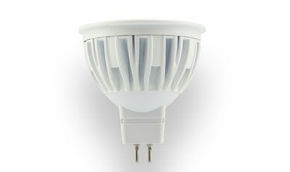
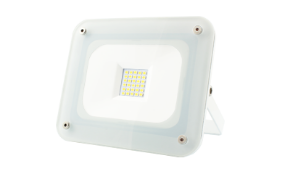
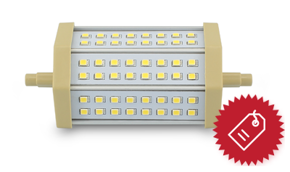
Before diving into the fascinating world of LED strips, it's essential to understand why this technology represents an evolutionary leap compared to bulbs, even LED ones. Bulbs are point light sources: they emit light from a specific point, creating shadowed areas and requiring multiple light points to evenly illuminate a space.
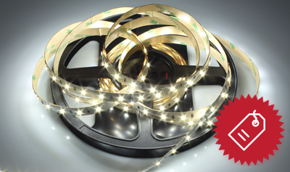
LED strips, on the other hand, are continuous linear sources that distribute light homogeneously, completely eliminating shadows and dark spots. But it's not just about light distribution. LED strips offer installation flexibility impossible for bulbs: they adapt to any shape, bend, follow profiles, hide in minimal spaces. They can be cut to the exact needed length, avoiding waste. And most importantly, while a bulb does one thing (illuminate), an LED strip can change color, intensity, color temperature, and even sync with music or movies.
The savings paradox: LED strips beat even LED bulbs
You probably already know that LED bulbs beat incandescent ones with savings up to 90%. But did you know that LED strips in turn beat LED bulbs? Here are the numbers that will convince you definitively. To uniformly illuminate a 20 m² ceiling, about 8-10 LED bulbs of 800 lumens each are needed (total consumption: 80-100W). With a high-quality LED strip, only 5-6 meters of strip are needed (consumption: 40-50W) to achieve the same brightness, but distributed in an infinitely more uniform and pleasant way. Additional savings: 40-50%.
Then consider the lifespan: while a good LED bulb lasts 25,000-30,000 hours, a quality LED strip reaches 50,000 hours. And the cost? One meter of high-quality RGBW LED strip costs as much as a mid-range smart LED bulb, but can illuminate an entire wall, change color, create dynamic effects.
The infinite types of LED strips: one for every need, desire, dream
The world of LED strips is incredibly varied and specialized. Unlike bulbs, which are distinguished mainly by base, shape, and wattage, LED strips offer a range of technical characteristics that allow finding the perfect solution for any imaginable application. In this section, we will explore in detail every type of LED strip available on the market, from the simplest single-color strips to advanced RGBIC strips with independent control of each single LED.
For each type, we will provide precise technical data, practical application examples, and advice on how to choose the right one for your specific needs. Whether you want to illuminate the kitchen with perfect white light, create a romantic atmosphere in the bedroom, transform your home cinema into an immersive experience, or give a magical touch to your shop, there is an LED strip made just for you.
Fixed white LED strips: the professional solution for functional lighting
Fixed white LED strips are the modern equivalent of LED bulbs, but with all the advantages of strips. Available in different color temperatures (2700K warm white, 3000K neutral warm white, 4000K neutral white, 6500K cool white), these strips are ideal for applications where constant, uniform, quality light is needed.
They are perfect for: under-cabinet kitchen lighting (where uniform light eliminates shadows on the worktop), wardrobe and closet lighting (linear light perfectly reveals colors and fabrics), stair and handrail lighting (increased safety with continuous light), office and professional studio lighting (reduces eye strain).
LED density typically ranges from 30 to 240 LEDs per meter, with power from 4.8W/m to 28.8W/m for the brightest versions.
COB LED strips: the latest frontier of uniform lighting
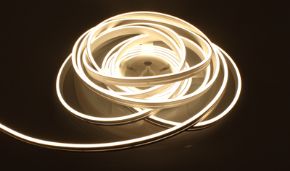
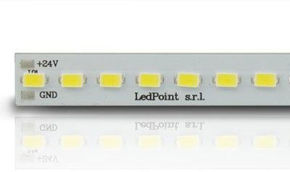
Among fixed white LED strips, COB (Chip On Board) strips represent the maximum expression of uniformity and light quality. Unlike traditional LED strips that use discrete SMD (Surface Mounted Device) LEDs spaced apart, COB strips have hundreds of micro-LEDs mounted directly on the circuit in a continuous line.
The result is an absolutely uniform strip of light, without visible bright spots, perfect for applications where light quality is fundamental: jewelry store windows, museums, art galleries, photography studios, luxury clothing stores. COB strips also have better heat dissipation and an even longer lifespan than traditional SMD strips. If you seek the highest quality for your professional lighting, discover our selection of COB LED strips by clicking here.
RGB LED strips: the world of colors at your fingertip
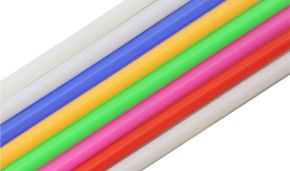
RGB (Red, Green, Blue) LED strips are those that revolutionized the concept of decorative and ambient lighting. By combining the three primary colors (red, green, blue) in varying proportions, these strips can create over 16 million different colors. You are no longer simply lighting, you are painting with light.
The applications are infinite: home theater ambiance (red light for action movies, blue for thrillers, green for fantasy), bar and restaurant lighting (change atmosphere between happy hour, dinner, and after-dinner), parties and events, shops (themed lighting for holidays), kids' rooms (total personalization).
Standard RGB LED strips have 3 control channels (R, G, B), while RGB+W versions add a separate white channel to have both vivid colors and pure white when needed. Our collection of RGB LED strips is available in this section.
RGBIC and RGBWW LED strips: the advanced control that makes the difference
While standard RGB LED strips control all LEDs on the strip simultaneously (all the same color), RGBIC (RGB Independent Control) strips represent the most advanced evolution. These strips allow you to control each single LED segment (typically every 3-5 LEDs) independently, creating dynamic effects impossible with standard RGB strips: scrolling rainbows, luminous fireworks, color waves that follow music, gradual transitions between different colors along the same strip.
RGBWW strips (Red, Green, Blue, Warm White, Cold White) instead add two separate white channels (warm and cold) to the three RGB colors, allowing not only all colors of the spectrum but also any shade of white, from candle warm to daylight cool. These strips are ideal for those who want maximum versatility: vivid colors for fun and perfect whites for daily lighting. Explore the infinite possibilities of RGBW LED strips on this page.
Outdoor LED strips: total resistance to water, cold, and sun
One of the most frequent questions our customers ask is: "can I use LED strips outdoors?" and the answer is: "yes, but you must choose the right type." Indoor LED strips are not protected from weather and would quickly get damaged. Outdoor LED strips, however, have specific construction features: protection rating IP65, IP67, or IP68 (completely waterproof), UV resistance (to not fade in the sun), materials resistant to extreme temperatures (-20°C to +50°C).
These strips are perfect for: garden and terrace lighting, pool outlining, building facade lighting, tree and hedge decoration, commercial sign lighting. They can withstand heavy rain, snow, ice, and direct sunlight for years. If you want to bring the magic of LED strips to your outdoor space, visit the dedicated section.
Why LEDpoint specializes in LED strips instead of bulbs
Many ask us: "why does LEDpoint, despite having 'led' in its name, not sell LED bulbs?" The answer is simple and strategic: we don't sell products, we sell advanced lighting solutions. And LED strips represent the present and future of intelligent, customizable, and efficient lighting.
LED bulbs are commodities: you find them everywhere, from supermarkets to hardware stores, often at rock-bottom prices but of questionable quality. LED strips, however, require technical knowledge, specialized consultation, and quality components to guarantee perfect and lasting installations. Our mission is to guide our customers towards the lighting of the future, not sell them the past in an efficient format. By specializing exclusively in LED strips and strip lighting systems, we can offer:
• The widest selection of types, lengths, LED densities, colors;
• In-depth technical consultation by real industry experts;
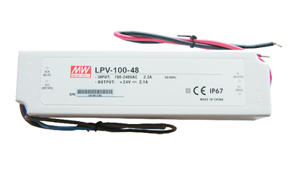
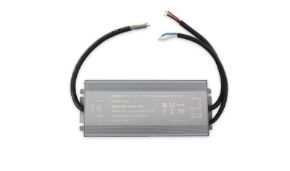
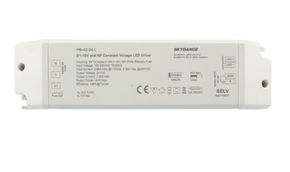
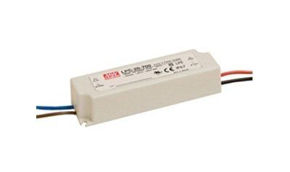
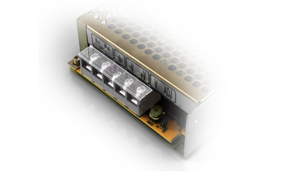
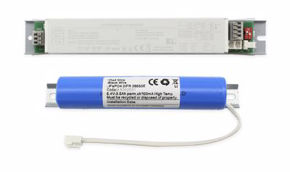
• Compatible, quality components: power supplies, controllers, connectors, aluminum profiles;
• Complete plug & play systems for every need;
• Specialized post-sales support for installation and troubleshooting.
In short, while others sell bulbs, we create atmospheres, emotions, luminous experiences. And we do it with the most advanced and versatile technology available: LED strips.
The LEDpoint advantage: not just strips, but complete systems
Buying LED strips from LEDpoint doesn't mean receiving just a roll of luminous strip. It means having access to a complete system of lighting products designed to work perfectly together. For every type of LED strip we sell, we offer:
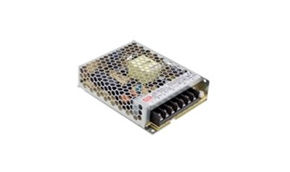
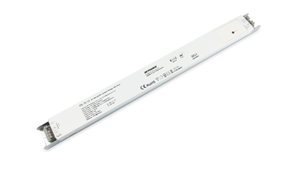
1. Correctly sized power supplies: calculated based on strip length and power, with load reserve for safety and longevity.
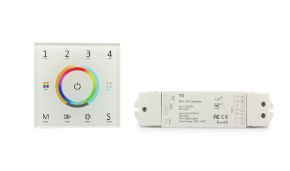
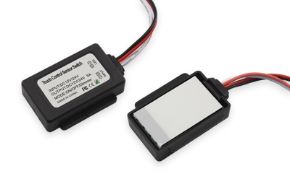
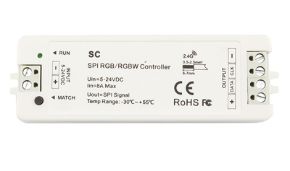
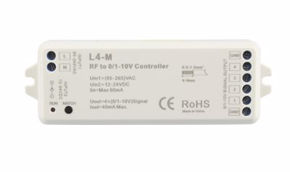
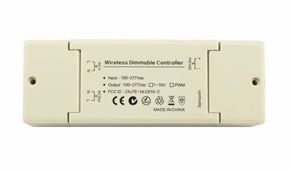
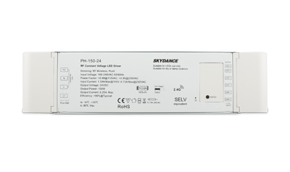
2. Suitable controllers and dimmers: from simple wall switch to WiFi controller with app, to professional DMX system.
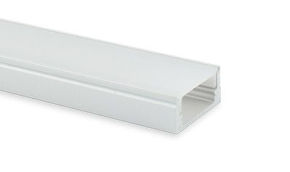
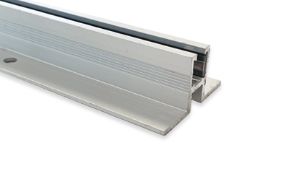
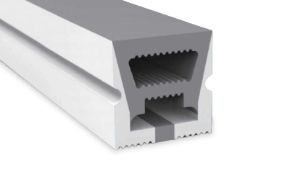
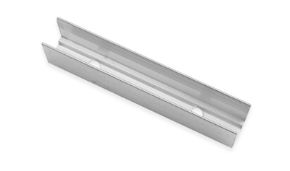
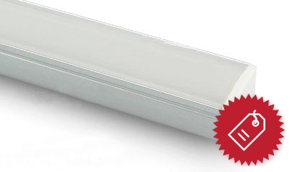
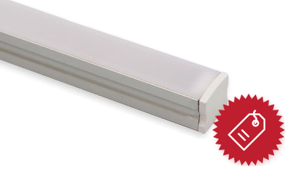
3. Aluminum profiles with diffusers: for professional mounting, better heat dissipation, and optimal light diffusion.
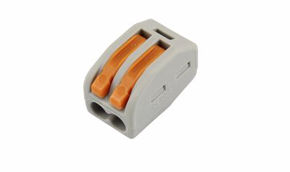
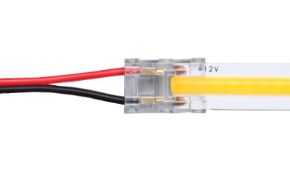
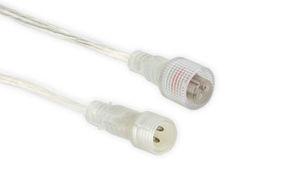
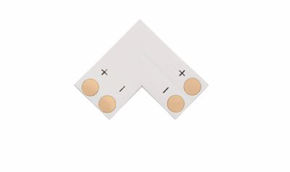
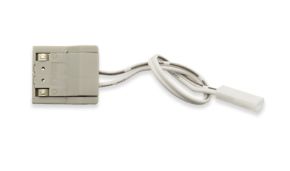
4. Installation accessories: solderless connectors, fixing clips, corners, extensions.
This systemic approach guarantees that your installation not only works perfectly from day one but continues to do so for decades. Because an LED strip is only as good as the system that powers and controls it. .
LED strips vs. LED bulbs
To fully understand the superiority of LED strips, let's analyze in detail each technical parameter compared to LED bulbs. This comparison leaves no room for doubt: LED strips win in almost every category, especially when considering modern lighting and design applications.
Light distribution: uniformity vs. point sources
LED bulbs: point sources that create areas of intense light alternating with shadows. To illuminate a surface uniformly, multiple bulbs strategically placed are needed. Even with the best placement, light gradients and shadows are created.
LED strips: continuous linear sources that emit light uniformly along their entire length. They create a "wall of light" without interruptions, shadows, or hot spots. Perfect for illuminating worktops, shelves, stairs, where uniform light is essential.
Practical example: in a kitchen, 4 LED bulbs under cabinets create 4 circles of light with shadowed areas between them. A continuous LED strip under the entire cabinet creates a perfectly uniform band of light over the entire worktop.
Installation and design flexibility
LED Bulbs: require specific sockets, fixed positions, dedicated wiring. Limit design to predetermined shapes and positions.
LED Strips: can be installed anywhere, with double-sided tape or in our aluminum profiles. They follow any shape: curves, corners, circles. They hide in minimal spaces (channels of a few millimeters). Can be cut to the exact needed length (at marked points).
Practical example: want to illuminate a curved shelf? With bulbs, it's impossible. With an LED strip, you simply follow the curve exactly.
Control and automation
Smart LED bulbs: individual control per bulb, often limited to dimming and color change (if RGB). To control multiple bulbs together, a hub or centralized system is needed.
LED strips: unified control of entire installations (up to 10-15 meters with a single controller). Dynamic effects along the entire strip. Perfect synchronization between different segments. Integration with complex home automation systems (KNX, Control4, Savant).
Practical example: in a home cinema, an RGBIC LED strip can create lighting effects that follow the on-screen action, with colors and movements coordinated throughout the room. With bulbs, at best you change the color of the entire room uniformly.
Total cost
LED bulbs: apparently low initial cost (€5-15 per bulb), but multiplied by the number of needed light points. Higher consumption for the same useful light (losses due to non-uniform distribution). More frequent replacements (shorter lifespan).
LED strips: higher initial cost considering strip, power supply, controller, accessories. But lower cost per meter of illumination. Lower consumption for the same useful light. Longer lifespan (50,000+ hours vs. 25,000-30,000). No replacement cost for decades.
Real calculation: illuminating a kitchen with 10 linear meters of cabinets. With LED bulbs: 10 bulbs at 8W = 80W, €200, lifespan 25,000h. With LED strips: 10 meters of strip at 14.4W/m = 144W (but light 3x brighter), €150 complete with everything, lifespan 50,000h. For the same effective light, strips consume less and last twice as long.
How to choose the perfect LED strip: technical guide
Choosing the right LED strip isn't complicated if you know the fundamental parameters. Follow this technical guide and you'll never make a purchase mistake. Every decision is based on objective data and measurable parameters.
Step 1: determine the needed length
Measure exactly where you will install the LED strip. Add 10% for margin of error and curves. Standard LED strips are sold in 5-meter reels but can be cut (only at marked points!) to the exact length.
Important: if you need more than 5 meters, do NOT connect multiple reels in series! Beyond 5 meters, voltage drop makes the final LEDs weaker and yellowish. For greater lengths, make parallel connections with separate power supply every 5 meters. Our technicians can help you with personalized wiring diagrams for every project.
Step 2: choose LED type and density
• SMD 2835 LED: the right compromise between brightness, efficiency, and cost. Perfect for most domestic applications.
• SMD 5050 LED: larger LEDs, brighter but less efficient. Ideal for RGB applications where color intensity is needed.
• SMD 5730 LED: very high brightness, for commercial applications and where a lot of light is needed.
• COB LED: ultra-uniform light without dots, for high-end applications.
Density (LEDs per meter):
• 30 LED/m: ambient lighting, very economical.
• 60 LED/m: the right compromise for most uses.
• 120 LED/m: high density, very uniform and bright light.
• 240 LED/m: professional density, for shop windows and commercial applications.
Step 3: calculate power and choose the power supply
The strip's power is measured in watts per meter (W/m). Multiply the total length by the W/m of the chosen strip. Example: 5 meters of strip at 14.4W/m = 72W total. The power supply must have at least 20% more power than the total consumption: for 72W, at least 86W are needed, so better a 100W power supply. On our site, every LED strip clearly indicates consumption in W/m, and we suggest compatible power supplies. Choosing an undersized power supply is the most common error causing malfunctions and reduced life.
Step 4: choose controller and control system
• Fixed white strips: simple wall dimmer or PWM dimmer for brightness control.
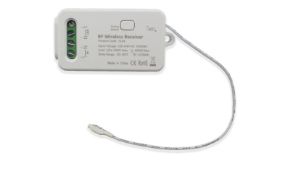
• RGB/RGBW strips: infrared controller (basic), RF controller with remote (medium), WiFi controller with app (advanced).
• RGBIC strips: dedicated WiFi controller with app for dynamic effects.
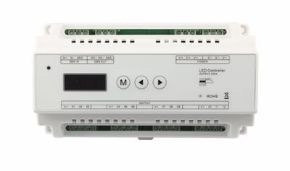
• Professional applications: DMX controller for total software control.
On our site, for every type of strip, you find compatible controllers. Complete kits already include everything needed.
Professional installation: how to mount LED strips perfectly
Correct installation is what separates an amateur project from a professional one. Follow these guidelines for expert installer results.
Surface preparation
The surface must be clean, dry, free of grease and dust. Use isopropyl alcohol to clean. If the surface is uneven, use our aluminum profiles: they diffuse light better, dissipate heat, protect the strip. Profiles are fixed with screws or strong double-sided tape, then the strip snaps inside.
Electrical connection
1. Cut only at marked points (cut lines with scissor symbol).
2. Use solderless connectors to join segments or make curves.
3. Respect polarity: + and - must be correct.
4. Protect connections with heat-shrink tubing or insulating tape.
5. Test before final installation.
Heat dissipation
LED strips generate heat, especially high-power ones. If installed on non-conductive surfaces (wood, plastic) or in enclosed spaces, heat accumulates and drastically reduces LED life. For strips above 10W/m, always use aluminum profiles, which dissipate heat. For very high power (above 20W/m), consider profiles with cooling fins.
Creative applications: where and how to use LED strips
The possibilities are limited only by your imagination. Below are some applications our customers realize...
At home: transforming every environment
Every corner of the house is renewed by strategically installing led strips:
• Kitchen: under cabinets (perfect lighting for the worktop), inside glass-front cabinets, above tall units (floating effect).
• Living room: behind the TV (reduces eye strain), under sofas and furniture (floating effect), in niches and shelves.
• Bedroom: bed headboard (ambient light), inside the wardrobe (clothes lighting), under the bed (night light effect).
• Bathroom: mirror (perfect lighting for makeup/shaving), shower niches, under the sink.
• Stairs: on steps (safety), under handrail (design effect).
Commercial and professional
• Shops: windows (product lighting), shelves (product highlight), guided paths.
• Restaurants and bars: under counter, under seating, effect walls, tables with integrated lighting.
• Offices: indirect ceiling lighting, illuminated partitions, relaxation areas with dynamic light.
• Showrooms: product lighting, path creation, focal areas.
Maintenance and troubleshooting: the definitive guide
Quality LED strips last decades with zero maintenance. But if you have problems, here's how to solve them.
Common problems and solutions
• Strip doesn't turn on: check power supply, connections, power supply fuse.
• Strip flickers: undersized or faulty power supply, loose connections.
• Wrong colors (RGB): reversed cables, faulty controller, damaged strip.
• Non-functioning segments: incorrect cut point, physical damage to the strip.
• Brightness decreases after a few meters: voltage drop, needs parallel power supply.
For every problem, on our site you find detailed troubleshooting guides with photos and videos. And our technical support is always available.
The future of LED strips: what's coming in the next few years
LED technology advances at incredible speed. Here's what awaits us:
MiniLED and microLED
Ever smaller LEDs (miniLED under 200 microns, microLED under 50 microns) will allow strips with thousands of LEDs per meter, near-continuous resolution, perfect individual controllability. For flexible displays and ultra-precise lighting.
Integrated smart LED strips
Controllers and sensors integrated directly into the strip: motion sensor, ambient light sensor (automatic adjustment), color sensor (adapts light to content). Strips that self-configure and update via WiFi.
Flexible and organic materials
Flexible OLEDs for strips that bend into any shape without damage. Stretchable materials that stretch like elastics. Installations on mobile or deformable surfaces.
Bulbs, LED bulbs, and strips: why you should choose the latter today
LED bulbs were an excellent step forward from incandescent ones. But LED strips are the next step, indeed, the leap. They offer everything bulbs offer (efficiency, lifespan) and much more: perfect uniformity, unlimited flexibility, advanced control, boundless creativity. They cost slightly more initially, but repay amply over time with greater savings, superior lifespan, and possibilities bulbs could never offer.
Now you can choose whether to continue with the lighting of the past (fixed light points, shadows, limitations) or switch to the lighting of the future (continuous, uniform, dynamic, customizable light). LEDpoint exists to guide you in this transition by offering you consultation, assistance, and personalized solutions.