












LED and LED modules: what are they?
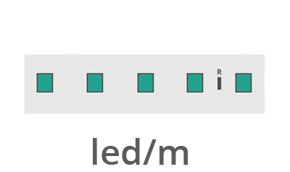
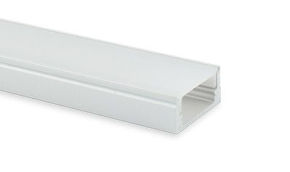
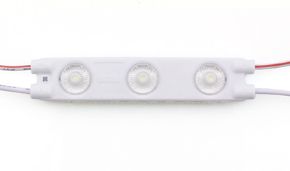
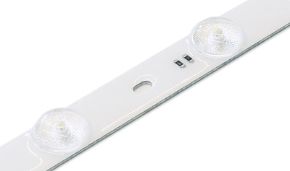
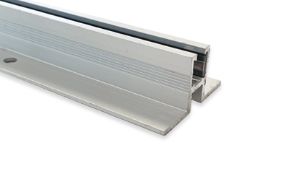
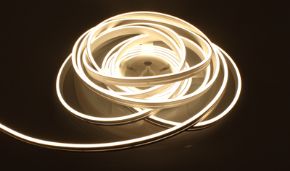
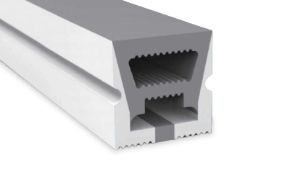
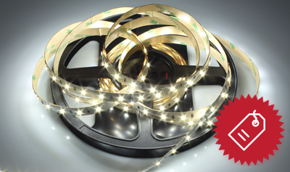
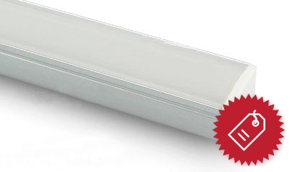
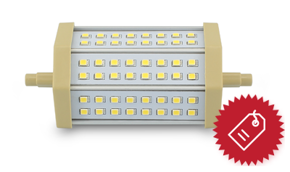
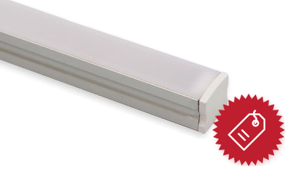
In an era dominated by technological innovation and sustainability, the LED lighting revolution has radically transformed our conception of light, energy, and the spaces we inhabit. This article is a comprehensive and detailed exploration of the world of LEDs, a useful resource for professionals, architects, interior designers, retailers, and anyone wishing to fully understand the potential of this extraordinary technology. Through a journey ranging from the physics of semiconductors to the latest trends in visual merchandising, we will reveal why LEDs are not merely light sources, but true instruments of design, efficiency, and communication. We will discover how LED strips, LED modules, and flexible neon lights are redefining the boundaries of the possible in professional lighting design, offering solutions that combine exceptional performance, unparalleled versatility, and minimized environmental impact. Prepare to immerse yourself in an illuminating journey that will forever change your perception of light. The term LED, an acronym for Light Emitting Diode, identifies an optoelectronic component that exploits the properties of certain semiconductor materials to produce photons, i.e., light, through a physical phenomenon called electroluminescence. Unlike incandescent or fluorescent light bulbs, an LED does not use a filament that heats up until it becomes incandescent, nor ionized gases, but relies on the movement of electrons within a semiconductor material, typically compounds like gallium arsenide, gallium phosphide, or, for white and high-power LEDs, indium gallium nitride on a sapphire or silicon carbide substrate. This fundamental difference is not just a technical curiosity: it is the cornerstone upon which all the revolutionary advantages of this technology rest: unprecedented energy efficiency, extraordinary lifespan, robustness, compactness, and precise control of the emitted light spectrum. To fully understand the ingenuity of the LED, it is necessary to delve, albeit in a simplified way, into its physical operation. An LED diode is essentially a PN junction, i.e., the union of two regions of semiconductor material: one with atoms that create an excess of electrons (N region, negative) and one with atoms that create a deficit of electrons, i.e., "holes" (P region, positive). By applying an electric voltage in forward bias (positive to the P region and negative to the N region), electrons are pushed from the N zone towards the P zone and holes in the opposite direction. When an electron and a hole recombine in the junction zone, the excess energy of the electron is released in the form of a photon, a quantum of light. The energy (and therefore the color or wavelength) of this photon is determined precisely by the "band gap" of the semiconductor material used. This principle is the cornerstone of all solid-state lighting (SSL). The choice of semiconductor material is therefore crucial to determine the color of light emitted by the LED. The first commercial LEDs of the 1960s, made of gallium arsenide (GaAs), emitted a faint infrared light. Subsequently, with gallium phosphide (GaP), visible red light was obtained, the classic type used in appliance indicators. To obtain other colors, more complex compounds were developed: gallium arsenide phosphide (GaAsP) for yellow and orange, gallium nitride (GaN) for blue and green. The real revolution, the one that enabled general white LED lighting, occurred in the 1990s with the invention of the high-brightness blue LED by Shuji Nakamura (Nobel Prize in Physics 2014). The white LED, in fact, does not exist in nature as a semiconductor material. It is obtained primarily in two ways: 1) combining red, green, and blue LEDs in a single package (RGB technology) and mixing their light; 2) using a blue or violet LED coated with one or more layers of phosphors, substances that absorb blue/violet light and re-emit it at longer wavelengths (yellow, red). The combination of the residual blue light and the yellow-red light from the phosphor gives rise to the perception of white. The color temperature (warm, neutral, cool) is regulated by modifying the composition and thickness of the phosphor layers. This technology, called "phosphor-converted white LED," is the most widespread today for general lighting. The history of the LED is a fascinating tale of scientific intuition, perseverance, and incremental technological progress, which in a few decades turned a curious light emission from an obscure crystal of carborundum into the driving force behind a global transformation of lighting. This evolution was not linear but was marked by fundamental discoveries, epic engineering challenges, and an increasingly deep understanding of semiconductor physics. Retracing this history is not just an exercise in technological memory but is essential to appreciate the maturity, reliability, and extraordinary future potential of the solid-state technology we now almost take for granted. From the first observations at the beginning of the 20th century to the high-efficiency white light that illuminates our homes, offices, and cities, every step has built the present and shaped the future of lighting. The first documented observation of electroluminescence in a solid dates back to 1907, when the British inventor Henry Joseph Round, while experimenting with carborundum (silicon carbide) crystals and a "cat's whisker" (a crystal detector), noted the emission of a faint yellowish light when a voltage was applied. However, the phenomenon remained a laboratory curiosity, poorly understood and not exploitable. We must wait until 1927 when the Russian Oleg Losev, systematically studying point-contact diodes in zinc oxide and carborundum, published several articles in which he described light emission in detail, understood its non-thermal nature (unlike incandescence), and even patented the idea of a "light relay", foreseeing potential applications in telecommunications. Unfortunately, Losev's pioneering but isolated work fell into oblivion due to his premature death in 1942 and the lack of pure semiconductor materials. The theoretical understanding of electroluminescence had to await the development of semiconductor band theory after the war. The true birth of the LED as a commercial electronic component took place in General Electric's laboratories in 1962, by Nick Holonyak Jr., considered the "father of the LED". Holonyak, who had worked on semiconductor technology for lasers, managed to create the first visible light-emitting diode (red) using gallium arsenide phosphide (GaAsP) as the active material. These first LEDs were expensive devices, with very low luminous efficacy (about 0.1 lumens per watt, compared to 15 for an incandescent bulb of the time), but reliable and long-lasting. They found immediate application as status indicators and pilot lights in military, industrial equipment, and later in consumer electronics (radios, TVs, calculators). In the 1970s, improvements in crystal fabrication processes and the introduction of new materials like gallium phosphide (GaP) made it possible to obtain green, yellow, and orange LEDs, increasing efficiency and reducing costs. The LED became the standard for pilot lights, replacing small incandescent bulbs. However, general lighting remained a distant dream: high-efficiency blue and green-blue colors, fundamental for creating white light via RGB mixing or phosphors, were still missing. The transition from traditional lighting technologies (incandescent, halogen, compact fluorescent CFL) to LED lighting is not a mere trend or a simple technological update. It is a paradigm shift justified by an overwhelming set of advantages that touch every aspect: economic, performance, environmental, and design-related. Understanding these advantages in depth is fundamental for any professional who must choose, specify, or install a lighting system, whether for a residence or a large commercial project. It's not just about "saving on the electricity bill", but about adopting a superior technology that offers unprecedented control over light, opens new creative possibilities, and significantly reduces the environmental footprint of the building or activity. The most well-known and immediately quantifiable advantage of LEDs is their extraordinary energy efficiency, expressed in lumens per watt (lm/W), i.e., how much visible light is obtained per unit of electrical energy consumed. A traditional incandescent light bulb converts less than 5% of the electrical energy it consumes into visible light, while the remaining 95% is dissipated as heat. Halogens slightly improve the situation but remain around 10-12% efficiency. Compact fluorescents (CFL) represent a first leap, reaching 20-25%. Modern LEDs for general lighting, on the other hand, regularly exceed 100 lm/W, with the most advanced models approaching 200 lm/W in the laboratory. This means that to produce the same amount of light (lumens), an LED consumes up to 90% less energy than an incandescent and up to 60% less than a CFL. This translates into direct and very substantial savings on electricity costs, with return on investment periods often less than two years, especially in applications with many annual operating hours, such as commercial, office, industrial, or public space lighting. For a large retail store, a complete replacement of lighting with LEDs can lead to savings on the order of tens of thousands of euros per year. The second pillar of the LED revolution is its operational lifespan, expressed in hours, which has no comparison with any past lighting technology. An incandescent bulb typically lasts 1,000 hours, a halogen 2,000-4,000 hours, a CFL 8,000-10,000 hours. A quality professional LED module, correctly managed thermally and electrically, has a nominal useful life ranging from 25,000 to 50,000 hours, with some products reaching 100,000 hours. Translated into years, considering 12 hours of daily use, this means 3-11 years of continuous operation. It is crucial to note that for LEDs, the concept of "lifespan" does not coincide with sudden failure (like a broken filament), but with L70 or L80: the point where the emitted luminous flux has decreased to 70% or 80% of the initial value, respectively. This gradual decay is mainly due to thermal degradation of the materials (especially the phosphor and interconnections). Therefore, construction quality, heat management (through adequate heat sinks), and the drive electronics (driver) are critical to achieving the promised lifespan. For professional applications, such as store, museum, or office lighting, this longevity means minimized maintenance costs, less disruption to activities (lamps are not replaced frequently), and an extremely advantageous total cost of ownership (TCO) forecast. In the vast ecosystem of solid-state lighting, there is no "one-size-fits-all" solution. LED technology manifests in profoundly different physical formats and manufacturing architectures, each with ideal characteristics, strengths, and fields of application. Confusing a single LED (an electronic component) with an LED strip (a flexible system) or an LED module (an integrated professional system) is a common mistake that can lead to wrong design choices, disappointing results, and higher long-term costs. Understanding the fundamental distinctions between these three categories is the first essential step to designing successful lighting, whether for a decorative effect at home, general store lighting, or a complex architectural installation. Let's analyze each of these typologies, examining their essence, construction methods, and most appropriate usage scenarios. The single LED (discrete or SMD - Surface Mount Device) is the elementary unit, the basic "pixel" from which everything originates. It is a tiny electronic component, typically a few square millimeters, that integrates the semiconductor chip (the die), the connection elements (bonding wires), and often the reflective cup, all encapsulated in a transparent or colored epoxy resin that acts as a primary lens and protection. Classic discrete LEDs, with the characteristic leads (through-hole), are still used for indicators. For lighting, the most common form is the SMD LED, soldered directly onto the surface of a printed circuit board (PCB). Standard sizes (e.g., 2835, 3030, 3535, 5050) refer to measurements in tenths of a millimeter (a 2835 is 2.8mm x 3.5mm). These single chips are designed to be mounted in arrays on larger PCBs to create LED panels, bulbs, downlights, or, indeed, LED strips. Their power can vary from less than 0.1W to over 10W for COBs (Chip-on-Board), where many small chips are assembled tightly on a substrate to form a single compact luminous area. Single LEDs offer maximum design flexibility in terms of optical layout and thermal management but require advanced electronic and design knowledge to be integrated into a functional and safe system. They are not "ready-to-use" products for the end user, but components for lighting system manufacturers. LED strips, also known as LED tapes or ribbons, represent the first level of "ready-to-use" integration aimed at installers, hobbyists, and professionals. They consist of a flexible or rigid PCB base, onto which SMD LEDs are soldered at regular intervals (e.g., 30, 60, 120 LEDs per meter), along with the necessary resistive components to limit current (for fixed-voltage versions, like 12V or 24V) or more complex circuits for high-voltage or addressable versions (like the famous WS2812B, called "Neopixel").The strip is then coated with a layer of silicone resin or PVC to protect the components from dust, moisture (IP20, IP65, IP67 ratings), and minor impacts. The great advantage of LED strips is their physical flexibility (for those on flexible PCBs) and conceptual flexibility: they can be cut at predetermined points, bent, adapted to complex geometries, and hidden in channels (profiles) to create linear lighting effects, wall washing, accent and atmospheric lighting. They are ideal for furniture, kitchens, stairs, ceiling contours, commercial displays, and luminous signage. However, they have limits: heat management on long, high-power installations can be critical if not mounted on heat-dissipating surfaces (like an aluminum profile), color and brightness uniformity over long distances can be compromised by voltage drops, and lifespan can be reduced if operated outside specifications. For medium-to-high-level professional projects, using a high-quality LED strip installed in an extruded aluminum profile with a diffuser is the standard and winning solution, as the profile acts as an excellent heat sink, provides mechanical protection for the strip, and the diffuser (opal, micro-prismatic, crystal) ensures a homogeneous and pleasant line of light, eliminating the annoying "dotting" effect of individual LEDs. When moving from DIY and small domestic installations to the professional world of commercial, architectural, retail, and museum lighting, simple LED strips are often insufficient. This is where LED modules come into play, the mandatory choice for those requiring high performance, repeatability, absolute reliability, and perfect aesthetic integration. An LED module is a complete and integrated lighting system, designed and engineered to meet stringent technical specifications and to be a component of a larger system. It represents the mature evolution of solid-state technology, conceived not as a replacement for a light bulb, but as an integral part of the architecture or furnishings. For a lighting designer, specifying a quality LED module means having total control over the final result: the quantity of light, its distribution (via dedicated secondary optics), color (CRI, CCT), lifespan, and even ease of installation and maintenance. In a sector like retail, where light is the primary tool to enhance merchandise, guide customers, and create a brand identity, relying on amateurish components is an unacceptable risk. Professional LED modules are the answer to this need for excellence. The first and most evident advantage of professional LED modules is the guarantee of uniformity and repeatability of photometric characteristics. In high-end production, the LEDs used are selected based on "binning", a process that classifies chips according to critical parameters such as luminous flux (lumens), color temperature (CCT), and forward voltage. By using LEDs from the same bin, the manufacturer can guarantee that all modules from the same series emit exactly the same white hue and the same intensity, avoiding annoying color differences (shifts towards green, pink, or blue) that can ruin the aesthetics of a uniformly lit environment, such as a fashion store window or the general lighting of an open-plan office. Furthermore, LED modules often integrate secondary optics made of high-quality PMMA or polycarbonate, designed to control the light beam precisely (beam angle, distribution) and to perfectly mix the light from individual chips, eliminating shadows, streaks, or unwanted halos. This level of control is impossible to achieve with standard LED strips, where minor variations from one production batch to another and the lack of dedicated optics can lead to inconsistent results. The lifespan of an LED is inversely proportional to the junction temperature of its chip. Professional LED modules are designed around this fundamental principle. The heart of a quality module is its heat sink, typically made of extruded aluminum with substantial mass and surface area, often with fins to increase heat exchange. The PCB on which the LEDs are soldered (often an aluminum plate itself, called MCPCB - Metal Core PCB) is thermally connected in an optimal way to this heat sink, through high-quality thermally conductive interfaces. This integrated system ensures that the heat generated by the chips is quickly extracted and dissipated into the environment, keeping the junction temperature well below the recommended maximum limits (usually 85°C or less). This not only ensures reaching the nominal 50,000 or 100,000-hour lifespan but also preserves color and luminous flux stability over time. A well-designed LED module also includes an electronic driver (power supply/controller) of equal quality, often separate from the light module itself to isolate heat sources. The driver provides a constant and precise current to the LEDs, immunity to voltage spikes from the mains, and additional features like dimming via DALI, 0-10V, or PWM. In a professional application, such as lighting a chain of stores, this reliability means zero warranty defects, planned rather than emergency maintenance, and a brand image associated with quality and attention to detail. The latest trends in store and commercial space design see light no longer as a separate functional element, but as an intrinsic and foundational component of the furnishings and customer experience. Linear LED modules and flexible neon lights (an advanced and robust variant of LED strips, with high-density chips covered in high-quality silicone sheathing) are protagonists of this revolution. They are integrated directly into displays, shop windows, shelving, counters, and architectural structures to create dynamic effects, guide the gaze, emphasize products, and define pathways. The flexibility of LED neon, in particular, allows for creating luminous signs, organic shapes, outlines, and details that would be impossible with traditional glass neon tubes (fragile, hazardous due to mercury, high consumption). The ability to choose from millions of colors (with RGB+W or RGB+CCT modules) and program dynamic scenarios (with multi-channel controllers or pixel-mapping systems) allows the retailer to adapt the store's atmosphere to the time of day, season, a promotional campaign, or a special event. Lighting thus becomes an active and reactive marketing tool. For these critical applications, choosing LED modules and flexible neon lights from professional sources like those offered by Ledpoint, with guarantees of lifespan, electrical safety (CE markings, certifications), and technical support, is not an optional, but an indispensable requirement for investing in an asset that must function perfectly, every day, for years. Our journey through LED technology has shown an extraordinary trajectory: from a laboratory phenomenon to a pillar of the energy transition and innovation in lighting design. The advantages in terms of efficiency, lifespan, versatility, and environmental sustainability are undeniable and have made LEDs the obvious choice for any new installation or renovation. However, as we have explored in depth, not all LEDs are created equal. The fundamental distinction between generic components, consumer-grade strips, and true professional LED modules marks the boundary between an amateurish result, potentially disappointing and costly in the long term, and a successful project, high-performing, durable, and of great aesthetic impact. For commercial, retail, hospitality, and architectural applications, where light is a strategic investment, the choice must inevitably fall on engineered quality, guaranteed performance, and specialized technical support. Ledpoint positions itself precisely at this crossroads between advanced technology and professional application. Our company does not just provide products but offers complete solutions: from high-color-rendering LED strips to extruded aluminum profiles designed for maximum heat dissipation and a minimalist aesthetic, to linear modules and flexible neon lights that are the industry standard for creativity and reliability. We understand that every project is unique, and that the correct selection and integration of components are decisive for the final result. Let our team of experts assist you in the design, in choosing the products most suited to your specific needs (from lighting a showroom to creating a custom sign, from a restaurant's laylight to a jewelry store window) and provide you with dedicated after-sales support. Contact Ledpoint's technical-commercial support today for a free, personalized consultation. Bring us your idea, your project, or your lighting challenge, and together we will transform light into an experience, an emotion, and a lasting competitive advantage.LEDs? The lighting revolution of the 21st century
The heart of the LED: the PN junction and electroluminescence
From materials to colors: how LED light is born
History and evolution of LED technology
The roots: electroluminescence and early discoveries (1907-1960)
The birth of the LED for commercial use: the 1960s and 1970s
Advantages of LEDs compared to traditional technologies
Unparalleled energy efficiency
Extreme lifespan and reliability: the end of frequent maintenance
Difference between LEDs, LED strips, and LED modules
Single LEDs (Discrete or SMD): the building blocks of solid-state light
LED strips: flexibility and simplicity for continuous lines of light
Why LED modules are fundamental for professional applications
Uniformity, repeatability, and light quality
Integrated thermal management and guaranteed lifespan: designed to last
Integration in commercial furnishings and retail design
The future is LED, but only if it's high quality