








LED tree: the latest decorative trend
In the contemporary landscape of interior design and commercial fittings, one figure is emerging with unrivalled strength, a perfect synthesis of technology, art, and sustainability: the LED tree. It is not simply a lighting object, but a true element of architectural scenography, capable of redefining the atmosphere and perception of a space. From the warm atmospheres of domestic settings to the most refined showrooms, from luxury hotels to innovative theatrical sets, the LED tree emerges as a versatile and emotionally engaging solution.
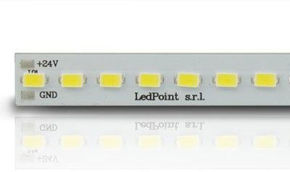
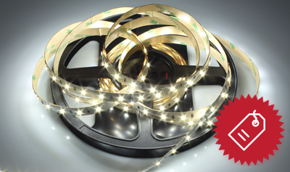
This article aims to be the definitive guide to understanding, choosing, and maximising the potential of an LED tree. We will explore the reasons behind its success, the technologies that allow for DIY creation (such as high-density LED strips F52-30s-240DF2), the countless practical applications, and the criteria for a conscious and valuable purchase.
LED tree: here's why it's so in demand.
The rise of the decorative LED tree is not an isolated case, but the result of a convergence of social, technological, and aesthetic trends. In an era where attention to environmental sustainability and psycho-physical well-being is at its peak, this element represents an innovative and elegant response.
The need for nature and light in modern spaces (biophilic design)
Biophilic design is a design philosophy that aims to reconnect humans with nature within built spaces. The light tree perfectly embodies this principle. It simulates the organic and reassuring shapes of a tree, bringing a connection to nature into homes, offices, or stores, but it does so through the most contemporary medium: light.
It is not a substitute; it can be placed in a context with other plants, but it is an evolution. While a real plant has specific light and water needs, an indoor LED tree brings with it the symbol of life (the tree) united with the technology that shapes modern life (LED light). This pairing generates an immediate sense of calm, well-being, and inspiration, as demonstrated by numerous studies on well-being in work and care environments.
The tree for personalising the environment
In a world saturated with uniform visual stimuli, furnishings become an expression of identity. An LED tree for the home or for a commercial activity is an unparalleled focal point. It immediately attracts the eye, defines the atmosphere of the space, and tells a story about the person or brand that chose it. The ability to adjust intensity, colour (in RGB or variable colour temperature versions), and, in some models, even to program dynamic sequences, makes it a deeply customisable object. Today, a light tree is not bought just to illuminate, but to communicate.
From fixed decoration to dynamic scenography
The real revolution introduced by the LED tree for shops or events is its dynamism. A traditional furnishing is static. An LED tree, thanks to increasingly sophisticated controllers, can change colour based on the time of day (warm light in the evening, more neutral during the day), the season (green tones in spring, warm in autumn), or to highlight a particular promotional campaign. It transforms a static space into a mutable and emotional stage.
Energy efficiency and sustainability: the real added value
Adopting an LED tree for a hotel or for large spaces is not only an aesthetic choice but also an economic and ethical one. LED technologies, like those offered by LEDpoint with high-efficiency strips, consume up to 90% less than traditional incandescent light sources and have a lifespan that can exceed 50,000 hours.
A decorative LED tree is a long-term investment: it requires practically no maintenance, produces no heat (reducing air conditioning costs), and, at the end of its very long life cycle, the components are more easily recyclable. From a corporate social responsibility perspective, choosing LED lighting for one's premises or office is a tangible signal of attention to environmental impact.
How an LED tree is made: technology and components
To fully appreciate the value of an LED tree and make an informed purchase choice, it is essential to know its "anatomy". The final visual magic is the result of the perfect integration of technologically advanced components.
The luminous heart: high-density LED strips
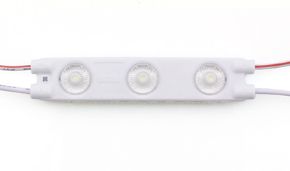
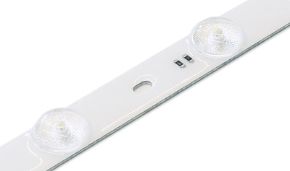
The "branches" and "trunk" of the tree are made with highest quality LED modules. Here, the choice of product makes the difference between a professional and an amateur result. Let's analyse the main characteristics:
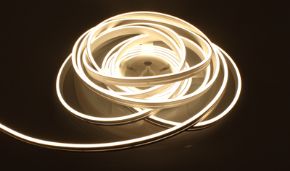
- LED density: high density is crucial for a light tree because it eliminates the artificial effect of the light, creating instead a diffuse, homogeneous, and high-impact glow, similar to a branch emanating its own light.
- Luminous efficacy (lm/W): this is the ratio between emitted lumens and watts consumed. High values mean maximum brightness with minimum consumption and less thermal stress on components, extending their life.
- Convenience: ready-to-use, they can be connected directly to the power supply.
The supporting structure: skeleton and design
The structure is what gives physical form to the decorative LED tree. It can be made of metal (steel, aluminium) for a modern, industrial look, or composite materials and even wood for a more natural appearance. The design can range from hyper-realistic (with branches faithfully imitating a botanical species) to abstract and sculptural, where the tree's shape is merely an inspiration for a light sculpture. The structure must be designed to:
- conceal the cabling in a base or within the "trunk".
- allow for easy assembly.
- be stable and safe, especially for large models.
Power supply and control
A control system transforms an indoor LED tree from a passive object into an interactive element. The key components are:
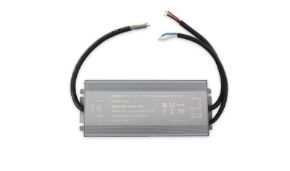
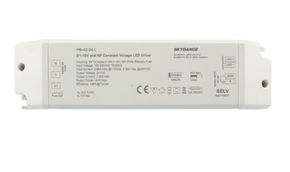
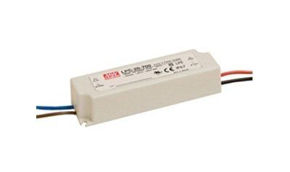
- Power supply: Integrated into the tree, suitable for connection to 230V mains.
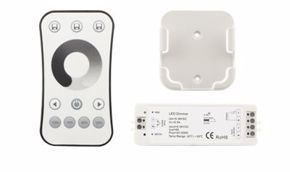
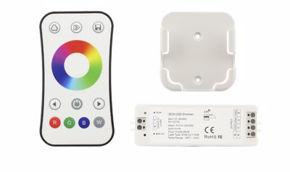
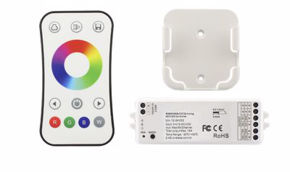
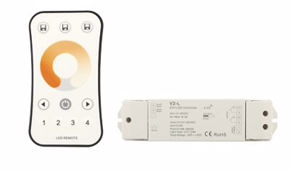
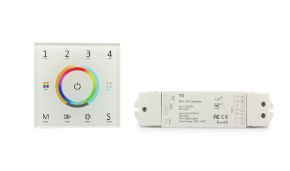
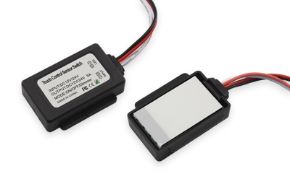
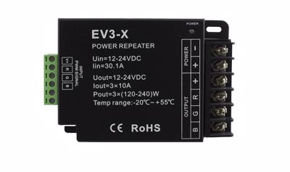
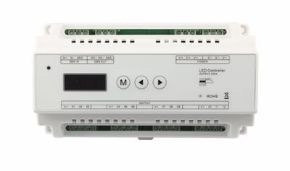
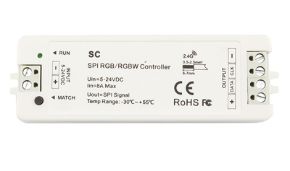
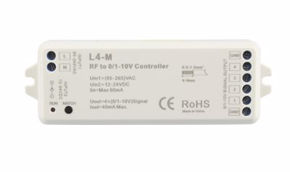
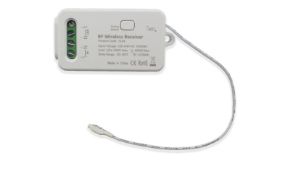
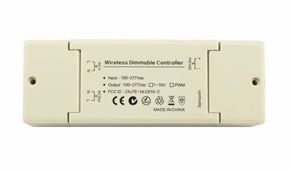
- LED controller: Not all LED trees include one. It can be a simple dimmer to adjust the brightness of a warm white light (3000K), a dual-colour temperature (CCT) controller to switch from warm white to cool white, or a sophisticated RGB controller to manage colours. The most advanced controllers can be managed via smartphone app, Bluetooth, or Wi-Fi, integrating into smart home systems.
Practical applications: where and how to use an LED tree
The true strength of the LED tree lies in its versatility. The same basic concept adapts and transforms to meet completely different needs, from domestic hospitality to commercial marketing.
Domestic environments: creating the perfect atmosphere at home
At home, an LED tree for the living room or bedroom becomes the protagonist furnishing piece. It does not replace general lighting; it completes and enhances it.
- Living room: placed in a corner, behind the sofa, or next to a bookshelf, it creates a warm and welcoming visual point of interest. The indirect, diffused light brightens corners, visually "widens" the space, and reduces the need for bulky floor lamps.
- Bedroom: a light tree of modest size, with very warm light (2700K-3000K), becomes perfect ambient lighting for the evening hours, promoting relaxation. It effectively replaces the classic bedside lamp with a much more sophisticated design.
- Entrance/Hall: a design tree at the home entrance gives a spectacular welcome, immediately leaving guests with an impression of care and style.
Pro tip: at home, prefer dimmable warm white or CCT (colour temperature tuning) LED strips to maximise visual comfort. Models like the F52-30s-1208F2 (2345 lm/m, 3000K) are ideal.
Commercial activities and retail: illuminating the brand
In retail, lighting is marketing. An LED tree for a shop or shopping mall serves precise functions. Let's see which ones.
- Attracting attention: in a shop window or at the entrance, it catches the eye of passers-by even from a distance, especially in the evening.
- Defining zones (zoning): in a large open space, a decorative tree can be used to elegantly and unobtrusively delimit a relaxation area, a promotional corner, or a fitting room.
- Enhancing the product: the uniform light with high colour rendering value highlights the colours and details of the displayed merchandise, especially in clothing, jewellery, or design stores.
- Telling a story (storytelling): a nature-linked brand can use a realistic tree; a tech brand can opt for a futuristic design with dynamic colours.
Hospitality and wellness: the guest experience
Hotels, spas, restaurants, and medical practices compete on the experience they offer. An LED tree for a hotel or medical practice contributes decisively to this experience.
- Lobby and reception: creates an immediate "wow effect", a memorable image that guests share on social media. An imposing and spectacular tree becomes part of the hotel's very identity.
- Restaurants and bars: defines the venue's atmosphere. Warm, fixed lighting for a romantic dinner; soft, changing colours for an aperitif; bright colours for after-dinner. A single element can adapt to the different moments of the day.
- Spas and medical practices: here, the light must convey calm, cleanliness, and serenity. An LED tree with neutral white, diffused light reduces the clinical feel of waiting rooms, helping to relax patients and clients before a treatment.
Art, culture, and entertainment: a scenographic LED tree
This is the most creative and experimental application. Museums, theatres, television sets, and event venues use LED trees for scenography in innovative and disparate ways.
- Exhibitions and installations: the tree becomes a work of art itself, an interactive installation that reacts to sound, movement, or public touch.
- Theatre and dance: it can be a fixed scenographic element that changes colour and intensity in sync with the narrative, representing the passage of time, a change of season, or a mood.
- Events and weddings: as a spectacular centrepiece, as a backdrop for cutting the cake, or to create a magical ceremonial aisle. The ability to choose colours (e.g., white and gold for an elegant wedding) makes it perfectly adaptable to the event's theme.
LED tree: designing and building It yourself with LED strips
Navigating products to create your ideal LED tree may seem complex. This practical guide, based on LEDpoint's offerings, will help you make informed choices.
Product analysis for building an LED tree
Let's compare the two LED strips most suitable for creating a high-quality decorative tree:
| Characteristic | F52-30s-240DF2/14.4 (Top of the range) | F52-30s-1208F2/14.4 (Excellent value for money) |
|---|---|---|
| LED Density | 240 LED/m (Maximum Homogeneity) | 120 LED/m (Excellent Homogeneity) |
| Lumens/Meter | 2000 lm/m (Very Bright) | 1550 lm/m (High Brightness) |
| Efficacy (lm/W) | 150 lm/W (Excellent) | 115 lm/W (Very Good) |
| Cutting Points | Every 3.33 cm (Maximum Design Flexibility) | Every 5 cm (Good Flexibility) |
| Ideal For | Professional LED trees for hotels, retail, events where the impact must be perfect and uncompromising. Projects seeking maximum continuity of the light line. | LED trees for homes, small shops, fittings where an excellent result is desired with a contained investment. The density is more than sufficient for most applications. |
For maximum professionalism and a seamless "branch of light" effect without interruptions, the choice falls on the F52-30s-240DF2. For domestic projects or those with a more contained budget, the F52-30s-1208F2 remains an excellent solution with very high performance.
How to calculate the necessary material: a simple formula
To avoid ordering too much or too little material, follow these steps and you'll be certain to have everything you need!
- Design your tree: sketch the structure on paper, defining the approximate length of ALL the "branches" and "trunk" you intend to illuminate.
- Add up the linear meters: sum all these lengths. Example: 10 branches of 0.5m + trunk of 1.5m = 5m + 1.5m = 6.5 total linear meters.
- Add a safety margin: add 10-15% for cuts, curves, and unforeseen events. 6.5m + 15% = approximately 7.5 meters.
- Choose the reel: LEDpoint strips are sold in 5m reels. For 7.5m you will need 2 reels. You can use different reels for different parts of the tree (e.g., a 240DF2 for the main branches and a 1208F2 for the secondary twigs).
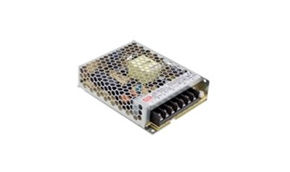
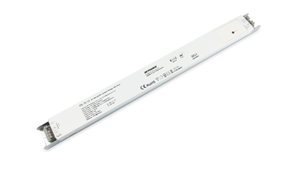
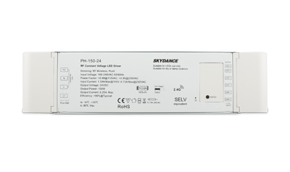
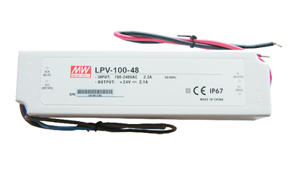
- Size the power supply: calculate the total power. For 7.5m of F52-30s-240DF2 (14.4W/m): 7.5m * 14.4W/m = 108W. Choose a 24V power supply rated for at least 130W-150W (to have a 20-30% safety margin, prolonging its life).
Frequently asked questions (FAQ)
- Q: Are the LED strips already waterproof?
A: The models mentioned are for indoor use (IP20). For outdoor installations or humid environments (e.g., conservatories), it is necessary to request strips with an IP65/IP67 protection rating or insert them into a sealed profile. - Q: Can I connect multiple reels together?
A: Yes, but within the power limits of the supply and controller. It is essential to respect the manufacturer's specifications for the maximum series length to avoid voltage drops (which result in loss of brightness towards the end of the strip). - Q: Is it difficult to install?
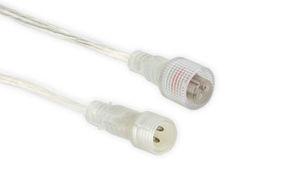
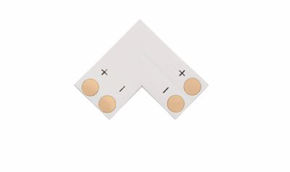
A: Applying the strip to the structure, if it is prepared, is very simple: peel off the adhesive backing and press it on. The more "technical" part is the electrical connection (soldering or using connectors) between strips, power supply, and controller. If you are not experienced, it is advisable to rely on an electrician or an LED installation specialist.
LED tree: trends for the coming years
The LED tree too is looking towards a world in constant evolution. The future will also bring new updates and new performances in this field.
The next LED tree: interactivity and total integration
The trend is towards ever-greater interaction between light, space, and people, and the market will integrate the latest technologies into the current offerings.
- Reactive and smart trees: models that change colour based on the music played in the environment, that light up when a person passes by (thanks to motion sensors), or that show patterns linked to data (e.g., weather trends or stock market performance in a conference room).
- Integration into home automation and IoT: the LED tree will become a standard node in smart home networks (with protocols like Matter), controllable by voice (Alexa, Google Home, Siri), and programmable in complex scenarios (e.g., "Cinema Mode" that lowers the blinds, turns on the projector, and sets a deep red ambient light on the tree).
- Innovative materials: ever lighter, more flexible, and perhaps even "living" structures, integrating real plant elements with artificial luminous ones.
Why choose an LED tree already today?
Investing in an LED tree means investing in atmosphere, identity, and efficiency. Whether you are a private individual wanting to transform your living room, a retailer seeking to stand out, or an architect designing the lobby of a new hotel, this element offers a unique mix of advantages.
- Immediate emotional impact: creates memorable experiences.
- Maximum flexibility: adapts to any space, style, and need.
- Economic and environmental sustainability: low consumption, very long lifespan, zero maintenance.
- Guaranteed professionalism: using high-end components, the final result will always be professional, free of those imperfections (dotting effect, unstable light) that reveal a low-quality product.
The LED tree is not a passing fad. It is the expression of a smarter, more beautiful, and personalised way of conceiving light and space. It demonstrates that technology, when applied with aesthetic sensitivity, does not create cold environments but, on the contrary, can make them warmer, more welcoming, and more profoundly human than one might imagine.