








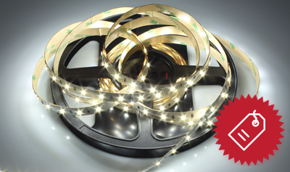
220V LED strips: a technical guide on operation, advantages, and differences from 12V/24V options.
220V LED strips, within the landscape of LED lighting, represent a technologically advanced solution that is gaining increasing consensus among professionals and DIY enthusiasts. This technical article will explore in depth the operation, advantages, and substantial differences between LED strips operating at mains voltage (220V) and traditional low-voltage ones (12V/24V). Understanding these differences is fundamental to selecting the most appropriate solution for each specific application, ensuring safety, efficiency, and longevity.
220V LED strips, also known as high-voltage LED strips or AC LED strips, are revolutionizing the way linear lighting systems are designed and installed, thanks to their ability to operate directly from the mains voltage without the need for bulky external power supplies. This characteristic makes them particularly suitable for installations over long distances, industrial and commercial applications, but also for residential projects where installation simplicity is a determining factor.
In this comprehensive guide, we will analyze every technical aspect of 220V LED strips, from the electronic components that constitute them to safety considerations, from optimal installation techniques to maintenance strategies. We will systematically compare the performance, costs, and ideal applications of 220V LED strips with those of 12V and 24V systems, providing the reader with all the necessary elements for an informed and conscious choice.
220V LED strips: basic operating principles
220V LED strips represent a significant evolution in LED lighting, based on an operating principle that differs substantially from low-voltage systems. Understanding these principles is essential to fully exploit their potential and ensure a safe and efficient installation.
Electronic architecture of 220V LED strips
220V LED strips integrate specialized electronic components within them that distinguish them from traditional low-voltage strips. The most significant element is the presence of rectifier circuits and current limiters integrated directly into the strip. These circuits convert the alternating current (AC) from the domestic mains into direct current (DC) suitable for powering the LEDs, eliminating the need for a separate external power supply.
Main components of a 220V LED strip
Each meter of a 220V LED strip contains a series of modules connected in parallel, each comprising: high-quality SMD LEDs (typically 2835, 5050, or 5730), current limiting resistors calibrated for mains voltage, bridge rectifier diodes for AC/DC conversion, and in some more advanced models, protection circuits against overvoltages and voltage spikes. This integration of components allows the strip to operate directly at 220V AC, significantly simplifying the installation process.
Operating frequency and flicker
A critical aspect of 220V LED strips is their operating frequency. Since they operate directly from the mains at 50Hz (in Europe), they present light ripple at this frequency. Higher quality models integrate smoothing capacitors that significantly reduce the flicker effect, bringing the effective frequency to 100Hz or higher. This is particularly important for applications in environments where video or photographic recordings are frequent, avoiding the annoying flickering effect that can appear in recordings.
220V LED strips: main advantages
The advantages of 220V LED strips are numerous and significant, but it is important to understand them in their entirety to correctly assess the suitability of this technology for specific applications.
Simplified installation over long distances
The most evident advantage of 220V LED strips is their ability to be installed over considerable distances without significant voltage drops. While 12V strips have stringent limitations in terms of maximum length (typically 5 meters per circuit), 220V strips can be connected in series up to 50-100 meters with a single power point, depending on the cable cross-section and the specific power of the model. This makes them ideal for continuous linear lighting in warehouses, industrial corridors, building facades, and other large-scale applications.
Minimization of voltage drops
The physical reason for this superiority over long distances lies in Ohm's law: P = V x I. For the same power, a higher voltage system requires proportionally lower current. Since voltage drops in cables are proportional to current (ΔV = R x I), reducing current drastically reduces losses. For a 100W installation at 12V, the current would be about 8.3A, while at 220V it would be only 0.45A. The reduction of current by over 18 times results in negligible voltage drops even over considerable distances.
Reduction of installation costs
The absence of a large external power supply represents a significant economic saving in large-scale installations. Power supplies for low-voltage systems, especially for high power, are expensive components that often require active cooling, thermal protections, and installation in dedicated technical rooms. With 220V LED strips, the only necessary component is a simple power cable connected directly to the mains, possibly via a compatible switch or dimmer.
Optimization of connection materials
The low current required by 220V LED strips allows the use of cables with a reduced cross-section compared to 12V/24V systems. This translates into additional savings on materials, especially in long installations where cables represent a significant cost item. For example, for a 200W installation over 20 meters, a 12V system would require cables of at least 4mm² to limit voltage drops, while a 220V system could use 0.75mm² cables, achieving superior performance.
Design flexibility
220V LED strips offer greater freedom in designing complex lighting systems. They can be cut to custom lengths (typically every 0.5m or 1m, depending on the model) and connected to each other without the complex load balancing considerations required by low-voltage systems. This characteristic is particularly advantageous in architectural applications where required lengths are variable and non-standardized.
Technical comparison between 220V and 12V/24V LED strips
To fully understand the differences between the technologies, it is necessary to systematically analyze every performance, installation, and safety aspect.
Energy efficiency and luminous efficacy
A common misconception to dispel is that 220V LED strips are less efficient than low-voltage ones. In reality, the overall efficiency of an LED lighting system depends on multiple factors: the efficiency of the LEDs themselves, the efficiency of the driving electronics, and losses in the connection cables. While it is true that the integrated circuits in 220V LED strips may have slightly lower efficiencies (85-90%) compared to high-quality switching power supplies for 12V/24V systems (90-95%), this disadvantage is often offset by negligible losses in the distribution cables thanks to the low current.
Complete energy balance analysis
Considering a real installation over 30 meters with a total power of 300W: a 12V system would have cable losses of 10-15% (30-45W), while a 220V system would have losses of less than 1% (3W). Even considering the slightly lower efficiency of the integrated electronics, the 220V system would be overall more efficient in this configuration. This demonstrates how the choice between different voltages must consider the specific installation context rather than relying on generalizations.
Light quality and color rendering index
The quality of light emitted by 220V LED strips is comparable to that of low-voltage systems when using high-end products. The LEDs used are identical, and the main difference lies in the driving electronics. Premium 220V LED strip models use integrated constant current drivers that guarantee color stability and absence of flicker, with Color Rendering Indexes (CRI) reaching 95+ for high-quality applications. For applications requiring maximum color fidelity, such as art galleries or clothing stores, it is essential to select 220V LED strips with technical specifications that guarantee these performances.
Lifespan and long-term reliability
The lifespan of 220V LED strips is influenced by different factors compared to low-voltage systems. The absence of a centralized power supply eliminates a potential single point of failure, but exposes the integrated electronic components directly to mains fluctuations. Higher quality models integrate multiple protections: NTC thermistors to limit inrush current, MOV varistors to protect against transient overvoltages, and regulation circuits that maintain constant current despite mains voltage variations. These protections are fundamental to guaranteeing a useful life that reaches the 50,000 hours declared by premium manufacturers.
Ideal applications for 220V LED strips
Identifying applications where 220V LED strips offer significant advantages is crucial to maximizing return on investment and guaranteeing optimal performance.
Industrial and commercial lighting
Industrial applications represent the ideal field for 220V LED strips. Warehouses, production plants, logistics centers, and covered parking lots often require linear lighting over distances that can reach tens or hundreds of meters. In these contexts, the possibility of powering long runs from a single point, using reduced-section cables and without the need to multiply power supplies, translates into significant savings both in initial costs and in long-term maintenance.
Case study: warehouse lighting
Consider a 50x20 meter warehouse requiring continuous lighting along the perimeter and between shelving. With 12V LED strips, at least 20 150W power supplies would be needed strategically distributed, with complex and expensive cabling. With 220V LED strips, the entire system could be powered from a few strategic points, with simplified cabling and minimal maintenance. Furthermore, the absence of power supplies prone to overheating in an industrial environment further improves system reliability.
Architectural and external applications
220V LED strips are excellent for architectural lighting, building outlines, soffits, and facades. Their resistance to voltage drops over long distances allows creating continuous lighting effects without interruptions or variations in color/brightness. For external applications, it is essential to select models with IP67 protection rating or higher, guaranteeing water and weather resistance, and with construction in UV-resistant materials to prevent degradation of the silicone covering.
Residential applications: when to choose 220V
In the residential sector, 220V LED strips find application primarily in external contexts where: lengths exceeding 10 continuous meters are required, such as around the house perimeter or walls, access for maintenance is difficult and minimizing points of possible failure is preferred, and a particularly clean and minimal installation is desired, without the need to hide bulky power supplies.
Safety in the installation of 220V LED strips
The installation of devices operating at mains voltage requires particular attention to safety standards. This section details the necessary precautions and best practices for safe and compliant installations.
Electrical risk and fundamental protections
220V LED strips operate at a voltage dangerous to people (220V AC), unlike 12V/24V systems which fall into the SELV (Safety Extra Low Voltage) safety category. This imposes additional precautions during installation and maintenance. It is essential that all connections are made with the power off, using insulated tools, and following current electrical regulations (CEI in Italy). For accessible applications, strips must be installed inside LED profiles with a diffuser that offer mechanical protection and insulation from accidental contact.
Residual current device and circuit breaker protection
All circuits powering 220V LED strips must be protected by a Residual Current Device (RCD/safety switch) with sensitivity not exceeding 30mA and by an appropriately sized circuit breaker. It is advisable to dedicate separate circuits for LED lighting, avoiding overloading existing circuits with additional loads. For installations with power exceeding 500W, it is appropriate to consult a qualified electrician for the correct sizing of cables and protections.
Thermal considerations and ventilation
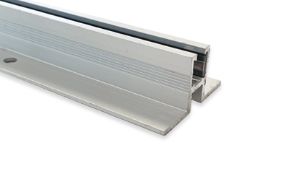
Although LEDs are efficient, a part of the energy is still dissipated as heat. 220V LED strips, especially high-density ones (60 LED/m or more), require adequate thermal dissipation to guarantee lifespan and color stability. Installation on aluminum LED profiles is not only aesthetic but functional: aluminum dissipates the generated heat, keeping the LEDs at optimal temperature. In environments with high temperatures or in applications with power exceeding 10W/m, the use of profiles with cooling fins or even forced ventilation may be necessary.
Protection against overvoltages
The electronic components integrated into 220V LED strips are sensitive to transient overvoltages in the mains, caused by lightning or operations on electrical systems. For installations in areas subject to thunderstorms or in industrial plants with inductive loads, it is advisable to install Surge Protective Devices (SPD) upstream of the lighting system. Some high-end 220V LED strips already integrate basic MOV protections, but for maximum safety it is appropriate to provide additional protections at the electrical panel level.
Practical guide to installing 220V LED strips
This section provides detailed instructions for a professional installation of 220V LED strips, from planning to commissioning.
Preliminary planning and sizing
The planning phase is fundamental for the success of an installation with 220V LED strips. It begins with calculating the total power required: total length (in meters) multiplied by the power per meter of the selected strip. A 20% safety margin is added to this value to compensate for any inaccuracies. Subsequently, the location of the power point is determined, preferably central to the total length to be powered to minimize the lengths of the branch cables.
Choice of installation materials
The choice of installation materials significantly influences the final result and the installation's lifespan. For 220V LED strips, the following are recommended: extruded aluminum profiles with opal diffuser for uniform light distribution and optimal dissipation, connection cables in copper of 0.75mm² minimum for branches, increasing the section for lengths over 10 meters, IP67 waterproof connectors for junctions, preferably crimp-type rather than soldered for greater long-term reliability.
Step-by-step installation procedure
1. Surface preparation: ensure that the installation surfaces are clean, dry, and free of grease or dust. For aluminum profiles, use a high-quality double-sided adhesive specific for LED applications, possibly integrated with mechanical fixing screws for permanent installations.
2. Strip placement: remove the protective film from the adhesive and place the strip inside the profile, pressing uniformly along its entire length. Pay attention to cutting points, which must coincide with the markings on the strip to avoid damaging the integrated circuits.
3. Electrical connections: connect the power cables to the strip terminals, respecting polarity even though 220V LED strips contain bridge rectifiers (still connect phase and neutral correctly). Use crimp connectors with heat-shrink tubing to guarantee a watertight seal in external applications.
4. Connection protection: all connections must be insulated with quality insulating tape or, preferably, with heat-shrink tubing. For external installations, use IP65 or higher waterproof junction boxes.
Testing and commissioning
Before connecting the system to the mains, perform a visual check of all connections and verify with a multimeter the continuity and absence of short circuits. Upon first connection, observe the behavior of the strips: immediate ignition without flickering or dark zones. For the first 24 hours, periodically monitor the temperature of the profiles and connection points, which should not exceed 60°C under continuous operation.
Maintenance and troubleshooting for 220V LED strips
Proper maintenance and the ability to diagnose problems are essential to maximize the lifespan of installations with 220V LED strips.
Scheduled preventive maintenance
220V LED strips require minimal but regular maintenance to maintain optimal performance. Semiannually, visually inspect all sections of the strips, checking for absence of damage to the silicone covering, oxidation of contacts, or discoloration of LEDs. Clean profile diffusers with a soft cloth and neutral detergent to remove dust and deposits that reduce luminous efficiency. Check the tightness of connections, especially in external applications subject to thermal expansion that can loosen mechanical contacts.
Diagnosing common problems
There are several problems one may encounter during the installation of 220V LED strips. Let's see which ones.
220V LED strips not turning on
If a section or the entire installation does not turn on, proceed with a systematic diagnostic process: 1) Verify the presence of voltage at the power point with a tester; 2) Check the RCD and circuit breaker in the electrical panel; 3) Inspect intermediate connectors for oxidation or loosening; 4) Test strip continuity with a multimeter in diode mode (with power disconnected). If a specific section is faulty, it is often more economical to replace the affected segment rather than attempting repairs on the integrated components.
Flickering or brightness variations
Flickering in 220V LED strips can have several causes: loose connections creating variable resistance; circuit overload when the total length exceeds the cable's capacity; interference from other devices on the same circuit; deterioration of integrated electronic components due to overheating or aging. To diagnose, progressively isolate sections of the installation until the problematic point is identified.
Premature degradation or color variations
If some sections show discoloration or significant reduction in brightness compared to others, the probable causes are: inadequate thermal dissipation accelerating LED degradation; direct exposure to UV radiation (for non-specific models); voltage variations in the mains affecting sections farther from the power point differently. In these cases, consider installing additional heat sinks or splitting the power into multiple points.
Replacement and repair of components
220V LED strips are generally considered non-repairable at the single LED or integrated circuit level, due to the high component density and difficulty of access. Replacing damaged segments is the most practical and economical approach. Always keep a small stock of strips from the same production batch to guarantee perfect color matching in future repairs.
Selecting 220V LED strips: technical parameters and quality
Choosing the appropriate 220V LED strips requires understanding specific technical parameters and the ability to distinguish quality products from inferior imitations.
Fundamental technical parameters to evaluate
As with other strips, 220V LED strips are also available in multiple categories and characteristics; it's important to know how to navigate them.
LED density and power per meter
The LED density (expressed in LEDs/m) determines the uniformity of the emitted light and the total luminous power. For general applications, densities of 60 LEDs/m (about 10W/m) offer a good compromise between cost and performance. For applications requiring maximum uniformity or brightness, densities of 120 LEDs/m or higher can be considered, with powers up to 25W/m. It is important to note that higher densities require more effective thermal dissipation and adequately sized power cables.
Color rendering index (CRI and Ra)
The CRI (Color Rendering Index) measures the light source's ability to faithfully reproduce the colors of illuminated objects. For residential and commercial applications, a minimum CRI of 80 is advisable, while for shops, galleries, or environments where light quality is critical, CRIs of 90 or higher are necessary. Economical products often do not declare the CRI or have values below 70, resulting in "dull" and unnatural colors.
Color temperature and LED binning
Color temperature (expressed in Kelvin) should be selected based on the environment and desired atmosphere: 2700-3000K for a warm and cozy atmosphere (residential); 4000K neutral for work environments; 5000-6500K cool for industrial or work environments requiring maximum concentration. Serious manufacturers use LEDs with accurate binning, guaranteeing color uniformity between strips from the same batch and between different batches.
Construction quality and materials
The construction quality of 220V LED strips is evaluated through: the thickness of the printed circuit board (PCB), which should be at least 2oz (70μm) of copper to guarantee good conductivity and dissipation; the quality of the solder mask, which must be uniform and resistant; the quality of the silicone covering (for IP65+ models), which must be flexible, UV resistant, and adherent to the PCB. Economical products often use thin PCBs (1oz or less) that overheat quickly, drastically reducing LED lifespan.
Certifications and warranties
Quality 220V LED strips should have recognized certifications: CE marking attesting compliance with European directives (low voltage, electromagnetic compatibility); RoHS certification guaranteeing the absence of hazardous substances; any specific certifications for particular applications (e.g., certification for food environments). The warranties offered by manufacturers are a good indicator of quality: professional products offer 3-5 year warranties, while consumer products rarely exceed 2 years.
Dimmability and control of 220V LED strips
Controlling light intensity is a common requirement in many applications. 220V LED strips have specific characteristics regarding dimmability that are important to understand.
Types of dimmers for 220V LED strips
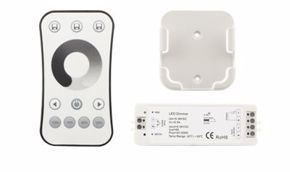
220V LED strips can be dimmed using different systems, not all compatible with every strip model. The main ones are: leading-edge phase control dimmers, similar to those for halogen lamps; trailing-edge phase control dimmers, more suitable for electronic loads; 0-10V signal dimmers requiring a separate control cable; PWM dimmers modulating the power supply at high frequency; DALI or DMX control for professional installations and building automation systems.
Compatibility and selection of the correct dimmer
Compatibility between dimmer and 220V LED strips depends on the electronics integrated into the strip. It is fundamental to consult the strip manufacturer's specifications to identify tested and certified compatible dimmers. Generally, 220V LED strips with integrated constant current regulation work best with trailing-edge dimmers or 0-10V control. Using incompatible dimmers can cause flickering, buzzing, reduction of dimming range, or even permanent damage to the strips.
Advanced control systems
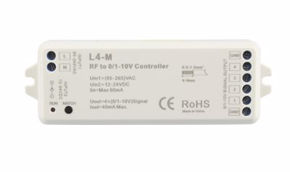
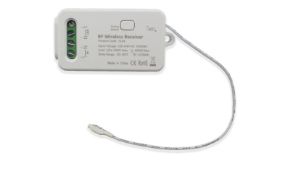
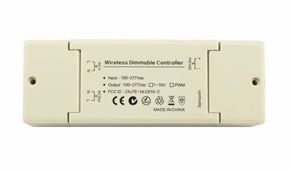
For applications requiring dynamic control (RGB/RGBW color variation, preset scenes, integration with home automation systems), specialized controllers for 220V LED strips exist. These devices are designed to manage the specific characteristics of high-voltage strips, with integrated protections and appropriate control interfaces (WiFi, Bluetooth, Zigbee, KNX, etc.). It is important to verify that the controller is correctly sized for the total power of the controlled strips, with a 20-30% safety margin.
Cost analysis: 220V vs 12V/24V LED strips over the lifecycle
A complete economic evaluation must consider not only the initial cost of materials, but all costs over the installation's lifecycle.
Initial material cost
220V LED strips generally have a higher cost per meter than equivalent low-voltage strips, due to the more complex integrated electronics. However, this additional cost is often offset by the absence of external power supplies. For small-scale installations (up to 5-10 meters), the low-voltage system may be more economical. Beyond these lengths, the economic crossover point shifts in favor of 220V LED strips, especially when considering simplifications in cabling and installation materials.
Installation and labor costs
Installation time for 220V LED strip systems is significantly reduced compared to equivalent low-voltage systems, especially over medium-long distances. The absence of planning for power supply placement, the reduction of connection points, and the possibility of using reduced-section cables translate into labor savings that can range from 30% to 50% depending on the installation's complexity.
Operating and maintenance costs
Operating costs depend mainly on the overall system efficiency. As previously analyzed, over medium-long distances 220V LED strips can be more efficient thanks to lower cable losses, resulting in lower energy consumption. Maintenance costs are generally lower for 220V systems, as they have fewer failure-prone components (no centralized power supply) and replacing damaged segments is simpler and faster.
Return on investment (ROI) analysis
To correctly evaluate ROI, consider: difference in initial cost; installation savings; estimated energy savings (considering annual operating hours and energy cost); expected maintenance costs; expected system lifespan. In many commercial and industrial applications, 220V LED strip systems show faster ROI thanks to significant installation savings and reduced maintenance.
Future trends and technological developments in 220V LED strips
The technology of 220V LED strips continues to evolve, with promising developments that will further expand their applications and improve performance.
Integration with smart systems and IoT
The most significant trend is the integration of intelligent control circuits directly into 220V LED strips. Some manufacturers are developing strips with integrated microcontrollers that allow individual addressing of segments even just a few centimeters long, self-diagnosis of faults, and direct communication with building automation systems without the need for external controllers. This evolution could revolutionize architectural and scenographic lighting, allowing complex dynamic effects with simplified installations.
Improvements in efficiency and light quality
Advances in LED technology and power electronics are leading to ever-increasing efficiencies for 220V LED strips. New LED chips with efficiencies exceeding 200 lm/W, combined with ultra-high efficiency integrated drivers (>95%), are further reducing consumption for the same luminous flux. At the same time, Color Rendering Indexes are improving (CRI >95 becoming standard) and color stability over time, with increasingly tighter MacAdam ellipses to guarantee perfect uniformity even in extensive installations.
Developments in materials and heat dissipation
Material research is leading to flexible PCBs with high thermal conductivity that allow better heat dissipation without the need for massive aluminum profiles. Materials like copper deposited on flexible substrates with advanced thermal properties will allow more compact, flexible 220V LED strips with higher power densities without compromising lifespan. This will open new applications in sectors like automotive, aerospace, and interior design where space is limited.
220V LED strips: the optimal solution for long lengths
220V LED strips represent a mature and advantageous technology for a wide range of applications, especially those involving medium-long distances, simplified installations, and reduction of installation costs. The choice between 220V LED strips and low-voltage systems (12V/24V) must be based on a careful evaluation of the specific requirements of each project: total length, accessibility for maintenance, installation complexity, available budget, and technical skills of the installer.
For most commercial and industrial applications over distances exceeding 10 meters, 220V LED strips offer significant advantages in terms of installation simplification, reduction of material and labor costs, and greater long-term reliability thanks to the absence of centralized power supplies as potential single points of failure. For small residential applications or where low-voltage safety is a primary requirement (e.g., in easily accessible humid environments), 12V/24V systems remain the preferable choice.
Regardless of the technological choice, it is fundamental to select quality products from reliable suppliers, with appropriate certifications and valid warranties. Investing in professional products results in superior performance, greater longevity, and, in the long term, lower total cost of ownership. For complex or large-scale projects, consulting a lighting designer or qualified electrician can help optimize the solution and guarantee maximum safety and regulatory compliance.
LEDPoint.it offers a complete range of high-quality 220V LED strips, with different technical specifications to meet every application need. Our team of experts is available to support professionals and enthusiasts in selecting the most appropriate solution and optimizing lighting projects.