





















RGBW, RGB, and RGBWW LEDs: differences and controllers
The LED lighting sector has undergone a revolution in the last ten years, evolving from a simple low-consumption alternative to traditional bulbs with monochromatic strips into a complex and highly customizable ecosystem with RGBW, RGB, and RGBWW LEDs. These technologies have democratized access to millions of colors and white light temperatures. Today, these devices are no longer a hobbyist's luxury, but a fundamental component in diverse fields: from interior design to commercial lighting, from gaming to video production.
The ability to modulate light according to context, time of day, or desired mood has opened unexplored scenarios, making lighting a dynamic and interactive element. Today, we aim to understand how far we can push the boundaries with colored light.
RGBW, RGB, and RGBWW LEDs: a growing market
According to a recent report by MarketsandMarkets, the global smart LED lighting market is expected to grow from $18.2 billion in 2023 to $34.5 billion by 2028, with a compound annual growth rate (CAGR) of 13.6%. This growth is driven precisely by the demand for systems capable of offering not only energy efficiency, but also light quality and chromatic customization.
The principle behind these devices is additive color synthesis, a concept dating back to the studies of James Clerk Maxwell and Thomas Young, but which finds its most widespread practical application precisely in LEDs. Each LED chip is actually a micro-unit composed of distinct diodes. In an RGB LED, the three chips (Red, Green, Blue) are enclosed in a single package and, by turning on with variable intensity, trick the human eye into perceiving the entire color spectrum. However, the pursuit of lighting perfection soon revealed the limitations of this technology: the combination of red, green, and blue produces a poor-quality white, often tending toward purple or cyan, and with very low color rendering (CRI).
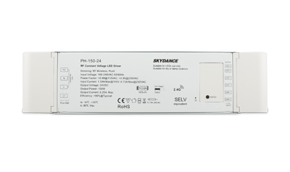
This led to the need to introduce dedicated chips for white light, giving rise to RGBW LEDs and subsequently RGBWW (or RGBCCT) LEDs. This technological evolution has profound implications not only on light quality, but also on wiring and control complexity, requiring increasingly sophisticated controllers, such as the Skydance V3, V4, and V5 series that we will analyze in detail.
RGB LEDs: the pioneer of colored light
RGB LEDs represent the gateway into the world of dynamic lighting. Their acronym, now part of common language, stands for Red, Green, Blue, the three primary colors of light. Unlike pigment colors (subtractive synthesis, as in painting), the combination of these three colors at equal intensity produces white light.
So, what does RGB LED mean? It means exactly this: a device capable of reproducing any color of the visible spectrum starting from these three monochromatic sources.
What are red LEDs used for? The role of each channel
We often wonder what the specific role of each single color is. The red LED is fundamental not only for obtaining warm tones (orange, pink, purple), but also for plant growth (photoperiod), hazard signaling, and creating intimate, relaxing atmospheres. Green, at the center of the spectrum, is the color to which the human eye is most sensitive, and contributes significantly to the perception of total brightness. Blue, historically the last to be developed (Nobel Prize in Physics in 2014), is essential for cool tones and for regulating circadian rhythm (daylight). In an RGB LED, independent modulation of these three channels allows obtaining any color, but the quality of white, as we will see, is the Achilles' heel of this technology.
What does RGB LED mean and what is an RGB LED diode?
An RGB LED diode is not a single diode that changes color, but a package containing three distinct diodes (one red, one green, and one blue) very close to each other. Their light mixes in space before reaching the observer's eye. There are two main construction types: common cathode RGB LEDs and common anode RGB LEDs. In the former, the negative terminal (cathode) is shared, while in the latter the positive terminal (anode) is shared. This distinction is crucial when connecting to controllers, as it determines how the power supply must be wired. Flexible RGB LED strips, the most common on the market, usually adopt the common anode scheme to simplify PWM control.
How do colored LED lights work? The PWM principle
The heart of RGB LED functionality lies in the Pulse Width Modulation (PWM) technique. Instead of varying the voltage (which would alter the color temperature), the controller turns the LED on and off thousands of times per second. The human eye, due to persistence of vision, does not perceive the flicker but only the average intensity. A low PWM frequency (below 200Hz) can cause discomfort or visual fatigue. Quality controllers, such as Skydance units, use PWM frequencies that can reach up to 32kHz (32,000 times per second), making the emission perfectly smooth and flicker-free, an essential aspect for video recording and visual well-being. The controller manages three independent PWM signals (one per color), and the combination of the three duty cycles (percentage of time the LED is on) determines the final color.
LED types: SMD, COB, and their evolution
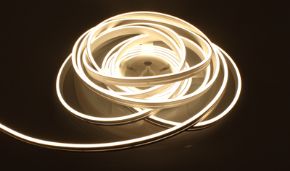
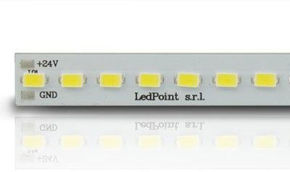
What types of LEDs exist? Besides the distinction by color, LEDs differ by mounting technology. The most common are SMD (Surface-Mount Device), such as the famous 3528, 5050, or 2835. The numbers indicate the chip dimensions (e.g., 5.0mm x 5.0mm for the 5050). 5050 LEDs are the classic ones used for RGB strips because the larger package can comfortably house the three chips. More recent is COB (Chip-On-Board) technology, where many chips are mounted directly on the substrate to create a continuous, dot-free light line. There are also RGB COB strips, where the color mixing is so homogeneous that it appears as a single light strip, ideal for minimalist light profiles. The choice of LED type affects brightness, beam angle, and final aesthetic result.
Applications of RGBW LEDs: from gaming to commercial venues
The applications are countless.
For the gaming enthusiast, RGB LED strips are the simplest way to create an immersive setup. Positioned behind the monitor (bias lighting), they reduce eye strain and increase perceived contrast. Synchronized with music or games via software, they transform the desk into an extension of the virtual world.
For the bar/restaurant owner, RGB LEDs allow changing the venue's atmosphere in seconds: warm, dim light during a romantic aperitif, dynamic and colorful lighting during an event or party.
For the architect and designer, RGB LEDs are a design tool to emphasize volumes, create color niches, or give a high-tech character to an environment.
For the influencer and student, they are the key to an Instagram-friendly background and superior video quality.
Finally, for the DIY enthusiast, they are the ideal component for customizing furniture, decorating the home for holidays, or creating artistic projects with Arduino and microcontrollers.
How to connect RGB LED strips? Practical guide
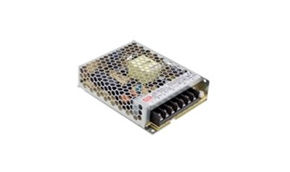
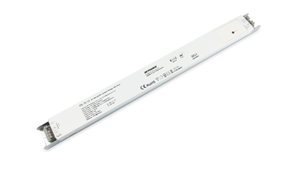
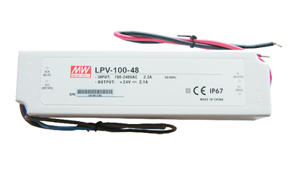
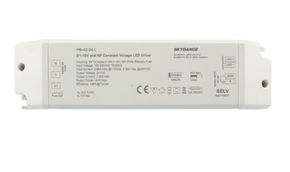
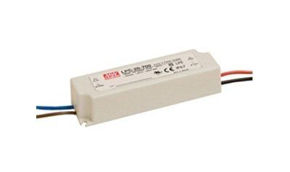
Connecting an RGB LED strip requires three fundamental components: the power supply (transformer), the controller, and the strip itself.
How to power an RGB LED strip? The power supply must be chosen based on the strip's power consumption (Watts/meter x total length) with a 20% safety margin.
How is the RGB LED connected? The standard connection involves: 1) power supply connected to the 220V mains. 2) power supply output (12V or 24V DC) connected to the controller input. 3) controller output connected to the strip, respecting the color codes: usually the black or common wire (V+) goes to the strip's "+" pad, while the red (R), green (G), and blue (B) wires go to their respective pads.
How to connect an LED strip without a transformer? It is not possible and would be extremely dangerous: LED strips operate at low voltage (12/24V) and require a transformer to step down the mains voltage (220V).
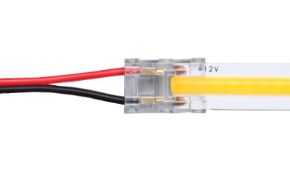
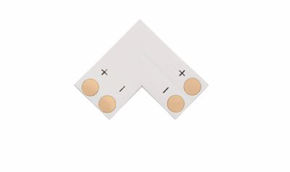
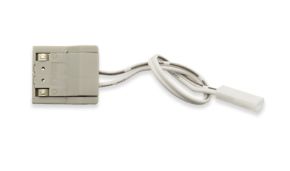
How to use a cut LED strip? Strips have marked cut points (usually every 5 or 10 cm). Once cut, the new end must be soldered or connected via quick connectors (clips) to be powered.
Skydance controllers for RGB strips: the V3 Series
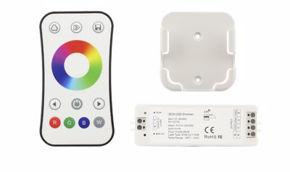
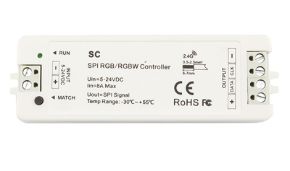
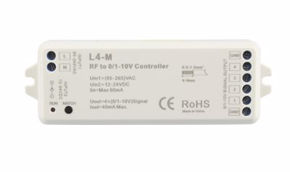
Skydance control systems stand out for their scalable architecture and use of 2.4GHz RF technology, which allows managing over 1000 devices in sync with ranges up to 30 meters. For standard RGB strips, the reference series is the V3. These 3-channel (R, G, B) controllers are designed for high-frequency PWM modulation. The V3 / V3-L series offers outputs with loads up to 6A per channel, handling even considerable-length domestic installations without issues. The Mini versions (V3-M / V3-W) are compact and often equipped with quick connectors, ideal for ready-to-use kits or installations behind a desk.
The capabilities of these controllers include 10 predefined dynamic modes (jump, fade, smooth) and saturation adjustment to obtain pastel tones by mixing white (RGB mix). A relevant technical aspect is the dimming curve: Skydance allows choosing between a logarithmic curve (more natural for the human eye, which perceives brightness variations non-linearly) and linear (more predictable for technical uses).
Comparative table of Skydance controllers for RGB
| Model | Channels | Current per channel | Main features |
|---|---|---|---|
| V3-M (Mini) | 3 (RGB) | 4A | Compact, quick connectors, 10 effects |
| V3-L | 3 (RGB) | 6A | High power, selectable dimming curve |
| V3-W (Wi-Fi) | 3 (RGB) | 4A | Tuya integration, Alexa/Google voice control |
RGBW LEDs: evolution toward pure white
If RGB LEDs represent the foundation, RGBW LEDs represent their natural refinement. The acronym stands for Red, Green, Blue, White. The addition of a dedicated white chip solves the main problem of RGB synthesis: the reproduction of quality white light. With an RGBW LED, you are no longer forced to turn on all three chips to obtain white; you use the dedicated white chip, which offers superior color rendering (CRI), often >90, and a precise tone (warm, neutral, or cool). But what does RGBW mean exactly? It means having a fourth control channel, which doubles creative possibilities and dramatically improves energy efficiency when white light is desired.
Differences between RGB and RGBW: the main difference
The difference between RGB and RGBW is substantial and manifests on three levels: light quality, efficiency, and control complexity. An RGB LED, to produce white light, turns on the three R, G, B chips simultaneously. The result is a "combined" white, often tending toward bluish or pinkish, with low CRI (often below 70). Furthermore, the sum of the three chips' power leads to higher consumption.
An RGBW LED, instead, turns on only the white chip, consuming less and producing a pure, crisp white with high CRI (Ra >90). Pastel tones, such as dusty pink or powder blue, benefit enormously from this architecture, as they are created by mixing white with a small color component, resulting in much more natural and less "acidic" tones compared to those obtained from pure RGB mixing. For a restaurateur wanting an elegant environment or an architect caring about details, the difference is immense.
What is RGBW technology?
RGBW technology finds its ideal habitat in all those contexts where white light is not just a background, but a primary functionality. In an office, during the day, you can use cool white to promote concentration, while in the evening you can switch to warm white or relaxing tones. In a clothing store, the ability to alternate faithful white light (to show the true colors of garments) with colored effects (to attract attention in the window display) is a significant competitive advantage. For a video maker or streamer, having a high-CRI white chip means being able to illuminate your face professionally, without the color casts that occur with economical RGB panels.
How to connect an RGBW LED strip?
Connecting an RGBW strip requires a 4-channel controller and 5-wire wiring (common V+, R, G, B, W). Compared to the RGB version, the fourth wire (often white or yellow) manages the white channel.
How is the RGBW LED connected? The principle is always the same: power supply -> controller -> strip. However, it is essential that the controller is specific for RGBW (4 channels). If you connect an RGBW strip to an RGB controller, the white chip will never turn on. Furthermore, many Skydance RGBW controllers offer two operating modes: one in which RGB and White can be turned on simultaneously (to create pastel colors or increase total brightness) and one in which they are alternated, to better manage power absorption and not exceed the controller's maximum current. This flexibility is crucial for complex installations.
Skydance controllers for RGBW strips: V4 series
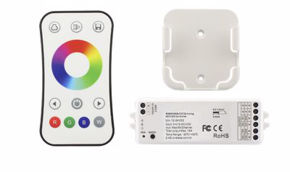
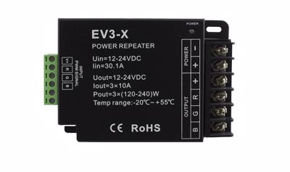
To manage 4-channel strips, Skydance offers the V4 series. The V4 / V4-L / V4-X models are designed to drive substantial loads with maximum precision. These controllers allow managing the White channel independently from the RGB channels, and many models, such as the V4-T(WT), offer advanced synchronization via DMX512 protocol between master and slave units, ideal for professional installations. The selectable PWM frequency (up to 32kHz) is a distinctive feature of these devices, designed for video professionals who need to eliminate any trace of "flicker" from their recordings. Additionally, the RF auto-transmission function allows each receiver to repeat the signal, virtually extending the control range infinitely, a boon for those who need to control long strips or distant light points.
Comparative table of Skydance controllers for RGBW
| Model | Channels | Protocols | Special functions |
|---|---|---|---|
| V4-L | 4 (RGB+W) | RF 2.4GHz | High power, auto-signal transmission |
| V4-T(WT) | 4 (RGB+W) | DMX512/RF | DMX Master/Slave synchronization |
| DA4-D | 4 (RGB+W) | DALI-2 (DT8) | Integration into professional home automation systems |
RGBWW LEDs (RGBCCT): the pinnacle of chromatic versatility
With RGBWW LEDs, we enter the territory of "tunable white" lighting. What does RGBWW mean? The acronym can be misleading: often RGBWW stands for Red, Green, Blue + White Warm, but technically the more correct term is RGBCCT (Red, Green, Blue + Correlated Color Temperature). In practice, these are 5-channel LEDs: the three colors (R,G,B) plus two dedicated white chips: one warm white (Warm White, usually 2700K-3000K) and one cool white (Cool White, usually 6000K-6500K).
This architecture allows not only having high-quality white, but also varying its temperature continuously (from warm to cool), exactly as a CCT strip (Dynamic White) would do, but with the added ability to obtain any color of the RGB spectrum. It is the "all-in-one" solution for those who do not want to compromise.
Differences between RGBW and RGBWW: why choose one or the other
The difference between RGBW and RGBWW is the difference between having a single type of white (e.g., cool white) and having the ability to choose any white temperature (e.g., from 2700K to 6500K). With an RGBW LED, if you choose the warm white chip, you will always and only have that tone. With an RGBWW LED (RGBCCT), instead, you can adjust the color temperature by mixing the two white chips, just as you would with a CCT dimmer.
This is fundamental in areas such as Home Automation and Human Centric Lighting (person-centered lighting), where warm light in the evening promotes relaxation and melatonin production, while cool light in the morning stimulates attention. For an architect, proposing an RGBWW system means giving the client the freedom to change the emotional "temperature" of a room with a simple touch on the remote or smartphone.
How to make white with RGB LEDs?
To understand the power of RGBWW, let's return to the question: how to make white with RGB LEDs. The answer, as seen, is: poorly. With RGBWW, instead, you obtain perfect white in two ways: either by using only the warm chip or only the cool chip, or by mixing them to obtain all intermediate gradations. This not only guarantees excellent CRI (>95), but also allows adjusting a venue's atmosphere according to the time of day. A restaurant can thus transition from a crisp, cool light for a business lunch to an intimate, warm light for a romantic dinner, all on the same LED strip.
Skydance controllers for RGBWW: the V5 series
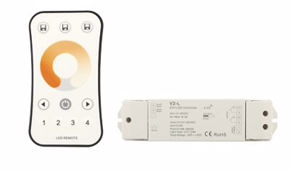
To manage the complexity of a 5-channel chip, Skydance has developed the powerful V5 series. The V5 / V5-L / V5-M models are defined as "5-in-1" controllers because, via a setting button or DIP switch, they can be configured to drive practically any type of strip: monochrome, CCT (two whites), RGB, RGBW, or RGBCCT. This flexibility makes them the ideal tool for those who have different strip types in stock or for those who want a single universal model.
Smart capabilities are the true strength of this series. The WT (WiFi), WZ (Zigbee), and WB (Bluetooth) models natively integrate with the Tuya Smart ecosystem, allowing control via App and voice commands with Amazon Alexa and Google Assistant. Furthermore, new models like the WM5 support the Matter standard, the new universal protocol that guarantees cross-platform compatibility with Apple Home, Alexa, Google Home, and Samsung SmartThings without the need for proprietary gateways. The dimming precision is taken to the extreme, with 4096 gray levels (0-100%) that make color and temperature transitions absolutely smooth, without any visible stepping.
Table of Skydance controllers for RGBWW and compatibility
| Model | Configuration | Smart integration | Supported standards |
|---|---|---|---|
| V5-L | 5-in-1 (RGB/CCT/RGBW/RGBCCT) | RF 2.4GHz | Auto-transmission, adjustable PWM |
| V5-WT | 5-in-1 | Wi-Fi + Tuya | Alexa, Google Home, IFTTT |
| WM5 | 5-in-1 | Matter over Wi-Fi | Apple Home, Google, Alexa, SmartThings |
Beyond basic controllers: DMX, DALI, and home automation integration
For complex installations, such as theaters, hotels, shopping centers, or smart homes, standard RF controllers might not be sufficient. This is where professional protocols like DMX512 and DALI come into play. Skydance offers a complete range of decoders and controllers for these standards, allowing multicolor LED strips to be integrated into centralized control systems. The choice of the right protocol depends on the project scale and control requirements.
DMX512/RDM decoders: professional flexibility
The decoders of the D3, D4, and D5 Skydance series convert professional DMX signal into PWM outputs for RGB/W/CCT strips. DMX is the standard of the entertainment industry, but is increasingly used in architecture for "media facades" or artistic lighting projects. These decoders support bidirectional RDM (Remote Device Management) addressing, which allows configuring and monitoring devices directly from the control console, without having to physically intervene on each decoder. The ability to set high PWM frequencies (up to 32kHz) is fundamental here as well to avoid flicker in high-speed video recordings or with electronic optics.
DALI-2 (DT8) decoders: the standard for construction
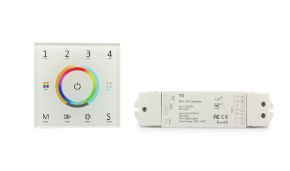
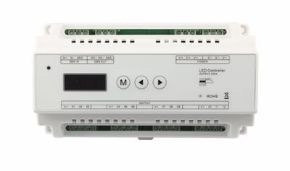
DALI (Digital Addressable Lighting Interface) is the reference standard for architectural and home automation lighting. The DALI-2 version and the DT8 protocol (Device Type 8) are specifically designed for color and color temperature control. The decoders of the DA4-D or DA5-L Skydance series allow integrating multicolor LED strips into systems like KNX, ABB, Siemens, or Schneider Electric, making them an integral part of the building. An architect can thus program complex lighting scenarios involving the entire property, managed by wall panels or sensors, with the certainty of standardized and reliable control.
Protections and distinctive technical features
All Skydance controllers, from the simplest to the most complex, include integrated safety systems: protection against reverse polarity (essential to avoid damage during installation), against overheating, overload, and short circuit, with automatic recovery. The selectable PWM frequency is another standout feature: the user can choose between different frequencies (e.g., 2kHz for standard use, 8kHz to eliminate audio noise, 16kHz or 32kHz for video applications) to adapt the controller to the specific environment. The dimming curve (logarithmic or linear) completes the picture of a control system designed to offer maximum light quality and user experience.
Selection guide for every need
After analyzing the technical part, it's time to apply it in practical advice. How do you choose the right strip and controller for your use case? There are many variables: budget, space size, control needs, desired light quality. Here we answer the typical questions of different professional figures and hobbyists.
For the gaming enthusiast: Immersion and synchronization
What are the best RGB lights for my gaming setup? For a gaming setup, the watchword is "wow effect" and synchronization. A standard RGB strip (with V3 controller) is more than enough to start. The important thing is that it is dimmable and bright enough. For those who want the most, RGBW strips with dedicated white (V4 controller) are useful when streaming and quality white light on the face is needed. How can I synchronize RGB lights with games or PC? This is where Wi-Fi or Matter controllers (V5-WT, WM5) come into play, which integrate with platforms like Razer Chroma, Corsair iCUE (via third-party software or bridge) or via IFTTT. Some games natively support ambient lighting that changes based on in-game events. Which colors or effects are most suitable? For a relaxed environment, cool tones (blue, purple) or warm white light are recommended. For adrenaline-pumping gaming sessions, red or music synchronization (sound reactive effect) are perfect. Installation behind the monitor (bias lighting) is the simplest and most immediate.
For the bar/restaurant owner: atmosphere and control
How can I use RGB lights to improve my venue's atmosphere? The key is versatility. An RGBWW (RGBCCT) system with V5-WT (Wi-Fi) controller is ideal. During the day, you can set neutral white light (4000K) for a clean, bright environment. In the evening, you can switch to warm white (2700K) for aperitif time. During an event or party, you can activate dynamic colored modes. Can RGB lights be easily controlled during opening hours? Absolutely yes. With the Tuya app on the bartender's or manager's tablet, you can change color and intensity instantly, or program automatic scenarios based on time. Can I synchronize RGB lights with music or special events? Yes, via controllers with sound reactive function (or via Apps that use the phone's microphone). For a more professional system, you can opt for a DMX decoder and a lighting console, managed by a DJ or lighting designer.
For the influencer/student: video quality and portability
Which RGB lights are easiest to use for creating quality content? The priority for videos and photos is color rendering. It is essential to avoid economical RGB LEDs that produce visible flicker in recordings. Look for strips and panels with high PWM frequency (>8kHz) or, even better, constant current (CC). Skydance controllers with selectable PWM are perfect for this. Which light effects are most popular among followers? The "aurora" effect (slow transitions between pastels), pink/purple light (retro), and warm/white light for makeup tutorials are the most requested. Are RGB lights portable and easy to transport? Battery-powered strips or kits with power banks exist, but for professional quality, a USB strip or rechargeable light stick is better. For outdoor sessions, portable RGB LED panels, more compact than strips, can be used.
For the architect and designer: Integration and innovation
What are the most elegant and modern RGB lighting solutions? For design projects, RGB COB LED strips are the ideal choice: they offer a continuous light line, without visible light points, perfect for being hidden in plaster profiles or luminous baseboards. High-CRI (>95) RGBW strips are essential for illuminating artworks or precious materials. What are the most advanced control technologies? Home automation integration is the future. Matter controllers (WM5) and DALI-2 (DT8) decoders are the obligatory choice for those who want to offer a future-proof installation, controllable from any voice assistant and integrable into any building automation system. How can I propose a customized system to clients? The proposal must be based on the analysis of spaces and client habits. A zonal system, where each strip is addressable and controllable individually, is the most flexible and fascinating solution.
For the DIY enthusiast: customization and safety
What are the easiest RGB lights to install for DIY decorations? Self-adhesive RGB strips with quick connectors (solderless) are the simplest. A basic kit with V3-M controller and power supply is the ideal starting point. How can I create personalized lighting effects for parties? You can use a controller with microphone (sound reactive) to synchronize lights with music, or a programmable controller with Arduino (like the V5 series with analog inputs). Are RGB lights safe to use in home environments? Yes, if you use certified power supplies (CE, UL) and follow basic rules: do not exceed the power supply's maximum power, do not cover strips during operation to avoid overheating, and use connectors suitable for the cable section. Skydance controllers, with their integrated protections, add an additional level of safety.
Your questions
In this section, we answer in a concise but exhaustive manner all the questions that are often asked of us, providing a quick and comprehensive response to all.
What are red LEDs used for?
Red LEDs are fundamental for obtaining warm tones (orange, pink, purple), for applications in agriculture (plant growth), and for signaling.
What are RGB LEDs used for?
To create millions of colors for decorative lighting, displays, scenic effects, and personalized atmospheres.
What does RGB LED mean?
Red Green Blue Light Emitting Diode: a diode that emits red, green, and blue light, combinable to obtain other colors.
What are RGB LEDs?
They are semiconductor devices containing three chips (R,G,B) in a single package, allowing colored light generation.
What does RGBW mean?
Red, Green, Blue, White: an LED that adds a dedicated white chip to the three primary colors to improve white rendering.
What does RGB light mean?
It is a light whose tone is determined by the additive mixing of the three primary colors of light: red, green, and blue.
What does RGBWW mean?
Often used as a synonym for RGBCCT, it indicates an LED with Red, Green, Blue chips + two white chips (warm and cool) for color temperature adjustment.
What is an RGB LED diode?
It is an electronic component that emits light when current passes through it. In the RGB case, it is a triple diode in the same container.
What is RGBW technology?
It is the evolution of RGB technology that integrates a high-CRI white chip to obtain pure whites and more natural pastel colors.
What is an RGB LED?
An LED capable of reproducing any color through the combination of three independent channels.
What does RGB LED strip mean?
A flexible strip on which numerous RGB LED chips are mounted, usually with a flexible printed circuit board (FPCB).
What types of LEDs exist?
There are SMD LEDs (3528, 5050, 2835), COB LEDs, RGB, RGBW, RGBWW LEDs, high-power LEDs, surface-mount and through-hole LEDs.
How do colored LED lights work?
They work through additive color mixing: three LEDs (R,G,B) are turned on with different intensities (via PWM) to create the perception of a specific color.
How to power an RGB LED strip?
By connecting the strip to a power supply (12V or 24V) of adequate power, passing through an RGB controller.
How to power an RGB LED?
RGB LEDs must be powered with direct current (DC) through a driver or current-limiting resistor, if connected to microcontrollers.
How does the RGB LED work?
Each chip (R,G,B) has a cathode and an anode. By modulating the current on each chip, you vary the light intensity and thus the perceived color.
How are LEDs connected in LED strips?
Usually in parallel (in segments), where each segment (e.g., 3 LEDs) has its own resistors and can be cut without damaging the rest of the strip.
How to make white with RGB LEDs?
By turning on the red, green, and blue chips simultaneously at maximum intensity. The result is a lower-quality white compared to a dedicated white chip.
How to connect an LED strip without a transformer?
It is not possible and not safe. LED strips operate at low voltage and require a power supply (transformer) to convert the 220V mains.
How is the RGB LED connected?
It is connected respecting polarity: the common (anode or cathode) to the + or - of the power supply, and the three pins R,G,B to the controller's output channels.
What are color-changing LEDs called?
They are called RGB LEDs, RGBW LEDs, or RGBWW LEDs. They can also be called color-changing LEDs.
How to use a cut LED strip?
After cutting it at the predetermined points, it is necessary to solder or apply a quick connector to connect the power cables to the new end.
How to make LEDs change color?
Using a controller (manual, RF, Wi-Fi, DMX) that sends PWM signals to the R, G, and B channels to vary their intensity.
How to connect RGB LED strips?
In parallel to the controller, paying attention to voltage drop over long distances. For very long runs, the strip is powered at the beginning, middle, and end.
How to choose LEDs?
By evaluating voltage (12/24V), power (Watts/meter), chip type (SMD/COB), color rendering (CRI), and control type (RGB/RGBW/RGBWW).
How do LEDs change color?
They do not change physical color, but contain three chips of different colors that turn on with variable intensity, tricking the eye.
How do LED lights change color?
Through PWM (Pulse Width Modulation) of the three base channels, managed by a microcontroller.
How to connect an RGBW LED strip?
Using a 4-channel controller (V4). The wires are generally: V+ (common), Red (R), Green (G), Blue (B), White (W).
How to choose LED strips?
Based on use: for RGB color effects, for quality whites RGBW, for adjustable whites RGBWW. Then choose density (LEDs/m) and power.
How do multicolor LEDs work?
They exploit the same principle as RGB LEDs: three or more chips of different colors in a single package.
How does the RGB color model work?
It is an additive model in which colors are formed by summing the intensities of red, green, and blue light. The sum of all three at maximum intensity gives white.
How to connect RGB LED strips?
R: To the controller's Red channel, G: to Green, B: to Blue, and the common wire (generally black or +12V) to the positive of the power supply (or controller).
What is RGB used for?
It is used to reproduce the visible color spectrum in devices such as monitors, TVs, projectors, and dynamic lighting systems.
What are RGBs used for?
Same answer as above: to create colored light.
What is RGB used for?
The acronym refers to the method of color generation through the mixing of Red, Green, and Blue.
What is the RGB system?
It is a color coding system based on the intensity of the three primaries.
What does RGB color mean?
A color described in terms of the amount of red, green, and blue needed to reproduce it.
What is meant by RGB?
The acronym for Red, Green, Blue.
What is the difference between RGB and ARGB?
ARGB (Addressable RGB) means that each LED can be controlled individually, unlike standard RGB where the entire strip shows the same color.
RGBW, RGB, and RGBWW LEDs: intelligent and personalized lighting
The choice between an RGB, RGBW, or RGBWW LED system is not just a technical matter, but a design decision that impacts the daily experience of the spaces in which we live and work. RGB LEDs remain the most economical and fun choice for those seeking a first approach to color. RGBW LEDs represent the right compromise for those who desire quality white without giving up chromatic versatility. RGBWW LEDs (RGBCCT) are the ultimate solution for those who demand maximum control over light, capable of adapting to every need and circadian rhythm.
Similarly, the choice of controller is equally crucial. Skydance controllers, with their range spanning from the simple V3 series to sophisticated DMX and DALI decoders, offer a solution for every need, guaranteeing high quality standards in terms of dimming precision, flicker-free operation, and robustness. The evolution toward open standards like Matter promises to make lighting an increasingly integrated and invisible element in the smart home ecosystem.
Whether you are a gamer, a restaurateur, an architect, or simply an enthusiast, the invitation is to consider lighting no longer as a static element, but as a true tool for design and well-being.