






LED relamping: the revolution that ignites savings
More and more often, companies, condominium administrators, and technical managers of large structures ask us if it still makes sense to act for energy savings with relamping. Even though it may seem anachronistic, even today LED relamping represents the most effective intervention to reduce energy costs without starting major structural works.
For years we have been dealing with the design and supply of LED profiles and lighting systems, and we have seen cellars, offices, and entire plants transform completely precisely thanks to LED relamping, which is why today we have decided to address this topic.
But what exactly is relamping?
By relamping we mean the planned (or extraordinary) replacement of existing light sources with others of more advanced technology, today almost exclusively LED in a systematic way. The system is evaluated, products with the right fitting and the right color temperature are chosen, and you proceed. Therefore, relamping means an intelligent modernization of lighting and should not be confused with revamping, which is much more invasive.
Relamping or revamping? Let's discover the differences
We are often asked to carry out the revamping of a building when in reality the client simply wants to change fluorescent tubes with LED strips. In this case, we will have a relamping: revamping implies the replacement or structural modification of the lighting fixture (such as changing the entire lamp body because it is old or rusty).
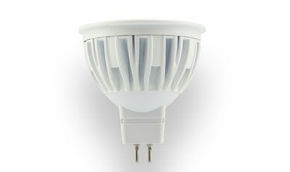
Our advice is that if the fixture is still in good condition and you want to save money, opt for relamping systems with LED kits or retrofit lamps. If instead the optics are compromised or you want a new design, we speak of revamping. In any case, Ledpoint is able to supply both LED profiles for new systems and products for rapid LED relamping.
LED relamping: how does it work?
The principle is simple: you remove an old halogen or fluorescent lamp and put in an LED lamp. But there is a huge difference: LEDs work at low voltage (generally 12V or 24V or 220V with integrated driver), and offer very high luminous efficiency.
Comparison table between lamps
| Lamp Type | Power (W) | Luminous Flux (lm) | Average Duration (hours) | Annual Energy Cost* |
|---|---|---|---|---|
| Incandescent | 60 W | ~700 lm | 1,000 | € 21.5 |
| Halogen | 50 W | ~800 lm | 2,000 | € 18.0 |
| Compact Fluorescent | 15 W | ~800 lm | 8,000 | € 5.4 |
| LED (relamping) | 9 W | ~800 lm | 25,000 - 50,000 | € 3.2 |
*Estimated annual cost based on 6 hours/day at 0.25 €/kWh. Source: ENEA 2025 data.
As you can see, with LED relamping the cost is reduced by up to 85% compared to old light bulbs. And the duration is 50 times higher.
Relamping in public lighting and thermal account calculation
One of the fields where relamping is giving clamorous results is public lighting. Replacing old mercury vapors (which are currently illegal) with LED lighting allows municipalities to save on bills and reduce light pollution. Furthermore, thanks to the Thermal Account (Conto Termico), it is possible to obtain incentives for energy efficiency interventions, including LED relamping in Public Administration buildings and schools. However, if you want to access incentives, you must remember that applications must be submitted before the start of works.
Our suggestions for relamping: LED profiles and strips
In the catalog, it is possible to find a range of different products to realize relamping systems:
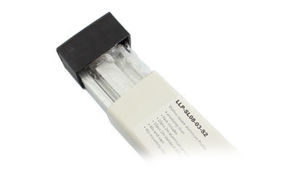
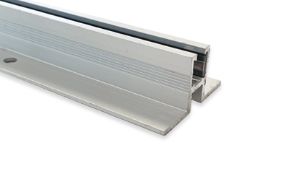
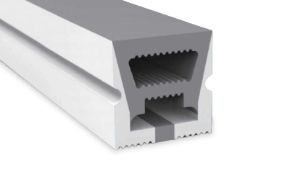
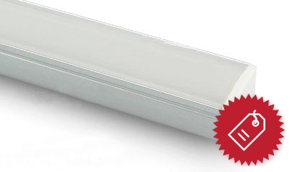
- recessed ceiling profiles – ideal for offices, replace old ceiling lights;
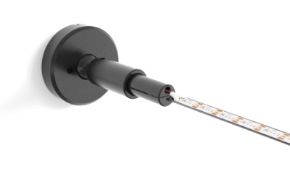
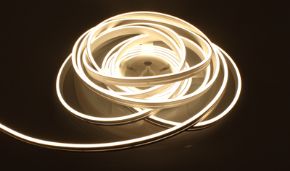
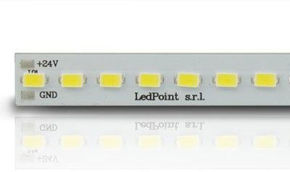
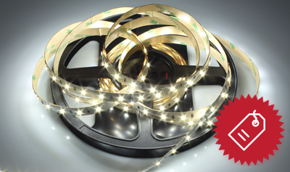
- flexible LED strips cuttable every 5cm – perfect for revitalizing showcases or light paths;
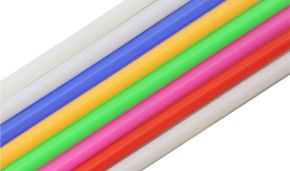
- round profiles – aesthetically replace neon tubes perfectly;
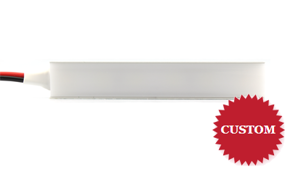
- custom cut: we supply profiles made to measure for complex relamping projects.
How to plan a relamping project
A good relamping project is based on some steps:
- energy audit: current consumption and lighting levels are measured;
- choice of lamps: based on fittings (E27, E14, GU10, etc.) and color temperature;
- compatibility check: especially with old electronic transformers (sometimes they need to be replaced);
- economic return analysis: calculation of payback time (often 2-3 years);
- installation and disposal: old lamps must be taken to WEEE collection centers.
We always recommend ordering a single sample before ordering the entire supply, to verify that the new luminosity actually corresponds to what is desired.
Challenges and technical considerations in LED relamping
In relamping, some problems may arise which are good to keep in mind
- flicker: with poor drivers or incompatible dimmers, LEDs flicker;
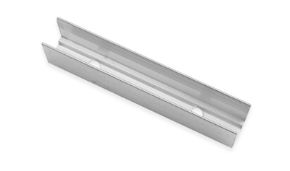
- heat dissipation: LEDs heat up little but need dissipation. Our aluminum profiles act as heat sinks;
- residual light: already mentioned, if the system has structural problems the LED generates this problem, but it is the system that needs to be reviewed;
- dimming: not all LEDs are dimmable (those in our catalog are), before proceeding with the purchase it is good to read the product technical sheet scrupulously.
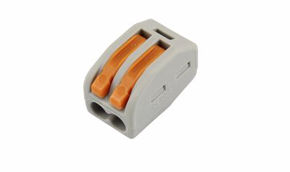
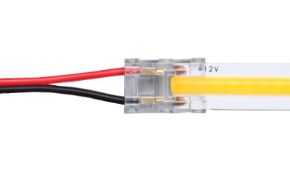
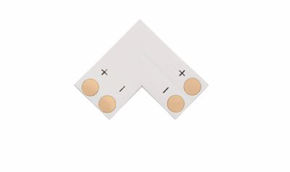
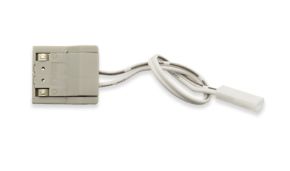
Sometimes we are asked if it is possible to reuse LED strips, the answer is affirmative but it is necessary to be careful not to damage the copper tracks. On Ledpoint it is possible to find a fair number of connectors to connect LED strips together without having to solder them.
Case study: relamping in an industrial warehouse
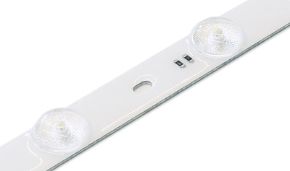
A few months ago we followed a metalworking company with 200 ceiling lights with two 58W neon tubes each in order to downsize energy consumption. After an in-depth analysis, we proposed an LED relamping using our recessed LED profiles line cut to measure 1200 mm with high efficiency 26W COB LEDs each (to replace the two original lamps). We kept the structure of the existing ceiling lights, replacing only the internal part with our profiles, a very quick intervention.
The numbers speak clearly: the total consumption of the system went from 23,200W (200 ceiling lights x 116W) to 5,200W (200 profiles x 26W), considering 10 hours of work per day for 250 days a year. The annual savings are around €10,800, with an investment amortized in less than 2 years. And the light quality has improved significantly: we went from a dim and poorly distributed light (poor 3500K, with those old ones flickering) to a nice neutral 4000K, with a color rendering (CRI >90) that also improved the visibility and quality control of the products made.
| Parameter | Pre relamping (neon 2x58W) | Post relamping with LED profiles |
|---|---|---|
| Total system power (200 ceiling lights) | 23.2 kW | 8.0 kW |
| Annual operating hours | 2,500 h | 2,500 h |
| Annual consumption | 58,000 kWh | 20,000 kWh |
| Annual energy cost (0.25€/kWh) | 14,500 € | 5,000 € |
| Annual Savings | 9,500 € | |
We chose profiles with 120° optics to ensure uniform distribution, given that the warehouse height was 6 meters. The old neon tubes had dispersed flux, while the LED profiles concentrate the light better on the work plane.
Incentives for relamping: Thermal Account 3.0 and White Certificates
We are often asked if there are public contributions for LED relamping or if it is possible to deduct something fiscally. The answer is affirmative, but it is necessary to navigate between different mechanisms depending on whether you are a Public Administration, a company, or a private individual. Let's try to clarify because in recent months things have changed considerably with the arrival of the Thermal Account 3.0 and the update of the White Certificates for the 2025-2030 period.
Thermal Account 3.0: even companies can access it
Until recently the Thermal Account for relamping was reserved almost exclusively for the Public Administration. With the new Thermal Account 3.0 (decree August 7, 2025) the audience has widened and now the contribution can also be requested by:
- private companies of any size (small, medium and large);
- third sector entities (associations, foundations, social cooperatives);
- professionals and VAT holders;
- agricultural and forestry companies.
In practice, if you have a commercial activity, an office, a warehouse or even a bed & breakfast, today you can access this non-repayable incentive. For private citizens the Thermal Account remains valid but mainly for interventions on single real estate units, such as the replacement of air conditioning systems.
What does the Thermal Account 3.0 provide for relamping?
The new decree explicitly includes the replacement of indoor lighting systems and external pertinences with LED or high-efficiency technologies among the subsidized interventions with important technical constraints to respect.
The fundamental requirement is that the installed power of the new LED lamps must not exceed 50% of the replaced power. If previously there was a ceiling light with two 58W neon tubes (116W total), the new LED system cannot exceed 58W. This constraint was designed to guarantee real energy savings, but it sometimes clashes with modern lighting regulations (the UNI EN 12464-1 today requires higher illuminance levels than in the past, such as 500 lux in offices versus the 300 lux of once upon a time).
If the 50% limit is not respected because the old system was undersized, the incentive is still recognized but limited to the power quota equal to 50% of that replaced. In practice, the GSE calculates the incentive on a virtual system that would have the same performance as the old one, not on the new, more performant one. A complex bureaucratic mechanism, which is why we always recommend getting assistance from a technician before starting work.
How much is due and how to request it
The contribution percentages vary based on the subject:
- public administrations: up to 65% of the expense (and in some cases they reach 100%);
- companies and private individuals: from 25% to 40% depending on the type of intervention and the savings obtained.
Applications are submitted exclusively online via the new GSE CT3 Portal, operational from February 2, 2026. For interventions completed by December 25, 2025, the old Thermal Account 2.0 can still be used, but for subsequent ones the new rules apply. Submission times: within 90 days from the end of works for direct access.
White Certificates (TEE): the option for large companies and energy managers
If instead we talk about large systems or interventions on an industrial scale, another interesting tool is the White Certificates, also called Energy Efficiency Certificates (TEE).
Unlike the Thermal Account (which is a non-repayable contribution), White Certificates are negotiable titles that certify the energy savings obtained. The mechanism is simple on paper: every TOE (tonne of oil equivalent) saved generates a certificate that can be sold on the market to energy distributors obliged by law to reach certain efficiency targets. The current value is around €250-260 per certificate.
To access TEEs, however, strict requirements must be met:
- be a ESCo (Energy Service Company) certified UNI CEI 11352 or
- have a EGE (Energy Management Expert) certified UNI CEI 11339 or
- have a Energy Management System certified ISO 50001.
The new White Certificates Decree of July 21, 2025 has redefined objectives and methods for the 2025-2030 period, in line with the PNIEC 2024. Energy distributors (those with more than 50,000 customers) have increasing obligations until 2030, which keeps the demand for certificates stable and therefore their market value.
For LED relamping projects, TEEs represent an interesting opportunity when the intervention is large-scale (think of an entire industrial area or a supermarket chain). In these cases, the incentive can cover a significant portion of the investment, even over 50%.
Watch out for cumulability
You cannot accumulate multiple incentives on the same intervention. In general, Thermal Account and White Certificates are not cumulable with other public incentives (including tax bonuses such as the ecobonus) for the same expenses. You must choose the most convenient path depending on the specific case
For companies that want to navigate this jungle of incentives, the advice is to rely on industry professionals such as energy managers and thermal technicians who help prepare the necessary documentation.
Relamping and savings: the numbers
When we present a LED relamping project to our clients, the first question is always: "but how much do I really save?". We have seen the numbers in the previous chapters, but it is worth framing the phenomenon at a national level, because the data emerging from the most recent research are surprising and deserve further investigation.
The national potential according to ENEA
According to the Annual Report on Energy Efficiency 2024 by ENEA, the energy saving potential in Italy with LED relamping interventions is estimated at around 4 TWh per year . To give a more concrete idea, this is equivalent to the annual electricity consumption of about 1.5 million Italian families (considering an average domestic consumption of 2,700 kWh/year). Translated into economic terms, we are talking about a potential savings on the national bill that exceeds one billion euros per year at current energy prices.
Yet, despite these staggering numbers, the LED penetration rate in the non-residential sector is still stuck at low percentages. From our elaborations on sector data, only about 30% of Italian companies have already converted their systems to LED. The remaining 70% still operates with obsolete technologies (fluorescence, halogens, mercury vapors) with embarrassing efficiencies compared to today's. A paradox, considering that LED has been on the market for over 15 years and prices have now collapsed.
Why have so few companies already converted?
If we consider how much can be saved with relamping it seems strange that few are implementing it. The reasons are various:
- poor technical knowledge: many entrepreneurs think it is enough to buy an LED light bulb at the supermarket and screw it in. In reality a relamping project requires a minimum of competence to choose the right color temperature, the correct luminous flux and compatibility with existing drivers. If you get it wrong, you end up with a dark environment or with flickering lights;
- fear of the initial investment: even if the return is 2-3 years, many SMEs struggle to immobilize capital. Too bad because, as we have seen, the numbers are on their side;
- bureaucracy and incentives: until yesterday the Thermal Account was reserved for the PA, White Certificates seem like a jungle. With the new rules of 2025-2026 things are improving, but confusion reigns supreme.
The weight of lighting in building consumption
To understand the strategic importance of relamping, you must start from a basic fact: artificial lighting accounts on average for 15-30% of the overall consumption of a building . In some sectors (offices, schools, warehouses) the percentage rises further. The UNI EN 15193 standard of 2021 introduced the LENI (Lighting Energy Numeric Indicator) index to evaluate the energy performance of lighting systems, but its application has so far been limited by the complexity of the calculations .
To overcome this problem, at the end of 2024 ENEA launched LENICALC, a free tool that supports professionals in calculating the efficiency of lighting systems . The tool, developed in collaboration with the University La Sapienza of Rome, is based on over 2,000 numerical simulations to determine the reference LENI values for various types of buildings . This means that today we finally have precise tools to quantify the potential savings before even intervening.
The public building stock: a huge opportunity
A separate discussion deserves the Public Administration. According to a GSE/RSE study from 2014 (unfortunately still the only one available with aggregated data), the Italian public real estate assets amount to about 300 million sqm, equal to 10% of the national total . The annual consumption of the PA is estimated at 4.6 Mtep/year between electric and thermal, of which a significant slice (over 30%) is absorbed precisely by public lighting and institutional buildings .
The PNIEC (National Integrated Plan for Energy and Climate) provides for the energy redevelopment of at least 3% per year of the covered useful surface of the public building stock. But according to ENEA, the current rate does not even reach 2% . We are behind, in short. A study by the Politecnico di Milano estimated that increasing the objective to 4% per year would lead to an additional saving of 0.4 TWh/year and a savings on the bill for the PA of 75 million euros per year more compared to the current scenario .
Concrete case study: the numbers of a typical intervention
Let's now see the numbers applied to a real case, similar to what we described in chapter 7. Let's take an average company with 200 neon ceiling lights (2x58W). The data speak for themselves:
| Item | Pre relamping (neon) | Post relamping (LED) | Difference |
|---|---|---|---|
| Total system power | 23.2 kW | 8.0 kW | -65% |
| Annual consumption (2,500 h) | 58,000 kWh | 20,000 kWh | -38,000 kWh |
| Annual energy cost (0.25€/kWh) | 14,500 € | 5,000 € | -9,500 € |
| CO₂ emissions avoided (0.4 kg/kWh)* | - | - | 15.2 tonnes/year |
*Average emission factor for the Italian electricity mix, source ISPRA 2024.
If we extend this reasoning at a national level, the potential of 4 TWh/year equals about 1.6 million tonnes of CO₂ less every year. Not bad for an intervention that essentially consists of changing light bulbs.
The comparison with Europe
Italy is unfortunately not in the top places in Europe for LED penetration rate in the tertiary sector. Countries like Germany and Scandinavia travel with conversion percentages higher than 50-60%, driven by more aggressive incentive policies and greater sensitivity to the topic. But the gap is also an opportunity: it means that the potential market is still huge and that those who invest today in LED relamping position themselves at an advantage compared to competitors who will have to catch up tomorrow.
The learning curve: prices down, efficiency up
In the last 10 years, the cost of LEDs has collapsed by over 80%, while luminous efficiency (lumens per watt) has more than doubled. Today a good LED profile reaches 150-170 lumens/watt, compared to 60-80 lumens/watt of fluorescents and 12-15 lumens/watt of halogens. This means that the average payback of a relamping intervention has reduced from 5-6 years of a decade ago to the current 2-3 years, making the investment accessible even to small and medium enterprises.
The following table shows the evolution of average prices and efficiency in recent years:
| Year | Average cost per 1000 lumens (€) | Average efficiency (lm/W) | Average relamping payback* |
|---|---|---|---|
| 2015 | 8-10 € | 80-100 | 5-6 years |
| 2020 | 3-5 € | 120-140 | 3-4 years |
| 2025 | 2-3 € | 150-170 | 2-3 years |
*Payback calculated on replacement of fluorescents in tertiary context, 2,500 hours/year.
Relamping: the potential is still all to be exploited
The numbers say one thing clearly: LED relamping is one of the highest yielding interventions in the energy efficiency landscape. The potential of 4 TWh/year estimated by ENEA is still largely unexpressed, and the margins for improvement are enormous. With current prices and the renewed incentives of the Thermal Account 3.0, the time to invest is now.
Relamping with Ledpoint
Ledpoint helps you select the right components for your relamping systems, with the best strips and profiles and supports you technically.
Our offer: profiles, strips and turnkey systems
On our website Ledpoint.it you find a complete range of products designed specifically for professional relamping:
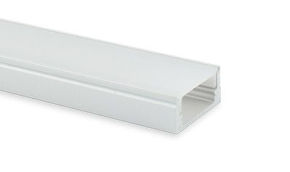
- recessed and surface mounted LED profiles: available in dozens of cuts and finishes (white, black, aluminum). We also supply them made to measure to adapt perfectly to your existing ceiling lights;
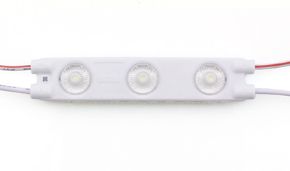
- high efficiency LED strips: with COB or SMD chips, with density up to 240 LED/m and CRI >90 for those with high color rendering needs (showrooms, laboratories, shops). Available in reels of 5 or 10 meters, cuttable every 1/2/5 cm to adapt to any space;
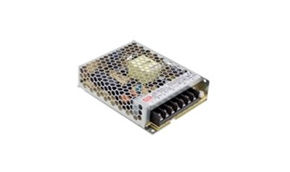
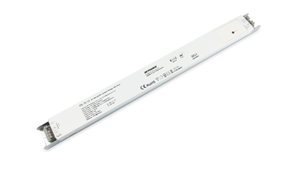
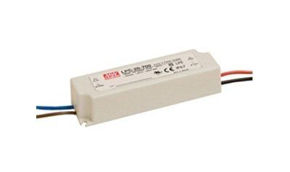
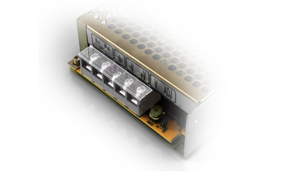
- quality drivers and power supplies: we work only with certified power supplies with protections against overloads and flicker.
Technical support: we follow you step by step
What differentiates us from the usual online stores is the technical assistance we offer. Specifically, we help you to:
- select the right product based on the environment (height, temperature, exposure to dust or humidity), the type of existing fitting (E27, GU10, G13, etc.) and the desired color temperature (2700K warm, 4000K neutral, 6500K cold);
- calculate the number of profiles needed and the optimal arrangement to obtain the lux required by the UNI 12464-1 regulation without waste;
- verify compatibility with existing systems: many relamping interventions go into difficulty because old transformers do not communicate well with LEDs. We suggest what can be kept and what not;
- provide samples before the final order. If you have to illuminate 1000 sqm of office, it makes sense to try a profile first to see if the result satisfies you. N
Why custom cut is fundamental in relamping
One of the characteristics you appreciate most about our profiles is the possibility of having them cut to measure. In relamping, you often find yourself having to insert the profile inside an existing ceiling light with precise and non-standard dimensions. If a standard 1200 mm profile arrives but your ceiling light is 1185 mm, you are in trouble. With us you order the exact length (within the millimeter) and the profile arrives ready, with caps mounted and holes for fixing if necessary.
We also supply:
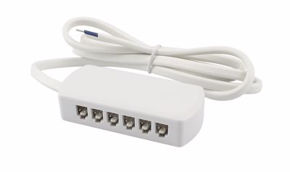
- solderless connectors to join multiple profiles in series or to derive power;
- opaque, satin or transparent diffusers depending on the desired effect and the need to shield the LED chips or not.
How to start?
If you are reading this article and have in mind a relamping project - whether it's an office, a warehouse, a restaurant or your cellar - the first step is to contact us. We will be happy to prepare a detailed quote (without obligation) with the right products, the necessary cuts and delivery times.
Because LED relamping is not just a matter of numbers and savings: it is also a matter of light quality, visual well-being and environments that are more beautiful to live in.