






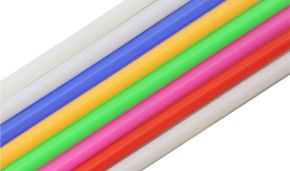
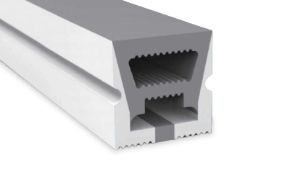
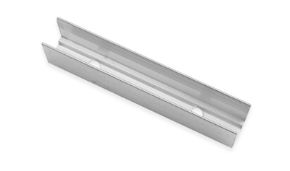
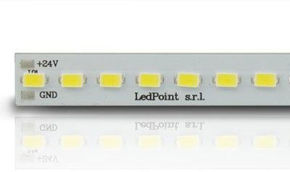
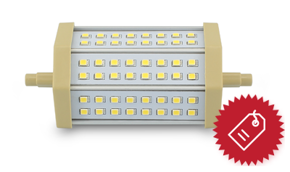
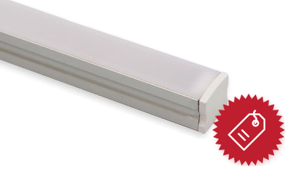
Led dots: low density for scenic effects
Led points: the dotted pattern as an aesthetic and design choice
There is a precise moment in the history of LED lighting when technology stopped being merely a response to efficiency and began to become an aesthetic language. That moment coincides with the awareness that LED points, the individual visible emitters along a strip, were not a problem to solve, but rather a resource to be valued. For years, the lighting industry worked in the opposite direction: increasing density, adding optimized diffusers, multiplying the number of chips to achieve that homogeneous, continuous, uninterrupted line of light that seemed to be the ultimate goal. And in many cases, that continuity is indeed what is needed, but this is not always true, not in all spaces.
The history of art, architecture, and design teaches us that emptiness is as important as fullness, and that discontinuity, point-like repetition, and the rhythm of intervals can generate visual tension of extraordinary power. The pointillism of Georges Seurat was not a technical error, but a philosophical choice about the perception of color and form. Similarly, a lighting designer who deliberately chooses low-density LED points is not renouncing quality: they are asserting an aesthetic, drawing a boundary between the functional and the poetic, between technical lighting and lighting as a sensory experience.
In the following pages, you will find a complete and in-depth guide that starts from the technical fundamentals of LED points and their density, explores the characteristics of aluminum profiles and their optical interactions with LED strips, examines applications in different contexts (residential, commercial, architectural, hospitality), and concludes by outlining the most recent market trends, industry statistics, and forecasts for the coming years.
Why talk about led points today
The interest in LED points as an autonomous aesthetic element is neither casual nor fleeting. It fits into a broader context of re-evaluation of handmade craftsmanship, visual artisanship, and texture in contemporary design. After years of extreme minimalism and perfectly smooth surfaces, the world of design (from architecture to product design, from interior design to graphics) is rediscovering the value of grain, rhythm, and modular repetition. Low-density LED points fit perfectly into this cultural current: they are luminous textures, rhythmic patterns, elements that restore an almost tactile quality to lighting.
At the same time, the growing diffusion of smart lighting systems, the ability to program animated sequences, vary color temperature, and create dynamic effects through digital control of individual segments, has opened new expressive frontiers. A starry ceiling created with low-density LED points can be static like a painted night sky, or pulse gently as if the stars were breathing, or even simulate the passage of clouds or the dance of aurora borealis lights. Technical and creative possibilities multiply exponentially, and this article aims to be a tool for exploring them methodically.
What are led points
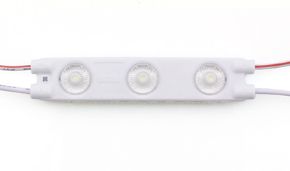
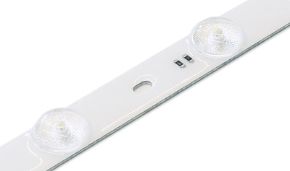
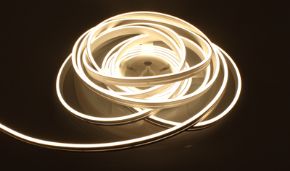
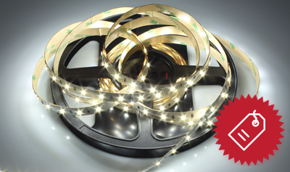
To fully understand the phenomenon of LED points and their aesthetic value, it is essential to start with a technical understanding of the structure of an LED strip. An LED strip (also called LED tape, LED ribbon, or flexible LED) is fundamentally a flexible polyester or polycarbonate substrate on which small semiconductor light-emitting devices are soldered at regular intervals: LEDs (Light Emitting Diodes). Each individual LED mounted on the strip is an LED point: a point-like light source, characterized by concentrated and directional light emission.
The geometry of this arrangement (the number of LED points per meter, their size, their spacing, the type of chip used) determines decisively the final visual appearance of the installation. Understanding these parameters is the foundation of every conscious design choice regarding LED lighting.
The physical structure of an led strip
A typical LED strip is composed of the following fundamental elements, each of which influences the performance and appearance of the final product:
The flexible substrate (PCB): the base of the LED strip is a flexible printed circuit board (PCB) made of polyester material or, in higher-quality versions, polyimide (Kapton). The PCB has thicknesses typically ranging from 0.1 to 0.3 mm and standard widths of 8 mm, 10 mm, 12 mm, or 14 mm, although custom versions exist. The PCB houses the copper traces that conduct electric current to the individual LEDs and resistive components. The quality of the PCB influences thermal dissipation, flexibility over time, and the overall lifespan of the product.
Led chips: The individual light emitters, the actual LED points, are small SMD (Surface Mounted Device) components soldered directly onto the PCB. LED chip dimensions are indicated with a numerical code describing their width and length in tenths of millimeters: the most common formats are 2835 (2.8×3.5 mm), 3528 (3.5×2.8 mm), 5050 (5.0×5.0 mm), 5630 (5.6×3.0 mm), and, increasingly common in premium applications, flip-chip versions like 2216 and COB (Chip-On-Board) where multiple chips are grouped in a single package. The chip format directly determines the visual size of the individual LED point.
Resistors: in series with each group of LEDs (generally 3 LEDs in series form an independent segment) there is a resistor that limits current and protects the chips from overvoltage. Resistors are also visible on the strip as small rectangular components and contribute to the overall visual appearance.
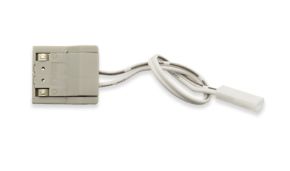
Connectors and cut zones: every LED strip features, at regular intervals, cut zones marked by a line and gold-plated contacts. These points allow shortening the strip to the desired length without damaging the circuit. The interval between cut zones determines the granularity of length adaptation to the project.
The life cycle of an led point
From a physical standpoint, each LED point is a p-n junction of semiconductor material that, when traversed by electric current, emits photons. The wavelength of the emitted photons (and therefore the color of the light) depends on the semiconductor material used: indium gallium nitride (InGaN) for blue and green wavelengths, aluminum-gallium-indium phosphides (AlGaInP) for red and orange. White LEDs are almost always blue LEDs coated with a layer of yellow phosphor that converts part of the blue radiation into yellow light, producing white light through chromatic mixing whose tone depends on the phosphor composition.
The lifespan of an led point, expressed in operating hours, typically varies from 25,000 to over 100,000 hours depending on chip quality, thermal management, and operating conditions. The L70 parameter indicates the number of hours after which the luminous flux has dropped to 70% of its initial value: this is the standard metric for LED lifespan and allows objective comparison of different products.
Technical terminology for led points
In the technical language of LED lighting, led points are described through a set of parameters that every designer should know. The following table summarizes the main ones:
| Parameter | Description | Unit of measurement | Typical values |
|---|---|---|---|
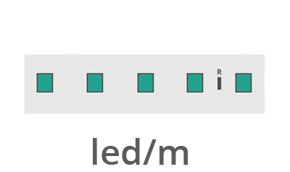
| Led density | Number of LED chips per linear meter of strip | LEDs/m | 30 / 60 / 120 / 240 LEDs/m |
| Led pitch | Center-to-center distance between two adjacent LEDs | mm | 8 / 16 / 25 / 33 mm |
| Chip format | Physical size of the SMD chip | — | 2835 / 3528 / 5050 / 5630 / COB |
| Flux per led | Luminous flux emitted by the single chip | lm/chip | 5 – 200 lm/chip |
| Operating voltage | Supply voltage of the strip | V DC | 12 V / 24 V / 48 V |
| Specific consumption | Power absorbed per linear meter | W/m | 4 – 30 W/m |
| Emission angle | Angle of the light cone emitted by the single chip | ° | 100° – 180° |
| CRI | Color Rendering Index | Ra | 70 – 98+ Ra |
| Color temperature | Tone of white light | K | 2200 K – 6500 K |
How the chip influences led point visibility
Not all LED points are equally visible. The visibility of each individual point depends on a series of factors that interact in complex ways. The primary factor is the chip size: an SMD 5050 chip (5×5 mm) is much more visible as an individual point compared to a 2835 chip (2.8×3.5 mm), at the same viewing distance. This has direct implications for the dotted effect: strips with 5050 chips tend to produce a more pronounced and plastically present dotted pattern, while those with 2835 or 2216 chips give a finer, more graphic dotted effect.
The second factor is the luminous flux of the individual chip: the brighter an LED point is, the more visible it becomes at a distance and the more the contrast with the dark interval between one point and the next is accentuated. A 30 LEDs/m strip with high-flux chips will produce a much more dramatic and theatrical dotted effect compared to a strip with the same density but low-flux chips. Finally, color temperature influences the visual perception of the dotted pattern: warm white light (2700-3000 K) tends to make LED points more enveloping and amber, almost like little stars of fire, while cool white light (5000-6500 K) accentuates the geometric sharpness of the dotted pattern, making it more graphic and contemporary.
Led density: technical parameter and aesthetic tool
The density of LED points per meter is perhaps the single most important parameter in determining the visual appearance of an LED strip installation. Understanding this parameter in all its implications (technical, optical, aesthetic, and applicative) is fundamental for anyone who wants to work professionally with LED lighting. Density is not an abstract number: it is a design choice that translates directly into a visual experience, and as such should be treated with the same attention that an architect dedicates to material selection or a musician to the tempo of a piece.
In this chapter, we will explore in detail the concept of LED density, its effects on light quality, the scales available on the market, and the relationships between density, energy consumption, color rendering, and product lifespan. We will also provide comparative data, reference tables, and practical indications for selecting the density most suitable for each project.
Definition and measurement of led density
The LED density of a strip is defined as the number of LED chips (or the number of emitting components, in the case of COB strips) present per linear meter of product. The standard measurement is LEDs/m (LEDs per meter). In strips with multiple LEDs per segment, such as those with RGB or RGBW chips that combine multiple dies in a single package, the complete package is considered as the unit, not the number of individual dies. Therefore, a 60 LEDs/m strip with 5050 RGB chips has 60 packages per meter, but 180 dies (3 per package).
The LED pitch, i.e., the center-to-center distance between two adjacent LEDs, is the complementary measurement to density: if the density is 60 LEDs/m, the pitch is 1000 mm / 60 = 16.67 mm ≈ 16.7 mm. The relationship is direct and inverse: doubling the density halves the pitch, and vice versa.
The density scale: from ultra-low to ultra-high
The market today offers LED strips in an extremely wide range of densities, ranging from just 14-18 LEDs/m for purely low-density scenic lighting applications to over 700-1200 LEDs/m for latest-generation COB (Chip On Board) strips. The following table categorizes the main density classes with their characteristics and typical applications:
| Density class | Leds/m | Typical pitch | Visual effect | Typical applications | Indicative consumption |
|---|---|---|---|---|---|
| Ultra-low | 14 – 30 | 33 – 71 mm | Very pronounced dotted pattern, well-separated and distinct points | Starry effects, theatrical decorative lighting, scenography | 2 – 5 W/m |
| Low | 30 – 60 | 16 – 33 mm | Visible dotted pattern, regular rhythm, individual points distinguishable at close range | Architectural frames, step lighting, decorative signage | 4 – 9 W/m |
| Medium | 60 – 120 | 8 – 16 mm | Dotted pattern perceptible up close, almost continuous at normal distance | Functional lighting with aesthetics, indoor profiles, luminous accents | 8 – 16 W/m |
| High | 120 – 240 | 4 – 8 mm | Almost continuous light, dotted pattern visible only from very close | Accent lighting, backlighting, under-shelf | 15 – 25 W/m |
| Ultra-high / COB | 240 – 1200+ | < 4 mm | Completely continuous light, no visible dotted pattern | High-quality lighting, medical applications, photography | 10 – 30+ W/m |
The perceptual threshold of the dotted pattern
One of the most interesting and least discussed aspects in technical literature on LED lighting is the perceptual threshold of the dotted pattern: the viewing distance below which the individual LED point becomes distinguishable as a separate entity, creating the dotted effect, and above which the points perceptually blend into a continuous line of light. This threshold depends on many factors: point density, their brightness, contrast with the background, ambient lighting conditions, and the observer's visual acuity.
Under normal ambient lighting conditions and for an observer with normal vision, very useful practical approximations can be established. With a 30 LEDs/m strip (33 mm pitch), individual LED points are distinguishable as separate entities at viewing distances up to approximately 3-4 meters. With a density of 60 LEDs/m (16.7 mm pitch), the threshold lowers to approximately 1.5-2 meters. With 120 LEDs/m (8.3 mm pitch), the dotted pattern is visible only from distances less than approximately 0.5-0.8 m. These values are indicative and vary depending on chip brightness and background contrast, but they provide a very useful starting point for design decisions.
Density and energy consumption
The relationship between LED density and energy consumption is neither linear nor trivial, but it presents some important regularities that every designer should keep in mind. As a first approximation, with the same chip used, doubling the density tends to double the consumption per meter. However, in practice this relationship is modulated by other factors: the operating voltage (12V, 24V, 48V), the drive current of each individual LED, the number of LEDs connected in series per segment, and the losses in current-limiting resistors.
Low-density strips, which produce the scenic LED point effects we are exploring, are generally very energy-efficient: a consumption of 4-6 W/m is typical for 30-40 LEDs/m strips with quality chips, which means it is possible to illuminate large surfaces with modest energy impact. This is a significant advantage in many architectural and scenographic applications, where installation continuity is important but the maximum load on power supplies must remain within reasonable limits.
| Density (Leds/m) | Pitch (mm) | Typical 12V consumption (W/m) | Typical 24V consumption (W/m) | Typical flux (lm/m) | Typical efficiency (lm/W) |
|---|---|---|---|---|---|
| 30 | 33.3 | 3.6 – 4.8 | 3.6 – 5.0 | 200 – 450 | 70 – 100 |
| 60 | 16.7 | 7.2 – 9.6 | 7.2 – 10.0 | 450 – 900 | 75 – 110 |
| 120 | 8.3 | 14.4 – 19.2 | 14.4 – 20.0 | 900 – 1800 | 80 – 120 |
| 240 | 4.2 | 24 – 36 | 24 – 36 | 1800 – 3600 | 85 – 130 |
| COB 320+ | < 3 | 10 – 28 | 10 – 28 | 1200 – 4000 | 100 – 160 |
Density and light quality
A fundamental aspect, often overlooked in generalist guides, concerns the relationship between LED point density and the quality of emitted light. Light quality in an LED installation is determined by several factors: color rendering (CRI), consistency of color temperature, uniformity of light distribution, absence of flicker, and dimming dynamic range. Not all these factors are influenced by density in the same way.
Color rendering (CRI) is a property of the individual LED chip and does not depend on strip density: a 30 LEDs/m strip with CRI 95 chips will have the same chromatic quality as a 120 LEDs/m strip with the same type of chip. Uniformity of light distribution, however, is strictly linked to density: at low density, each LED point projects a small independent cone of light, and the flux distribution on the illuminated surface is irregular, with intensity peaks at each LED and shadow zones in the intervals. This is exactly the effect we seek when we want scenic dotted patterns; it becomes a problem instead if the goal is uniform illumination of a work surface.
The dotted effect: origins, visual perception and applications
The dotted effect of LED points is much more than a simple consequence of low density: it is a visual phenomenon with its own psychology, aesthetics, and history. To truly understand it, it is useful to take a step back and consider how the human eye perceives point-like light sources, what the relationship is between distance, size, and brightness in visual perception, and how this understanding translates into conscious design choices. The perception of the dotted effect is a phenomenon that involves both the physics of optics and the neurology of vision, and understanding both dimensions is fundamental to mastering this expressive tool.
The visual psychology of the luminous point
The isolated luminous point on a dark background is one of the most powerful visual stimuli that exists. Evolution has endowed us with a visual system extraordinarily sensitive to points of light in the dark—just think of the adaptive importance of the ability to see stars, fire, the eyes of nocturnal animals. This ancestral sensitivity translates into an immediate and profound emotional response to the presence of LED points in darkness: activation, attention, a sense of mystery and wonder. It is the same reason why Christmas lights, candles, fireworks, and starry skies exert such a universal and persistent fascination on us.
From the standpoint of perception psychology, the luminous point activates pattern recognition mechanisms: the mind spontaneously tends to connect points into figures, to perceive rhythms and sequences, to construct visual narratives. A ceiling with low-density LED points arranged randomly immediately evokes the starry sky; a linear sequence of points recalls perspective and the path; a geometric pattern of points suggests order and structure. These associations are involuntary and instantaneous, and the lighting designer who works with LED points thus has a powerful archetypal language with which to communicate.
The halation phenomenon and the luminous diffusion around the point
One of the most characteristic optical effects of high-brightness LED points on a dark background is the phenomenon of halation, or luminous halo, which forms around each single point. This phenomenon results from a combination of optical factors: light diffraction through the eye's crystalline lens, the non-linear response of photoreceptors in high-contrast luminous conditions, and light diffusion in the cornea and vitreous. Halation perceptually amplifies the dimensions of each LED point, creating around it a soft halo that gradually fades into the surrounding darkness. This effect is maximized when the strip is installed on an opaque, dark background, with very low ambient lighting.
Managing halation is an important compositional element in installations with scenic LED points. A wide, soft halo will give a romantic and dreamy character to the installation while a dry point without halo (obtained for example with small chips and an opaque surrounding surface) will give a more graphic and contemporary character. The choice of LED profile (particularly its internal surface, its color, and the presence or absence of a cover) directly influences this aspect.
Luminous pointillism: the lesson from art
It is no coincidence that the dotted effect of LED points immediately recalls the painterly pointillism of the late nineteenth century. Georges Seurat, Paul Signac and their contemporaries had discovered that by juxtaposing small touches of pure color, rather than mixing them directly on the canvas, one obtained a luminosity and chromatic vibration impossible to achieve with traditional painting. The optical, rather than physical, mixing of pure colors produced extraordinarily vibrant light effects. The same principle, translated into the language of LED lighting, suggests that discrete, spaced, pure LED points in their singularity can produce more vivid, more dynamic, and more memorable light effects than continuous, homogeneous light.
This analogy with pointillism is more than a metaphor: it is an operational guide. Just as Seurat calculated the optimal viewing distance for his work to achieve the desired chromatic fusion, the LED lighting designer with low-density LED points must calculate the intended viewing distance to determine the optimal density that will produce the desired effect. At close range the points remain distinct and the rhythm of the dotted pattern is fully visible while at greater distances the points tend to blend, and perception shifts from analysis of the individual point to experience of the luminous composition as a whole.
Dotted effect in motion: animation of led points
One of the most fascinating properties of low-density LED points, especially when controlled by digital systems, is their capacity to produce high-impact animated visual effects. When each single point can be controlled individually, as in addressable LED strips that use integrated chips like WS2812B, SK6812, or WS2815, the dotted pattern becomes a matrix of luminous pixels that can animate following any programmed sequence. The result is similar to that of a low-resolution display, but with a material quality and physical presence that no digital screen can replicate.
The most effective animations with LED points are those that respect and valorize the point-like nature of the source. Twinkling effects, where each point turns on and off with random frequency and phase, produce the visual effect of a starry sky or the surface of water reflecting light. Wave effects, where illumination propagates along the strip like a progressive wave, create a sense of movement and flow that can be horizontal, vertical, or in any direction. Breathing effects, where all points attenuate and amplify in sync, give installations an almost biological quality, as if they were living entities that breathe.
Low-density led: when less is truly more
The paradox of low LED density is one of the most elegant in the entire field of lighting: by reducing the number of LED points per meter, one does not reduce the visual impact of the installation — on the contrary, one often increases it. This paradoxical inverse relationship between quantity of sources and power of the scenic effect is at the heart of design with low-density LED strips, and deserves in-depth exploration. Understanding why fewer LED points produce more visual impact under certain conditions means understanding something fundamental about perception psychology, the role of visual silence in composition, and the aesthetics of imperfection as a conscious choice.
Visual silence and the tension of intervals
In music, silence is not the absence of music: it is an integral part of the composition, it is the breath that gives meaning to the notes, the void that creates anticipation and tension. The same principle applies to luminous composition with low-density LED points. The dark interval between one point and the next is not a defect, not a void to fill: it is visual silence, it is compositional tension, it is the breath of the installation. Without that silence, the LED point loses its identity and becomes just a segment of a continuous line. With that silence, the LED point exists as an autonomous entity, has defined boundaries, has a before and an after, and its presence in space becomes an event.
This principle of interval tension is well known in dance, visual arts, and architecture, where fullness and emptiness define each other in a continuous dialectic. Applied to LED points, this principle suggests that low density is not a renunciation of continuity but the deliberate choice to create a rhythmic composition, where the time between points is as important as the points themselves.
Effects of depth and three-dimensionality
One of the most surprising properties of low-density LED points is their ability to create effects of depth and three-dimensionality on flat surfaces. When a low-density LED strip is installed in a profile recessed into a wall or ceiling, and one looks at the installation from a certain distance, the individual LED points do not appear as points on a two-dimensional surface: they appear as objects floating in space, suspended in an indefinite depth. This effect is particularly marked when the points are very bright and the background against which they are seen is completely dark, as in nighttime illumination of a black wall or an artificial sky.
The physical phenomenon underlying this three-dimensional effect is complex and involves several perceptual mechanisms: the lack of scale references and visual context around each point (which makes it impossible for the brain to place it with certainty on a surface), the differentiated response of the visual system to point-like sources compared to extended sources, and the activation of night sky recognition mechanisms (for which the brain automatically presupposes an enormous distance, incomparably greater than the real one). The perceptual result is a sort of pleasant spatial vertigo: space seems to expand, the physical boundaries of the room dissolve, and the observer has the sensation of looking out onto an infinite volume.
Quantitative comparison: low vs. high density
To make the difference between low- and high-density LED strips more concrete in terms of scenic visual impact, we present below a quantitative comparison on several key parameters:
| Parameter | 30 leds/m strip (low density) | 60 leds/m strip (medium density) | 120 leds/m strip (high density) | COB strip 320 leds/m |
|---|---|---|---|---|
| Dotted effect | Very pronounced, distinct points up to 4m | Visible from 0-2m, almost continuous at 2-3m | Only from <50cm, continuous at normal distance | No dotted pattern, completely continuous line |
| Scenic impact | ★★★★★ Maximum | ★★★★☆ High | ★★★☆☆ Medium | ★★☆☆☆ Low (maximum uniformity) |
| Lighting uniformity | ★☆☆☆☆ Very low (intended effect) | ★★★☆☆ Medium | ★★★★☆ High | ★★★★★ Maximum |
| Energy efficiency | ★★★★★ Maximum (min W/m) | ★★★★☆ High | ★★★☆☆ Medium | ★★★★☆ High (efficient chips) |
| Dynamic effects/animations | ★★★★★ Maximum impact | ★★★★☆ High | ★★★☆☆ Medium | ★★☆☆☆ Low (no dotted pattern) |
| Adaptability to diffuser cover | ★★☆☆☆ Low (cover cancels effect) | ★★★☆☆ Medium | ★★★★☆ High | ★★★★★ Maximum |
| Cost | ★★★★★ Very low | ★★★★☆ Low | ★★★☆☆ Medium | ★★★☆☆ Medium-high |
Case studies: low density in emblematic projects
To concretely illustrate the scenic power of low-density LED points, it is useful to analyze some types of application that have made exemplary use of them. Although for reasons of brevity we cannot here analyze specific projects with proprietary data, we can describe recurring typologies that illustrate the principles at play.
The starry ceiling in a luxury lounge: in many bars, restaurants, and upper-category hotels, the ceiling is transformed into an artificial firmament using hundreds of optical fiber strands or, more economically and with greater flexibility, ultra-low-density LED strips (14-30 LEDs/m) installed in a three-dimensional grid frame. The individual LED points, distributed with variable pitch and orientation to simulate the randomness of real stars, create a visual experience of extraordinary emotional power: space dilates, the ceiling disappears, clients feel immersed in a cosmic environment. This type of installation would be impossible with high-density strips, which would produce lines of light rather than isolated points.
Perimeter lighting of stairs in a luxury residential building: in prestigious palaces and villas, stairs are often enhanced with low-density LED points installed in thin profiles embedded in the steps or handrails. The effect is that of a vertical constellation that unfolds through the floors, guiding the path with discreet elegance. Low density is here an aesthetic and functional choice: one does not want to illuminate the stairs as if they were a hospital corridor, but to signal their presence and enhance their geometry with suggestive, directional light.
Led profiles: the container that transforms the point into a scene
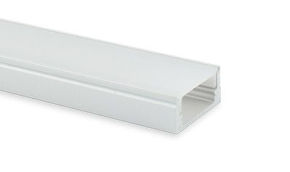
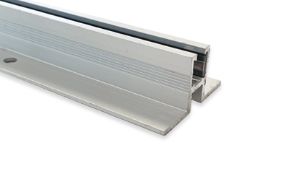
If LED points are the starring actors of scenic lighting, aluminum profiles are the stage on which they perform. The choice of profile is not a secondary or purely technical detail: it is a primary design decision that decisively influences the final appearance of the installation, the quality of emitted light, the durability of the system, and the ease of installation and maintenance. A bright LED point in the wrong profile can yield a poor result; the same point in an intelligently chosen profile can produce a high-impact scenic effect. Understanding the logic of LED profiles, their variety, their optical and mechanical properties, is therefore fundamental to fully exploiting the potential of LED points.
In this chapter we will explore in detail the world of LED profiles: their physical structure, available typologies, material and cover properties, rules for correctly matching profile and LED strip according to the desired effect.
Functions of the led profile
The LED profile fulfills a series of functions that go well beyond simple mechanical containment of the strip. Here are the main functions of a quality LED profile:
Thermal dissipation: heat is the primary enemy of LED lifespan. LED strips, even low-density ones, generate heat that must be dissipated effectively to ensure long chip life and stable color temperature. Aluminum profiles (material with excellent thermal conductivity, approximately 150-200 W/(m·K) for common alloys) act as heat sinks, conducting heat from the strip to the external environment. Adequate profile thickness, good thermal contact between strip and profile base (facilitated by thermal double-sided tape), and adequate heat exchange surface are fundamental for this function.
Mechanical protection: the LED strip is a relatively fragile component: it can be damaged by impacts, dust, humidity, repeated handling. The profile protects it from all these agents, ensuring installation durability over time. In recessed installations (in wall, floor, furniture), the profile also offers structural protection against substrate deformations.
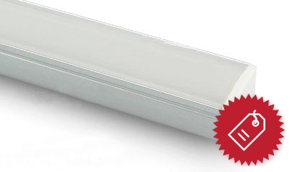
Optical modulation: this is the most relevant function for our discussion on scenic LED points. The profile (through its internal geometry, its surface color, the presence or absence of covers, and the optical properties of these covers) decisively modulates the light emitted by the strip. It can amplify the dotted effect (white profile with transparent cover or without cover), attenuate or completely eliminate it (profile with highly diffusing cover), vary its angular distribution, modify its perceived color temperature. Knowing these optical interactions is fundamental to selecting the right profile for each application.
Aesthetic quality and finish: the profile is the visible part of the installation: it is what the end user sees when looking at the installation point. The quality of the finish, the color, the edge geometry, the perfect linearity of the profile are elements that determine the perceived quality level of the entire installation. A high-quality anodized aluminum profile with precise finishes and clean edges communicates professionalism and attention to detail; a poor-quality profile, with imprecise alignments and rough finishes, devalues even the best installation work.
Led profile materials: aluminum and beyond
The vast majority of professional LED profiles are made of aluminum, and for excellent reasons. Aluminum combines a series of properties difficult to replicate in other materials: lightness (density approximately 2.7 g/cm³), excellent thermal conductivity, high corrosion resistance thanks to the natural surface layer of aluminum oxide that forms, ease of extrusion into profiles with complex geometry, and possibility of being anodized in a very wide range of colors and finishes.
Aluminum profiles for LED strips are normally produced by extrusion: molten aluminum is forced through a die that gives it the desired shape. This process allows obtaining profiles with very precise and complex geometries (grooves, channels, cooling fins, cover guides) with theoretically unlimited length. Profiles are then cut to standard commercial lengths (typically 1 meter, 2 meters, or 3 meters) and surface-treated.
The most common and prestigious surface finish is anodization: an electrochemical process that increases the thickness of the aluminum oxide layer on the surface, making it harder, more corrosion-resistant, and stably colored (pigments are trapped in the oxide layer). The most common anodization colors for LED profiles are natural (silver), black, bronze, and gold, but special colors are also available. Natural silver anodization reflects well the light emitted by the strip, helping to maximize useful flux and amplify the visibility of individual LED points.
Beyond aluminum, profiles in other materials exist: stainless steel for premium applications in aggressive environments, flexible PVC for installations on curved surfaces, transparent polycarbonate for decorative applications. However, for professional installations with scenic LED points, anodized aluminum profile remains the standard reference choice.
Types of led profiles for the dotted effect
The LED profile market is extremely varied, with hundreds of different models for geometry, size, intended use, and optical characteristics. To navigate this landscape, and to select the profile most suitable for enhancing scenic LED point effects, it is useful to organize profiles into functional categories based on their geometry and installation method.
Recessed wall and ceiling profiles
Recessed profiles are designed to be inserted into a groove cut into the wall, ceiling, floor, or any other architectural element. Recessing ensures a clean, integrated finish, where the profile becomes part of the surface on which it is installed. This typology is particularly effective for the scenic LED point effect, because it allows creating situations where the LED strip is not visible as an added element, but seems to emerge from the very matter of the architecture.
Standard recessed profiles have a width of 12-18 mm and a depth of 6-12 mm. Ultra-thin (narrow) versions also exist with widths of 8-10 mm, ideal for minimal grooves in premium finishes. For the dotted effect, recessed profiles are particularly effective if installed without a cover or with a smooth transparent cover, leaving full visibility to the individual LED points. The wall or ceiling surrounding the profile serves as a dark background (especially in black or anthracite finishes) that maximizes contrast with the luminous points.
Surface-mounted profiles (flat, angular, corner)
Surface-mounted profiles are applied directly to the installation surface without requiring grooves. They are the most versatile and easiest-to-install solution, and adapt to any situation where creating a groove is impossible or undesirable. For scenic LED point effects, surface-mounted profiles present some important optical characteristics to evaluate: the color of the profile's internal surface (white or natural reflects more light, black absorbs it), the shape of the cross-section (flat, angular, teardrop), and the mounting method (double-sided tape, screws, magnets).
Angular profiles at 45° or 90° (also called corner or angular) are particularly interesting for the dotted effect because they orient the LED strip toward the corner of a structure, typically the junction between wall and ceiling, or between two planes and the LED points become visible simultaneously from two directions, amplifying the perception of the dotted rhythm. Angular profiles are widely used in kitchens, wardrobes, and illuminated bookcases, where the dotted effect adds a touch of refinement to structural edges.
Floor and step profiles
Floor and step profiles represent a specialized category with very specific requirements: they must withstand foot traffic, water cleaning, and often must comply with anti-slip regulations. Despite these constraints, even these profiles can be used for scenic effects with low-density LED points, particularly in installations that simulate luminous paths, edges of starry steps, or discreetly elegantly signaled pathways.
The main characteristic of floor profiles is the cover: almost always in tempered glass or anti-slip treated PMMA, with a minimum thickness of 6-8 mm to withstand loads. The cover is necessarily more robust than that of wall profiles, which tends to slightly reduce the vivacity of LED points; however, by choosing high-transmission transparent covers, a good level of dotted pattern visibility can be maintained even in these applications.
False ceiling and suspended system profiles
Profiles for false ceilings and suspended systems are designed to be integrated into the supporting structures of false ceilings (drywall, metal slats, acoustic panels) or to be hung with cables or hangers. In these contexts, the low-density LED point effect is particularly powerful: the ceiling becomes a constellation, an artificial firmament, that radically transforms the perception of space. Hotels, restaurants, conference halls, luxury showrooms—all these environments benefit enormously from a ceiling animated by low-density LED points.
For false ceilings, the most used profiles are recessed ones (flanged or unflanged), but there are also specific systems with multiple guides that allow installing several parallel LED strips with precise spacing, creating geometric patterns of great precision.
Linear suspended profiles (pendant)
Linear suspended profiles, also called pendant or linear suspensions, are profiles hung from the ceiling with cables or hangers, normally oriented downward to illuminate the work plane below. In versions with emission also upward (bi-emission or up-down profiles), they can illuminate simultaneously downward and upward, creating an indirect light effect on the ceiling. For scenic LED point effects, pendant profiles with upward light are very interesting: the individual LED points looking upward project small cones of light that overlap and blend on the ceiling, creating a pattern of light alternating with shadow of great atmospheric effect.
Comparative table of profile types for dotted effect
| Profile type | Led point visibility | Scenic impact | Installation difficulty | Ideal applications | Notes |
|---|---|---|---|---|---|
| Recessed without cover | Maximum | ★★★★★ | Medium (requires groove) | False ceilings, frames, walkable surfaces | Maximum dotted pattern visibility |
| Recessed with transparent cover | High | ★★★★☆ | Medium | Walls, ceilings, furniture | Protects strip while maintaining visibility |
| Surface angular (corner) | High, from two directions | ★★★★☆ | Low | Corners, wall-ceiling junctions | Dotted pattern visible on two planes |
| Recessed with opalescent cover | Medium (soft points) | ★★★☆☆ | Medium | Residential environments, offices | Soft dotted pattern, "soft" lights |
| Floor (walkable) | Medium | ★★★☆☆ | High (requires structure) | Steps, floors, pathways | Robust cover slightly limits effect |
| Pendant bi-emission | High (upward light) | ★★★★☆ | Medium | Meeting rooms, restaurants, offices | Dotted effect projected on ceiling |
| Without profile (bare strip) | Maximum | ★★★★★ | Low | Temporary scenography, behind decorative elements | No protection, limited use |
Materials, finishes, and led profile covers
The cover of an LED profile is the element that more than any other determines the final visual effect of LED points. It is the window through which light exits the profile toward the space, and its optical properties (transmissivity, diffusivity, color, thickness) decisively modulate what is seen and how it is seen. In designing installations with scenic low-density LED points, cover choice is a critical decision that requires deep understanding of available options and their optical implications. Too often this choice is made automatically or superficially, ignoring the enormous performance differences separating one cover from another.
Smooth transparent cover: maximum point visibility
The smooth transparent PMMA (polymethyl methacrylate, commonly known as Plexiglas or Perspex) cover is the optimal choice for those who want to maximize visibility of individual LED points and fully exploit the scenic dotted effect. With luminous transmissivity exceeding 92%, this type of cover does not significantly alter either the brightness or the visual appearance of LED points: each chip remains visible in its natural shape and size, with sharp edges and intact brightness. The only effect of the transparent cover is a slight reflection of ambient light on its surface (the "showcase" effect) which can be reduced with anti-reflective treatments.
From a practical standpoint, the transparent cover is recommended in all applications where the dotted effect is the very reason for the installation: starry ceilings, decorative frames, step lighting with galaxy effect, luminous borders with dotted rhythm. In these applications, any other type of cover would reduce the visual impact. The transparent cover is available in smooth (flat) or rounded (dome) version, and the latter tends to slightly amplify the visual perception of each LED point through a lens effect.
Opalescent cover: from dotted pattern to luminous veil
The opalescent milky white PMMA cover is the most used in functional LED strip lighting installations. Its characteristic property is diffusivity: instead of transmitting light directly from the chip to the exterior, it diffuses it in all directions, creating an apparently homogeneous luminous surface. This has the effect of almost completely canceling the LED point effect: instead of seeing individual points, one sees a strip of continuous, uniform, and soft light, whose appearance is practically independent of the density of the underlying strip.
The opalescent cover thus has the opposite effect to that desired for scenic lighting with low-density LED points: it is not a tool for valorizing the dotted pattern, but for hiding it. This does not mean it is inferior (for many functional lighting applications it is the correct choice) but it means that for the purposes we are considering it should be categorically avoided when the objective is the scenic dotted effect. There is also a semi-opalescent version (light milk or frost) that partially diffuses light, making individual LED points less sharp but still visible as areas of maximum brightness: this is an interesting compromise for installations where one wants a soft and poetic dotted pattern rather than sharp and graphic.
The internal surface of the profile: color and reflectivity
Beyond the cover, the internal surface of the aluminum profile channel plays an important role in determining the final effect of LED points. A profile with white or silver internal surface reflects outward part of the light emitted laterally by the LED chips, increasing useful flux and creating around each LED point a halo of reflected light that perceptually amplifies its dimensions. This effect can be desirable or undesirable depending on the objective: if one wants a sharp and precise dotted pattern, it is better to use a profile with black or anthracite internal surface that absorbs lateral light while if one wants a softer and more enveloping dotted pattern the white internal surface is preferable.
Colored and filtering covers
There are covers in PMMA available in colored versions (red, blue, green, amber, and many other colors) that act as chromatic filters on the strip's light. This option is widely used in colored scenic lighting installations, in discos, nightclubs, artistic installations, and event design contexts. With high-CRI white LED points paired with a colored cover, one obtains an effect of intense and pure chromatic dotted pattern while with RGB or RGBW LED strips, the colored cover can be used to narrow the chromatic range toward a specific color or to subtly correct tones.
Colored covers are less common in residential and commercial architectural contexts, where flexibility of chromatic adjustment via controller is preferred. However, in permanent installations with a defined chromatic character (such as a blue corridor in a wellness center, or a gallery with amber lights to enhance wood finishes) colored covers offer a stable, economical, and high visual impact solution for the scenic LED point effect.
High-visibility led point strips: selection and parameters
Selecting the right LED strip to achieve the scenic LED point effect is a process that requires evaluating many parameters in an integrated manner. It is not enough to choose a low-density strip: one must evaluate chip size and type, flux per LED, operating voltage, color or color temperature, color rendering, compatibility with control systems, and not least the overall build quality of the product.
Led chips for maximum point visibility
Chip size is the primary factor determining visibility of the individual LED point. Larger physical size chips, such as 5050 (5×5 mm), produce visually large and well-distinct points while smaller chips like 2835 (2.8×3.5 mm) produce finer, more graphic points. For high-impact scenic applications, where one wants each LED point to be immediately recognizable as an individual entity, the 5050 chip is often the preferred choice. However, the 2835 chip offers generally superior flux per watt and a more precise point size, which may be preferred in contemporary design environments where one seeks a refined dotted pattern rather than a theatrical one.
A very interesting recent trend is the use of "filament" or "spider" LED chips—chips of elongated or cross shape—in scenic strips. These chips produce LED points of unusual shape, which can add a further element of visual interest to the installation. There are also "twinkle" chips with an integrated flicker element that produces a slight natural scintillation without requiring external controllers: ideal for applications with static starry sky effect.
Operating voltage: 12V, 24V, or 48V
The operating voltage of the LED strip influences several practical aspects of installation, but also has implications for the scenic LED point effect that are useful to understand. 12V DC strips generally connect groups of 3 LEDs in series, while 24V strips connect groups of 6 LEDs. This means that the minimum cut distance, i.e., the shortest segment into which the strip can be divided, is different in the two configurations: approximately 50 mm for 12V strips with 30 LEDs/m, and approximately 100 mm for 24V strips with the same density.
For low-density LED point applications, 24V strips offer an important practical advantage: lower voltage drop along the strip allows installing longer lengths from a single power point without loss of brightness uniformity. With 12V low-density strips, it is advisable not to exceed 5-7 m in length per power side while with 24V strips one can reach 10-15 m without problems. 48V strips, increasingly common in high-quality professional applications, allow even greater lengths (up to 20-25 m) and are particularly suitable for perimeter installations in large spaces where power points must be minimized.
Addressable led strips for dynamic led point effects
A separate chapter deserves addressable LED strips (or digital, or pixel strips), where each LED, or each group of LEDs, is controlled individually by an integrated chip. These strips, based on digital protocols like WS2812B, SK6812, WS2815, APA102, or the more recent DMX512 protocols on strips, allow creating animated effects with LED points of extraordinary complexity and refinement. Each point can have its own color, brightness, and animation phase, independently from all others.
For high-impact scenic applications with low-density LED points, addressable strips open possibilities that conventional strips cannot offer. One can program a "meteor" effect where a single luminous point travels along the strip at variable speed or a "breathing" effect where each point has a slightly different breathing phase, creating an impression of organic life, a "star storm" effect where dozens of points turn on and off in a random but coordinated manner.
CRI and light quality of led points
Color rendering (CRI or Ra) is a parameter describing the ability of a light source to faithfully render the colors of illuminated objects, compared to a reference source. For scenic LED point lighting, CRI is important especially when the points illuminate surfaces or objects whose chromatic qualities must be valorized (paintings, fabrics, natural materials, skin). For purely decorative installations where the point is the element of interest in itself (starry ceilings, decorative frames), CRI has relatively minor importance.
On the market there are LED strips with CRI ranging from 70 (acceptable for non-critical applications) to 98+ (exceptional, similar to natural light). High-quality 30-60 LEDs/m strips, those most suitable for the scenic effect we are describing, are also available in high-CRI versions (90-95) with selected chips, and represent an excellent choice for applications where one wants to combine the scenic dotted effect with art-quality lighting.
Led strip selection table for scenic led point effect
| Desired effect | Recommended density | Recommended chip | Voltage | Profile cover | CRI | Notes |
|---|---|---|---|---|---|---|
| Starry sky maximum impact | 14-30 LEDs/m | 5050 or Filament | 12V or 24V | None or transparent | 70-80 | Black background for maximum contrast |
| Elegant architectural dotted pattern | 30-60 LEDs/m | 2835 high efficiency | 24V | Smooth transparent | 90-95 | Black anodized recessed profile |
| Animated colored effect | 30-60 LEDs/m addressable | 5050 RGB / RGBW | 5V or 12V | Transparent or colored | N/A (RGB) | WS2812B or SK6812 for vivid color |
| Soft residential dotted pattern | 60 LEDs/m | 2835 high CRI | 24V | Semi-opalescent (frost) | 95+ | Warm tone 2700-3000K for atmosphere |
| Starry steps and floors | 30-60 LEDs/m IP65 | 2835 or 5050 | 24V | Transparent tempered glass | 80-90 | Certified walkable cover |
| Luminous art and installations | 14-30 LEDs/m addressable | WS2812B or APA102 | 5V | None or custom transparent | N/A | Pixel-by-pixel control |
Architectural applications of led points
Contemporary architecture has embraced LED points as an expressive tool with growing enthusiasm in recent years. From a purely functional tool (signaling edges, indicating paths, creating basic safety lighting levels), LED dotted patterns have conquered an increasingly central role in architectural composition proper, influencing perceived spatial proportions, modifying the dialectic between full and empty, creating narrative sequences through the building. This section explores in depth the main architectural applications of low-density LED points, with attention to the technical details that make them possible and the compositional principles that make them effective.
Illuminated architectural frames
The illuminated architectural frame is perhaps the most classic application of LED points in architecture. It involves lighting the edges of openings (doors, windows, niches), surfaces (panels, wardrobe doors, wall paneling), or structural elements (beams, pillars, architraves) with LED strips in linear profiles. When using a low-density strip with transparent cover profile, each opening or surface becomes a composition of LED points that underline its geometry with a precise dotted rhythm.
From a technical standpoint, illuminated frames require particular attention to corner junctions: how is the change of strip direction managed at frame turning points? The main solutions are three: cutting and joining with angular connectors (which can create discontinuity in the dotted pattern if not executed carefully), direct bending of the strip (possible only with flexible strips and for angles not less than approximately 90°), and the use of pre-assembled angular profiles with 45° or 90° joints. For an impeccable dotted effect on frames, it is recommended to calculate the position of LED points at turning points to ensure that the dotted rhythm is coherent on all sides of the frame.
Linear lighting of paths and corridors
In paths and corridors, lighting with low-density LED points serves both a practical and narrative function: it physically guides movement and at the same time creates a sensory experience that anticipates and accompanies the journey. The most effective installations are those that exploit perspective: a row of LED points extending in length, converging toward a vanishing point, creates a powerful sensation of depth and direction that instinctively invites advancement.
For corridors, the most used solutions are skirting board lighting (profiles recessed in the skirting with upward light grazing along the wall), ceiling edge lighting (perimeter profiles with downward light), and central floor lighting (floor profiles with walkable cover). In all cases, the choice of a low-density strip (30-60 LED points per meter) creates a visual rhythm that accompanies the user's step, almost like a luminous metronome.
External facades and architecture of darkness
Lighting building external facades with low-density LED points is a fascinating and relatively new theme, closely linked to the concept of "architecture of darkness": the design of built spaces in function of how they will appear at night, rather than (or in addition to) how they appear during the day. In this context, LED points are not only tools to make the building visible in the dark, but are compositional elements with which one redraws the perceived form of the facade, emphasizes structural geometries, creates recognizable landmarks in the urban landscape at night.
For external facades, LED strips with low-density LED points must be certified for outdoor use with IP65 or higher protection rating (IP67 for installations exposed to direct rain, IP68 for underwater installations). Profiles must be in aluminum with anodization treatment resistant to UV rays and thermal stresses of seasonal temperature variation.
Starry ceilings and planetariums
The starry ceiling is probably the application of low-density LED points that has achieved the greatest popularity and diffusion in the world of luxury interior design. The reason is simple: no other luminous technology knows how to create with the same effectiveness the sensation of being under a starry sky — that combination of immensity and intimacy, of sublime and welcoming, that makes certain spaces memorable places. LED technology at low density, properly managed, can create excellent-quality starry ceilings at costs considerably lower than traditional alternatives (optical fibers, star projectors).
The key to a convincing starry ceiling is variability: real stars are not distributed on a regular grid, nor do they all have the same brightness. To simulate this effect with LED strips, one uses a combination of different LED point densities (some denser strips will simulate zones of the Milky Way richer in stars), different chip brightnesses (chips with different flux to simulate stars of different magnitude), and random or pseudo-random distribution of strips in the ceiling space. The control system completes the effect with twinkling programs and slow intensity variation that restore to the ceiling a sense of life and movement.
Internal stairs and steps
Stair lighting is an application of LED points of extraordinary visual and functional effectiveness. From a functional standpoint, light on steps ensures safety in reduced lighting conditions, clearly signaling the edge of each step. From an aesthetic standpoint, a series of LED points unfolding along the steps, both on the front and under the tread, transforms the stairs into a vertical luminous composition of great impact. Low density is particularly effective here: the rhythm of points adds to the rhythm of steps, creating a double-cadence composition that visually and narratively guides the journey upward or downward.
Technical solutions for step lighting with LED points include specific profiles for under-tread (installed on the lower edge of the step with downward light), profiles for the tread front (installed on the step edge with outward light), and handrail profiles (integrated into the handrail structure with downward light along the stair path). For each of these solutions, the choice of a low-density strip with transparent cover ensures the purest and most visually attractive dotted effect.
Led points in retail and hospitality
The retail and hospitality sectors are the contexts in which scenic LED points find some of their most sophisticated and commercially relevant applications. In these environments, lighting is never merely technical: it is a marketing tool, a brand communication instrument, a customer seduction method, and an experience creator. Low-density LED points, with their ambiguous character (elegant and accessible, mysterious and festive together) adapt with great versatility to very different contexts: from high-end jewelry stores to trendy bars, from boutique hotels to fashion brand flagship stores.
Stores and show windows: the led point as visual attractor
The store show window is the first contact between the brand and the potential customer: it must capture attention in a fraction of a second, communicate brand values, and invite entry. In this context, low-density LED points function as high-power visual attraction actors: in the darkness of an illuminated show window, each luminous point is a focus that irresistibly draws the eye. A show window ceiling scattered with LED points, perhaps in warm tones to enhance displayed products, creates an atmosphere of exclusivity and refinement very difficult to achieve with conventional light sources.
For retail stores, LED points are also used to highlight specific products (accent lighting), to create visual separations between store zones (luminous frames, starry floors), and to mark the hierarchy of display surfaces (a jewelry counter with edge illuminated by a row of precise LED points is perceived as more precious than a counter without lighting). All this contributes to creating that "theatrical retail experience" that luxury marketing consultants indicate as a key factor for premium brand differentiation.
Restaurants and bars: atmosphere built with led points
In restaurants and bars, lighting is a fundamental ingredient of the gastronomic experience, on par with food and service. Numerous environmental psychology studies have demonstrated that lighting significantly influences customer behavior: low, warm light increases dwell time and spending per customer while bright, lively light favors turnover. Low-density LED points fit perfectly in the segment of low, warm lighting, adding however an element of visual sophistication that simple diffuse light cannot offer.
A restaurant ceiling with low-density LED points integrated into a dark false ceiling, possibly with some points twinkling slowly, creates an atmosphere of intimacy and mystery almost universally appreciated. Customers feel "at the center of something special", in a space that has its own well-defined luminous personality. This effect has been documented in numerous studies on consumer behavior in mid-to-high-end restaurants, where lighting design is considered an investment with measurable ROI in terms of return frequency, positive social media reviews, and average check price.
Hotels and hospitality: the led point in the guest experience
The hotel sector is one of the most active in adopting scenic LED points as a tool for offer differentiation. Boutique hotels and luxury resorts, in particular, have understood that every space (from lobby to room, from corridor to pool) is an opportunity to create memorable moments that the guest will carry with them in their memory and in their social media shares. Low-density LED points are perfect for this role: they create visually surprising effects with contained costs, are highly customizable according to brand positioning, and lend themselves to being programmed to vary throughout the day and season, creating an always slightly different experience for each guest.
In luxury hotel rooms, LED points find application in canopy ceilings (the bed under an artificial starry sky), in illuminated niches of custom furnishings, in bathroom edges (a bathtub edge or shower threshold illuminated with warm LED points creates a luxury hammam effect), and in picture or mirror frames.
Residential applications: led points at home
If in commercial and hospitality contexts LED points are now a consolidated design tool, in the residential sector their use is still growing. The diffusion of lighting design as an autonomous discipline in residential interior design, a strong trend in premium European and North American markets, has led professionals to explore the expressive possibilities of LED points even in private homes. This chapter explores the main residential applications, with attention to the contexts and scales typical of private housing.
The kitchen: led points as functional and decorative accent
The kitchen is one of the domestic environments in which LED lighting with LED points finds the most varied and visually effective applications. Under-cabinet lighting with low-density LED strips and transparent cover creates a luminous dotted effect on kitchen tops that is at once functional (illuminates the work surface) and decorative (the rhythm of points is a compositional element in the kitchen's aesthetics). In kitchens with glass cabinets, LED points inside the cabinet illuminate shelves from within, creating effects of soft light through the glass.
The bar area or central island is another privileged context for scenic LED points: an edge of the work surface illuminated from below with low-density strips, or a perimeter of the ceiling above the island with a frame of LED points, visually elevates the central element of the kitchen to protagonist of the space. For these applications, selection of LED strips with color temperature matched to the tone of kitchen materials (cool white for steel and lacquer, warm white for natural wood and stone) is fundamental to obtain a harmonious and coherent effect.
The bathroom: led points and sensory well-being
The residential bathroom is an environment in which lighting has a particularly strong impact on the user's sensory experience and well-being. Bathroom lighting must be able to perform very different functions: functional lighting at the mirror for makeup and personal care, atmospheric lighting for relaxing baths, nighttime safety lighting for dark movements. Low-density LED points are perfect for atmospheric and safety functions: edges of the tub illuminated with low, warm strips, bathroom floor with LED points under the furniture edge, mirror with a frame of warm LED points that creates a refined Hollywood mirror effect.
For the bathroom, humidity protection is an indispensable requirement: LED strips used in wet zones must have minimum IP44 protection rating (water sprays from any direction), IP65 in shower zones, and IP67 or IP68 if immersed or exposed to rain in bathrooms with rain showers without enclosure. Anodized aluminum profiles are naturally resistant to humidity, but connectors, terminals, and power points require specific attention in designing and executing the installation.
The living room: led points as scenic protagonists
The living room is the domestic space where scenic LED points can express their potential to the maximum. From constellation-illuminated ceiling to TV backlight with addressable LED strips, from perimeter cornice with elegant dotted pattern to bookcase lighting with starry effect, possibilities are infinite and adapt to every style: Nordic minimalist, contemporary Italian, eclectic New York, Parisian glamour. The key is coherence between the style of lighting with LED points and the overall tone of the furnishings: a precise, geometric dotted pattern pairs with furniture with clean edges of contemporary Italian design; a more irregular, warm dotted pattern integrates better with eclectic and layered environments.
A particularly interesting and increasingly diffused residential application is TV backlighting (bias lighting). Low-density LED strips, installed in a thin profile applied to the back of the television and oriented toward the wall, create a diffuse light effect that reduces visual fatigue during viewing and creates a scenic halo of light around the screen. With addressable LED strips and controllers compatible with Philips Hue or with the most widespread home automation systems, the bias lighting effect can be synchronized with reproduced content, further amplifying the audiovisual experience.
The bedroom: led points and circadian rhythm
The bedroom is the domestic environment in which the relationship between lighting and physical well-being is most direct and most scientifically documented. Light significantly influences the circadian rhythm (the human being's internal biological clock), regulating melatonin production and therefore sleep quality. For the bedroom, low-density LED points with warm color temperature (2200-2700 K) and high color rendering are the optimal choice: they create atmospheric lighting that favors evening relaxation without interfering with melatonin production.
The most effective applications of LED points in the bedroom include the illuminated bed edge (thin profiles applied to the bed frame with grazing downward light that creates a "floating" bed effect), the headboard with niche illuminated by warm LED points, closet handrails and wardrobe edges, and the canopy ceiling with starry effect. For natural wake-up simulation (sunrise simulation), tunable white LED strips (which automatically vary color temperature from warm morning white to cool daytime white) with low-density LED points and discreet visibility are the most sophisticated solution available on the market.
Practical installation guide
The quality of an installation with scenic LED points depends not only on the quality of chosen components, but also on the accuracy and competence with which they are installed. An imprecise installation can nullify even the best project, producing unwanted effects (misalignments of the dotted pattern, brightness variations between segments, LED points that do not turn on, evident voltage drops) that destroy the sought scenic effect. This section provides a practical guide to installing LED strips with scenic LED points, with attention to the most common errors and industry best practices.
Substrate preparation
Preparation of the installation substrate is a fundamental passage that determines the quality of the final result. The substrate must be clean, dry, planar (in the case of surface-mounted profiles), and sufficiently resistant to support the weight of the profile and LED strip. For recessed installations, the groove must be executed with precision: width and depth must correspond exactly to profile dimensions, with tolerances not exceeding 0.5-1 mm, to ensure precise insertion without play. A profile that oscillates in its seat, even by a few tenths of a millimeter, produces an instability of the dotted pattern that is immediately perceptible.
For drywall substrates, the groove is executed with guided router or oscillating tool while for concrete or brick substrates, one uses an angle grinder with diamond disc. In both cases, it is fundamental that the groove is perfectly straight: any deviation from linearity will produce a corresponding deviation in the line of LED points, visually evident especially in installations of considerable length.
Profile installation
The aluminum profile is installed before the LED strip. The fixing method depends on the type of profile and the nature of the substrate: for recessed profiles, screws or fixing clips inserted in the groove are typically used while for surface-mounted profiles, screws, finishing nails, or high-strength double-sided tape are used (for profiles shorter than 1 m and on clean, smooth surfaces). Double-sided tape, although very convenient, is not recommended for profiles longer than 1 m or in environments subject to high temperatures, where reduced adhesiveness can cause profile detachment.
In 45° and 90° frame corners, critical points for dotted pattern continuity, profiles must be cut precisely using an aluminum cutter or band saw with angular guide. An imprecise cut, even of 1°, produces a visible gap between profiles at the junction point that distracts the eye and interrupts the rhythm of the dotted pattern. In high-quality projects, angular profile joints are made by specialized workshops with CNC milling, ensuring maximum geometric precision.
Positioning and fixing the led strip
The LED strip is inserted into the profile channel after the latter is fixed. It is important that the channel is clean and dry before insertion. The strip is fixed to the channel bottom through the double-sided tape already applied on the PCB back (almost all quality LED strips have pre-applied double-sided tape), which ensures stable thermal contact between strip and aluminum. Before removing the tape backing and permanently gluing the strip, it is good practice to "dry-fit" the strip positioning in the profile to verify that the rhythm of LED points is correct at critical points (corners, joints, ends).
An often overlooked but fundamental aspect for the dotted effect is the longitudinal alignment of LED points: if multiple strips are used in sequence (necessary when the required length exceeds the maximum length of a single strip), the joint must be executed so that the rhythm of LED points results continuous and without perceptible interruptions. This requires precisely calculating the position of the cut and joint connector according to the LED pitch: the connector must be positioned exactly in the interval between two consecutive LED points, not in correspondence with an LED.
Wiring and power supply
Wiring of LED strips with scenic LED points is a technical aspect that requires specific attention to guarantee the quality of the luminous effect. The main risk is voltage drop along the strip: the resistance of the PCB copper traces causes the voltage at the LEDs farthest from the power supply to be lower than that at the LEDs closest, producing a decrease in brightness along the strip length. In low-density strips (30-60 LEDs/m), this effect is particularly visible because each single LED point is well distinguishable, and even a small difference in brightness between points near and far from the power supply is immediately perceptible.
To minimize voltage drop, the following strategies are adopted: use of 24V strips rather than 12V (percentage voltage drop is halved at equal current), power supply from both ends for long strips (parallel power supply from two symmetric points), use of connection cable section adequate to the current (normally not less than 1.5 mm² for currents above 5A), and choice of power supplies with fine output voltage adjustment that allows compensating for the installation's voltage drop.
Quality Checklist for Scenic LED Point Installations
| Phase | Check | Acceptable | Unacceptable |
|---|---|---|---|
| Preparation | Linearity of groove/surface | Deviation < 1 mm/m | Deviation visible to naked eye |
| Profile | Angular joints | Gap < 0.5 mm | Visible gap > 1 mm |
| Led strip | Strip alignment in profile | Strip centered, flat, without bubbles | Strip inclined or with non-adherent areas |
| Led strip | Dotted pattern continuity at joints | Uniform pitch without evident interruptions | Double gap or missing point at joint |
| Power supply | Voltage drop along strip | < 2% of nominal value | Visible brightness variation along strip |
| Cover | Cover fixing and linearity | Cover firm, without play or undulations | Undulated cover, creating irregular reflections |
| Testing | Color uniformity between different segments | Difference not perceptible to naked eye | Visible tone variation between adjacent segments |
Control, dimmability and smart integration
Lighting control has become, in recent years, an element as important as the physical components of the system. For installations with scenic LED points, the possibility of varying intensity, color, and lighting dynamics is not optional but an essential component of the effect. A starry ceiling at fixed intensity is beautiful while the same ceiling that slowly turns on upon entering a restaurant, twinkles slightly during dinner, that progressively attenuates toward the end of the evening is an experience. Control transforms LED point lighting from static scenography into dynamic luminous narrative.
Dimming technologies for led strips
Dimming of LED strips with LED points can be achieved with different technologies, each with its own quality and compatibility characteristics. The main ones are:
PWM (Pulse Width Modulation): the most widespread technique, which consists of varying the width of current pulses sent to the strip, keeping frequency constant. The perception of brightness variation is the result of temporal integration performed by the eye of the on/off pulses. PWM dimming quality depends critically on frequency: at too low frequencies (below 400-500 Hz) the eye perceives flicker of LED points, which can cause visual fatigue and discomfort. Professional-quality dimmers operate at frequencies above 1 kHz, which makes flicker imperceptible. For installations with LED points that will be photographed or filmed with digital cameras, it is important to use high-frequency dimmers (preferably above 10 kHz) to avoid banding effects in images.
CCR (Constant Current Reduction): dimming technology that acts by reducing the direct current sent to the strip rather than modulating it. Produces completely flicker-free light at any dimming level, but can cause color temperature variations in LEDs at very low brightness (white chips become slightly redder at low current). It is the optimal choice for high-quality applications where absolute absence of flicker is a priority.
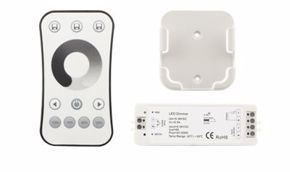
0-10V analog dimming: widely used control protocol in professional lighting, where a variable voltage signal between 0 and 10V drives the dimming level of the driver. Simple, reliable, and compatible with many building automation control systems.
DALI (Digital Addressable Lighting Interface): digital control protocol that allows individual addressing of each device in a lighting system, configuration of scenes and groups, and status feedback. Ideal for complex installations with many independent LED point circuits to control and program separately.
Controllers for addressable led strips
For addressable LED strips (WS2812B, SK6812, APA102, etc.) that allow pixel-by-pixel control of individual LED points, several types of controllers with very different capabilities and functionalities are available. Standalone controllers (without network connection) are the simplest: they store one or more animation programs in memory and execute them autonomously. They are ideal for fixed scenic installations, such as starry ceilings, where one wants a predefined effect that repeats cyclically without need for interaction.
Controllers with WiFi or Bluetooth connection (such as those of the WLED open source family or proprietary controllers of systems like Govee, Twinkly, or Philips Hue Gradient) allow control from smartphone or tablet and integration with major smart home ecosystems (Amazon Alexa, Google Assistant, Apple HomeKit). These systems open practically unlimited customization possibilities: one can program custom animation sequences, synchronize LED points with music or TV content, create automated scenarios according to time of day, presence of people, external weather conditions.
Integration with smart home systems
Integration of scenic LED points into smart home systems is now a reality accessible even for mid-to-high-end residential installations. The main ecosystems (KNX, Crestron, Control4, Home Assistant, Loxone, Savant) all offer tools for advanced control of LED strips, including addressable ones. Integration allows coordinating LED points with all other building systems (audiovisual system, motorized blinds, HVAC, access control) creating complex and coherent scenarios activatable with a single command.
A particularly interesting aspect for installations with scenic LED points is the possibility of synchronizing lighting with audio: systems like WLED support real-time synchronization of LED point animation with ambient audio signal, creating lighting effects that "dance" with music. This type of integration is very popular in lounge areas of hotels and restaurants, in nightclubs, and also in private homes of music and design enthusiasts.
Comparison with other luminous technologies
To fully understand the value of LED points as a scenic tool, it is useful to compare them with other luminous technologies that can be used for similar effects. Each technology has its strengths, limitations, and contexts in which it performs best: it is not about establishing which is "the best" in absolute terms, but about understanding which is most suitable for each specific project and objective. This chapter offers an objective comparison between LED points and the main alternatives: optical fibers, star projectors, incandescent lamps, and neon/OLED.
Led points vs. optical fibers
Optical fibers have been for many years the dominant technology for creating starry ceilings and dotted effects in luxury installations. The principle is different from that of LED points: light is generated by a single source (a lamp or high-power LED, the "illuminator") and distributed to hundreds of optical fibers that carry it to the points where the starry effect is desired. The fiber ends, emerging from the ceiling, appear as small, pure, brilliant luminous points.
The main advantage of optical fibers over LED points is point quality: fiber ends are microscopic (from 0.75 to 3 mm in diameter) and produce extremely sharp and small light points, with a luminous intensity that has no equivalent in LED strips. The visual result is that of real stars: small, brilliant, perfectly defined points. The main disadvantage is cost and installation complexity: a high-quality optical fiber starry ceiling with 1000 fibers can cost 10-20 times more than an equivalent starry ceiling realized with low-density LED points.
In summary, optical fibers are preferable when absolute quality of the luminous point is the priority and budget is adequate; LED points offer enormously superior quality/price ratio and much greater applicative flexibility (possibility of colors, animations, digital control) for the vast majority of projects.
| Criterion | Led points (Low-density strip) | Optical fibers | Star projectors | Neon dotted pattern |
|---|---|---|---|---|
| Point quality | High | Excellent | Good | Medium |
| Installation cost | Low - Medium | High - Very high | Low - Medium | Medium - High |
| Chromatic flexibility | Very high (RGB) | Medium (filter change) | High (LED projector) | Low (fixed color) |
| Dynamic animations | Excellent (addressable) | Medium (mechanical twinkling) | High (programmable projector) | Low |
| Lifespan | 50,000 - 100,000 hours | 50,000 hours (LED illuminator) | 30,000 - 50,000 hours | 20,000 - 40,000 hours |
| Maintenance | Simple | Difficult (inaccessible fibers) | Simple (bulb change) | Complex |
| Smart home integration | Excellent | Limited | Good | Limited |
| Energy efficiency | High | Medium (losses in fibers) | Medium | Low |
Market, trends and statistical data
To understand the context in which scenic LED points are inserted as a design tool, it is useful to look at global and Italian LED lighting market data. The LED market has undergone a radical transformation in the last fifteen years, moving from niche technology for special applications to dominant technology in practically all lighting segments. Growth has been driven by two parallel engines: progressive reduction of production costs and continuous improvement of performance (luminous efficiency, color rendering, lifespan, miniaturization). This chapter presents the most significant market data, with specific focus on the segment of LED strips and profiles for scenic applications.
The global led lighting market
The global LED lighting market reached an estimated value between 140 and 165 billion dollars in 2024, depending on analysis sources and definition of market boundaries. Growth has been constant in the last decade, with an estimated CAGR (compound annual growth rate) between 12% and 15% in the period 2018-2024. Forecasts for the next five years indicate continued growth, with an expected CAGR between 8% and 11% until 2030, driven mainly by growth of emerging Asian markets (India, Indonesia, Vietnam, Philippines) and acceleration of European building stock renovation in terms of energy efficiency.
The segment of LED strips and flexible linear lighting systems, the market in which scenic LED points are placed, is one of the highest-growth segments within the overall LED market. According to Mordor Intelligence data, the global LED strip market reached approximately $3.8 billion in 2023 and is expected to reach $7.5-8 billion by 2029, with a CAGR of approximately 12-13%. Growth is driven by three main factors: growth of the interior design and interior architecture sector, expansion of the DIY (do-it-yourself) market for residential lighting, and diffusion of smart home technologies that increase the perceived value of lighting installations.
The italian led lighting market
Italy is one of the most important and sophisticated European markets for quality LED lighting. The country has a manufacturing tradition of absolute excellence in the sector and a very developed interior design and architecture market that generates constant demand for innovative and high-quality lighting products.
According to ASSIL (Italian Lighting Manufacturers Association) data, the Italian lighting market reached approximately €2.1 billion in 2023, of which over 75% already consisted of LED products. The contract segment (lighting for commercial, hotel, retail, and architectural projects) represents approximately 60% of the market, with an average project value significantly higher than the residential segment. Forecasts for 2024-2026 indicate overall growth of 4-6% annually, with the architectural and outdoor segment growing more rapidly thanks to European incentives for energy efficiency.
Design trends: the dotted pattern as language of luxury
One of the most evident trends in lighting design in the last three years is the rediscovery of the dotted pattern as an aesthetic language of contemporary luxury. This trend manifests at different levels: in collections of major lighting brands, in the increase of online searches related to LED points and starry ceilings, and in lighting choices of high-level contract projects published in major architecture and design magazines. Keywords associated with this trend ("starfield ceiling", "starry ceiling", "architectural LED points", "point lighting") have recorded an average increase of 45% in Google searches in the last 24 months.
| Search trend (Google Trends Italy) | Growth 2022-2024 | Seasonality |
|---|---|---|
| "punti led" (exact) | +62% | Peak October-December |
| "soffitto stellato led" | +78% | Peak spring-summer (renovations) |
| "strip led puntinata" | +41% | Peak September-November |
| "profili led incasso" | +55% | Constant, with spring peak |
| "illuminazione scenografica led" | +89% | Constant |
| "striscia led bassa densità" | +37% | Peak summer |
Impact of European energy regulations
European energy efficiency regulations for buildings (Energy Performance of Buildings Directive, EPBD, and its update in the 2024 version) are having a significant impact on the lighting market, accelerating replacement of obsolete lighting systems with high-efficiency LED technologies. In this context, low-density LED strips for scenic effects find themselves in a particularly favorable position: they offer exceptional visual impact with very reduced consumption (4-7 W/m versus 15-30 W/m of high-density systems or previous incandescent solutions), and lend themselves easily to integration with smart energy management systems.
The Italian National Recovery and Resilience Plan (PNRR) has allocated significant resources for energy renovation of public and private building stock, explicitly including modernization of lighting systems among eligible interventions for incentives. This has created additional demand for quality LED products, including scenic LED strips in common areas of residential buildings (entrances, corridors, stairs) and in public structures (schools, hospitals, public offices).
Market survey: professional preferences
A survey conducted by Ledpoint on a sample of 350 sector professionals (architects, interior designers, lighting designers, and installers) in 2024 revealed the following data on preferences in using scenic LED points:
| Question | Main answer | % | Second answer | % |
|---|---|---|---|---|
| Which LED density do you use most often for scenic effects? | 30-60 LEDs/m | 52% | 14-30 LEDs/m | 28% |
| Which type of cover do you prefer to maximize the dotted pattern? | Smooth transparent | 67% | Without cover | 21% |
| In which context do you most often use scenic LED points? | Hospitality (hotels/restaurants) | 44% | Premium residential | 31% |
| Which voltage do you prefer for low-density strips? | 24V DC | 71% | 12V DC | 22% |
| Do you use addressable strips for dynamic LED point effects? | Yes, always or often | 38% | Occasionally | 41% |
| Which color temperature do you prefer for starry effects? | Warm white (2700-3000K) | 58% | Neutral white (3500-4000K) | 25% |
Common errors and how to avoid them
Designing and installing systems with scenic LED points requires specific competencies that cannot be improvised. Over the years, observing hundreds of installations, from the simplest to the most complex, a series of recurring errors that compromise the final result have been identified. Knowing these errors in advance is the most effective way to avoid them. This section analyzes them one by one, with indication of causes, visual consequences, and corrective solutions.
Error 1: using diffusing cover for dotted effects
This is probably the most common and most devastating error for scenic LED point effects. The designer or installer automatically chooses a 30 or 60 LEDs/m strip thinking to obtain the desired dotted effect, but then installs the profile with the standard supplied cover, which is normally opalescent or frost, completely canceling the effect. The result is a uniform and anonymous strip of light, visually identical to any high-density strip with diffusing cover, and completely devoid of the sought scenic effect. The solution is simple: explicitly select transparent cover or order the profile without cover when the objective is the dotted effect.
Error 2: mistaking viewing distance in density selection
A very frequent error in designing with LED points is not considering the actual viewing distance in the final installation. A ceiling installed at 3 meters height in a commercial space, observed by people seated at 1.5 m height, is at 1.5 m visual distance. At this distance, a 60 LEDs/m strip with 16.7 mm pitch already produces an almost continuous effect, without the desired dotted rhythm. To obtain a clearly visible dotted pattern from 1.5 m it is necessary to use a density of 30 LEDs/m or less. Correct calculation always starts from the intended viewing distance and works back to the maximum tolerable density for having the dotted pattern visible at that distance.
Error 3: not calculating voltage drop
Voltage drop along LED strips is a technical problem that can seriously compromise uniformity of the LED point effect. When voltage drops significantly toward the strip end farthest from the power supply, LEDs receive less current and shine less intensely. With low-density strips, where each single LED point is well visible and distinguishable, this non-uniformity is immediately evident and ruinous for the scenic effect. The solution is always to calculate voltage drop in the design phase, using 24V strips for lengths above 5 m, powering from both ends for lengths above 10 m, and using adequate connection cable section.
Error 4: discontinuity of rhythm at strip joints
When the installation requires multiple strips in sequence (for lengths exceeding the maximum length of a single reel), the joint between strips must be executed so that the rhythm of LED points results continuous and without perceptible interruptions. A frequent error is realizing the joint without considering the position of LEDs relative to the cut point, obtaining a double space or a missing point in the sequence that visually interrupts the rhythm. The solution is to plan joints by calculating the position of LEDs at the edges of strips to be joined, and if necessary slightly shorten one of the two strips to align the dotted pattern rhythm.
Error 5: neglecting tone coherence between different reels
LEDs are components with a certain natural variability of color temperature and luminous intensity between chips of different batches. When using LED strips of different batches in the same project, it is possible that the light tone emitted by LED points varies slightly from one section to another of the installation, especially in installations that juxtapose multiple parallel or sequential strips. The solution is to purchase all material necessary for a project in the same order, specifying to the supplier the need for coherent batches (coherent Bin Code), and verifying coherence before installation.
Error 6: choosing poor-quality profiles
The quality of LED profiles varies enormously depending on the quality of aluminum used, precision of the extrusion die, quality of surface treatment, and geometric linearity of the finished profile. An economical profile can present section variations along the length, surface undulations, anodization color variations, and imprecise cover sliding guides. All these defects translate into irregularities of the LED point effect (imperfect alignments, irregular reflections, cover that does not slide or bends) that compromise the scenic effect. On quality installations, choosing good-quality profiles is an investment that pays off rapidly in better results and installation durability.
Advanced design with led points
Advanced design with LED points goes beyond simple selection of strips and profiles: it is a multidisciplinary creative process that requires competencies in optics, perception psychology, interior architecture, electrical engineering and, increasingly, programming and digital integration. This chapter is aimed at professionals who want to take their LED point installations to a higher level, exploring advanced techniques of composition, simulation, and control.
3D simulation and modeling of the dotted effect
Before realizing a complex installation with scenic LED points, it is always recommended to simulate its effect in a 3D modeling environment. Software like Dialux Evo, Relux, AGi32, or lighting plug-ins for Rhino/Grasshopper allow faithfully modeling profile geometry, optical characteristics of covers, photometric distribution of individual LED chips, and overall visual perception of the installation. An accurate simulation allows verifying the dotted effect at different viewing distances, optimizing density and strip position, predicting possible problems of uniformity, and presenting the client with a realistic visual anticipation of the final result.
Photometric IES libraries of LED chips used in LED strips are increasingly available from manufacturers (or can be measured with professional goniophotometers), allowing high-fidelity simulations. The investment in accurate simulation translates into fewer surprises during installation and a final result closer to the design objective.
Geometric patterns and dotted compositions
For luminous art installations and high-impact scenography, LED points can be arranged not in straight lines but in complex geometric patterns: Bezier curves, Fibonacci spirals, hexagonal grids, Voronoi networks, fractals. Realizing these patterns requires parametric design of LED strip and profile paths (tools like Grasshopper for Rhino are ideal for this purpose), production of custom-shaped profiles (curved, angled, or free-form shaped), and often use of addressable LED strips with custom pixel mapping.
Some of the most memorable installations of recent years in art galleries and museums have made skillful use of geometric LED point patterns: large star maps projected on the ceiling as constellations of points, neural networks simulated through networks of addressable LED strips on transparent floor, three-dimensional structures of suspended LED points in space like luminous clouds. These projects require multidisciplinary teams combining art direction competencies, parametric design, lighting engineering, and software development, but the results are of cultural and visual impact difficult to match with other technologies.
Luminous layering: combining led points with other sources
In advanced lighting design, LED points rarely work alone. Luminous layering, the superposition of lighting levels with different characteristics (ambient, diffuse, accent, decorative), is the fundamental technique for creating luminously rich and coherent spaces. Scenic LED points typically constitute the decorative level of layering, while other levels (downlights, indirect lighting, track systems) manage functional needs.
Well-designed layering creates a dynamic visual hierarchy: when all levels are active, the space is fully illuminated and functional while when functional levels are progressively turned off, the level of scenic LED points emerges more and more clearly, transforming the space from workplace to experience place. This transformation can be programmed to occur automatically according to time, presence, space use, creating adaptive environments that change character throughout the day.
Led points and augmented reality
One of the most innovative frontiers of LED point design is its integration with augmented reality (AR). In environments equipped with user position tracking systems (via Bluetooth beacons, recognition cameras, or wearable devices), addressable LED point installations can respond in real time to the presence and movement of people: points around the user can increase in brightness, change color, create circular waves radiating from their position.
This type of installation, which sits at the intersection of lighting, interactive art, and experience design, is still predominantly in the domain of art festivals and special events, but the technologies that make it possible are rapidly becoming more accessible and their diffusion is expected to grow in high-level retail and hospitality contexts.
Your questions...
In this section we collect the most frequent questions about LED points and the dotted effect, with detailed and practical answers to guide the choices of those approaching this technology for the first time or wanting to deepen specific aspects.
- Q: What does "led points" mean in practice?
- With LED points is meant the visibility of individual LED chips mounted on an LED strip. Each LED is a small light emitter; when LED density per meter is low (typically below 60 LEDs/m) and the profile in which the strip is installed has a transparent cover or no cover, individual LED points are clearly distinguishable as separate luminous entities. This dotted effect is an aesthetic characteristic that, if deliberately sought, produces high-impact scenic effects.
- Q: What is the difference between a 30 leds/m strip and a 60 leds/m strip for the dotted effect?
- With a 30 LEDs/m strip, individual LED points are approximately 33 mm apart and are clearly visible as separate entities up to distances of 3-4 meters. With a 60 LEDs/m strip, the pitch drops to approximately 17 mm and points begin to perceptually blend at distances above 1.5-2 meters. For high visual impact starry and scenic effects from a distance, the 30 LEDs/m strip is generally preferable; for a finer, more refined dotted pattern in more intimate environments, the 60 LEDs/m may be the right choice.
- Q: Can I create a starry ceiling with a normal led strip?
- Yes, absolutely. A convincing starry ceiling can be realized using low-density LED strips (14-30 LEDs/m) installed in a frame on the ceiling, without profile (or with recessed transparent cover profile). Strip distribution should not be regular: to simulate the starry sky, strips are arranged with variable angles and spacing, using different densities in different zones to simulate variability of stellar density. A controller with twinkling program completes the effect.
- Q: Can led points be used in environments with high ambient light?
- The dotted effect of LED points is maximum in environments with little ambient light (nighttime condition or with controlled artificial light). In environments strongly illuminated from outside or by other sources, LED points lose contrast relative to the background and the scenic effect is reduced. For this reason, installations of greatest impact are typically those in windowless spaces, or with dark curtains, or in nighttime environments. If one wants to maintain a visible dotted effect even during the day, it is necessary to use high-flux LED chips (at least 10-15 lm per chip) and dark backgrounds.
- Q: How much do low-density led strips and profiles for the dotted effect cost?
- Cost varies significantly depending on quality, brand, and technical characteristics. As a rough guide, a good-quality 30 LEDs/m strip costs between 3 and 8 euros per meter; quality aluminum profiles cost between 3 and 15 euros per meter depending on typology and finish. For a typical 10 linear meter installation (strip + profile + power supply + accessories), material cost generally ranges between 80 and 250 euros, with the main variable represented by LED chip quality and profile finish.
- Q: How is an addressable led strip connected for dynamic led point effects?
- Addressable LED strips are connected to a specific controller that sends control data (color and brightness of each LED) along the strip's data wire. Electrical connection is simple: positive, negative, and data. The controller receives commands via WiFi, Bluetooth, or DMX512 from the control interface (smartphone app, lighting control software, home automation system). Effect programming varies from very simple (selection of preset effects via app) to very complex (custom programming in Python, JavaScript, or C++ for personalized effects).
- Q: Which color temperatures are most suitable for scenic led point effects?
- For warm, atmospheric starry effects, color temperatures between 2200 K and 2700 K are used: the orange-yellow tone recalls stars of spectral class K and M, the most common in the night sky, and creates a cozy, comforting atmosphere. For more modern, graphic, and contemporary effects, neutral white (3500-4000 K) or cool white (5000-6500 K) is used, which accentuate the geometric purity of the dotted pattern and pair better with minimalist design environments. For maximum flexibility, tunable white LED strips allow varying color temperature from 2700 K to 6500 K according to time and mood.
- Q: Where can I purchase low-density led strips and quality profiles in Italy?
- Ledpoint.it is one of the main Italian specialists in LED strips, aluminum profiles, and components for quality LED lighting. The catalog includes a wide selection of LED strips at various densities, profiles of every typology, power supplies, controllers, and accessories, all selected with rigorous quality criteria. The Ledpoint team's technical consultancy is available to guide selection of components most suitable for each specific project.
Technical deep dive: photometry of led points and lighting calculation
Photometry of LED points is a specialist field that requires deep understanding of optics and radiometry laws. For professionals who want to design installations with scenic LED points with technical rigor, and not only intuitively, this section provides the conceptual tools and fundamental formulas for photometric calculation of low-density LED strip installations. Understanding LED point photometry is the basis for making accurate predictions about the final effect, for avoiding surprises during installation, and for communicating precisely with clients and other project professionals.
Fundamental photometric quantities
Luminous flux (lm): the total quantity of light emitted by a source in all directions, weighted by the spectral sensitivity of the human eye. For LED points, luminous flux is specific to the individual chip. A good-quality SMD 2835 chip can emit from 30 to 120 lm; a 5050 chip can reach 300-400 lm. The total strip flux per meter is the product of single-chip flux times density: a 30 LEDs/m strip with 100 lm/chip chips emits approximately 3000 lm/m — a considerable value for a consumption of only 4-6 W/m.
Luminous intensity (cd — candela): luminous intensity measures the concentration of flux in a given direction. For a single LED point with Lambertian emission at 120° and flux of 100 lm, intensity on-axis is approximately 31 cd. This concentrated intensity is much higher than any diffuse source of equal flux, which explains the visually brilliant effect of individual LED points even when total flux is low.
Illuminance (lx — lux): the density of luminous flux incident on a surface. For an LED point with intensity I, illuminance E on a surface at distance d is given by the inverse square law: E = I × cos(θ) / d². This relationship explains why LED points illuminate nearby surfaces intensely but their influence falls rapidly with distance — a desirable characteristic for scenic effects, undesirable for uniform work lighting.
Luminance (cd/m²): luminance measures the perceived "brilliance" of a source: it is intensity per unit area. Individual LED points have extremely high luminances: a 2835 chip with intensity 30 cd and dimensions 2.8×3.5 mm presents a luminance of approximately 3 Mcd/m² (three million candelas per square meter). This extreme concentration is the reason why looking directly at a lit LED strip from close range can be uncomfortable: not because of total power, but because of the density of luminous energy concentrated in a microscopic point.
Calculating the perceptual threshold of the dotted pattern as a function of geometry
To determine which density of LED points is necessary for a visible dotted effect at a certain viewing distance, one can use the following simplified procedure based on the angular resolution limit of the human eye (approximately 1 arcminute, corresponding to 1/60°).
At a viewing distance D (in meters), the minimum physical separation limit between two points for them to be perceived as distinct is:
d_min = D × tan(1/60 × π/180) ≈ D × 0.00029 m
For a visible dotted effect, the pitch between LED points must be significantly greater than this minimum — typically 10-20 times, to have clearly perceptible "visual silence" between one point and the next. This gives the minimum practical distance between points for an evident dotted pattern:
pitch_min_scenic ≈ D × 0.003 m (i.e., D × 3 mm/m)
| Viewing distance (m) | Minimum scenic pitch (mm) | Maximum density (leds/m) | Recommended density for strong effect |
|---|---|---|---|
| 0.5 | 1.5 | 667 | 120 – 240 LEDs/m |
| 1.0 | 3 | 333 | 60 – 120 LEDs/m |
| 1.5 | 4.5 | 222 | 30 – 60 LEDs/m |
| 2.5 | 7.5 | 133 | 30 – 60 LEDs/m |
| 3.5 | 10.5 | 95 | 14 – 30 LEDs/m |
| 5.0 | 15 | 67 | 14 – 30 LEDs/m |
| 8.0 | 24 | 42 | 14 – 20 LEDs/m |
This table shows with immediacy a fundamental fact: in the most common applications, residential ceilings at 2.5-3.5 m height, walls of commercial rooms observed from 2-3 m, a 30 LEDs/m strip is always more than sufficient for a scenographically marked dotted pattern. Choosing higher densities in these contexts reduces the dotted effect without appreciable aesthetic advantages, while increasing costs and energy consumption.
Photometric distribution and cast shadows of the dotted Pattern
An often underestimated aspect in designing with low-density LED points is the phenomenon of cast shadows: each single LED point, being a high-intensity point source, casts sharp, defined shadows of objects it encounters. Unlike a diffuse source that creates soft, gradual shadows, an LED point creates shadows with sharp edges and high contrast. On smooth surfaces this is not a problem; on structured surfaces (natural stone, exposed concrete, wood with marked grain), this phenomenon amplifies the three-dimensionality of the surface, enhancing its texture with an effect that diffuse lighting cannot match.
This capacity of LED points to reveal the texture of material surfaces is one of the most powerful expressive tools of contemporary architectural lighting. Rough stone walls illuminated grazing by a row of low-density LED points show every detail of the material with almost sculptural sharpness; wood panels with marked grain (illuminated in the same way) reveal micro-irregularities of the surface as if every fiber had perceptible relief. This technique, called grazing light or precision wall-washing, is particularly effective with 30-60 LEDs/m strips without cover, installed in wall-flush recessed profiles, with LED points looking directly at the surface to be illuminated.
Special profiles: advanced geometries and custom solutions for led points
The world of LED profiles for installations with scenic LED points goes well beyond standard rectangular-section models. There is a universe of special-geometry solutions (curved profiles, double, T-shaped, Y-shaped, underwater, flexible) that opens design possibilities of great interest for high-level installations. In this section we explore these solutions with the detail they deserve, offering designers concrete tools to enrich their repertoire of LED point solutions.
Curvable profiles: sinuous lines of led points
LED strips are flexible by definition, but standard aluminum profiles are not. When the project requires installations on curved surfaces (architectural arches, columns, cylindrical walls, sinuous trajectories on ceilings or floors) there are three categories of solutions:
Custom-curved profiles: the profile is mechanically curved after extrusion with CNC roller machines. Uniform curves with radii from 200 mm up to several meters are obtained. Each curved profile is essentially a unique piece, cut to project specifications. The result is geometrically precise and visually impeccable: LED points follow the curve with absolute regularity, without play, undulations, or discontinuities. This solution is the most prestigious for permanent high-level installations.
Serrated flexible profiles: profiles with transverse incisions on the back that allow manual bending on radii even of 50-100 mm. They are widely used in renovations where the geometry of the surface is not known precisely in advance, because they allow adapting the profile on-site without special equipment. The incisions on the back are not visible in the final version because they are inside the housing groove; the frontal surface of the profile remains smooth and continuous, ensuring a refined appearance.
Flexible silicone or PVC profiles: for very tight curves or surfaces with double curvature (convexity in two directions), flexible polymer profiles are the only practicable solution. Their thermal conductivity is much lower than aluminum (0.1-0.3 W/(m·K) versus 150-200), but for low-density strips — whose consumption is modest — the thermal problem is rarely critical. Transparent flexible silicone profiles are particularly interesting for decorative applications: they allow seeing even the external structure of the profile, which becomes an integral part of the installation's aesthetics.
Double-channel profiles: two-dimensional texture of led points
One of the most refined applications of scenic LED points is the creation of two-dimensional textures (grids of points, scale patterns, rhomboidal compositions) through the use of multiple profile systems mounted in parallel with precise spacing. With two rows of 30 LEDs/m strips mounted on parallel profiles with 50 mm spacing, one obtains a grid of points with 33 mm spacing in the longitudinal direction and 50 mm in the transverse direction. Varying densities and spacings yields infinitely different patterns, each with a unique visual texture.
This technique is used with great elegance in decorative luminous wall panels, structured starry ceilings, high-end jewelry show windows where the background texture enhances the displayed product. Double-channel profiles, which house two parallel LED strips in a single profile, simplify installation by reducing the number of components and guaranteeing spacing precision without need for individual measurements.
Complex angular profiles: 30°, 45°, 60°, 135°
Angular profiles, designed for installations in junctions between inclined surfaces, are available for standard angles (45°, 90°) but also for special angles on request. A 30° profile is perfect for enhancing junctions of inclined panels in obliquely-oriented false ceilings while a 135° profile allows installing LED points in obtuse junctions between walls and ceilings in lowered false ceilings. The angular geometry of the profile determines the emission angle of LED points relative to adjacent surfaces: varying the profile angle allows orienting the dotted pattern toward the ceiling, toward the wall, or toward an intermediate angle, obtaining very different grazing illumination or reflected light effects.
Underwater profiles and for illuminated fountains
Underwater LED point installations (in pools, thermal basins, decorative fountains, artificial ponds) are among the most visually spectacular applications of the entire category. LED light in water diffuses in a completely different way compared to air: water has a refractive index of 1.33 (versus 1.0 for air), which modifies the perceived emission angle and creates refraction effects at the surface that further amplify the movement and dynamism of LED points.
For these applications, technical requirements are very specific. Minimum protection rating is IP68, with specification of maximum depth and immersion duration (e.g., IP68 3m/24h). Profiles must be in completely waterproof material resistant to treated water (chlorine, ozone, UV): AISI 316L stainless steel or technical polymer certified for pool use. Connectors and joints must be sealed with special encapsulation resins and no generic non-waterproof connector must be present in the immersed section of the system.
High-visual-impact led strips: selection guide for scenic led points
Not all LED strips are suitable for scenic effects with low-density LED points. Selecting the right product requires simultaneous evaluation of many parameters that influence each other reciprocally. This section offers a systematic guide to selection, starting from fundamental quality criteria and arriving at specific configurations for the main application typologies.
The seven quality criteria of an led strip for scenic dotted pattern
1. Color bin uniformity: chromatic variability between chips of the same strip, and between different strips of the same order, must be minimized through bin selection. A professional-quality strip uses chips of the same MacAdam step (typically ≤3 SDCM) over the entire length and between different batches. Economical strips mix chips of different bins, producing variations in tone between adjacent LED points that are immediately perceptible in the final installation.
2. Copper thickness on PCB: copper traces of the PCB must have adequate thickness to conduct current without excessive voltage drops and to dissipate heat. The standard parameter is expressed in "ounces of copper per square foot" (oz/ft²): 1 oz ≈ 35 µm thickness. Quality strips use 2 oz or higher PCBs; economical strips go down to 1 oz or less. With thin traces on 30-60 LEDs/m strips, even small voltage drops produce variations in brightness between LED points near and far from the power supply that are visible to the naked eye.
3. Soldering quality: each LED chip is soldered to the PCB with two or more solder pads. Soldering quality (uniformity of paste quantity, absence of anomalous sphericity, good pad wetting) determines both mechanical resistance of the chip and quality of thermal and electrical contact. Strips produced with fully automated pick-and-place and reflow soldering processes have much more consistent and reliable soldering than those with partially manual soldering, typical of low-end strips.
4. Chromatic stability over time: high-quality LED chips maintain color temperature and luminous flux stable for the entire declared useful life. Lower-quality chips undergo a color shift toward yellow, green, or pink in the first thousands of hours of operation, producing a chromatic variation of LED points that is perceptible and annoying in long-exposure installations. Requesting LM-80 data (flux stability over time) and TM-21 (useful life projection) from the supplier is correct practice for professional installations.
5. Power output protection: quality LED strips include integrated protections against incorrect supply voltages, voltage spikes, polarity inversion, and short circuits. These devices, normally TVS (Transient Voltage Suppressors) or resettable fuses, protect LED chips from premature failures caused by non-ideal power conditions. Strips lacking these protections are particularly vulnerable to failures in systems with economical power supplies or poor-quality wiring.
6. Double-sided adhesive on back: the pre-applied double-sided tape on the strip back is the primary fixing means and the main thermal dissipation path toward the profile. Tape quality (long-term adhesiveness, thermal resistance, coverage width) influences both fixing safety and dissipation efficiency. Quality strips use double-sided tapes with heat-resistant structural acrylic adhesive (up to 80-100°C), with width covering at least 70% of the PCB back.
7. Certifications and technical documentation: a professional-quality LED strip must be accompanied by complete technical documentation: datasheet with all photometric and electrical parameters, LM-80 data for flux stability, CE certificate, RoHS declaration, IEC 62471 photobiological safety data. Absence of technical documentation is a clear signal of an economical product without adequate engineering.
Addressable led strips for advanced dynamic effects
Addressable LED strips, where each LED (or each group of LEDs) is controlled individually by an integrated chip, represent the most advanced level for installations with dynamic scenic LED points. The most widespread protocols are:
WS2812B: the most widespread chip in the maker world and mid-to-high-end installations. Each LED incorporates a control chip that receives data in cascade from the previous one and transmits to the next along a single data line. Allows individual control of each LED point on strips of any length. Update frequency is approximately 400 Hz per channel, sufficient for fluid effects. The main limitation is the single data line: if a chip fails, all subsequent LEDs lose the signal. Available in typical densities of 30, 60, and 144 LEDs/m.
WS2815: evolution of WS2812B with dual data line (backup): if a chip fails, the signal is automatically diverted to the backup line and animation continues on subsequent LEDs without interruption. 12V power supply instead of 5V, which reduces voltage drop problems on long strips. Ideal for large-scale professional installations with addressable LED points where reliability is critical.
SK6812 (RGBW): addressable chip with four channels (red, green, blue, and white) instead of the classic RGB three. The dedicated white channel allows obtaining high-quality warm and neutral whites without the chromatic compromises of RGB mixing, while maintaining all the chromatic flexibility of the three color channels. For installations with scenic LED points that must alternate vivid chromatic effects and quality white lighting, it is the most versatile solution available on the market.
APA102 (Dotstar): two-wire data chip (data and clock) that allows much higher update frequencies compared to WS2812B — up to 20 kHz versus 400 Hz of WS2812B. This makes it ideal for installations filmed with high-speed cameras, for synchronizations with high-frequency audio signals, and for ultra-fluid animation effects that require very rapid updates of individual LED points. Requires specific controllers compatible with the SPI protocol.
Specialized monochromatic led strips
For certain scenic effects with LED points, non-white monochromatic LED strips are tools of great specificity and impact. Monochromatic light, with a narrow spectrum concentrated around a single wavelength, has very different optical and perceptual characteristics from broad-spectrum white light.
Amber LED strips (590-620 nm) produce LED points of warm and sensual color, similar to candlelight or firelight. They are widely used in saunas, hammams, wellness centers, restaurants with rustic or Moroccan furnishings. Amber light has a documented relaxing physiological effect and does not significantly interfere with evening melatonin production.
UV (ultraviolet) LED strips at 365-395 nm produce a dotted pattern almost invisible in normally illuminated environments, but which becomes spectacular on fluorescent or phosphorescent materials. Wall with fluorescent paint illuminated by low-density UV LED points: during the day it seems a normal wall; at night, with lights off, it appears studded with galaxies, geometric patterns, or texts written with fluorescent material. This technique is widely used in children's environments, nightclubs, escape rooms, and in certain artistic installations.
Deep red LED strips (625-660 nm) have very specific applications: in professional photographic studios for darkrooms, in greenhouses where red light stimulates photosynthesis, in medical phototherapy, and in certain astrophotography contexts where red light does not compromise observers' dark adaptation. As a scenic effect, deep red dotted pattern has a dramatic and almost unsettling intensity that can be exploited in certain theatrical or artistic installations of strong emotional impact.
Safety, regulations and certifications for led point installations
Every LED lighting installation, including those with scenic LED points, must comply with prevailing electrical and photobiological safety regulations. This is not only a legal obligation: it is an ethical imperative toward the people who will live and work in the illuminated spaces. This section provides a practical and updated overview of the main applicable regulations in Italy and Europe.
Electrical regulation: CEI 64-8 and SELV systems
In Italy, electrical installations are regulated by CEI standards (Italian Electrotechnical Committee). The cornerstone standard is CEI 64-8, which governs "Electrical user installations at nominal voltage not exceeding 1000 V in alternating current and 1500 V in direct current". For LED strips operating at 12V, 24V, or 48V DC, the system falls into the SELV category (Safety Extra Low Voltage — extra-low safety voltage), provided that the power supply guarantees safety separation from the 230V AC mains according to standard EN 61558-2-6.
SELV circuits are subject to significantly less stringent installation requirements compared to mains circuits, and in particular do not require the use of high-voltage insulated cables nor grounding of components. However, the power supply that converts 230V AC mains to 12/24/48V DC must be correctly sized, certified, and installed according to prevailing regulations: it is the critical point of the system where CEI 64-8 regulation applies with full rigor. Particular attention must be paid to short-circuit protection (fuses or magnetothermal circuit breakers on the AC side of the power supply) and correct section of connection cables.
Photobiological safety: standard EN 62471
The standard EN 62471 "Photobiological safety of lamps and lamp systems" classifies light sources into four risk groups (0 — no risk / 1 — low risk / 2 — moderate risk / 3 — high risk) based on their potential harmfulness to eyes and skin. For LED strips with high-luminance LED points, typical of scenic low-density applications, it is important to verify the product classification and respect any usage prescriptions.
In practice, commercial LED strips for general use fall into groups 0 or 1. Some very high-power strips or with particularly concentrated chips may fall into group 2, which imposes labeling with the warning "do not look directly at the source" and definition of minimum safety distances. For scenic installations where LED points might be looked at directly from close range, for example in interactive artistic installations, it is fundamental to verify the photobiological class of the product and design accordingly.
IP protection ratings: correct choice for every environment
| IP rating | Protection vs solids | Protection vs liquids | Typical led point contexts |
|---|---|---|---|
| IP20 | Fingers (≥12mm) | None | Living rooms, ceilings, dry attics, closed cabinets |
| IP44 | Wires ≥1mm | Splashes from any direction | Bathroom zone 2, kitchens, covered terraces |
| IP65 | Total dust-proof | Low-pressure jets | Shower zone 1, sheltered exterior, industrial ceilings |
| IP67 | Total dust-proof | Temporary immersion (30 min, 1m) | Exposed exterior, external steps, wet zones |
| IP68 | Total dust-proof | Continuous immersion (specified depth) | Pools, fountains, thermal basins, underwater |
It is important to remember that the IP rating of LED strips and that of the profile must be evaluated jointly: the overall system has the IP rating of the least protected component. A frequent error is using IP65 strips with non-waterproof connectors, nullifying the strip's protection itself. For installations in humid environments or outdoors, every element of the system (strip, profile, connectors, terminals, wiring, power supply) must have the IP rating adequate to the context.
WEEE regulation and end-of-life disposal
The European WEEE Directive (Waste Electrical and Electronic Equipment, transposed in Italy with Legislative Decree 49/2014) regulates collection and recycling of electrical and electronic equipment at end of life. LED strips, profiles with integrated electronic components, controllers, and power supplies fall into this category and must be delivered to authorized WEEE collection centers at the end of their useful life. It is the responsibility of installers and end users to ensure correct disposal of these components, avoiding their dispersion in undifferentiated collection where contained substances (gallium, indium, arsenic) could cause environmental pollution.
Maintenance and longevity of led point installations
One of the most appreciated characteristics of installations with scenic LED points is their extraordinary longevity compared to previous technologies. However, "exceptional longevity" does not mean "zero maintenance": like every quality technical system, installations with LED strips require specific periodic care to maintain performance and aesthetics unaltered over time. Designing the maintainability of an installation from the initial phase is as important as designing its aesthetics.
Thermal derating: the primary enemy of led points
The primary cause of premature aging in LED chips is not mechanical wear of components, but thermal derating: the irreversible reduction of luminous flux caused by prolonged operation at high junction temperature. The relationship is exponential: every 10°C increase in junction temperature reduces useful life by approximately 50%. For quality LED chips, the recommended maximum junction temperature is typically 85-105°C; systematically exceeding it reduces useful life from 50,000 to less than 10,000 hours.
For strips with low-density LED points (consumption 4-7 W/m), thermal derating is rarely a problem in standard-size profiles installed in normal environments. It becomes relevant in three specific situations: profiles recessed in highly insulating materials (expanded polystyrene, thick wood without heat cut), environments with constantly high ambient temperature (>40°C), and strips installed without profile on surfaces with low thermal conductivity. In these cases, increasing profile dimensions or providing periodic operation interruptions is the most effective preventive solution.
Ordinary cleaning of profiles and covers
Anodized aluminum profiles are easily cleaned with soft microfiber cloth dampened with lukewarm water and a drop of neutral detergent. Anodization resists well to ordinary cleaning agents while acidic detergents (concentrated limescale removers) that attack aluminum oxide and abrasive detergents that scratch the surface should be avoided. Transparent PMMA covers are particularly sensitive to organic solvents: acetone, concentrated isopropyl alcohol, nitro thinner can irreversibly opacify PMMA. For cleaning PMMA covers, only lukewarm water with neutral detergent and microfiber cloth.
Recommended cleaning frequency varies with environment: in low-dust domestic environments, annual cleaning is sufficient. In professional kitchens, public venues, or industrial environments, quarterly or monthly cleaning may be necessary to avoid accumulation of grease or dust that reduces cover transmissivity and alters the LED point effect.
Component replacement and facilitated access
In an installation with low-density LED points, a single failed chip is visually very evident: the hole in the dotted pattern rhythm interrupts the sequence and immediately attracts the eye. Ease of access to the strip for replacement of the failed segment is therefore a practical requirement to be considered in the design phase. Technical solutions to facilitate replacement include:
- profiles with tool-free removable cover (snap or pressure systems instead of gluing);
- recess grooves with depth slightly greater than strictly necessary to extract the profile without demolishing the finish;
- power supplies and connectors accessible in dedicated boxes or niches instead of being walled in;
- technical documentation of the installation (system diagram, segment lengths, strip type, product code) preserved and available for future maintainers.
Investing in these precautions at the time of installation costs little and saves much in case of failures or updates.
Technological update without demolition
A not always valorized advantage of installations with LED points in quality aluminum profiles is the possibility of technologically updating the system without demolishing the existing installation. Anodized aluminum profiles, as already said, are essentially eternal: they do not degrade or age under normal use conditions. When the LED strip, after 10-15 years of operation, begins to show signs of flux decay or color shift, it can be replaced with the latest-generation strip simply by removing the old one from the profile and inserting a new one.
This possibility of modular replacement, strip without profile, is an important element of the long-term value of investing in quality profiles. In 10 years, new-generation LED strips will almost certainly have superior luminous efficiency (more lm/W), higher color rendering, and lower price compared to current products. The possibility of replacing only the strip (the component that ages) while keeping the profile (the component that lasts) allows capturing these technological benefits without the expense and disruption of a complete renovation.
Environmental sustainability of led points: an honest assessment
LED lighting is universally recognized as the most sustainable technology among those available for artificial lighting, but a complete and honest environmental assessment must consider the entire life cycle, from component production to daily use to final disposal. This section proposes a realistic sustainability assessment of installations with scenic LED points, without hiding complexities but also highlighting real advantages.
Energy savings: the primary benefit
The energy savings of LED strips with low-density LED points compared to traditional alternatives is documented and significant. A good-quality 30 LEDs/m strip consumes 4-5 W/m producing 300-400 lm/m. To obtain a comparable visual effect with previous technologies (mini halogen lamps, incandescent garlands) would require 25-40 W/m, a consumption 6 to 8 times higher. On a 50 linear meter installation operating 8 hours/day, the annual energy savings compared to the halogen alternative is on the order of 350-700 kWh, corresponding to approximately 100-200 kg of CO₂ with the Italian electricity mix of 2024 (approximately 290 gCO₂/kWh).
To this direct savings is added the indirect benefit of long lifespan: with an L70 useful life of 50,000 hours, an LED strip installed today will last until 2041 if it operates 8 hours per day, avoiding the annual or biennial replacements required by previous technologies. Each replacement cycle has an environmental cost (production, transport, disposal) that the long life of LEDs almost completely eliminates.
Environmental impact of production
The life cycle of LED components is not without environmental impacts. LED chips require rare or critical materials (gallium, indium, arsenic, rare earths for phosphors) whose extraction and refining entail significant impacts in terms of land use, water consumption, and mining waste production. FR4 PCBs (glass fiber-epoxy resin) are difficult to recycle at end of life. Polymers used for covers and IP coatings have their own environmental impacts related to petrochemical production.
A complete LCA (Life Cycle Assessment) of a typical LED strip shows that the use phase (energy consumption) largely dominates the overall environmental balance, typically representing 70-85% of total impact over the entire life cycle, compared to the production phase (10-20%) and disposal (5-10%). This means that energy efficiency improvements during use have a much greater environmental impact than any optimization of the production or disposal phase. Choosing high-efficiency LED strips (high lm/W) and control systems that limit operating hours to times of actual use is therefore the most effective strategy for minimizing the environmental impact of LED point installations.
Circular economy: reusable profiles and replaceable strips
A particularly positive aspect of installations with LED points in quality aluminum profiles is their natural compatibility with circular economy principles. Aluminum profiles are disassemblable, repairable, reusable, and, at the end of a multi-decade life, completely recyclable with almost total material recovery (aluminum recycling requires only 5% of the energy necessary for primary metal production). LED strips are replaceable without replacing the profile, allowing the modular technological update already described. Electronic components (power supplies, controllers) are easily disassemblable for recovery of precious materials.
This "modular and updatable luminaire" model is exactly that promoted by recent European ecodesign regulation for lighting products (Regulation (EU) 2019/2020 and subsequent updates), which requires that lighting system components be replaceable and that products be designed for durability and repairability. Installations with LED points in quality aluminum profiles naturally respect these requirements, confirming that the most performant technical choice is often also the most sustainable.
Complete design checklist for scenic led point installations
To systematize all the knowledge presented in this article, we propose below a design checklist that guides the designer through all phases of a scenic LED point installation, from objective definition to final verification. This checklist is conceived as an operational tool to be used concretely in real projects, not as a mere theoretical summary.
Phase 1 — Objective definition
| Check | Question | Answer to collect |
|---|---|---|
| ☐ | What is the sought visual effect? | Starry, architectural dotted pattern, decorative frame, guided path, etc. |
| ☐ | What is the typical viewing distance? | In meters, determines maximum density for visible dotted effect |
| ☐ | Which light tone is suitable for the context? | Color temperature (K), influences overall atmosphere |
| ☐ | Is the installation static or dynamic? | If dynamic, addressable strip and appropriate controller needed |
| ☐ | What level of chromatic quality is required? | Required CRI (70 / 80 / 90 / 95+), influences cost |
| ☐ | What is the installation environment? | Indoor dry / bathroom / kitchen / exterior, determines IP rating |
| ☐ | Is smart home integration planned? | KNX / DALI / Hue / HomeKit / Alexa, influences controller and protocols |
| ☐ | What is the available budget for materials? | Defines the range of selectable products |
Phase 2 — Component selection
| Check | Component | Parameters to verify |
|---|---|---|
| ☐ | LED Strip | Density (LEDs/m), chip, voltage, CRI, CCT, IP, certifications, coherent batch |
| ☐ | Aluminum Profile | Type (recessed/surface/angular), dimensions, finish, cover type |
| ☐ | Profile Cover | Transparent for max dotted pattern, opalescent for diffuse, frost for compromise |
| ☐ | Power Supply | Voltage, power (with 20% margin), efficiency, regulation, certifications |
| ☐ | Controller/Dimmer | Compatibility with strip, protocol, PWM frequency, smart home compatibility |
| ☐ | Connectors and Accessories | Joint connectors, terminals, angular profiles, fixing clips |
Phase 3 — Preliminary calculations
| Check | Calculation | Formula / method |
|---|---|---|
| ☐ | Total strip length | Sum of all sections, + 10% spare for cuts and waste |
| ☐ | Total system power | W/m × total length in m, + 20% safety margin |
| ☐ | Maximum voltage drop | Formula: ΔV = 2 × I × R × L, must remain <2% of nominal value |
| ☐ | Number and position of power supplies | Power from both ends for strips >10 m at 24V or >5 m at 12V |
| ☐ | Position of cut zones and joints | Verify that joints fall in the interval between LEDs for dotted pattern continuity |
| ☐ | Quantity of profiles and fittings | Net lengths + number of angular fittings + terminals + joint profiles |
Phase 4 — Installation and testing
| Check | Operation | Acceptance standard |
|---|---|---|
| ☐ | Linearity of groove / surface | Deviation <1 mm/m over entire length |
| ☐ | Angular profile joints | Gap <0.5 mm, no visible misalignment |
| ☐ | Strip fixing in profile | Strip flat, centered, without bubbles or lifting |
| ☐ | Dotted pattern continuity at joints | Regular pitch without double gaps or missing points |
| ☐ | Voltage measurement at extremity | Drop <2% compared to nominal value measured at input |
| ☐ | Brightness uniformity verification | No visible intensity variation along strip to naked eye |
| ☐ | Color tone uniformity verification | No visible chromatic variation between adjacent segments |
| ☐ | Dimmer and controller operation | Smooth dimming without flicker, all programmed effects functioning |
| ☐ | Profile temperature at full power | Surface temperature <50°C after 30 min continuous operation |
| ☐ | Final documentation | System diagram, product codes, lengths, maintenance notes archived |
The future of led points: ongoing innovations and evolutionary scenarios
The field of LED lighting is among the most dynamic in the entire technological industry. The pace of innovation, which has already radically transformed the market in just fifteen years, shows no sign of slowing. Understanding ongoing technological trends enables professionals to make conscious installation choices, to anticipate obsolescence, and to seize opportunities offered by new solutions as they become accessible. This section explores the most relevant innovations for scenic LED point installations.
Micro-leds: nanometric-scale led points
Micro-LED chips, with dimensions on the order of 1-100 micrometers (from 1,000 to 100,000 times smaller than a conventional SMD chip), represent the most advanced frontier of LED technology. Already present in ultra-high-end displays (Apple Watch Ultra, some premium smartphone models), micro-LEDs are evolving toward general lighting applications with never-before-seen characteristics: luminance potentially superior even to conventional LEDs, luminous efficiency that can exceed 200 lm/W, extremely long useful life, and above all the possibility of integrating onto flexible or transparent substrates with a point density so high as to make available totally programmable luminous surfaces.
For scenic effects with LED points, micro-LEDs open the way to installations where every square millimeter of surface is an individually controllable pixel: starry ceilings where each star can have precise position, color, and brightness, with walls that transform from opaque surfaces into ultra-high-resolution displays and interactive floors that respond to footsteps with personalized luminous patterns. Current cost is still very high, but market forecasts indicate significant reduction by 2027-2030.
Human-Centric Lighting: adaptive led points for well-being
The concept of Human-Centric Lighting (HCL), lighting designed for the physical and psychological well-being of the human being, is establishing itself as the dominant paradigm in professional lighting design. The most advanced HCL systems integrate environmental and biometric sensors to adapt LED point lighting in real time to the physiological needs of people present in the space: automatically varying color temperature (from warm-orange morning to cool-blue in central hours of the day, to stimulate serotonin production) and intensity, HCL systems support the natural circadian rhythm even in environments lacking natural light.
The combination of low-density tunable white LED strips, which create the scenic dotted effect, with intelligent HCL control systems is one of the most interesting developments of the near future for high-level installations. A starry ceiling that in the evening enriches itself with warm and golden tones to favor relaxation, and that in the morning transforms into a clear sky of fresh light to favor awakening, offers at once scenic beauty and physiological benefit — the most powerful possible combination to justify investment in a premium lighting installation.
3D printing and digital fabrication of profiles
Additive manufacturing (3D printing) in metal and technical polymers is beginning to erode the monopoly of extrusion in LED profile production. With 3D printing in aluminum (Selective Laser Melting, SLM) it is possible to produce profiles with geometries impossible for extrusion: lattice structures for maximum thermal dissipation with minimum weight, organic geometries inspired by nature, profiles with internal channels for cable passage or cooling fluids, complex angular joints without seams. Production is economically advantageous for small series (from 1 to a few hundred pieces), exactly the scale of custom high-level architectural installations.
For scenic LED point installations of artistic level, this means the possibility of producing unique profiles, geometrically perfect, optimized for each specific project, without the geometric and dimensional compromises imposed by standard profiles. The barrier between project and realization thins: a 3D model becomes directly a physical component, eliminating the intermediation of the traditional manufacturing process.
Artificial intelligence for luminous composition
Artificial intelligence systems applied to control of addressable LED point lighting are opening completely new creative possibilities. Generative algorithms can create animation patterns that evolve over time following rules inspired by nature (bird flocking, plant growth, wave diffusion in a fluid), producing organic and unpredictable visual effects that no human animator could program. Computer vision systems can analyze in real time the environment and people present, and adapt the LED point pattern to create interactions between light and user movements, transforming the installation from static luminous sculpture into reactive, living environment.
The convergence of all these trends (Micro-LEDs, HCL, digital fabrication, AI) draws an exciting future scenario for LED points as an expressive tool. Point-like light, which has fascinated humanity from the first fires in prehistoric caves, continues to be one of the most powerful and archetypal visual languages that exist. LED technology brings it into new dimensions, makes it controllable, programmable, reactive, sustainable but does not change its essence. The LED point remains what it has always been: a small fire in the darkness, a signal in the night, an invitation to look and to wonder.
Resources, recommended readings and useful links
To further deepen the topics treated in this article, we signal below a selection of technical, regulatory, and cultural reference resources.
Technical and regulatory resources
The main normative reference sources for installations with LED points in Italy and Europe are: the CEI 64-8 standard for low-voltage electrical installations; the EN 62471 standard for photobiological safety; the IEC 60529 standard for IP protection ratings; the European directive 2019/2020/EU on ecodesign of lighting products; the LM-80 method for measuring LED flux decay; the IES TM-21 method for projecting LED useful life. All these documents are available on the websites of CEI (www.ceinorme.it), IEC (www.iec.ch), and ANSI/IES (www.ies.org).
For technical deepening on lighting, the most complete resources in Italian are the training materials of ASSIL (Italian Lighting Manufacturers Association, www.assil.it) and of CIE Italy (International Commission on Illumination, Italian section).
Appendix A — Market data and reference statistics 2024-2025
This appendix collects in tabular form the main statistical market data relating to LED lighting, LED strips, and scenic installations with LED points, cited in the body of the article, integrated with additional data of interest for sector professionals.
| Indicator | 2024 Value | Trend 2022-2024 | 2027 Forecast | Source / notes |
|---|---|---|---|---|
| Global LED lighting market | ~$160 billion | +12-15% CAGR | ~$220 billion | MarketsandMarkets, GVR (estimate) |
| Global LED strip market | ~$3.8 billion | +11-13% CAGR | ~$6 billion | Mordor Intelligence (estimate) |
| Italian lighting market | ~€2.1 billion | +4-6% CAGR | ~€2.5 billion | ASSIL (estimate) |
| LED share of Italian market | >75% | +15 p.p. in 5 years | >90% | ASSIL (estimate) |
| Max efficiency of commercial LEDs | 220 lm/W (chip) | +8-10 lm/W/year | 260-280 lm/W | Nichia, Cree datasheets |
| Price of quality 60 LEDs/m strip | €4-8/m | -5-8%/year | €3-6/m | Italian market survey |
| Google IT searches "punti led" | Index 100 | +62% in 2 years | — | Google Trends (estimate) |
| Google searches "soffitto stellato led" | Index 100 | +78% in 2 years | — | Google Trends (estimate) |
| LED vs halogen energy savings | 75-85% | Stable | 85-90% | EU Energy Efficiency Directive |
| L70 useful life of quality LED strips | 50,000-100,000 hours | Increasing | 100,000-150,000 hours | Premium manufacturers (LM-80) |
| Hospitality share of LED strip demand | ~22% | +3 p.p./year | ~28% | Aggregate sector estimates |
| Professionals using addressable LEDs | 38% often/always | +8 p.p. in 2 years | ~55% | Ledpoint Survey 2024 |
Appendix B — Quick guide to Ledpoint.it product selection for led points
This appendix offers a quick guide to selecting products most suitable for the main typologies of scenic LED point installations described in this article. Each row of the table corresponds to a specific use case and indicates the optimal combination of strip, profile, power supply, and controller.
| Application | Recommended strip | Recommended profile | Cover | Power supply | Controller |
|---|---|---|---|---|---|
| Lounge starry ceiling | 14-30 LEDs/m warm white 2700K CRI80, 24V | Ultra-thin flat recessed, black anodized | None or transparent | 24V dim 0-10V | 0-10V Dimmer + timer |
| Elegant architectural frame | 30-60 LEDs/m warm white 3000K CRI90, 24V | Standard recessed black anodized | Smooth transparent | 24V constant voltage | TRIAC or DALI Dimmer |
| Animated starry ceiling | 30 LEDs/m addressable WS2815 12V RGBW | Flat recessed, black anodized | None | 12V switching, 20A+ | WiFi WLED or Twinkly Controller |
| Residential steps | 60 LEDs/m warm white 3000K CRI90 IP20, 24V | Under-tread step profile | Transparent | 24V with 0-10V dimmer | Presence sensor + dimmer |
| Spa tub edge | 30-60 LEDs/m warm white IP65 24V | IP44 recessed anodized profile | Transparent IP65 | 24V IP67 outdoor | IP65 touch dimmer |
| Building external facade | 60 LEDs/m RGBW IP67 24V | IP65 marine aluminum recessed profile | Transparent IP65 | 24V IP67 outdoor | DMX512 + light design software |
| Private underwater pool | 60 LEDs/m white/RGB IP68 24V | IP68 profile | Tempered glass IP68 | 24V with safety transformer | IP67 waterproof controller |
| Jewelry show window | 30 LEDs/m neutral white 4000K CRI95 24V | Miniaturized 8mm recessed silver anodized | Smooth transparent | 24V linear (very low ripple) | Precision analog dimmer |
| Atmospheric restaurant | 30 LEDs/m warm white 2700K CRI90 24V | Perimeter ceiling recessed, black anodized | Transparent | 24V DALI | DALI gateway + scene manager |
| Artistic installation | 14-30 LEDs/m addressable APA102 5V | Custom support or without profile | None | 5V switching high current | Raspberry Pi + custom software |
For any configuration not present in this table, or to adapt indications to the specifics of your project, the Ledpoint.it technical team is available for free personalized consultancy. Our experience on hundreds of scenic LED point lighting installations allows us to guide you in selecting optimal components for each specific context and design objective.