





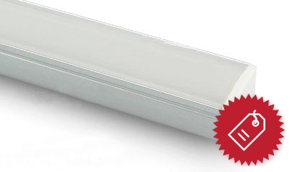
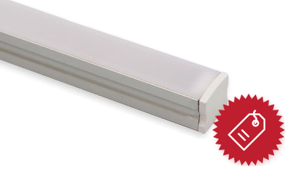
Corner LED profiles: uncompromising lighting
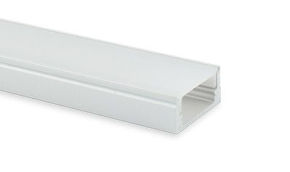
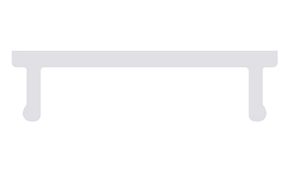
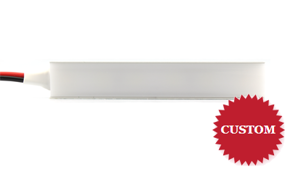
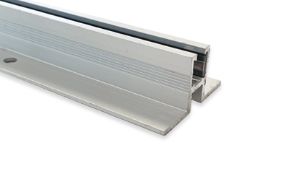
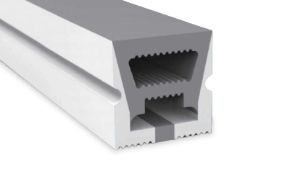
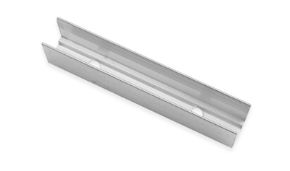
Corner LED profiles are the perfect solution for integrating LED strips into corners, cornices, canopies, or furniture with an impeccable finish and optimal light output. This article, born from years of experience in the LED lighting sector, will guide you in choosing the right corner profile. You won't find just a simple product description, but a true technical and practical manual that will guide you step-by-step in understanding, choosing, and installing the ideal corner profile for your needs. We will discuss materials, dimensions, thermal power, light diffusion, mounting techniques, and all those details that make the difference between a "DIY" job and a top-level professional installation. Get ready to discover why corner LED profiles are the key element that transforms a simple light strip into an integrated, elegant, long-lasting, and powerful lighting system. Before delving into the technical aspects, it's essential to understand exactly what we're talking about. Corner LED profiles are structural components, typically made from extruded aluminum or high-quality plastic, specifically designed to house and protect an LED strip inside their channel. The distinctive feature that differentiates them from linear or recessed profiles is their shape: they are conceived to be easily installed in a corner, usually at 90 degrees, utilizing the joints between two perimeter surfaces. Imagine wanting to illuminate the coffered ceiling of your kitchen, the frame of a wall-mounted cabinet, the canopy above the cooktop, or the edge of a mirror: in all these scenarios, the corner is the dominant architectural element, and the corner profile fits this geometry perfectly, becoming an integral part of the furniture. The corner profile is not a simple "container." It is an engineered system that fulfills multiple critical functions for the successful outcome and longevity of the LED installation. Without an adequate profile, your LED strip is exposed to risks and limitations that seriously compromise the final result. Let's look at each function in detail. The main enemy of LED diodes is heat. Excessive heat buildup at the semiconductor junction causes a phenomenon called "thermal degradation," which translates into a drastic reduction in luminous flux (lumens) and, above all, an exponential shortening of the product's useful life. An LED strip glued directly onto a wood or drywall surface has no way to effectively disperse the heat generated during operation. The profile, especially if made of high-quality extruded aluminum, acts as a massive passive heat sink. Aluminum has excellent thermal conductivity (about 235 W/m·K) and, thanks to its large exchange surface, absorbs heat from the strip and transfers it quickly to the surrounding environment. This keeps the LEDs at an optimal operating temperature, ensuring they truly last the declared 50,000 hours. To quantify the impact, consider data from a study conducted on SMD 2835 LED strips at 3000K, 14.4W/m: The numbers speak clearly: using an aluminum corner profile can more than triple the actual lifespan of your LED lighting, protecting your investment. Discover our range of aluminum corner profiles for LEDs, designed for maximum heat dissipation. LED strips are delicate components. Flexible printed circuits (FPCs) and tiny SMD components can be damaged by accidental impacts, abrasions, dust, and humidity. The corner profile acts as a robust armor, enclosing and shielding the strip from any potentially harmful external agents. Furthermore, the front closure with opal or translucent crystal diffusers completes the work. These diffusers perform two essential tasks: they physically protect the LEDs and, most importantly, homogenize the light output. Without a diffuser, the individual light points of the LEDs are visible and create a very unpleasant "dotted" or "dashed" effect, especially on nearby surfaces. The diffuser mixes the light, transforming a series of distant light points into a continuous, uniform, and pleasant line of light, just like that of a traditional neon light but with all the advantages of LED. In summary, adopting a corner LED strip profile brings concrete and immediately appreciable benefits: Now that we understand the "why," we can delve into the "how to choose." The decision should not be taken lightly, as the final success of your lighting project depends on it. Choosing the correct corner profile is not difficult but requires considering some fundamental parameters in relation to the specific project. By following this systematic guide, you will avoid common mistakes and be certain to buy the right product on the first try. The choice of material is probably the most important, as it directly affects heat dissipation, robustness, aesthetics, and price. Extruded aluminum is the premium material par excellence in the world of LED profiles. The extrusion process allows for the creation of complex and robust shapes with millimeter tolerances. The advantages are overwhelming: Exceptional thermal dissipation, as we have amply demonstrated. Absolute structural robustness: it does not bend, does not deform, resists impacts. Contained weight and ease of working: it can be cut with a simple handsaw or hacksaw. Professional aesthetics: the natural finish (silver) or anodized (white, black, etc.) finish is high-level and integrates into any context. The only relative "disadvantage" is the slightly higher price, which is however amply repaid by the performance and durability. They are ideal for fixed, high-value installations in residential and commercial environments where light quality and longevity are priorities. Explore our extruded aluminum corner LED profiles. Profiles made of PVC (polyvinyl chloride) offer an economical and versatile solution. They are lightweight, easy to cut, and available in various colors. However, they present significant limitations: heat dissipation is almost non-existent. PVC is a thermal insulator, so the heat generated by the LEDs remains trapped in the channel, overheating the components. For this reason, plastic profiles are recommended exclusively for low-power LED strips (typically below 10W/m) and for temporary applications or where heat dissipation is not critical (e.g., in very cool environments or for short periods of use). They are often used for decorative color (RGB) lighting with low LED density. For heat dissipation reasons, Ledpoint has focused on aluminum. The profile dimensions must be compatible with the width of your LED strip and the available thickness for installation. A wrong choice will make it impossible to mount the strip or close the diffuser. Measure the width of your LED strip: standard strips are 8mm, 10mm, or 12mm wide. Profiles are designed to accommodate them with a small allowance. A profile with an internal channel of 10mm is suitable for strips up to 10mm wide. For a 12mm strip, a 12mm or 13mm channel will be needed. Consider the border height (or channel depth): the profile height, which can vary from 10mm to 25mm and beyond, determines how much the profile will "protrude" from the surface. For very discreet installations, low profiles are chosen (e.g., 10x10mm). If you need to house very powerful strips with many LEDs (e.g., high-density SMD 5050) or plan to use a thick diffuser, you will need a higher channel (e.g., 20x20mm). Practical example: to illuminate the frame of a bathroom mirror with an 8mm wide, low-thickness IP67 LED strip, a 10x10mm corner profile will be perfect. For the general lighting of a kitchen under cabinets, with a powerful 14.4W/m strip, it's better to opt for a 20x20mm aluminum corner profile to ensure adequate dissipation. The diffuser is the "glass" of your lighting system. The main types are: Opal: Perfect diffusion, completely hides individual LEDs. It is the best choice for most direct light applications. Clear/Translucent Crystal: Allows maximum light transmission (less loss), but the LEDs may remain slightly visible. Ideal when you want a more "brilliant" effect or for RGB strips with saturated colors. Micro-prismatic: Offers precise control of the light emission angle, reducing glare. Less common but useful in specific applications. The external finish of the aluminum is a crucial aesthetic detail. The most common finishes are: Natural silver (clear anodization), the most classic and versatile. Matte white, perfect for integration into white walls and ceilings. Choose the finish that best matches your environment from the available options in the drop-down menu. Standard profiles are sold in 2-meter or 3-meter bars. But what if the corner you want to illuminate is 3.5 meters long? Never cut the LED strip at points other than those marked! Instead, you can: 1. use jumper connectors for profiles: small elements inserted between two profiles to align them perfectly and hide the joint; 2. cut the profile to the desired length (aluminum cuts easily) and then place segments of LED strip inside each profile segment, powering them in parallel with connecting cables. Plan the layout before buying. Now that you've chosen the perfect profile, it's time to install it. The operations to be performed are as follows: - Preparation of the surface and measurement; Corner LED profiles are ideal for the following applications: - Kitchen lighting: cabinets, cooktop, island; In this section, we answer the most common questions we receive from our customers regarding corner LED profiles. You will find practical, detailed answers based on our direct field experience, to resolve any doubt you may have before, during, and after your purchase. The price of a quality corner LED profile varies based on material, dimensions, finish, and length. It's essential to consider the cost as an investment in the longevity and performance of your lighting system, not just an expense. Yes, it is possible to paint an aluminum profile, but you must do it the right way to ensure a lasting result and not compromise thermal dissipation. Aluminum has a natural surface that tends to oxidize and not hold common paint well. Here is the correct procedure: Important warning: a thick paint can act as a thermal insulator, slightly reducing the effectiveness of heat dissipation. Therefore, if you need a specific color, we recommend directly purchasing a profile with a colored anodized finish (like our white profile). Anodization is a long-lasting electrochemical treatment that colors the metal without adding significant insulating layers. Choosing the wrong power supply is the most common mistake that can lead to malfunctions, reduced LED life, or even safety risks. Follow this rule and these calculations. The Golden Rule: The power supply must have a power (Watt) rating 20-30% higher than the total consumption of your system. This "safety margin" ensures that the power supply never works at its maximum capacity, staying cool, efficient, and long-lasting. Practical Calculation: Other crucial factors: One of the great advantages of corner LED profiles is the ease of maintenance. With a few simple precautions, you will keep your system like new for years. Ordinary cleaning (every 2-3 months): Extraordinary maintenance (every 2-3 years or as needed): Final advice: the best maintenance is a correct initial installation with a quality profile that dissipates heat well. An LED that does not overheat degrades much more slowly. For any doubt, our spare parts and diffusers are always available for a quick and precise intervention. Choosing Ledpoint.it doesn't just mean buying a product. It means accessing a world of expertise, guaranteed quality, and after-sales support. Our corner LED profiles are selected from among the best European manufacturers, rigorously tested, and sold at competitive prices. We offer fast shipping throughout Italy and a free technical consultation service to help you with selection and installation. Do not entrust your lighting project to components of dubious origin. Invest in quality, invest in professionalism, invest in perfect light. Corner LED profiles: what they are and when to use them
The fundamental functions of corner LED profiles: much more than simple supports
Heat dissipation: the secret to a life span of tens of years
Installation condition Junction temperature (ºC) Lumen output after 10,000h Estimated useful life (L70) Without profile, on wood 85-95 ~70% of initial 15,000 - 20,000 hours With aluminum corner profile 45-55 >95% of initial 50,000 - 70,000 hours Mechanical protection and optimal light diffusion
The tangible benefits of using a corner LED profile
How to choose the perfect corner LED profile: the step-by-step guide with technical data
Parameter 1: the material - aluminum vs. plastic (PVC)
Extruded aluminum corner profiles
Plastic (PVC) corner profiles
Characteristic Aluminum corner profile PVC corner profile Thermal Conductivity ~235 W/m·K (Excellent) ~0.2 W/m·K (Poor) Weight (per linear meter, example 20x20mm) ~350-450 grams ~100-150 grams Robustness Very High Medium-Low Cost Medium-High (pays for itself over time) Low Recommended Application Primary lighting, warm/cool white, high power, permanent installations, kitchens, offices, shops. Decorative RGB lighting at low power, temporary setups, mechanical protection in non-critical environments.
Parameter 2: channel dimensions (width and height)
Parameter 3: the type of diffuser and external finish
Parameter 4: length and joining methods
Step-by-step installation of corner LED profiles
- Cutting of the profile and the LED strip;
- Mechanical fixing: screws, double-sided tape, or glue;
- Insertion and wiring of the LED strip;
- Application of the diffuser and final testing;Practical applications and project ideas with corner profiles
- Bathroom lighting: mirrors, shower enclosures;
- Commercial lighting: shop windows, displays, corridors;
- Architectural lighting: perimeter bands, frames, stairs.
Frequently asked questions about corner LED profiles
How much does a quality corner LED profile cost?
Can I paint the aluminum profile?
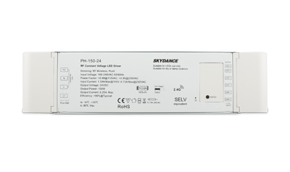
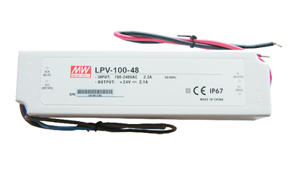
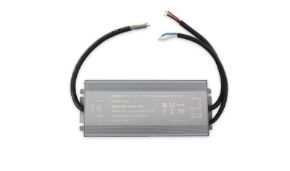
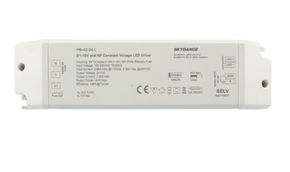
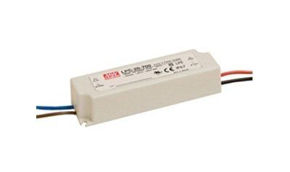
Which power supply should I choose for my system?
How to clean and maintain the profile over time?
Why buy corner LED profiles on Ledpoint.it