




LED backlighting: a complete guide
Today we will delve into LED backlighting, a technology that has revolutionized the world of lighting, design, and display. In this article, we will explore every aspect of this lighting solution: from its fundamental basics to the most advanced applications in the fields of home automation and professional lighting.
A special focus will be dedicated to the DALI protocol (Digital Addressable Lighting Interface), the digital communication standard that represents the present and future of intelligent lighting control, and to the DALI controllers for LED strips available on Ledpoint.it. Whether you are a professional in the sector, a technology enthusiast, or simply curious to discover how to optimize the lighting in your spaces, this discussion will provide you with all the necessary knowledge.
Backlighting: what is it?
Before delving into technical details, it is essential to understand what is meant exactly by backlighting. This chapter lays the theoretical and practical foundations to fully appreciate the evolution and potential of this technology.
Definition of backlighting
Backlighting is a particular type of lighting solution that consists of placing a light source inside an application, so as to illuminate a surface or a panel, making this light visible from the outside.
Unlike direct lighting, which points towards an object or space, backlighting is located "behind" the element to be illuminated, creating a diffused, uniform, and often high-impact aesthetic effect. It is not an essential parameter for a product's functionality, but it represents a significant added value, conferring an aesthetic and design component that can, in many cases, also transform into practical functionality.
From neon to LED and LED bars for backlighting
For decades, backlighting was the undisputed domain of neon lamps. These sources, characterized by low-intensity light with an orange hue and relatively low consumption, offered a lifespan of about 20,000 hours. However, they had significant limitations: bulky dimensions, a very limited color range (to vary the hue, colored fluorescent lamps like green were used), and little possibility for customization. These intrinsic properties, unsuitable for the miniaturization and flexibility needs required by modern products, paved the way for a technological revolution.
The LED revolution
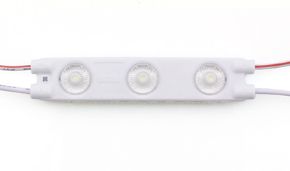
The advent of Light Emitting Diodes (LEDs) has completely transformed the backlighting landscape. An LED source consists of one or more light diodes strategically placed within the application. Compared to neon, LED backlighting offers a significantly superior aesthetic result in terms of light intensity, uniformity, and available color spectrum. The single LED, especially in the SMD (Surface-Mounted Device) version mounted on printed circuit boards (PCBs), allows working in extremely small spaces, opening up previously unimaginable design possibilities.
The advantages are overwhelming: a lifespan that can reach and exceed 50,000 hours (versus 20,000 for neon), very high energy efficiency, reduced heat emission, and above all, virtually infinite customization. LED technology allows not only choosing from an infinity of whites and colors but also integrating smart functionalities. With RGB (Red, Green, Blue) and RGBW (with an added White channel) LEDs, the light can change color to indicate different device states (e.g., red for "heating," blue for "ready for use") or simply to create atmospheres.
LED backlighting: technique, design, and advantages
Let's now explore the more technical aspects of LED backlighting, examining how to design an effective solution, its undisputed strengths, and the fields where it finds application.
Design parameters and technical specifications for backlighting
Designing a customized LED backlighting system requires attention to numerous critical parameters. The first step is always the analysis of the customer's request and the application context. Technical factors to be precisely defined include:
- type of light: direct, diffused, spot;
- light intensity: measured in lumens, to be defined based on use;
- color and hue: color temperature (e.g., 2700K warm, 4000K neutral, 6500K cool) or specific RGB color;
- distribution: homogeneous light or with differentiated spotlight effects;
- operating voltage: typically low voltage (12V, 24V, 36V DC) for safety and compatibility with controllers;
- maximum operating temperature: fundamental to ensure LED reliability and longevity;
- source position: study of internal dimensions for correct placement;
- type of fixing: mechanical or adhesive, based on the support.
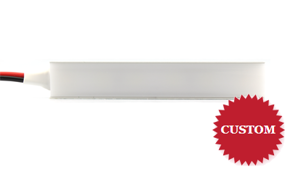
For custom applications, it is vital that the client provides the exact internal dimensions of the device. This allows designing a "plastic case" or a PCB that perfectly fits the available space, also facilitating any future maintenance or replacement operations.
The advantages of LED backlighting
The choice of LED backlighting is supported by a series of tangible and measurable advantages:
1. energy efficiency and savings: LEDs convert a very high percentage of absorbed electrical energy into light, dissipating little heat. This translates into drastically reduced consumption compared to previous technologies, with savings that can exceed 90% in some applications, contributing significantly to environmental and economic sustainability;
2. very long lifespan: with a useful life ranging from 50,000 to 100,000 hours, LED systems minimize maintenance and replacement costs and interventions;
3. superior light quality: they offer excellent color rendering (CRI), uniformity in light emission, and absence of flicker, improving visual comfort and quality of perception in display applications;
4. thin and flexible design: LED strips and SMD modules allow for extremely thin and light backlighting solutions, ideal for portable electronic devices, televisions, monitors, and design objects where space is precious;
5. dynamic control and intelligence: LEDs can be dimmed smoothly and precisely and, in color-variable versions (CCT, RGB), allow for total control of hue and lighting atmosphere. This characteristic is the gateway to intelligent lighting, which we will discuss extensively with the DALI protocol.
Main application areas of backlighting
The versatility of LED backlighting allows its use in a myriad of sectors:
- civil and industrial lighting sector: lighting profiles for ceilings, steps, furniture, shelving, safety signage;
- appliances and Consumer Electronics: backlighting of control panels, displays, ovens, coffee machines, televisions (where, together with QLED technology, it improves contrast and color gamut);
- light Signs and Advertising: luminous letters and logos, lightboxes, billboards;
- automotive and Transport: instrument panels, control panels, ambient lighting in cabins;
- architecture and Interior Design: accent lighting for niches, shop windows, artworks, designer furniture.
The DALI protocol: intelligent backlighting
We now come to the technological heart of modern backlighting: the DALI protocol. If LEDs are the "muscle" that produces light, DALI is the "nervous system" that commands, coordinates, and makes it intelligent. This chapter explores its fundamentals, architecture, and evolution.
DALI: what it is and why it was born
DALI (Digital Addressable Lighting Interface) is a standardized digital communication protocol, specifically designed for lighting control. Born in the late 1990s from the collaboration of major manufacturers in the sector, it was standardized internationally by the IEC (International Electrotechnical Commission), first with standard IEC 60929 and later, in an updated version, with the IEC 62386 series. Unlike old analog systems like 1-10V, which offered limited and non-standardized control, DALI was born to solve problems of scalability, precise control, and interoperability .
Its philosophy is that of an open, non-proprietary standard: any manufacturer can implement it, ensuring that devices from different brands can communicate on the same system. This protects client investments and fosters innovation.
Architecture and operating principle
A DALI system is based on a simple yet powerful network architecture. At its center is a two-wire bus that carries both the control power supply (typically 16V DC) and the digital communication signals. All devices are connected in parallel to this bus. The topology can be bus, star, tree, or linear, offering great wiring flexibility, but not ring or mesh .
Fundamental characteristics of DALI operation
The DALI protocol is characterized by some fundamental features such as:
1. individual addressing: each device (e.g., a driver for an LED strip) on the bus has a unique address, from 0 to 63. This allows the controller to talk to each device individually, with a precision impossible for analog systems [citation:2][citation:4].
2. bidirectional communication: this is the true revolution. The controller not only sends commands (e.g., "turn on at 50%"), but can also receive information from the device (status, consumption, failure, temperature). It enables proactive monitoring and diagnostics.
3. creation of groups and scenes: devices can be logically grouped (e.g., "All lights in the open space") and complex lighting scenes can be stored (e.g., "Meeting Mode", "Relax Mode") activatable with a single command.
The main components of a system are: the application controller (the brain that executes the logic), the DALI bus power supply, the control devices (dimmable DALI LED drivers), and the input devices (switches, motion and light sensors).
Advantages of the DALI lighting control system
Implementing a DALI system is not a simple technical upgrade, but a strategic choice that brings concrete and measurable benefits in terms of performance, management, and costs.
Unmatched flexibility and scalability
Flexibility is the hallmark of DALI. Once the bus wiring is installed, all control logic is software-based. Modifying which switch controls which light group, changing device assignments to groups, updating lighting scenes, or adding new functionalities requires no intervention on the cables, only software reconfiguration.
This is revolutionary in dynamic environments like offices that change layout, stores that rearrange spaces, or hotels that adapt suite atmospheres. Scalability is simple: up to 64 devices can be added per bus, and multiple buses can be linked for very large installations.
Energy efficiency and cost savings
Energy saving is a primary driver. An optimized DALI system with sensors can reduce lighting consumption by up to 90%. How?
- precise dimming: adjusting the light to the minimum level necessary for comfort, without waste;
- integration with sensors: presence sensors automatically turn off lights in unoccupied spaces. Daylight sensors adjust artificial lighting based on natural light entering from windows, maintaining a constant light level and minimizing energy use;
- centralized time management: scheduling of on/off times based on space usage schedules.
In addition to bill savings, maintenance costs are reduced. Integrated diagnostics allow rapid identification of a fault (e.g., a malfunctioning LED strip or driver), indicating its exact location, reducing intervention times.
Comfort, well-being, and productivity
DALI is not only about saving, but also about improving quality of life and work. The ability to create pre-set scenes (for meetings, presentations, breaks) adapts the environment to ongoing activities with a click [citation:4]. Controlling color temperature (CCT) is fundamental: one can program cool, bright light for morning concentration, and warm, soft light for evening relaxation, mimicking the natural light cycle and supporting the circadian rhythm (human-centric lighting). All this contributes to visual well-being and can increase productivity and satisfaction in work environments.
Integration and future proofing
DALI is designed for integration. It is not a technological island, but a specialized subsystem that connects perfectly to wider ecosystems:
- Building management system (BMS): through gateways, a DALI system can communicate with the building's central BMS, which manages heating, air conditioning, security. For example, in case of a fire alarm, the BMS can command DALI to turn all lights to 100% for evacuation;
- IoT and open standards: the evolution towards DALI+ (DALI over wireless) and integration with protocols like Matter opens the doors to intelligent lighting in the residential sector and interconnection with other smart home devices [citation:7].
Being a global and continuously evolving standard (DALI-2, DALI+), choosing DALI means making a future-proof investment, easily upgradeable and expandable.
Designing a DALI-controlled LED backlighting system: best practices
Moving from theory to practice requires careful planning. This chapter provides a step-by-step guide and best practices for designing a successful system.
Design phases
1. Needs analysis and goal definition: what must the lighting do? Create atmosphere? Highlight products? Provide ambient light? Define the desired lighting scenes;
2. LED selection: based on needs, select type (monochrome, CCT, RGB, RGBW), LED density (LEDs/m), power (W/m), protection rating (IP20 for indoors, IP65/67 for outdoors/bathrooms), color quality (CRI >80 for lived-in environments, >90 for retail);
3. Power supply sizing: calculate the total power of the LED strips and choose a power supply with a capacity 20% higher for safety and longevity. Verify that the output is constant voltage (CV) compatible with strips and controllers;
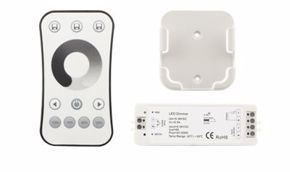
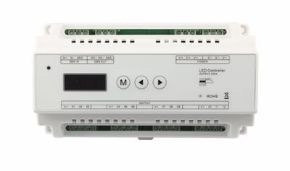
4. Selection of the DALI Controller: choose the controller based on the number of channels needed, required power, need for color control, and DALI-2 compatibility. For simple systems, a controller with an integrated master may be sufficient. For complex installations, a dedicated application controller will be needed;
5. Wiring design: plan the DALI bus route. Remember: free topology but not ring. Use twisted pair cables of at least 1.5 mm² for distances up to 300m. The bus is not polarized (DA+ and DA- cables are interchangeable). For power lines to the strips, calculate voltage drop and plan additional power injection points for long installations;
6. Programming and commissioning: assign addresses to each driver/controller, create logical groups, program scenes, and connect input devices (sensors, switches). This phase requires specific software and often the intervention of a specialized installer.
Common mistakes to avoid
It is necessary to pay close attention to some precautions to avoid the most common mistakes:
- overloading the controller or power supply: always respect current and power limits;
- underestimating voltage drop: with long strips and high currents, the voltage at the end of the strip can drop, causing non-uniform lighting. Use power supply from both ends or inject power at intervals;
- mixing devices from different brands without verification: although DALI promises interoperability, with uncertified DALI v1 devices there may be inconsistencies. Prefer certified DALI-2 devices for total guarantee;
- neglecting heat dissipation: controllers and especially power supplies generate heat. Ensure they are installed in well-ventilated environments and, if necessary, on heat sinks;
- inadequate programming: the power of DALI lies in the logic. Hasty or unintuitive programming negates the system's benefits. Invest time in designing control logics.
Case studies: backlighting application
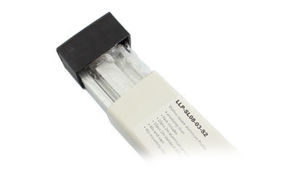
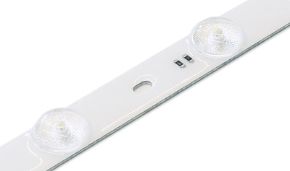
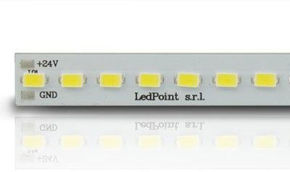
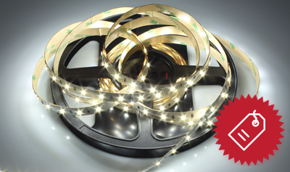
The evolution of LED technology has made backlighting bars key components in projects requiring impeccable light quality and high reliability. Unlike common flexible strips for light signaling, these bars are designed as technical light sources for specialized and integrated applications, where parameters like light uniformity, efficiency, and long lifespan are fundamental. Below, we analyze two real scenarios where LED bars for backlighting were decisive for project success.
1. Design of a photometry and color analysis laboratory
A research center specialized in calibrating optical sensors needed a standardized reference light source for its darkrooms. The technical requirements were extremely stringent: white light at a constant and certified color temperature (3000K 3-step), high efficiency to reduce heat emitted into the controlled environment (150 lm/W), and perfect luminous uniformity without hot spots or shadows.
Implemented Solution: flexible LED bars with very high diode density (240 LEDs/m) were selected and installed. This configuration guaranteed a completely homogeneous light distribution, creating a uniform light field essential for instrumental measurements. The flexibility of the module allowed them to be slightly curved to adapt to the internal geometry of the test chamber. The combination of high luminous flux (2000 lm/m) and high efficiency allowed achieving the required intensity while minimizing absorbed power and, consequently, dissipated heat, which could have influenced precision measurements.
Measurable Results: the laboratory was able to standardize and certify its optical bench with a source whose stability over time exceeded accelerated aging tests. The solution guaranteed measurement repeatability exceeding 99.8%, becoming a critical asset for the laboratory's accreditation. The absence of maintenance (thanks to the long LED lifespan) ensured operational continuity and zero interruptions in work cycles.
2. Base lighting for an industrial machine vision inspection system
A manufacturer of precision automotive components needed to optimize the machine vision inspection system on an assembly line. The problem was inconsistent lighting causing false negatives in quality checks. They needed a cool, stable, flicker-free light to uniformly illuminate the conveyor belt from under a frosted glass plate (diffuse backlighting), creating high contrast for the parts' contours.
Implemented Solution: under the inspection glass plane, several high-brightness rigid LED bars were installed in parallel, placed in a dedicated frame to guarantee precise angle and distance. The choice fell on models with a very high Color Rendering Index (CRI) and a driver that eliminated any flicker, even at very high camera acquisition frequencies. The possibility of precisely cutting the bars (in this case, every 5cm) allowed perfect adaptation of the light source length to the work area, maximizing uniformity.
Measurable Results: the implementation led to a 40% improvement in defect recognition reliability by the machine vision system, drastically reducing upstream returns. The stability and uniformity of the light allowed reducing the necessary lighting power, with estimated energy savings of 30% compared to previous fluorescent lamps. The robustness of the bars and absence of moving parts guaranteed 24/7 operational continuity without replacements for over 50,000 hours of operation.
Technical Conclusion: these cases demonstrate how LED bars for backlighting are not simple substitutes for other sources, but engineered components for extreme performance. Their ability to provide uniform, stable, and efficient light makes them the mandatory choice in contexts where light quality is a critical process parameter, whether in scientific research, industrial quality control, medical, or broadcast applications. The investment is fully justified by the improvement in final product quality, process repeatability, and reduction of long-term operational costs.
Backlighting: guaranteed design, comfort, and efficiency
LED Backlighting controlled via the DALI protocol represents the current pinnacle of lighting technology applied to design, comfort, and efficiency. They are no longer simple "light bulbs," but a digital nervous system for light, capable of dynamically adapting to the needs of people, activities, and the environment.
From the analysis conducted, its strengths clearly emerge: unparalleled project flexibility, extreme energy savings, improved visual comfort, perfect integration with the smart building, and a lifespan that guarantees return on investment. DALI controllers for LED strips, like the high-end ones available on Ledpoint.it, are the tools that turn this power into reality, allowing light to be sculpted with millimeter precision.
Looking to the future, developments are already mapped: the spread of the DALI-2 standard will guarantee an increasingly interoperable and reliable ecosystem; DALI+ will bring the protocol's advantages into the wireless world, simplifying retrofit installations; integration with Matter and other IoT standards will open even more sophisticated and user-friendly home and building automation scenarios.
For designers, architects, installers, and the most demanding end users, investing in the knowledge and implementation of DALI-controlled LED backlighting systems is not an optional choice, but a necessary step towards creating intelligent, efficient, beautiful spaces ready for tomorrow's challenges. Ledpoint.it, with its range of technologically advanced products and its specialized support, positions itself as the ideal partner on this path of conscious and cutting-edge lighting.