








How to read an led datasheet
The LED technical datasheet represents the fundamental document for any professional, designer, installer, or purchasing manager who needs to correctly select LED lighting products. Understanding how to read and correctly interpret every single parameter present in the LED technical datasheet is the difference between a high-performing, durable, and code-compliant lighting installation, and an investment that disappoints expectations in terms of light quality, energy efficiency, and longevity. In this comprehensive guide, designed for Ledpoint's clients and partners, we will analyze in depth every item found in a professional LED technical datasheet, from fundamental photometric quantities such as luminous flux and efficacy, to advanced color quality parameters such as SDCM and the reliability standards TM-21 and LM-80 that define the actual useful life of an LED product.
The LED lighting market has grown exponentially in recent years, bringing with it a proliferation of products with extremely variable quality. In this scenario, the LED technical datasheet is the only objective tool that allows comparison of different products on measurable bases. It is no longer enough to rely on brand or price: it is necessary to understand the data. The technical characteristics of LED strips can vary enormously even between apparently similar products, and only a careful analysis of the LED strip datasheet allows identification of the differences that truly matter. Ledpoint products stand out precisely for the completeness and transparency of their LED technical datasheets, which report all the parameters necessary for an informed choice, from photometric data to LM-80 test results and TM-21 projections.
In this guide, we will systematically address every aspect of the LED technical datasheet, starting from the basics of LED technology and progressing to the most advanced parameters. We will cover the operation of LED diodes, supply voltages, photometric quantities, color rendering, color uniformity, useful life, electrical diagrams for LED strip installation, selection criteria for different applications, and much more.
Introduction to LED technology and the LED technical datasheet
Before diving into reading the LED technical datasheet, it is essential to understand the basics of the technology underlying every solid-state lighting product. This introductory section provides the necessary context to correctly interpret every parameter we will encounter in subsequent sections, and is particularly useful for those approaching the world of professional LED lighting for the first time or wishing to consolidate their fundamental knowledge before tackling the more technical details of the LED technical datasheet.
How an LED is constructed and how LED diodes work
To fully understand the data contained in an LED technical datasheet, it is essential to start from the physical structure of the component. How is an LED made? The LED (Light Emitting Diode) is a semiconductor electronic component that directly converts electrical energy into light through a physical phenomenon called electroluminescence. Unlike incandescent lamps, which produce light by heating a filament to incandescence (and dissipate most of the energy as heat), or fluorescent lamps, which excite a gas to produce ultraviolet radiation then converted into visible light by a phosphor coating, the LED generates light directly and extremely efficiently.
An LED diode is composed of several fundamental elements, each of which influences the performance reported in the LED technical datasheet:
- The semiconductor chip (die) is the heart of the LED. It is a crystalline structure composed of layers of semiconductor materials with different electrical properties. The junction between an N-type layer (with excess electrons) and a P-type layer (with electron deficit, called holes) is where the magic happens: when an electric current passes through this junction in forward bias, electrons recombine with holes releasing energy in the form of photons, i.e., light. The semiconductor material used determines the wavelength of the emitted light and, consequently, the color. For high-quality white LEDs, a chip based on indium gallium nitride (InGaN) that emits blue light is typically used, combined with a phosphor layer that converts part of the blue light into yellow light, thus achieving the perception of white light. This is one of the fundamental LED characteristics that directly influences the color quality reported in the LED technical datasheet.
- The substrate is the base on which the semiconductor crystal is grown. The most common substrates are sapphire (Al₂O₃), silicon carbide (SiC), and, in more advanced technologies, gallium nitride itself (GaN-on-GaN). The choice of substrate affects thermal efficiency, luminous efficacy, and LED reliability. High-end products in the Ledpoint catalog use chips on substrates that guarantee the best possible thermal dissipation, a critical factor for product longevity.
- The phosphor layer, in white LEDs, is a coating applied over the blue chip that converts part of the blue radiation into longer wavelengths (yellow, red, green). The composition, distribution, and quality of the phosphors directly determine the color temperature (expressed in Kelvin, K), the color rendering index (CRI or Ra), and color stability over time. In the LED technical datasheet, these parameters are among the most important for applications where light quality is a priority, such as in architectural lighting, retail, and hospitality.
- The package (housing) is the structure that encloses the chip, provides electrical connections, protects the semiconductor from the external environment, and manages heat dissipation. The most common packages in modern LED strips include SMD (Surface Mount Device) formats such as 2835, 3528, 5050, and 2216, as well as COB (Chip on Board) packages that integrate multiple chips on a single substrate for more uniform light emission. In the LED technical datasheet or LED strip datasheet, the package type is always indicated and provides important information about expected performance. For example, a latest-generation SMD 2835 LED can offer significantly higher efficacy than a previous-generation SMD 5050 LED, and the LED technical datasheet is the tool to verify these differences.
- The primary optic is the lens integrated into the package that determines the light emission angle. In LED strips, the typical emission angle is 120°, but configurations with different angles exist for specific applications. This data is always present in the LED technical datasheet and influences lighting design.
- The bonding wire is a very thin wire (typically gold or copper) that electrically connects the chip to the external package. The quality of the bonding affects the long-term reliability of the LED.
So how do LED diodes work? The operating principle is based, as mentioned, on electroluminescence. When a forward bias voltage is applied to the P-N junction (i.e., connecting the positive pole to the anode and the negative pole to the cathode), the junction's potential barrier is lowered and electrons from the N region and holes from the P region migrate toward the junction zone where they recombine. The energy released by this recombination is emitted in the form of photons. The photon energy, and therefore the wavelength of the light (its color), depends on the energy gap of the semiconductor material used. This is one of the most important LED characteristics to understand: the color of light emitted by an LED is not determined by a filter but by the physics of the semiconductor itself.
In LED strips, dozens or hundreds of these LED diodes are mounted in series and/or in parallel on a flexible printed circuit (FPC) or rigid printed circuit board (PCB), connected through conductive traces and powered through a circuit that ensures the correct voltage and current to each LED. The LED strip technical datasheet describes this configuration in detail, indicating the number of LEDs per meter, the series/parallel configuration of the circuits, the required supply voltage, and the current absorbed.
What is the fundamental characteristic of LEDs: conversion efficiency
The fundamental characteristic of LEDs that distinguishes them from all other light sources is their extraordinary efficiency in converting electrical energy into visible light. While an incandescent lamp converts only about 5% of the electrical energy consumed into visible light (the remaining 95% is dissipated as heat and infrared radiation), a high-quality LED can convert up to 50% or more of electrical energy into visible light. This translates into luminous efficacy that in the LED technical datasheet is expressed in lumens per Watt (lm/W) and which for modern high-end LEDs exceeds 200 lm/W at the chip level, while at the system level (including losses from optics, driver, and thermal) it typically ranges between 100 and 170 lm/W for professional LED strips.
This efficiency has direct and measurable economic implications: a lighting installation based on high-efficiency LED strips, such as those offered by Ledpoint, can reduce energy consumption by 60-80% compared to an equivalent installation with traditional sources, with investment payback periods often under 2 years. The LED technical datasheet is the tool that allows precise calculation of these savings, providing the power, luminous flux, and efficacy data necessary for energy sizing.
Why the LED technical datasheet is indispensable
The LED technical datasheet is not a simple commercial document: it is a tool that provides measurable and verifiable data on product performance. Its importance is recognized in technical specifications for public and private tenders and in industry best practices for lighting. There are multiple reasons why the LED technical datasheet is absolutely indispensable in daily professional practice.
Regulatory compliance is one of the most critical aspects. European ecodesign regulations (EU Regulation 2019/2020) and energy labeling (EU Regulation 2019/2015) impose minimum requirements for efficiency, color quality, and durability for lighting products placed on the European market. The LED technical datasheet documents compliance with these requirements and forms an integral part of the technical documentation that the manufacturer must make available. For a construction entrepreneur or lighting designer, verifying regulatory compliance through the LED technical datasheet is a professional obligation.
System sizing requires precise and reliable data. To calculate the number of LED strips needed to illuminate an environment according to the levels prescribed by standard UNI EN 12464-1 (lighting of indoor workplaces), the designer must know the luminous flux, photometric distribution, efficacy, and physical dimensions of each component. All this data is found in the LED technical datasheet and the LED strip datasheet. Without a complete and accurate LED technical datasheet, any lighting calculation is unfounded.
Comparison between products is only possible when standardized and complete LED technical datasheets are available. Two LED strips may appear identical to the naked eye but have radically different performance in terms of efficacy, color rendering, color uniformity, and lifespan. Only by comparing LED technical datasheets is it possible to identify the product that offers the best quality/price ratio for a specific application. Ledpoint products stand out for the completeness of their LED strip datasheets, which enable transparent and objective comparison with any competing product.
Guaranteeing performance over time is an often overlooked but fundamentally important aspect. An LED does not suddenly stop working like an incandescent lamp whose filament burns out: its luminous flux gradually decreases over time, in a process known as lumen depreciation. The LED technical datasheet that reports useful life data based on LM-80 and TM-21 standards (which we will explore in dedicated sections) provides scientifically founded information on the actual product lifespan, enabling maintenance planning and calculation of total cost of ownership (TCO).
What a professional LED technical datasheet looks like
A professional LED technical datasheet is a structured document that contains several sections, each dedicated to a specific category of parameters. Understanding this structure is the first step to reading it effectively. Let's examine the typical structure of a complete LED technical datasheet, such as those provided by Ledpoint for its LED strips.
The product identification section contains the article code, commercial name, brief description, product images, and available variants. In the Ledpoint LED technical datasheet, this section is accompanied by high-resolution photographs and dimensional technical drawings that facilitate product identification and integration into the project.
The electrical data section reports the supply voltage, nominal current, power absorbed per meter, and total reel power. This data in the LED technical datasheet is essential for sizing power supplies and calculating voltage drops in supply lines, topics we will explore in the sections dedicated to electrical diagrams.
The photometric data section is the heart of the LED technical datasheet and contains luminous flux (in lumens), luminous efficacy (in lm/W), color temperature (in Kelvin), color rendering index (CRI/Ra), emission angle, and, in professional products, the SDCM value. In Ledpoint LED strip datasheets, this data is reported for each available color temperature and driving current variant.
The physical and mechanical data section includes dimensions (length, width, height), weight, PCB/FPC material, IP protection rating, minimum and maximum operating temperature, and information on flexibility and cutting options. In the LED strip datasheet, the minimum cutting distance (cut point) is particularly important information for the installer.
The durability and reliability section reports estimated useful life (typically expressed as L70 or L80 according to the TM-21 standard), LM-80 test results, test conditions (temperature, current), and recommendations for ensuring declared performance. This is one of the most complex sections of the LED technical datasheet and one of the most important for calculating return on investment.
The certifications and compliance section lists markings (CE, UKCA, UL, cUL), applicable directives (RoHS, REACH, Low Voltage Directive, electromagnetic compatibility), product certifications, and declarations of conformity. For the professional, verifying certifications in the LED technical datasheet is a mandatory step to ensure the legality and safety of the installation.
Finally, the installation diagrams and instructions section provides connection diagrams, electrical schematics, maximum connectable length limits, recommendations on compatible power supplies and controllers, and instructions on mounting methods. In the Ledpoint LED strip technical datasheet, this section is particularly detailed and includes diagrams for single and multiple configurations, with and without dimming, in series and in parallel.
| Section | Main Parameters | Unit of Measure | Importance |
|---|---|---|---|
| Product Identification | Code, name, variants, images | - | Identification and selection |
| Electrical Data | Voltage, current, power | V, A, W, W/m | System sizing |
| Photometric Data | Flux, efficacy, CCT, CRI, SDCM | lm, lm/W, K, Ra, step | Light quality |
| Physical Data | Dimensions, weight, IP, operating temperature | mm, g, IP, °C | Installation and compatibility |
| Durability and Reliability | Useful life L70/L80, LM-80, TM-21 | hours | TCO calculation and maintenance |
| Certifications | CE, UL, RoHS, REACH, energy class | - | Compliance and safety |
| Installation Diagrams | Diagrams, maximum lengths, compatibility | m, mm | Correct installation |
Voltage, current, and LED power supply
Electrical data is among the first parameters that a professional consults in the LED technical datasheet, since it determines fundamental choices related to power supply, wiring, and installation safety. This section comprehensively answers the most frequent questions about LED voltage and current, providing the basis for correctly understanding and using the electrical data present in the LED technical datasheet and the LED strip datasheet of any professional product.
At what voltage are LEDs powered? The Forward voltage
One of the most frequent questions regarding LED electrical characteristics is: at what voltage are LEDs powered? The answer requires a fundamental distinction between the operating voltage of the single LED chip and the supply voltage of the system (LED strip, module, or lamp).
At the single LED chip level, the operating voltage (called Forward voltage or Vf) is relatively low and depends on the semiconductor material, therefore on the color of the emitted light. This is one of the fundamental LED characteristics and is always reported in the chip manufacturer's datasheet. Here are typical forward voltage values for different LED colors:
| LED Color | Semiconductor Material | Typical Vf (V) | Min Vf (V) | Max Vf (V) | Wavelength (nm) |
|---|---|---|---|---|---|
| Red | AlGaInP | 2.0 | 1.8 | 2.2 | 620-635 |
| Amber / Orange | AlGaInP | 2.1 | 1.9 | 2.3 | 585-600 |
| Yellow | AlGaInP | 2.1 | 1.9 | 2.4 | 580-590 |
| Green | InGaN | 3.0 | 2.8 | 3.5 | 520-535 |
| Blue | InGaN | 3.2 | 2.8 | 3.6 | 460-475 |
| White (warm) | InGaN + phosphors | 3.0 | 2.8 | 3.4 | - |
| White (cold) | InGaN + phosphors | 3.2 | 2.9 | 3.5 | - |
| UV | InGaN / AlGaN | 3.5 | 3.2 | 4.0 | 365-405 |
These values are one of the most important LED characteristics for understanding the diode's electrical behavior. How do you know the voltage of an LED? The most reliable method is to consult the specific chip datasheet provided by the semiconductor manufacturer. Alternatively, for an already mounted LED, you can measure it with a multimeter in diode mode: connecting the red probe to the anode and the black to the cathode, the multimeter will show the approximate forward voltage. How to determine LED polarity? In through-hole LEDs, the longer lead is typically the anode (+) and the shorter one the cathode (-). In SMD LEDs mounted on LED strips, polarity is indicated by a mark on the package (a dot, notch, or colored bar) and the LED technical datasheet always reports the polarity diagram for each package type.
At the system level (LED strip, module, lamp), the supply voltage is different from the Forward voltage of the single LED. LED strips are designed to operate at standardized direct current (DC) voltages:
| Supply Voltage | Current Type | LED Configuration | Typical Maximum Length | Main Applications |
|---|---|---|---|---|
| 12V DC | Direct current | 3 LEDs in series + resistor | 5 m (single supply) | Decorative lighting, backlighting, small projects |
| 24V DC | Direct current | 6 LEDs in series + resistor | 10 m (single supply) | Architectural lighting, commercial, LED profiles |
| 48V DC | Direct current | 12 LEDs in series + resistor | 20 m (single supply) | Extended installations, large architectural projects |
| 230V AC | Alternating current | Special configuration with integrated rectifier | 50-100 m | Outdoor decorative lighting, long runs |
In the Ledpoint LED technical datasheet and LED strip datasheet, the supply voltage is always clearly indicated, along with the allowable tolerance. It is essential to strictly respect this parameter: powering a 12V LED strip with a 24V power supply can cause irreversible damage and safety risks, while powering it with insufficient voltage will produce weak and non-uniform light. What voltage is needed to turn on an LED? Practically speaking, the answer is the nominal voltage indicated in the LED technical datasheet of the product you intend to use.
Driving current: how many amps does an LED absorb?
If voltage determines the LED's operating point, current determines brightness and, to a significant extent, lifespan. How many amps does an LED diode absorb? The typical driving current of a standard power LED (e.g., SMD 2835) ranges between 30 and 150 mA, depending on chip size and application. High-power LEDs can absorb currents of 350 mA, 700 mA, or even higher.
How many amps are needed for an LED? The precise answer is always in the LED technical datasheet of the specific chip, which reports the nominal current (If) and the absolute maximum current. Exceeding the maximum current even briefly can irreversibly damage the LED due to junction overheating. This is why the LED technical datasheet of professional LED strips always specifies the nominal current per LED or per meter, along with total power.
For LED strips, calculating the total absorbed current is essential for correctly sizing power supplies and wiring. The formula is simple but fundamental:
Total Current (A) = Total Power (W) ÷ Supply Voltage (V)
For example, a 14.4 W/m LED strip powered at 24V, for a length of 5 meters, will absorb:
Total Power = 14.4 W/m × 5 m = 72 W
Total Current = 72 W ÷ 24 V = 3.0 A
This data, obtainable from the LED technical datasheet, is indispensable for selecting the power supply (which should have higher power, typically 20% as a safety margin, so at least 86.4 W in this case) and the cross-section of connection cables. Ledpoint LED strip datasheets always report power per meter and total power per reel, greatly facilitating these calculations.
| Parameter | 12V LED Strip | 24V LED Strip | 48V LED Strip |
|---|---|---|---|
| Power per meter | 9.6 W/m | 14.4 W/m | 19.2 W/m |
| Installed length | 5 m | 10 m | 15 m |
| Total power | 48 W | 144 W | 288 W |
| Absorbed current | 4.0 A | 6.0 A | 6.0 A |
| Recommended power supply (20% margin) | 60 W | 175 W | 350 W |
| Minimum recommended cable cross-section | 0.75 mm² | 1.0 mm² | 1.0 mm² |
The voltage-current relationship in LEDs: I-V characteristic curve
One of the most important LED characteristics from an electrical standpoint is its current-voltage (I-V) characteristic curve, which describes the non-linear behavior of the LED diode. Unlike a resistor, where current is proportional to voltage (Ohm's law), in an LED the current grows exponentially once the threshold voltage is exceeded. This means that even small voltage variations above the threshold can cause large current variations, with consequences for brightness and chip temperature.
This characteristic is the reason why professional LEDs are driven with constant current rather than constant voltage. In constant voltage LED strips (12V, 24V, 48V), current regulation is handled by resistors integrated into the strip itself, which limit the current through each group of LEDs connected in series. The LED technical datasheet of a quality strip reports the resistor values or at least the resulting current for each LED, allowing the professional to verify that the LEDs operate within the limits specified by the chip manufacturer.
What happens if the nominal current is exceeded? Excess current produces an increase in the LED junction temperature, which in turn causes a reduction in luminous efficacy (more energy is converted to heat rather than light), a shift in color temperature (warm white becomes warmer, cold white becomes more neutral), an acceleration of lumen depreciation (reduced lifespan), and, in extreme cases, chip failure. The LED technical datasheet always specifies the current and temperature conditions to which the declared performance data refers, and it is the designer's responsibility to ensure these conditions are met in the actual installation.
Do LED strips need a transformer? LED power supplies and drivers
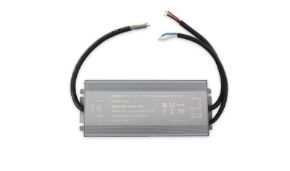
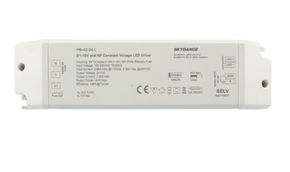
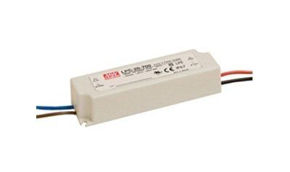
Do LED strips need a transformer? Yes, but the correct term is power supply (or LED driver), not transformer. A transformer only converts alternating voltage from one level to another (e.g., from 230V AC to 12V AC), while an LED strip power supply performs two conversions: it reduces the voltage and rectifies the current from alternating (AC) to direct (DC). LED strips operate exclusively on direct current (DC), and powering them directly with alternating current would cause flickering, malfunction, and possible damage.
There are two main types of LED power supplies, and the LED technical datasheet of the product always indicates which type is required:
Constant Voltage (CV) power supplies are the most common for LED strips. They provide a stable output voltage (12V, 24V, or 48V DC) regardless of the connected load (within the maximum power limits). Fine current regulation through the LEDs is handled by resistors integrated into the strip itself. The LED technical datasheet of the strip specifies the nominal voltage and absorbed power, which are the data needed to size the CV power supply.
Constant Current (CC) power supplies provide a stable output current (e.g., 350 mA, 700 mA, 1050 mA) automatically adjusting the voltage to the load. They are used primarily for LED modules and special LED strips designed for constant current driving. These systems offer better luminous uniformity and higher efficiency (eliminating resistor losses), but require more careful design. In the LED technical datasheet of these products, the nominal current and the compatible power supply output voltage range are specified.
The technical datasheet indicates the required power supply type and provides recommendations on compatible power supplies, including indications on the IP protection class needed for installations in humid or outdoor environments.
| Characteristic | Constant Voltage (CV) | Constant Current (CC) |
|---|---|---|
| Output | Fixed voltage (12V, 24V, 48V) | Fixed current (350mA, 700mA, etc.) |
| Main use | Standard LED strips | LED modules, special CC strips |
| LED current regulation | Resistors on the strip | Power supply itself |
| Luminous uniformity | Good (depends on strip quality) | Excellent |
| System efficiency | Good (resistor losses) | Excellent (no resistor losses) |
| Installation complexity | Simple | Requires attention to wiring |
| Dimmer compatibility | PWM, 0-10V, DALI, TRIAC (depends on power supply) | 0-10V, DALI, Push-dim (depends on power supply) |
Voltage drop in LED strips: a real problem
A critical aspect that every professional must consider when reading the LED technical datasheet is voltage drop along the LED strip. Since the strip's conductive traces have finite resistance (even if low), the voltage available to the LEDs progressively decreases as you move away from the power supply point. This phenomenon causes a reduction in brightness toward the end of the strip, which can be visible and unacceptable in professional installations.
The LED strip technical datasheet may specify the maximum length connectable with single-end power supply. This value should never be exceeded. For 12V LED strips, the typical maximum length is 5 meters; for 24V strips, up to 10 meters; for 48V strips up to 20 meters. Ledpoint 48V LED strips represent the ideal solution for extended installations where impeccable luminous uniformity over long lengths is required.
For installations longer than the limit indicated in the LED technical datasheet, specific multi-point power supply techniques must be adopted: bilateral power supply (connecting the power supply to both ends of the strip), injection power supply (connecting intermediate points of the strip to the power supply via additional cables), or segmented power supply (dividing the installation into independent sections each with its own power supply).
Why do LEDs glow in the dark? Leakage current
This question, seemingly odd, is actually very common among installers and concerns a phenomenon known as leakage current. When an LED circuit is connected to a dimmer, a switch with an indicator light, or wiring where capacitive coupling with other circuits is present, a small current can flow through the LEDs even when the circuit is nominally off. Since LEDs have very high efficiency, even a few microamperes can produce a faint glow visible in darkness.
This phenomenon does not indicate a defect in the LED or the LED strip, but a characteristic of the electrical circuit as a whole. Solutions include using a residual current suppressor module (RC snubber) in parallel with the LED load, replacing the switch with indicator light with one without, verifying correct neutral connection, and using dimmers specifically compatible with LED loads (information often reported in the LED technical datasheet of the power supply or dimmer). Ledpoint offers in its catalog power supplies and dimmers specifically designed to eliminate this problem.
Luminous flux: a key parameter of the LED technical datasheet
Luminous flux is probably the most important and most consulted parameter of the LED technical datasheet, since it quantifies the fundamental performance of any light source: the amount of light it produces. Understanding what luminous flux measures, how it is indicated in the LED technical datasheet, and how to use it to compare products and size installations, is an essential skill for every lighting professional.
Definition and unit of measurement of luminous flux
Luminous flux (symbol: Φv) is the photometric quantity that measures the total amount of visible light emitted by a source in all directions per unit of time, weighted according to the sensitivity of the human eye to different wavelengths. The unit of measurement is the lumen (lm). In the LED technical datasheet, luminous flux is always indicated in lumens and may refer to a single LED, a meter of strip, or the entire reel.
It is fundamental to understand that the lumen is a measurement weighted on the human eye sensitivity curve (V(λ) curve), defined by the CIE (International Commission on Illumination). The human eye has maximum sensitivity to green-yellow light (555 nm) and progressively lower sensitivity toward red and blue. This means that a green LED produces more lumens per Watt of optical power than a red or blue LED of the same optical power, simply because the eye is more sensitive to that wavelength. In the LED technical datasheet, luminous flux already accounts for this weighting.
How is LED power measured? In lighting engineering, luminous power is measured in lumens. Measurement is performed in the laboratory with an integrating sphere (or Ulbricht sphere), an instrument that captures all light emitted by the source in every direction and measures it with a spectrophotometer. The values reported in the LED technical datasheet of reliable manufacturers like Ledpoint are based on certified and repeatable laboratory measurements.
Luminous flux in the LED technical datasheet: how is it indicated?
In the LED technical datasheet of an LED strip, luminous flux can be expressed in different ways, and understanding the differences is essential for making correct comparisons:
- lumens per single LED is the flux emitted by a single chip LED at the specified current and temperature. This value comes from the chip manufacturer's datasheet and is useful for detailed calculations;
- lumens per meter (lm/m) is the total flux emitted by one linear meter of LED strip. This is the most practical format for the lighting designer, who uses it directly in sizing calculations. In the Ledpoint LED strip technical datasheet, this is the main value reported for each product variant;
- lumens per reel is the total flux of the entire reel (typically 5 meters). It is useful for quick checks but less practical for sizing.
A critical aspect in reading the LED technical datasheet concerns the measurement conditions. The declared lumens are always referenced to specific temperature and current conditions. The most reliable data is that measured at 25°C (ambient temperature) after thermal stabilization, according to the procedures of the LM-79 standard for finished products or LM-80 for LED chips. The LED technical datasheets of serious manufacturers always specify the measurement conditions, while less reliable manufacturers may report "peak" values measured under ideal conditions not representative of actual use.
| LED Strip Type | LEDs/meter | Power (W/m) | Flux (lm/m) | Efficacy (lm/W) | Typical Application |
|---|---|---|---|---|---|
| Basic 2835 LED Strip | 60 | 4.8 | 500-600 | 104-125 | Decoration, backlighting |
| Medium 2835 LED Strip | 120 | 9.6 | 1100-1300 | 115-135 | Accent lighting, LED profiles |
| High 2835 LED Strip | 120 | 14.4 | 1600-1900 | 111-132 | General lighting, coves |
| Professional 2835 LED Strip | 160 | 19.2 | 2400-2800 | 125-146 | Technical lighting, retail |
| High-efficiency LED Strip | 120 | 9.6 | 1500-1700 | 156-177 | High energy efficiency projects |
| COB LED Strip | 512 (equivalent) | 14.4 | 1600-1800 | 111-125 | Lighting without visible dots |
| High-power LED Strip | 60 | 24.0 | 2800-3200 | 117-133 | Industrial lighting |
The difference between chip lumens and system lumens
A common error in reading the LED technical datasheet is confusing chip lumens (emitted by the single LED under the semiconductor manufacturer's ideal conditions) with system lumens (actually emitted by the finished product under real operating conditions). The difference can be significant, up to 20-30%, and depends on several factors.
- Thermal losses are the most relevant factor. Chip data is typically referenced to a junction temperature of 25°C, but in an operating LED strip the junction temperature can reach 60-85°C. As temperature increases, LED efficiency decreases and luminous flux reduces. This phenomenon is quantified by the thermal coefficient of luminous flux, expressed in %/°C, which is one of the LED characteristics always present in the chip datasheet but not always explicitly stated in the finished product's LED technical datasheet. Ledpoint LED strips are designed with aluminum or copper PCBs that guarantee excellent thermal dissipation, minimizing these losses;
- Optical losses occur when light emitted by the LED is partially absorbed or diverted by covers, diffusers, profiles, or encapsulations. If the LED strip is installed in a profile with an opal cover, for example, you can lose from 10 to 30% of luminous flux depending on the quality and type of diffuser. The LED technical datasheet typically reports the flux of the bare strip; the professional must separately calculate the optical system losses;
- Production tolerances cause LEDs to have a statistical distribution of lumens around the nominal value. Manufacturers classify LEDs into bins (classes) of luminous flux, and a quality LED technical datasheet reports the bin used or the min-typical-max flux range. Ledpoint products use LEDs selected in narrow flux bins to guarantee maximum uniformity.
How many lumens per watt for LEDs? Luminous efficacy
How many lumens per watt for LEDs? Luminous efficacy (or efficacy, in English) is the ratio between luminous flux produced and electrical power consumed, expressed in lumens per Watt (lm/W). It is the parameter of the LED technical datasheet that best summarizes the product's ability to convert electrical energy into light and, consequently, its impact on energy costs and environmental footprint.
The evolution of LED luminous efficacy over the last two decades has been extraordinary:
| Technology / Year | Luminous Efficacy (lm/W) | Notes |
|---|---|---|
| Incandescent lamp | 10-17 | Discontinued in EU since 2012 |
| Halogen lamp | 15-25 | Discontinued in EU since 2018 |
| Compact fluorescent (CFL) | 50-70 | Being phased out |
| T5 fluorescent tube | 80-104 | Still in use, being replaced by LED |
| White LED (2010) | 60-80 | First commercial generation |
| White LED (2015) | 100-130 | Mature generation |
| White LED (2020) | 130-170 | High-efficiency commercial |
| White LED (2024-2025) | 150-200+ | State of the art, premium series |
| White LED laboratory record | 283 | Cree (now Wolfspeed), not commercial |
In the LED technical datasheet, efficacy may refer to the chip, the LED module, or the complete system (including power supply losses). The most significant value for the designer is system efficacy, which accounts for all losses from the electrical outlet to emitted light. Professional LED strips, in their LED technical datasheet, always declare luminous flux measured at the finished product level (not theoretical chip), thus offering data directly usable in design calculations.
What does 40 Watts of LED correspond to? This is a very frequent question that reflects the habit of thinking in Watts inherited from the incandescent lamp era. With an average efficacy of 120 lm/W for modern LED strips, 40 Watts of LED produce about 4,800 lumens, equivalent to about 3-4 incandescent lamps of 100W. In practice, to replace a 40W incandescent lamp (which produces about 430 lumens) requires about 3-4 watts of LED. This enormous difference is the main reason why the transition to LED produces such significant energy savings, as documented by LED technical datasheets.
How much does a high-brightness LED absorb? High-brightness LEDs for professional LED strips typically absorb between 0.2 and 0.5 W each, producing from 25 to over 70 lumens per LED. The LED technical datasheet of the specific chip reports luminous flux at different driving currents, allowing the designer to optimize the operating point between brightness, efficacy, and lifespan.
How much energy does an LED consume?
To calculate the energy consumption of an LED strip installation using data from the LED technical datasheet, use the following procedure:
Consumption in kWh is calculated as: Total Power (kW) × Hours of operation = kWh. For example, for an installation with 20 meters of 14.4 W/m LED strip operating 10 hours per day, the calculation is: Total Power = 0.0144 kW/m × 20 m = 0.288 kW. Daily consumption = 0.288 kW × 10 h = 2.88 kWh. Annual consumption = 2.88 kWh × 365 days = 1,051 kWh. With an energy cost of €0.25/kWh, the annual lighting cost is about €263.
With an equivalent installation in terms of lumens based on fluorescent tubes, consumption would have been about 2.5 times higher, with an annual cost of about €658. The annual savings with LED strips is therefore about €395, a figure that the purchasing manager can derive directly from the LED technical datasheet and use to calculate the ROI of the investment.
| Technology | Power for 10,000 lm | Annual consumption (10h/day) | Annual cost (€0.25/kWh) | Savings vs incandescent |
|---|---|---|---|---|
| Incandescent | 714 W | 2,606 kWh | €651 | - |
| Halogen | 500 W | 1,825 kWh | €456 | 30% |
| T8 Fluorescent | 125 W | 456 kWh | €114 | 82% |
| T5 HE Fluorescent | 100 W | 365 kWh | €91 | 86% |
| Standard LED Strip (120 lm/W) | 83 W | 304 kWh | €76 | 88% |
| High-efficiency LED Strip (160 lm/W) | 63 W | 228 kWh | €57 | 91% |
Color temperature and color rendering in the LED technical datasheet
Light quality is as important as light quantity. Two LED strips can emit the same luminous flux but produce a radically different visual effect due to color temperature and color rendering. This section of the LED technical datasheet is particularly relevant for interior architects, lighting designers, and all those who must ensure not only an adequate illuminance level but also a light quality that enhances environments, merchandise, and people's visual comfort.
What is the difference between 3000K and 6000K? Correlated Color Temperature (CCT)
Correlated Color Temperature (CCT) is the parameter of the LED technical datasheet that describes the chromatic appearance of the emitted white light, expressed in Kelvin (K). The name derives from the fact that the color of light is compared to that emitted by a black body (an ideal radiator) heated to a certain temperature: a black body at 3000K emits a warm reddish light, while at 6500K it emits a cold bluish light.
What is the difference between 3000K and 6000K? The difference is substantial and profoundly influences the perception of the illuminated environment:
| CCT (Kelvin) | Designation | Light Appearance | Sensation | Recommended Applications |
|---|---|---|---|---|
| 1800-2200K | Amber / Candle white | Very warm yellow-orange | Intimate, relaxing | Hospitality, restaurants, spas, decorative lighting |
| 2700K | Very warm white | Warm yellow, similar to incandescent | Welcoming, familiar | Residential, bedrooms, living rooms, hospitality |
| 3000K | Warm white | Slightly golden white | Comfortable, professional | Residential, fashion retail, reception offices, restaurants |
| 3500K | Warm neutral white | White with slight warm tone | Balanced | General retail, offices, modern hospitality |
| 4000K | Neutral white | Pure white, balanced | Alert, productive | Offices, schools, commercial environments, kitchens |
| 5000K | Cool white | White with bluish tint | Energizing, clinical | Food retail, laboratories, hospitals, industry |
| 5700-6500K | Daylight white | Bluish white, similar to daylight | Cold, technical | Industry, warehouses, outdoor areas, photography |
The choice of color temperature is one of the most important decisions in lighting design, and the LED technical datasheet must report this value precisely for each product variant. Ledpoint LED strips are available in a wide range of color temperatures, from amber light (1800K) to daylight (6500K), as well as tunable white versions that allow dynamic adjustment of color temperature through a controller, to adapt lighting to different activities and times of day.
How to choose lamps for the home? For home environments, the choice of color temperature depends on the room's function. Relaxation areas (living room, bedroom) benefit from warm tones (2700-3000K) that promote relaxation. Operational areas (kitchen, study, bathroom) can benefit from more neutral tones (3500-4000K) that improve concentration and color rendering. The LED technical datasheet of Ledpoint tunable white LED strips offers maximum flexibility, allowing color temperature to vary from 2700K to 6500K with a single product.
Color Rendering Index (CRI / Ra): color fidelity
The Color Rendering Index (CRI - Colour Rendering Index, also indicated as Ra) is the parameter of the LED technical datasheet that quantifies the ability of the light source to faithfully reproduce the colors of illuminated objects compared to a reference source. The CRI value is expressed on a scale from 0 to 100, where 100 corresponds to the perfect color rendering of the reference source (black body for CCT below 5000K, CIE D illuminant for higher CCTs).
CRI is calculated as the average of rendering on 8 standardized color samples (R1-R8), identified by the CIE 13.3 standard. However, many professional LED technical datasheets also report values for extended samples R9-R14, among which the most significant is R9 (saturated red), particularly important for applications where correct reproduction of skin tones, food, fabrics, and artworks is essential.
| CRI (Ra) | Classification | Perceived Quality | Typical Applications | Regulatory Requirements |
|---|---|---|---|---|
| Ra ≥ 95 | Excellent | Vivid and natural colors, indistinguishable from natural light | Museums, art galleries, high-end retail, photography | Recommended for critical applications |
| Ra ≥ 90 | Very good | Accurate colors, small deviations on saturated tones | Retail, hospitality, premium residential, executive offices | Required for retail and quality environments |
| Ra ≥ 80 | Good | Acceptable colors for most applications | Offices, schools, general lighting, corridors | Minimum for indoor lighting (EU 2019/2020) |
| Ra 70-79 | Fair | Visibly altered colors, especially reds | Warehouses, parking lots, basic industrial lighting | Acceptable only for non-critical applications |
| Ra < 70 | Poor | Significantly distorted colors | Street lighting, signaling | Non-compliant for indoor lighting |
In the Ledpoint LED technical datasheet, CRI is always clearly indicated for each product variant. Ledpoint professional range LED strips offer CRI ≥ 90 as standard, with special versions CRI ≥ 95 for the most demanding applications. This is a distinctive element compared to many low-end products that limit themselves to a CRI of 80, sufficient for regulatory compliance but insufficient for applications where light quality is a priority.
Beyond CRI: TM-30, Rf, Rg
The traditional CRI, while being the most widespread standard and present in every LED technical datasheet, has known limitations: it uses only 8 poorly saturated color samples, does not provide information on the direction of chromatic shift (do colors appear more vivid or more dull?) and can be manipulated by optimizing the spectrum on those specific 8 samples at the expense of overall rendering.
To overcome these limitations, the IESNA (Illuminating Engineering Society of North America) has developed the IES TM-30 standard, a more advanced color rendering evaluation system that uses 99 color samples (CES - Colour Evaluation Samples) derived from real objects. TM-30 provides two main metrics:
Rf (Fidelity Index) is the improved equivalent of CRI: it measures overall color fidelity on a scale from 0 to 100. An Rf ≥ 90 indicates excellent color fidelity.
Rg (Gamut Index) indicates whether the light source tends to increase (Rg > 100) or decrease (Rg < 100) color saturation compared to the reference. A value of Rg = 100 indicates that average saturation is identical to the reference; values around 100-105 may be desirable in retail contexts where slightly more vivid colors are commercially advantageous.
The most advanced LED technical datasheets on the market are beginning to include TM-30 values alongside traditional CRI, offering lighting designers more complete information for designing environments where chromatic quality is fundamental.
SDCM: chromatic uniformity in the LED technical datasheet
SDCM (Standard Deviation of Colour Matching) is one of the most important and least understood parameters of the LED technical datasheet. Yet, for any professional application where LED strips are directly visible or illuminate homogeneous surfaces, SDCM is a critical factor that can make the difference between an impeccable-looking installation and one that shows evident color non-uniformities. In this section we will explore in detail what SDCM measures, how it is indicated in the LED technical datasheet, why it is important, and what values to look for.
What SDCM means and MacAdam ellipses
SDCM quantifies chromatic variability between nominally identical LEDs, i.e., the dispersion of the actual chip color around the declared nominal color (the target point in the chromaticity diagram). This variability is inevitable in the semiconductor production process, since even minimal variations in crystalline layer thickness, phosphor composition, or crystal growth conditions produce slight differences in the color of emitted light.
The concept of SDCM is based on MacAdam ellipses, introduced by physicist David MacAdam in 1942. MacAdam demonstrated experimentally that the human eye's ability to distinguish two colors is not uniform in the CIE 1931 chromaticity diagram: in some areas (for example in green) the eye is very sensitive to differences, while in others (for example in blue) it is less discriminating. MacAdam ellipses describe, for each point of the chromaticity diagram, the region within which an average observer cannot perceive color differences.
The SDCM value indicates the number of MacAdam steps within which the LEDs of a given production batch fall. The lower the value, the more uniform the color is among different LEDs.
| SDCM (MacAdam steps) | Perceived Uniformity | Quality Classification | Suitable Applications |
|---|---|---|---|
| SDCM ≤ 1 | Absolutely imperceptible differences | Laboratory / Reference | Optical instrumentation, metric references |
| SDCM ≤ 2 | Imperceptible differences under normal conditions | Premium | Premium architectural lighting, museums |
| SDCM ≤ 3 | Barely perceptible differences by expert eye in direct comparison | Professional | Retail, hospitality, quality technical lighting |
| SDCM ≤ 5 | Perceptible differences in close direct comparison | Standard | General lighting, offices, common areas |
| SDCM ≤ 7 | Clearly perceptible differences | Basic | Industrial lighting, warehouses, parking lots |
| SDCM > 7 | Evident and unacceptable differences for most applications | Poor | Not recommended for professional applications |
The European ecodesign regulation (EU 2019/2020) establishes that light sources placed on the European market must have an initial SDCM not exceeding 6 MacAdam steps at the time of market placement, with a maximum SDCM of 6 steps maintained for the entire declared life. Ledpoint professional LED strips guarantee SDCM ≤ 3 as standard and SDCM ≤ 2 for premium series, a level of chromatic uniformity that goes well beyond minimum regulatory requirements and is clearly documented in the LED technical datasheet of each product.
Why SDCM is so important for LED strips
Chromatic uniformity measured by SDCM is particularly critical in LED strip installations because these applications expose dozens or hundreds of LEDs in close sequence, often on continuous and uniform surfaces. Under these conditions, even small color differences between adjacent LEDs become visible and create a "rainbow" effect or chromatic patches that compromise the perceived quality of the lighting.
Consider a practical example: in an installation with LED strip cove lighting on a 10-meter white wall, there are about 1,200 LEDs (with a density of 120 LEDs/m). If SDCM is 7 steps, some LEDs will have a visibly warmer tone and others cooler, creating irregular strips of different color along the wall. With SDCM ≤ 3, these differences are virtually invisible, producing uniform and professional lighting. This is why the LED technical datasheet of Ledpoint products always reports the SDCM value as a fundamental datum and why the most demanding professionals specify SDCM ≤ 3 requirements in technical specifications.
For an interior architect proposing lighting solutions to clients, SDCM in the LED technical datasheet is a non-negotiable quality indicator. A low SDCM value not only guarantees a superior aesthetic result immediately, but also ensures that chromatic consistency is maintained over time, since LEDs produced with tight tolerances tend to age more uniformly.
Chromatic binning in the LED technical datasheet
The process through which LED manufacturers guarantee the SDCM declared in the LED technical datasheet is called chromatic binning. After production, each LED is individually measured and classified into a "bin" (class) based on its actual chromatic coordinates. LEDs with similar colors are grouped into the same bin, and different bins are sold separately.
A quality LED strip manufacturer purchases exclusively narrow chromatic bins from the chip LED supplier and uses LEDs from the same bin for the entire production of each strip batch. This selection process has a cost (narrower bins have a higher unit cost), but it is essential to guarantee the uniformity declared in the LED technical datasheet. Low-end products often use wider bins (or even mix different bins) to reduce costs, at the expense of chromatic uniformity.
In the LED technical datasheet, the chromatic bin may be indicated with the chromatic coordinates (x, y) of the bin center and the radius (i.e., the SDCM), or with a specific alphanumeric code from the chip manufacturer. The most expert professionals verify not only the declared SDCM value but also the position of the target point in the chromaticity diagram, to ensure it corresponds to the desired color temperature.
Useful life, LM-80, and TM-21 in the LED technical datasheet
Useful life is one of the most complex and potentially misleading parameters of the LED technical datasheet. Unlike traditional light sources that fail suddenly (the incandescent lamp filament breaks, the fluorescent lamp gas is exhausted), LEDs undergo a gradual and progressive decline in luminous flux over time, a phenomenon known as lumen depreciation. Understanding how useful life is determined, declared, and documented in the LED technical datasheet is essential for calculating total cost of ownership and planning installation maintenance.
How LED useful life is defined
The useful life of an LED is not the time after which the LED stops working (which could be much longer), but the time after which the luminous flux falls below a predefined threshold relative to the initial value. The most common thresholds used in the industry and reported in the LED technical datasheet are:
| Symbol | Meaning | Residual Flux | Typical Applications |
|---|---|---|---|
| L70 | Flux dropped to 70% of initial value | 70% | General lighting, most widespread industry standard |
| L80 | Flux dropped to 80% of initial value | 80% | Professional and quality applications |
| L90 | Flux dropped to 90% of initial value | 90% | Critical applications (luxury retail, museums) |
| L50 | Flux dropped to 50% of initial value | 50% | Rarely used, for reference only |
These flux thresholds may be associated with a failure rate, indicated by the letter B followed by a percentage. For example, L70B50 means that after the indicated number of hours, 50% of tested samples will have a luminous flux below 70% of the initial value (it is the median value, the most common). L70B10 is more restrictive: it indicates that only 10% of samples will have flux below 70%. The LED technical datasheet should specify both the flux threshold (Lx) and the failure rate (By) for a complete and transparent useful life declaration.
The LM-80 Standard: how is LED lifespan measured?
LM-80 (IES LM-80 - Approved Method for Measuring Lumen Maintenance of LED Light Sources) is the standard that defines the procedure for measuring luminous flux depreciation of LEDs over time. It is the foundation upon which any credible useful life declaration in the LED technical datasheet is based.
The LM-80 test involves continuous operation of an LED sample (minimum 20 samples for each test condition) at defined temperatures (typically 55°C, 85°C, and a third temperature chosen by the manufacturer) for a minimum period of 6,000 hours (about 8.2 months of continuous operation). Luminous flux is measured at regular intervals (every 1,000 hours) and data is recorded. Many tests continue beyond 6,000 hours, up to 10,000, 15,000, or even 20,000 hours, to obtain more reliable projections.
It is important to understand what the LM-80 test is not: the LM-80 test is not a projection of useful life and does not declare how many hours the LED will last. It only provides raw depreciation data measured up to the test duration. To project this data into the future and estimate useful life, the TM-21 standard is necessary.
In the LED technical datasheet, references to LM-80 reports of the chip used are always indicated, allowing the professional to verify the reliability of duration declarations. A product whose LED technical datasheet declares 50,000 hours of useful life without any reference to LM-80 tests offers no guarantee on that declaration.
The TM-21 Standard: projecting LED useful life
TM-21 (IES TM-21 - Projecting Long-Term Lumen, Photon, and Radiant Flux Maintenance of LED Light Sources) is the standard that defines the methodology for projecting into the future the depreciation data measured with the LM-80 test, in order to estimate LED useful life at defined thresholds (L70, L80, L90).
TM-21 uses an exponential mathematical model to interpolate LM-80 data and project it up to a maximum of 6 times the test duration. This limit is fundamental and often ignored: if the LM-80 test has a duration of 6,000 hours, the TM-21 projection can extend to a maximum of 36,000 hours (about 4 years of continuous operation). If the LM-80 test has a duration of 10,000 hours, the TM-21 projection can extend up to 60,000 hours. Any useful life declaration in the LED technical datasheet that exceeds the limit of 6 times the LM-80 test duration goes beyond what is allowed by the TM-21 standard and should be treated with caution.
In practice, to obtain a useful life declaration of 50,000 hours L70 according to the TM-21 standard, an LM-80 test of at least 8,334 hours (about 11.5 months) is necessary. For a declaration of 100,000 hours L70, at least 16,667 hours of LM-80 testing are needed (almost 2 years).
| Parameter | Value |
|---|---|
| LED Chip | Samsung LM281B+ (example) |
| Test current | 65 mA |
| Test temperature (Ts) | 55°C / 85°C |
| LM-80 test duration | 10,000 hours |
| Flux at 10,000 hours (Ts=55°C) | 98.2% of initial value |
| Flux at 10,000 hours (Ts=85°C) | 96.5% of initial value |
| TM-21 projection L70 (Ts=55°C) | > 60,000 hours (projection limit) |
| TM-21 projection L70 (Ts=85°C) | > 60,000 hours (projection limit) |
| TM-21 projection L90 (Ts=55°C) | 54,000 hours |
| TM-21 projection L90 (Ts=85°C) | 36,000 hours |
Factors influencing actual useful life
The useful life data reported in the LED technical datasheet refers to specific temperature and current conditions. In practice, the actual useful life of the installation depends on multiple factors that the professional must carefully consider.
Ambient temperature is the most critical factor. Every 10°C increase in LED junction temperature can reduce useful life by 25-50%. If the LED technical datasheet declares a useful life at Ta=25°C (ambient temperature of 25°C) and the product is installed in a non-ventilated recess where temperature reaches 40°C, the actual useful life will be significantly lower than declared. Ledpoint LED strips installed in dedicated aluminum profiles benefit from optimal thermal dissipation that maximizes useful life.
Driving current directly affects junction temperature and phosphor degradation rate. Driving an LED at a current higher than the nominal value indicated in the LED technical datasheet proportionally reduces its useful life. Conversely, "derating" (driving at current lower than nominal) can significantly extend lifespan.
Power supply quality plays an important role. Excessive ripple (DC voltage ripple at power supply output), voltage spikes, and current instability can stress LEDs and their driving circuits, accelerating degradation.
Environmental conditions such as humidity, dust, vibrations, exposure to aggressive chemicals, and UV irradiation can influence the lifespan of LED strip components (PCB, connections, adhesive, protective coatings) even independently of the chip LED's own lumen depreciation. The IP protection rating indicated in the LED technical datasheet defines the product's level of protection against dust and water.
| Ambient Temperature (Ta) | Estimated Junction Temperature (Tj) | Estimated L70 Useful Life | Reduction vs 25°C |
|---|---|---|---|
| 25°C (standard conditions) | 55-65°C | 60,000 hours | - |
| 35°C | 65-75°C | 45,000-50,000 hours | 17-25% |
| 45°C | 75-85°C | 30,000-40,000 hours | 33-50% |
| 55°C | 85-95°C | 20,000-30,000 hours | 50-67% |
| 65°C | 95-105°C | 10,000-20,000 hours | 67-83% |
Types of LED strips: selection guide from the LED technical datasheet
The market offers a wide range of LED strip types, each with specific characteristics that make it more suitable for certain applications. Understanding the differences between various types by reading the LED technical datasheet is essential for selecting the most appropriate product for each project. In this section we will analyze the main types of LED strips available in the Ledpoint catalog and on the market in general, providing selection criteria based on LED technical datasheet data.
What does LED strip mean? Definition and operation
An LED strip (also called LED tape, LED ribbon, or LED band) is a flexible printed circuit (FPC) or rigid printed circuit board (PCB) on which numerous LEDs and the components necessary for their operation are surface-mounted (SMD - Surface Mount Device technology) (resistors, capacitors, and in some cases integrated drivers). LED strips are typically supplied in 5-meter reels (but are also available in other lengths) and can be cut to size at predefined cut points indicated in the LED strip technical datasheet.
How does an LED strip work? Operation is based on the modular repetition of a basic circuit. Each "module" of the strip consists of a group of LEDs connected in series (typically 3 LEDs for 12V strips, 6 LEDs for 24V strips, 12 LEDs for 48V strips) and a resistor that limits current to the value specified in the LED technical datasheet. These modules are connected in parallel to each other along the strip. This configuration allows the strip to be cut exclusively at the points between one module and the next, without compromising the operation of the remaining modules.
What is an LED strip made of? The physical structure of an LED strip comprises several elements: the substrate (flexible FPC in copper/polyimide or rigid PCB in aluminum/FR4), conductive copper traces that distribute current, surface-mounted LEDs, current-limiting resistors, adhesive on the back (typically 3M VHB for quality strips), and, in protected versions, a coating in silicone or a PU/silicone sheath for IP protection.
Classification by LED type and package
LED strips are classified first of all based on the type of LED (package) mounted, a datum always present in the LED technical datasheet:
SMD 2835 LED Strips use LEDs in the 2835 package (2.8 × 3.5 mm), currently the most widespread in professional LED strips. The 2835 package offers an excellent balance between efficacy, compact size, and cost. Latest-generation SMD 2835 LED strips achieve efficacies exceeding 170 lm/W, as documented in the LED technical datasheets of the best manufacturers. The Ledpoint range includes numerous variants of LED strips with high-efficiency 2835 chips.
SMD 5050 LED Strips use LEDs in the 5050 package (5.0 × 5.0 mm), larger than the 2835 and historically the first format widespread for LED strips. The 5050 package can contain up to 3 independent chips (typical in RGB strips), which is why it is still widely used for multi-color strips. The LED technical datasheet of an RGB 5050 strip reports power and flux separately for each color channel (red, green, blue).
SMD 3528 LED Strips use the 3528 LED format (3.5 × 2.8 mm), a previous-generation package with lower efficacy and power compared to the 2835. Today it is used primarily in low-power decorative applications.
SMD 2216 LED Strips use a very compact package (2.2 × 1.6 mm) that allows very high LED densities (up to 300 or more LEDs per meter) while maintaining reduced dimensions. 2216 strips are ideal for applications where a very tight LED pitch is needed to minimize the dotted effect, such as in narrow LED profile lighting or panel backlighting. The LED strip technical datasheet indicates LED density per meter, a crucial datum for evaluating emission uniformity.
COB (Chip on Board) LED Strips represent the most recent evolution of LED strip technology. In COB strips, LED chips are mounted directly on the flexible substrate and covered with a continuous layer of phosphors, completely eliminating the "dotted" effect typical of traditional SMD strips. The result is a perfectly continuous and uniform line of light, ideal for installations where the strip is directly visible or reflected on glossy surfaces. The LED technical datasheet of Ledpoint COB strips highlights the absence of dotting and the equivalent density that can exceed 500 light points per meter.
| Package Type | LED Dimensions (mm) | Typical Density (LEDs/m) | Typical Power (W/m) | Typical Efficacy (lm/W) | Dotting Effect | Main Applications |
|---|---|---|---|---|---|---|
| SMD 2835 | 2.8 × 3.5 | 60-160 | 4.8-19.2 | 110-170 | Medium (reduced at high density) | Universal, high efficiency |
| SMD 5050 | 5.0 × 5.0 | 30-60 | 7.2-14.4 | 60-100 | High | RGB, RGBW, decoration |
| SMD 3528 | 3.5 × 2.8 | 60-120 | 4.8-9.6 | 60-90 | Medium | Decoration, low cost |
| SMD 2216 | 2.2 × 1.6 | 180-300 | 9.6-19.2 | 100-140 | Reduced | Narrow profiles, high density |
| COB | Continuous | 320-512 (equiv.) | 10-24 | 100-140 | Absent | Continuous line, direct visibility |
Classification by chromatic functionality
Another fundamental classification of LED strips, always highlighted in the LED technical datasheet, concerns chromatic functionality:
Monochromatic (single-color) LED strips emit a single, fixed, non-adjustable light color. The most common versions emit white light at a specific color temperature (e.g., 2700K, 3000K, 4000K, 6500K), but are also available in single colors (red, green, blue, amber, UV). In the LED technical datasheet, color is identified by color temperature (for white) or dominant wavelength (for colors).
Tunable white LED strips (dynamic white) contain two series of white LEDs at different color temperatures (typically a warm white and a cool white) mounted on the same printed circuit. By varying the relative intensity of the two channels through a controller, it is possible to adjust the emission color temperature from warm to cool continuously. The LED technical datasheet of these strips reports the obtainable color temperature range (e.g., 2700K-6500K), power and flux for each channel, and power/flux under mixing conditions. Tunable white strips are particularly appreciated by interior architects for the ability to adapt lighting to different times of day and different activities.
RGB LED Strips contain red, green, and blue LEDs (or a single LED with three integrated R, G, B chips in the 5050 package) which, mixed in variable proportions through a controller, can produce virtually any color of the visible spectrum. The LED technical datasheet of an RGB strip reports power and flux of each channel separately. It is important to note that RGB strips do not produce quality white (the white obtained from mixing R+G+B is often grayish and with very low CRI); for applications requiring both colors and quality white, RGBW strips are used.
RGBW and RGBWW LED Strips combine RGB LEDs with dedicated white LEDs: RGBW adds a neutral white (around 4000K), RGBWW adds a warm white (2700-3000K). The most sophisticated versions (RGB+TW or RGB+CCT) combine RGB LEDs with two white channels (warm and cool) for maximum chromatic versatility. The LED technical datasheet of these products is necessarily more complex, with separate data for each channel and information on recommended combinations.
Addressable (digital) LED Strips are strips in which each LED (or group of LEDs) can be individually controlled in color and intensity, enabling the creation of dynamic effects, animations, luminous writing, and complex scenography. Each LED integrates a controller chip (e.g., WS2812B, SK6812, APA102) that receives digital instructions via a serial data signal. The LED technical datasheet of these strips includes, in addition to standard parameters, communication protocol specifications, refresh frequency, maximum number of LEDs controllable in cascade, and controller compatibility.
Classification by IP protection rating
The IP (Ingress Protection) rating indicated in the LED technical datasheet defines the product's resistance to penetration of dust and water. For LED strips, the most common IP ratings are:
| IP Rating | Dust Protection | Water Protection | Typical Construction | Applications |
|---|---|---|---|---|
| IP20 | No special protection | No protection | Bare strip, without coating | Dry interiors, closed LED profiles |
| IP54 | Partial dust protection | Protected against water splashes | Strip with silicone coating | Kitchens, bathrooms, humid zones |
| IP65 | Totally protected against dust | Protected against water jets | Strip with silicone sheath | Covered exteriors, signs |
| IP67 | Totally protected against dust | Protected against temporary immersion | Strip in sealed sheath | Exposed exteriors, poolside (edge) |
| IP68 | Totally protected against dust | Protected against permanent immersion | Strip in sheath with resin | Pools, fountains, underwater applications |
The Ledpoint catalog offers LED strips in all main IP protection ratings, allowing professionals to find the suitable solution for any environment. The Ledpoint LED technical datasheet always specifies the certified IP rating and test conditions, guaranteeing compliance with protection expectations.
How to choose LED strips: selection criteria based on the LED technical datasheet
Choosing the right LED strip for a specific project requires a methodical approach based on careful reading of the LED technical datasheet and understanding of application requirements. In this section we provide a practical guide for LED strip selection, structured according to the different parameters of the LED technical datasheet and the most frequent questions from professionals.
How to choose LED strip power
How to choose LED power? The power of the LED strip (expressed in W/m in the LED technical datasheet) must be determined based on the illuminance level required by the application, not chosen arbitrarily. The correct process involves several steps.
First, it is necessary to define the target illuminance level. For work environments, the UNI EN 12464-1 standard defines minimum illuminance levels based on activity type. For residential and commercial environments, levels are generally defined by the lighting designer based on the desired effect. As a general reference, accent lighting requires 100-300 lux, domestic general lighting 150-300 lux, office lighting 300-500 lux, retail 300-750 lux, and precise work areas 500-1000 lux.
Next, proceed with calculating the required luminous flux using the formula: Required flux (lm) = Illuminance (lux) × Surface area (m²) ÷ Utilization factor × Maintenance factor. The utilization factor accounts for room geometry and the efficiency with which light reaches the work plane (typically 0.3-0.6 for coves and indirect lighting, 0.5-0.8 for direct lighting). The maintenance factor accounts for lumen depreciation over time and dirt accumulation (typically 0.7-0.8).
Finally, select the LED strip from the LED technical datasheet by comparing the flux per meter with that required by the calculation. For example, if the calculation indicates that 1,500 lm/m is needed, select an LED strip with a flux declared in the LED technical datasheet of at least 1,500 lm/m, preferably with a 10-20% margin.
What happens if I install LED lamps with Wattage higher than that indicated by the manufacturer? In the case of LED strips, the "wattage" is determined by the strip itself and its power supply, so the question translates to: what happens if a strip is powered with an excessively powerful power supply? If the power supply voltage is correct (e.g., 24V for a 24V strip), the power delivered is determined by the strip itself and the power supply only provides what the strip requires. However, if the power supply voltage is higher than the strip's nominal voltage (e.g., 48V on a 24V strip), the LEDs will be subjected to excessive current, with serious consequences: overheating, accelerated depreciation, chromatic shift, and, in extreme cases, immediate failure. The LED technical datasheet always specifies the nominal voltage and allowable tolerance, which must be scrupulously respected.
How to choose LED strips for home?
For residential applications, the most important parameters of the LED technical datasheet to consider are:
Color temperature: for residential environments, warm tones (2700-3000K) are recommended for relaxation areas and neutral tones (3500-4000K) for operational areas such as kitchens and bathrooms. Tunable white strips offer maximum versatility, allowing tone adaptation to the situation. The LED technical datasheet indicates available color temperatures for each model.
CRI: for the home, a CRI ≥ 90 is strongly recommended to ensure that furniture, fabrics, food, and skin appear with their natural colors. A CRI of only 80 can make reds appear dull and skin tones unnatural. Always check CRI in the LED technical datasheet.
Power: for most domestic applications (coves, under-cabinet, backlighting), power between 4.8 and 14.4 W/m is sufficient. For general lighting from coves (which must illuminate an entire room), higher powers may be needed. The LED technical datasheet and even a simplified lighting calculation guide correct selection.
Uniformity: for the home, it is important to avoid the dotted effect, especially if the strip is directly visible or reflected. Prefer high-density strips (≥ 120 LEDs/m) or COB strips. Verify this parameter in the LED strip datasheet.
Dimmability: the ability to adjust light intensity is almost always desired in residential settings. Verify in the LED technical datasheet compatibility with available dimming systems (PWM, 0-10V, DALI, Bluetooth, WiFi, Zigbee). Ledpoint offers in its catalog LED strips compatible with all major dimming systems, including domotics controllers.
How to choose LED strips for commercial and professional applications
For commercial applications (retail, hospitality, offices), LED strip selection requires more in-depth analysis of the LED technical datasheet and evaluation of parameters in function of more stringent specific requirements.
For retail: light quality is fundamental for merchandise valorization. Recommended: CRI ≥ 90 (better ≥ 95 for high-end retail), SDCM ≤ 3 for impeccable chromatic uniformity, color temperature appropriate to merchandise type (3000K for clothing and jewelry, 3500-4000K for general retail, 4000-5000K for food), and luminous flux adequate to required illuminance levels (typically 500-750 lux on the sales plane). All these parameters are verifiable in the LED technical datasheet of Ledpoint professional strips.
For hospitality: atmosphere is a priority. Recommended: warm color temperatures (2200-3000K), CRI ≥ 90, full dimmability (0 to 100%), and if possible the tunable white function to adapt the lighting scene to different times of day (cooler and brighter light at lunch, warm and dim in the evening). The LED technical datasheet of Ledpoint tunable white strips specifies the complete adjustment range.
For offices: compliance with UNI EN 12464-1 standard is mandatory. Recommended: neutral color temperature (4000K), CRI ≥ 80 (≥ 90 for executive offices), 500 lux illuminance on the work plane, and high uniformity. Energy efficiency takes on particular importance for savings calculation and compliance with NZEB (Nearly Zero Energy Building) requirements. The LED technical datasheet of Ledpoint high-efficiency strips (up to 170+ lm/W) enables achieving required illuminance levels with minimum energy consumption.
| Application | Recommended CCT | Minimum CRI | Maximum SDCM | Indicative Power (W/m) | Minimum IP |
|---|---|---|---|---|---|
| Residential - accent | 2700-3000K | 90 | 5 | 4.8-9.6 | IP20 |
| Residential - general | 2700-4000K (TW) | 90 | 5 | 9.6-14.4 | IP20 |
| Kitchen/Bathroom | 3000-4000K | 90 | 3 | 9.6-14.4 | IP54-IP65 |
| Fashion retail | 3000K | 95 | 3 | 14.4-19.2 | IP20 |
| Food retail | 4000-5000K | 90 | 3 | 14.4-19.2 | IP20-IP54 |
| Hospitality | 2200-3000K (TW) | 90 | 3 | 9.6-14.4 | IP20 |
| Offices | 4000K | 80 (90 pref.) | 5 | 14.4-19.2 | IP20 |
| Outdoor | 3000-4000K | 80 | 5 | 14.4-24 | IP65-IP68 |
| Industrial | 4000-6500K | 80 | 7 | 19.2-24 | IP65-IP67 |
Electrical diagrams for LED strip installation
Correct electrical installation of LED strips is fundamental to guarantee the performance declared in the LED technical datasheet, installation safety, and product longevity. In this section we detail the fundamental electrical diagrams for the most common LED strip installation configurations, with reference to the parameters of the LED technical datasheet that guide the sizing of each component.
Basic diagram: single-end power supply
The simplest diagram for LED strip installation provides for a power supply connected to one end of the strip. This diagram is suitable for lengths not exceeding the limit specified in the LED strip technical datasheet (typically 5 m for 12V strips, 10 m for 24V strips, 20 m for 48V strips).
Circuit components are: the electrical network (230V AC), the LED power supply (which converts from 230V AC to the DC voltage required by the strip), connection cables (sized based on current calculated from the LED technical datasheet), and the LED strip. The power supply must have a nominal power 20% higher than the total strip power (calculable from the LED technical datasheet as: power per meter × length). Cable cross-section must be adequate to current (calculable as total power ÷ voltage) and connection length, to limit voltage drop. For Ledpoint installations, the LED strip technical datasheet specifies the maximum recommended cable length for each cross-section.
Practical example: installation of 5 m of Ledpoint 24V LED strip, 14.4 W/m. Total power is 72 W, absorbed current is 3 A. The power supply must have a power of at least 86.4 W (72 W + 20%). The cross-section of the connection cable between power supply and strip, for a distance of 3 m, must be at least 0.75 mm² to keep voltage drop within acceptable limits.
Diagram with bilateral power supply
For lengths exceeding the single power supply limit or to improve luminous uniformity, the LED strip technical datasheet recommends bilateral power supply, i.e., connecting the power supply to both ends of the strip. This diagram halves the maximum voltage drop and doubles the maximum usable length while maintaining excellent uniformity.
In this configuration, the power supply is connected to both the beginning and end of the strip via separate cables. Current flows in both directions, distributing evenly and reducing load on conductive traces.
Diagram with dimmer
Inserting a dimmer into the circuit allows adjustment of LED strip light intensity. The dimmer is connected between the power supply and the strip (for PWM dimmers on the DC side) or between the mains and the power supply (for TRIAC dimmers on the AC side, which require a specifically compatible power supply, as indicated in the LED technical datasheet of the power supply).
The main types of dimmers for LED strips are:
PWM (Pulse Width Modulation) dimmers: work on the DC side and regulate brightness by turning LEDs on and off at very high frequency (typically 1-20 kHz) varying the ratio between on-time and off-time. They are the most common type for LED strips and offer smooth regulation down to very low levels. The LED technical datasheet of the dimmer specifies PWM frequency, maximum manageable power, and dimming range.
0-10V / 1-10V dimmers: send an analog signal (from 0V to 10V) to the power supply, which proportionally regulates output current. They require a power supply with 0-10V input, as specified in the LED technical datasheet of the power supply. They are widespread in professional settings and compatible with many Building Management systems.
DALI (Digital Addressable Lighting Interface) dimmers: use a standardized digital communication protocol (IEC 62386) that enables individual addressing of each fixture and creation of complex lighting scenes. They require DALI-compatible power supplies. The LED technical datasheet of the power supply and dimmer specifies the supported DALI version (DALI-1 or DALI-2) and available functionalities.
Wireless dimmers (Bluetooth, Zigbee, WiFi): use wireless protocols for communication with controllers and apps. They are ideal for residential applications and home automation. Compatibility with home automation systems is indicated in the LED technical datasheet of the controller.
Diagram for RGB and RGBW LED strips
RGB and RGBW LED strips require a dedicated controller, positioned between the power supply and the strip, which manages color channel mixing. The controller independently regulates power sent to each channel (R, G, B, and W if present), enabling any color to be obtained from the spectrum . The LED technical datasheet of the strip indicates the number of channels (3 for RGB, 4 for RGBW, 5 for RGB+TW) and maximum current per channel. The controller must be sized to handle the total current of all channels at maximum power.
For large-scale installations with RGB/RGBW strips, the LED technical datasheet may recommend using signal amplifiers to extend the number of meters manageable by a single controller without degrading performance. Amplifiers replicate the controller signal on additional strip sections, ensuring color uniformity and synchronization. The Ledpoint catalog includes controllers and amplifiers specifically tested and certified with its own LED strips, guaranteeing full compatibility documented in the LED technical datasheet.
Diagram for tunable white LED strips
Tunable white LED strips (dynamic white) have two separate channels (warm white and cool white) that require a dedicated 2-channel controller or a CCT controller. The electrical diagram provides: constant voltage power supply → tunable white (or CCT) controller → tunable white LED strip. The controller independently regulates the two channels to obtain the desired color temperature. The LED technical datasheet of the strip reports the obtainable CCT range, luminous flux for each channel, and flux at the mixing color temperature.
Cable sizing and protections
Sizing connection cables between power supply and LED strips is a critical aspect often underestimated. The LED technical datasheet provides the power and current data necessary for calculation, but cable sizing also depends on connection length and allowable voltage drop.
Voltage drop on the cable is calculated as: ΔV = 2 × R × L × I, where R is cable resistance in ohms per meter (depends on cross-section and material), L is cable length in meters, and I is current in amperes. For low-voltage LED strips (12V, 24V), voltage drop on the cable should be kept below 5% of nominal voltage to avoid visible brightness reductions. For a 24V strip, 5% corresponds to 1.2V, which may seem small but is significant for LEDs.
| Current (A) | Distance 1 m | Distance 3 m | Distance 5 m | Distance 10 m |
|---|---|---|---|---|
| 1 A | 0.5 mm² | 0.5 mm² | 0.75 mm² | 1.0 mm² |
| 2 A | 0.5 mm² | 0.75 mm² | 1.0 mm² | 1.5 mm² |
| 3 A | 0.75 mm² | 1.0 mm² | 1.5 mm² | 2.5 mm² |
| 5 A | 0.75 mm² | 1.5 mm² | 2.5 mm² | 4.0 mm² |
| 8 A | 1.0 mm² | 2.5 mm² | 4.0 mm² | 6.0 mm² |
| 10 A | 1.5 mm² | 2.5 mm² | 4.0 mm² | 6.0 mm² |
The LED strip power supply circuit must include adequate protections: a magnetic-thermal circuit breaker on the AC side (sized for current absorbed by the power supply at full load), a fuse on the DC side (recommended to protect strip and wiring from short circuits), and if possible a differential circuit breaker (GFCI) dedicated to the LED lighting circuit, with appropriate sensitivity (30 mA for residential environments). The LED technical datasheet of the power supply specifies integrated protections (overvoltage, overcurrent, short-circuit, overtemperature) that complete system protection.
How many types of LEDs are there?
LED classification can be performed according to multiple criteria, and understanding these differences helps correctly interpret the LED technical datasheet of any product. In this section we offer a comprehensive overview of the different types of LEDs available on the market, with reference to the LED characteristics that distinguish them.
Classification by Emission Technology
Phosphor-converted LEDs (PC-LED) are the most widespread technology for white light production. A blue LED chip (InGaN) excites a phosphor layer that emits light at longer wavelengths (yellow, green, red). The combination of residual blue light and phosphor light produces the perception of white light. Color temperature and CRI depend on phosphor composition and concentration. This is the technology used in the vast majority of professional LED strips.
RGB mixing LEDs produce white light by combining red, green, and blue LEDs. They offer the ability to vary color but the obtained white typically has low CRI (60-70) and a non-continuous spectrum. They are used primarily for dynamic chromatic applications, not for quality white lighting.
Violet + phosphor LEDs use a violet or ultraviolet LED chip that excites red, green, and blue phosphors, producing a white with a spectrum more similar to the continuous spectrum of the sun. This technology can achieve very high CRI (≥ 95) with excellent red rendering (R9), but at the expense of lower luminous efficacy compared to conventional PC-LEDs. Some special variants of high-CRI LED strips use this technology.
MicroLED and MiniLED are emerging technologies that use extremely small LED chips (micrometers for MicroLED, hundreds of micrometers for MiniLED). Currently they find application primarily in displays and screen backlighting, but MiniLEDs are beginning to be used also in ultra-high-density LED strips for special applications.
Classification by format and package
As already discussed in the section on LED strip types, LEDs are also classified by package format. SMD (Surface Mount Device) formats are the most common for LED strips and are identified by a numerical code indicating dimensions in tenths of millimeters. COB (Chip on Board) formats integrate multiple chips on a single substrate for continuous emission. CSP (Chip Scale Package) formats have package dimensions close to those of the chip itself, enabling very high densities. Each format has its own LED characteristics in terms of efficacy, maximum power, emission angle, and thermal resistance, data found in the LED technical datasheet of the component.
Classification by color
In addition to white LEDs (available in different color temperatures), monochromatic LEDs are available in all colors of the visible spectrum and also in infrared and ultraviolet. The LED technical datasheet of monochromatic LEDs reports the dominant wavelength (in nm), spectral bandwidth, and radiant intensity, in addition to the electrical parameters common to all LEDs. Monochromatic LED strips are used for decorative lighting, signaling, plant growth (specific PAR spectrum LEDs), and industrial applications.
Certifications and regulations in the LED technical datasheet
Certifications and regulatory compliances reported in the LED technical datasheet attest that the product has been tested by independent third-party bodies and meets specific requirements for safety, performance, and environmental impact. For the professional, verifying certifications in the LED technical datasheet is an essential step to ensure installation legality and client protection.
CE marking and declaration of conformity
CE marking is mandatory for all lighting products placed on the European market and indicates that the manufacturer declares conformity to applicable European directives. For LED strips, the main directives are: the Low Voltage Directive (LVD - 2014/35/EU) for electrical safety, the Electromagnetic Compatibility Directive (EMC - 2014/30/EU) for electromagnetic emissions and immunity, the RoHS Directive (2011/65/EU) for restriction of hazardous substances, and the Ecodesign Regulation (EU 2019/2020) for energy efficiency and performance requirements. The LED technical datasheet must indicate the presence of CE marking and covered directives. The detailed declaration of conformity, with applied harmonized standards, must be made available by the manufacturer upon request.
Electrical safety standards
The main safety standards applicable to LED strips and related power supplies are:
IEC/EN 60598-1 (Luminaires - General requirements and tests): defines safety requirements for all lighting fixtures, including requirements for insulation, grounding, protection against direct and indirect contact, and thermal resistance.
IEC/EN 61347-1 and IEC/EN 61347-2-13 (Lamp controlgear - Electronic controlgear for LED modules supplied from a.c. or d.c. supplies): define safety requirements for LED power supplies. The LED technical datasheet of the power supply must indicate conformity to these standards.
IEC/EN 62031 (LED modules for general lighting - Safety specifications): defines specific safety requirements for LED modules, including LED strips.
Energy efficiency and labeling
The EU 2019/2020 Regulation (Ecodesign) establishes minimum requirements for efficiency, color quality, and durability for light sources. LED strips that do not meet these requirements cannot be legally placed on the European market. The main requirements, verifiable in the LED technical datasheet, include minimum efficacy as a function of power and color rendering, minimum CRI of Ra ≥ 80 for indoor lighting, maximum SDCM of 6 steps, a useful life declaration based on standardized testing, and maintenance of performance for the entire declared life.
The EU 2019/2015 Regulation (Energy Labeling) defines the energy classification system from A (most efficient) to G (least efficient) that must accompany lighting products. The energy class is indicated in the LED technical datasheet and must be displayed at the point of sale. Ledpoint high-efficiency LED strips achieve the highest energy classes, a datum verifiable in the LED technical datasheet of each product.
International certifications
For extra-European markets, the LED technical datasheet may report additional certifications: UL/cUL for the North American market, ENEC for third-party European product certification, CB Scheme for international recognition of safety compliance. For professionals operating on international projects, verifying these certifications in the LED technical datasheet is indispensable to ensure compliance in different markets.
Advantages of LED strips compared to traditional technologies
The advantages of LED strips compared to traditional lighting technologies are numerous and documentable through LED technical datasheet data. For the professional who must argue the choice of LED technology to their client, having concrete and verifiable data is essential. In this section we summarize the main advantages with quantitative references.
Energy savings and economic impact
Energy savings is the most immediate and quantifiable advantage of LED strips. As documented in LED technical datasheets, professional LED strips achieve efficacies of 130-170 lm/W, 3 to 10 times higher than traditional technologies. For a company with significant lighting consumption, transitioning to quality LED strips like those from Ledpoint can reduce the energy bill for lighting by 60-80%, with investment payback periods typically between 1 and 3 years.
Longevity and reduced maintenance
With typical L70 useful lives of 50,000-100,000 hours documented in LED technical datasheets according to LM-80 and TM-21 standards, LED strips last 5 to 25 times longer than traditional sources. For installations in hard-to-access positions (false ceilings, high coves, signs), the reduction in maintenance interventions represents significant savings beyond the simple cost of replacement lamps.
Light quality
Modern LED strips offer light quality that equals or exceeds the best traditional sources. With CRI ≥ 90-95, SDCM ≤ 3 uniformity, and a wide range of available color temperatures, documented in the LED technical datasheet, they enable the lighting designer to realize any lighting concept with maximum color fidelity.
Installation flexibility
LED strips offer installation flexibility impossible with traditional sources. They can be cut to size, bent, glued to curved surfaces, installed in very small profiles, and individually controlled in intensity and color. The LED strip technical datasheet specifies minimum bending radius, cut points, dimensions, and mounting methods, enabling the designer to integrate LED lighting into any architectural context.
Environmental impact
LED strips have a significantly lower environmental impact compared to traditional technologies: lower energy consumption (thus lower CO₂ emissions), absence of mercury (unlike fluorescent lamps), absence of significant UV and IR radiation, lower production of waste heat dispersed into the environment, and greater longevity that reduces waste. Compliance with the RoHS directive, indicated in the LED technical datasheet, guarantees the absence of hazardous substances in the product.
| Parameter | Incandescent | Halogen | Fluorescent | LED Strip |
|---|---|---|---|---|
| Efficacy (lm/W) | 10-17 | 15-25 | 50-104 | 100-200 |
| Useful life (hours) | 1,000 | 2,000-4,000 | 8,000-20,000 | 50,000-100,000 |
| CRI (Ra) | 100 | 100 | 70-90 | 80-98 |
| Start-up time | Instantaneous | Instantaneous | 1-3 seconds | Instantaneous |
| Dimmability | Yes (simple) | Yes (simple) | Limited | Yes (advanced) |
| Heat emission | Very high (95%) | High (90%) | Medium | Low (20-30%) |
| Mercury | No | No | Yes | No |
| UV/IR radiation | Significant IR | Significant IR | Minimal UV | Negligible |
| Shape flexibility | Limited | Limited | Limited | High |
| Digital control | No | No | Limited | Complete |
How to evaluate the quality of an LED technical datasheet
Not all LED technical datasheets are equal. The completeness, transparency, and accuracy of the LED technical datasheet are themselves indicators of manufacturer and product quality. In this section we provide criteria for evaluating the quality of an LED technical datasheet and identifying "red flags" that suggest caution.
Indicators of a quality LED technical datasheet
A high-quality LED technical datasheet, such as those provided by Ledpoint, presents the following characteristics:
Data completeness: all fundamental parameters are reported (luminous flux, efficacy, CCT, CRI, SDCM, power, voltage, current, useful life, IP, dimensions, certifications). The absence of important parameters in the LED technical datasheet is a red flag.
Specified measurement conditions: photometric and useful life data are accompanied by the conditions to which they refer (temperature, current, test duration). An LED technical datasheet that reports "50,000 hours of useful life" without specifying the threshold (L70 or L80), failure rate (B50 or B10), and temperature conditions, does not provide truly usable information.
References to international standards: the LED technical datasheet cites applied measurement standards (LM-79, LM-80, TM-21, CIE 13.3, etc.), enabling the professional to verify the methodology used.
Min/typ/max data: parameters with production tolerance are reported with minimum, typical, and maximum values, not just with a single value that could be optimistic. In the Ledpoint LED technical datasheet, photometric data is reported with tolerances.
Diagrams and curves: professional LED technical datasheets include spectral diagrams (light distribution by wavelength), polar diagrams (angular flux distribution), current-flux curves, and temperature-flux curves that provide much richer information than numerical values alone.
Red flags in the LED technical datasheet
Some elements in the LED technical datasheet should alert the professional:
- Unrealistically high values of luminous flux or efficacy that are not consistent with the state of the art of technology may indicate "inflated" data or measurements taken under non-representative conditions. If an LED technical datasheet declares 250 lm/W for a 3000K strip with CRI 90, the datum is probably unreliable, since it exceeds the practical physical limit for that parameter combination;
- Absence of references to LM-80 tests for high useful life declarations. If the LED technical datasheet declares 100,000 hours of useful life but does not mention any LM-80 testing or TM-21 projection, the declaration has no scientific foundation;
- Vague or incomplete data, such as "CRI > 80" without precise value, "high brightness" without lumen data, or "long life" without specific hours. A professional LED technical datasheet is precise and quantitative;
- Absence of certifications, in particular CE marking for the European market. A product without CE marking is not legally marketable in Europe and may not meet minimum safety requirements.
Correct installation of LED strips: from technical datasheet to practice
Correct installation is fundamental to realize the performance promised by the LED technical datasheet. Even the best LED strip will not perform adequately if installed incorrectly. In this section we provide practical indications for installation, with reference to the parameters of the LED technical datasheet that must guide every decision.
Surface preparation
The surface on which the LED strip will be applied must be clean, dry, smooth, and free of dust, grease, or processing residues. The 3M VHB adhesive present on the back of quality LED strips (such as Ledpoint's) guarantees excellent adhesion to properly prepared metal, plastic, and glass surfaces. Ambient temperature during application should be between 15°C and 35°C to allow optimal adhesive bonding. This information is specified in the assembly instructions section of the LED strip technical datasheet.
Thermal management
Thermal management is the most critical aspect of LED strip installation, since it directly influences luminous efficacy, chromatic stability, and product useful life. The LED technical datasheet specifies the maximum operating temperature (typically 40-50°C for ambient temperature) and the recommended thermal dissipation profile.
For LED strips with power above 10 W/m, installation on a dedicated aluminum profile is strongly recommended (and often mandatory to maintain warranty). The profile acts as a heat sink, transferring heat generated by the LEDs to the surrounding environment by natural convection. Ledpoint offers a wide range of aluminum profiles specifically designed for its LED strips, with different sections and finishes for each architectural application.
For installations in confined environments (closed false ceilings, non-ventilated niches), it is essential to verify that temperature does not exceed the limit indicated in the LED technical datasheet. In case of doubt, it is advisable to perform a thermal test with a contact thermometer positioned on the back of the strip after at least 2 hours of operation at full power.
Cutting and connection
LED strips can be cut exclusively at the cut points indicated on the strip itself and specified in the LED strip technical datasheet (typically every 25 mm, 33.3 mm, 50 mm, or 100 mm depending on model and voltage). Cutting should be done with sharp scissors, perpendicular to the strip, without damaging conductive traces.
Connection between cut strip sections or between strip and power supply can be made via tin soldering (preferred method for permanent and reliable connections) or via clip connectors without soldering (faster method but which can introduce contact resistances and reduce long-term reliability). For professional installations, soldering is always recommended. Soldering temperature and time must respect limits indicated in the LED technical datasheet to avoid damaging components (typically max 300°C for max 3 seconds).
Testing and commissioning of the installation
After installation completion, it is good professional practice to perform systematic testing to verify that performance corresponds to what is declared in the LED technical datasheet. Testing should include: visual verification of luminous and chromatic uniformity along the entire installation, voltage measurement at strip terminals at various points to verify absence of excessive drops, absorbed current measurement and comparison with LED technical datasheet data (a significant difference may indicate a problem), verification of dimmer operation over the entire regulation range, and temperature check after at least 2 hours of continuous operation. For large-scale or particularly prestigious installations, a commissioning report documented with photometric measurements can be agreed with the client.
Compatibility with home automation and automation systems
Compatibility of LED strips with home automation and lighting automation systems is an increasingly frequent requirement in modern projects. The LED technical datasheet provides the information necessary to verify this compatibility and select the correct components.
Communication protocols
DALI (Digital Addressable Lighting Interface) is the international standard (IEC 62386) for digital lighting control. DALI-controlled LED strips require DALI-compatible power supplies, as indicated in the LED technical datasheet. The DALI protocol enables individual addressing of each fixture, creation of lighting scenes, intensity regulation with logarithmic curve (perceived as linear by the eye), status and consumption monitoring, and integration with BMS (Building Management System).
KNX is the European standard (EN 50090, ISO/IEC 14543) for building automation. LED strips can be integrated into KNX systems via compatible KNX dimmer actuators, selectable based on power indicated in the LED technical datasheet of the strip.
Zigbee, Z-Wave, Bluetooth Mesh, WiFi are wireless protocols used primarily in residential and small commercial settings. LED strips compatible with these protocols use dedicated wireless controllers that receive commands from apps, voice assistants (Alexa, Google Home, Apple HomeKit), or home automation hubs. The LED technical datasheet of the controller specifies supported protocols and available functionalities.
DMX512 is the standard protocol for dynamic scenographic and architectural lighting, used with RGB, RGBW, and addressable LED strips. The DMX controller can manage hundreds of independent channels to create complex lighting effects. The LED technical datasheet of the strip indicates DMX compatibility and the number of required channels.
Light intensity regulation: dimming options
The ability to adjust light intensity (dimming) is one of the most requested functionalities for LED strips. There are different dimming technologies, each with its own advantages and limitations, and the LED technical datasheet must indicate product compatibility with different methods:
PWM (Pulse Width Modulation) dimming is the most widespread method for LED strips. The PWM signal turns LEDs on and off at high frequency, varying the duty cycle. A frequency above 1 kHz is generally sufficient to avoid perceptible flickering; frequencies above 3 kHz eliminate even stroboscopic flickering. The LED technical datasheet of the dimmer specifies frequency and dimming range.
Analog dimming (CCR - Constant Current Reduction) reduces current through LEDs to decrease brightness. It is simpler than PWM but can cause chromatic shift at low intensities (white LEDs tend to become cooler when dimmed with current reduction). Some LED strips are specifically designed to minimize this effect, as indicated in the LED technical datasheet.
Hybrid dimming combines CCR and PWM to get the best of both methods: CCR for reduction from 100% to 10-20%, then PWM for fine regulation down to 0.1%. This approach is used in more sophisticated LED drivers compatible with professional LED strips.
| Method | Dimming Range | Color Shift | Flickering | Complexity | Cost |
|---|---|---|---|---|---|
| PWM | 0-100% | None | Depends on frequency | Medium | Medium |
| CCR (analog) | 10-100% | Possible at low intensities | Absent | Low | Low |
| TRIAC (leading edge) | 5-100% | None | Possible | Low (existing wiring) | Low |
| 0-10V / 1-10V | 1-100% | Depends on driver | Depends on driver | Medium | Medium |
| DALI | 0.1-100% | Depends on driver | Minimal (quality drivers) | High | High |
| Hybrid CCR+PWM | 0.1-100% | Minimal | Minimal | High | High |
Calculating return on investment (ROI) thanks to LED technical datasheet data
For a purchasing manager or entrepreneur, the decision to invest in LED lighting must be supported by rigorous economic analysis. The LED technical datasheet provides all data necessary to calculate return on investment and total cost of ownership, transforming a technical decision into an informed business decision.
TCO (Total Cost of Ownership) calculation methodology
The total cost of ownership (TCO) of a lighting installation includes: initial purchase cost of products (LED strips, power supplies, profiles, controllers, accessories), installation cost (labor, electrical materials, design), energy cost (kWh consumed × energy cost × analysis duration), maintenance cost (component replacement, cleaning interventions, periodic checks), and end-of-life disposal cost.
Using data from the LED technical datasheet, it is possible to precisely calculate each item. A practical example for a commercial installation with 100 m of Ledpoint 24V LED strips, 14.4 W/m, operating 12 hours per day for 365 days:
| Cost Item | LED Strip | T8 Fluorescent Tube |
|---|---|---|
| Product purchase cost | €3,500 | €1,200 |
| Power supply/ballast cost | €1,500 | €800 |
| Profile/fixture cost | €2,000 | €1,500 |
| Installation cost | €2,500 | €2,500 |
| Total initial cost | €9,500 | €6,000 |
| Annual consumption (kWh) | 6,307 kWh | 15,768 kWh |
| Annual energy cost (€0.25/kWh) | €1,577 | €3,942 |
| 10-year energy cost | €15,770 | €39,420 |
| Replacements in 10 years | 0 (useful life > 10 years) | 3 cycles (€1,200 × 3 + labor) |
| 10-year maintenance cost | €500 | €5,100 |
| 10-year TCO | €25,770 | €50,520 |
| Total savings | €24,750 | - |
| Payback time | ~1.5 years | - |
These calculations, based on LED technical datasheet data, demonstrate how the higher initial investment of quality LED strips is amply repaid in the medium-long term through energy savings and reduced maintenance.
Frequently asked questions...
In this section we collect and answer the most frequent questions that professionals and end users ask regarding the LED technical datasheet and LED technical characteristics. Each answer is based on the principles and data discussed in the previous sections.
Questions about voltage and power supply
At what voltage do LEDs operate? Single LEDs operate at forward voltages between 1.8 V and 3.6 V depending on color. LED strips are designed for supply voltages of 12V, 24V, or 48V in direct current. The exact voltage is always indicated in the LED technical datasheet.
What voltage do LEDs have? The forward voltage (Vf) of a single white LED is typically 3.0-3.2 V. For LED strips, the system supply voltage is 12V, 24V, or 48V DC as specified in the LED strip technical datasheet.
What is the operating voltage of an LED? Operating voltage depends on semiconductor material: about 2.0 V for red LEDs, 3.0 V for green, and 3.2 V for blue and white. The LED technical datasheet of the chip reports the precise value.
How many Volts are needed to turn on an LED? The minimum voltage to turn on an LED is its threshold voltage (knee voltage), slightly lower than the nominal forward voltage. For a white LED, about 2.5-2.8 V are needed to begin emission, but correct operation requires the nominal voltage indicated in the LED technical datasheet.
How do you determine the voltage of an LED? The most reliable method is to consult the LED technical datasheet of the specific chip. Alternatively, you can measure it with a multimeter in diode mode.
Questions about current
How many Amps does an LED diode absorb? A single SMD 2835 LED for LED strips typically absorbs between 30 and 150 mA, as indicated in the chip's LED technical datasheet. The total current of a strip is calculated from power and voltage indicated in the LED strip technical datasheet.
How many amps are needed for an LED? The nominal current is specified in the LED technical datasheet of the chip. For a standard 2835 LED, it is typically 60-65 mA. For high-current LEDs, it can reach 150-200 mA.
Questions about power and consumption
How is LED power measured? Electrical power is calculated as Voltage × Current (P = V × I) and is expressed in Watts. The LED technical datasheet directly reports power per LED, per meter, or per reel.
How much energy does an LED consume? Energy consumption depends on power and usage time. For a 14.4 W/m LED strip on 5 meters (72 W total) turned on 8 hours per day, daily consumption is 0.576 kWh, equal to about 210 kWh/year.
What does 40 Watts of LED correspond to? With an efficacy of 120 lm/W, 40 Watts of LED produce about 4,800 lumens. A 40W incandescent lamp produced about 430 lumens, so 40W LED is equivalent to about 10 incandescent lamps of 40W.
Questions about light quality
What is the difference between 3000K and 6000K? 3000K is a warm white light, welcoming and relaxing, similar to the old incandescent bulb. 6000K is a cool white light, energizing and similar to daylight. The choice depends on application and personal preference. Color temperature is indicated in the LED technical datasheet.
What are the characteristics of LEDs? The main LED characteristics reported in the LED technical datasheet are: luminous flux (lm), efficacy (lm/W), color temperature (K), color rendering index (CRI/Ra), SDCM (color uniformity), power (W), voltage (V), current (A), emission angle (°), useful life (hours), protection rating (IP), dimensions, and certifications.
Questions about LED strips
How do you tell if a strip is LED? LED strips are recognizable by the presence of small components (SMD-format LEDs) mounted on a flexible printed circuit, typically with adhesive on the back. The LED strip technical datasheet describes the product structure in detail.
How to choose a good LED strip? Verify in the LED technical datasheet: efficacy ≥ 100 lm/W, CRI ≥ 90, SDCM ≤ 5 (preferably ≤ 3), useful life ≥ 50,000 hours L70 TM-21 certified, CE certification, and manufacturer warranty of at least 5 years. Ledpoint products meet all these criteria.
How to choose LED lamps? Selection must be based on the specific application, considering the color temperature suitable for the environment, the CRI necessary for the intended use, the power sufficient for the required illuminance level, compatibility with the control system, and quality documented by the LED technical datasheet.
The future of LED technology and the LED technical datasheet
LED technology is continuously evolving, and the LED technical datasheet is progressively enriched with new parameters that reflect sector innovations. Being aware of future trends helps the professional make forward-looking choices.
Technological trends
Ever-increasing efficiency: LED efficacy continues to grow, progressively approaching the theoretical limit. The LED technical datasheets of next-generation products will report system efficacies ever closer to 200 lm/W, making LED lighting even more convenient from an energy standpoint.
Human Centric Lighting (HCL): human-centered lighting, which varies color temperature and intensity according to circadian rhythm, requires tunable white LED strips with wide CCT ranges and intelligent control systems. The LED technical datasheet of HCL products includes additional parameters such as melanopic radiation content (M/P ratio) and compliance with the WELL Building standard.
Connectivity and IoT: connected LED strips, with integrated sensors and IoT communication capabilities, require extended LED technical datasheets that include communication protocols, standby consumption, response latency, and compatibility with cloud platforms.
Sustainability and circularity: environmental parameters such as carbon footprint, material recyclability, and Environmental Product Declaration (EPD) are becoming an integral part of the LED technical datasheet of the most advanced manufacturers.
Ledpoint positions itself at the forefront of the professional LED strip sector, constantly investing in technological innovation and the quality of its technical documentation. Every product in the Ledpoint catalog is accompanied by a complete, transparent, and internationally standards-compliant LED technical datasheet. By visiting www.ledpoint.it, professionals find not only excellent LED products, but also the technical support necessary to select, design, and install LED lighting solutions that perform as promised by the LED technical datasheet.
The Ledpoint technical team is available for assistance in reading the LED technical datasheet, sizing installations, selecting accessory components (power supplies, profiles, controllers), and resolving any technical issues related to LED strip installation and operation. The quality of an LED product is measured not only by the performance declared in the LED technical datasheet, but also by the ability of those who supply them to guarantee those performance over time and to support the professional in every phase of the project.
The LED technical datasheet as a tool for informed choice
The LED technical datasheet is much more than a simple informational document: it is the fundamental tool through which the lighting professional transforms the technical complexity of LED into informed, efficient, and quality-oriented design decisions. In this comprehensive guide we have analyzed in depth every parameter present in the LED technical datasheet, from the physical structure of the diode to photometric quantities, from color quality parameters to reliability standards, from electrical diagrams to selection criteria for different applications.
We have seen how luminous flux and efficacy in the LED technical datasheet enable correct system sizing and calculation of energy savings. We have understood how color temperature and CRI determine the perceived quality of lighting and how SDCM guarantees the chromatic uniformity indispensable for professional installations. We have explored the LM-80 and TM-21 standards that give scientific credibility to useful life declarations, and we have provided electrical diagrams and practical criteria for translating LED technical datasheet data into correct and high-performing installations.
Competence in reading the LED technical datasheet distinguishes the qualified professional from the improvised installer, the excellent lighting project from the mediocre one, the intelligent investment from resource waste. In a market where the quality of LED products varies enormously, the LED technical datasheet is the compass that guides toward safe and advantageous choices.