








Food and leds: a guide to safe use
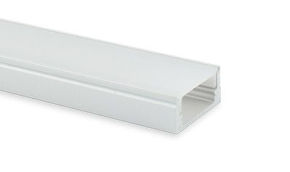
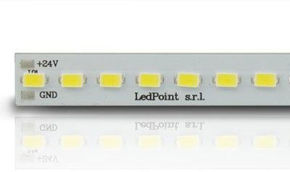
Food: in the landscape of contemporary professional lighting, the use of LED strips in environments where food is present represents a significant technical challenge. Restaurants, bars, professional kitchens, and food retail outlets increasingly rely on LED lighting solutions to aesthetically enhance their spaces and displayed products. However, the proximity between light sources and food substances requires a thorough understanding of technologies, regulations, and best installation practices. This article, the result of years of experience by Ledpoint in professional lighting, aims to serve as the definitive guide for food-industry professionals, installers, and designers. It addresses every critical aspect in detail—from selecting LEDs free of unwanted emissions to choosing the correct color temperature, from maintaining safe distances to thermal management and protection in humid environments. The goal is to provide all necessary information to implement lighting solutions that are not only visually appealing but, above all, food-safe and compliant with current regulations. The adoption of LED lighting systems in professional settings dedicated to food preparation, storage, and display has revolutionized lighting design in sectors such as hospitality, food retail, and food service. The reasons are numerous: energy efficiency, long lifespan, installation flexibility, and the creative possibilities offered by LED strips. However, this application context presents unique challenges and requirements that must be deeply understood. Light is no longer just a means of making environments and products visible; it becomes an element that directly interacts with food substances, potentially influencing their perception, preservation, and safety. In this section, we will explore various application scenarios, the specific needs of each context, and current market trends in professional lighting. In professional kitchens, lighting must simultaneously fulfill multiple functions: ensuring optimal visibility for food preparation tasks, contributing to operator safety, withstanding often harsh environmental conditions (heat, humidity, grease), and aesthetically integrating with increasingly refined modern kitchen environments. LED strips find diverse applications in this context: under-cabinet lighting at workstations, illumination of storage compartments and refrigerated units, highlighting of display islands, and pathway delineation. Each application requires specific technical characteristics, especially when light sources are placed in direct or indirect proximity to food. Choosing the wrong product can pose food safety risks, such as overheating work surfaces or altering the organoleptic properties of food. The installation of lighting systems in food-handling environments is governed by a complex framework of regulations that vary nationally, regionally, and sometimes even municipally. At the European level, Regulation (EC) No. 852/2004 on the hygiene of foodstuffs establishes general requirements for all stages of food production, processing, and distribution, including facilities and equipment. Surfaces in contact with food must be smooth, washable, non-toxic, and corrosion-resistant. Although light sources are typically not in direct contact with food, their proximity demands precaution. Additionally, technical standards such as CEI EN 60598-1 (specifying requirements for luminaires) and CEI EN 62471 (assessing the photobiological safety of lamps and lamp systems) provide crucial guidance. Lighting in humid or wet environments must have an appropriate IP rating, as defined by CEI EN 60529. In bars and restaurants, lighting plays a dual, fundamental role: creating the right atmosphere for the customer experience and maximizing the visual appeal of dishes and beverages. Numerous sensory marketing studies show that the color temperature of light directly influences the perception of flavor, appeal, and perceived value of food. Light that is too cold and rich in blue components can make a meat dish appear less appetizing, while warm light can enhance the colors of a fruit-based dessert. Thanks to their flexibility and wide range of available color temperatures, LED strips offer extraordinary opportunities for lighting design. However, when installed near display counters, refrigerated showcases, or dining tables, it is essential to consider not only aesthetic impact but also the absence of harmful emissions and control of surface temperature. The decorative use of LED strips in bars and restaurants is now ubiquitous: under-counter lighting that creates a sense of lightness, luminous outlines of display shelves, backlighting of back-bars or partition panels. Often, these decorative installations are placed in close proximity to glasses, bottles, plates, or exposed food. It is therefore imperative to select products that—although not classified as “food-contact”—are designed with materials that do not emit volatile substances if overheated and are easily cleaned and sanitized. Aluminum profiles for LED strips, available at LEDpoint.it in numerous shapes and finishes, become in this context not only an aesthetic and light-diffusing element but a fundamental safety component to isolate the light source and effectively dissipate heat. Supermarkets, delicatessens, butcher shops, and fish counters extensively use LED lighting to illuminate food products for sale. Refrigerated display cases, cold counters, produce sections, and prepared-food areas are environments where LED strips often operate under extreme conditions of low temperature and high humidity. In these cases, IP65 or higher protection is often a mandatory requirement to prevent moisture and condensation from entering the system. Furthermore, light must portray the product as truthfully as possible: an incorrect color temperature can alter the appearance of meat or fish, conveying an impression of poor freshness. The absence of UV emissions is critical here, as certain foods (such as cured meats or cheeses) can experience accelerated degradation or oxidation under ultraviolet light. Selecting an LED strip for installation near food cannot be based solely on parameters like lumen output, efficiency, or price. A technical approach is required that considers three fundamental aspects: unwanted spectral emissions (specifically infrared and ultraviolet), the impact of color temperature on visual food perception, and heat management. If these factors are overlooked, they can compromise food safety, the consumer experience, and the longevity of the installation itself. In this chapter, we will analyze each of these aspects in detail, providing clear selection criteria and references to specific products in the LEDpoint.it catalog that meet the strictest requirements for food-sector applications. LEDs emit light in a relatively narrow spectral band, unlike traditional sources such as halogens or incandescents, which emit a continuous spectrum. Modern white LEDs are typically made by combining a blue-emitting diode with a yellow phosphor to produce white light. However, imperfect conversion processes or low-quality components can lead to residual emissions in the ultraviolet (UV, 100–400 nm) and infrared (IR, >700 nm) ranges. While IR is primarily associated with radiant heat, UV can cause harmful photochemical effects. For general applications, these residual emissions are often negligible, but near food they can become significant. Ultraviolet radiation, even at low levels, can accelerate degradation processes in many foods. The main mechanisms are: 1. photo-oxidation of lipids: UV can trigger reactions leading to rancidity in oils and fats, compromising flavor, aroma, and nutritional value; 2. vitamin degradation: light-sensitive vitamins such as riboflavin (B2), vitamin A, and ascorbic acid (C) can deteriorate; 3. pigment alteration: natural colorants in meat, fish, fruits, and vegetables (e.g., myoglobin, chlorophyll, carotenoids) may fade; 4. formation of undesirable compounds: in some proteins, UV exposure can promote the formation of potentially harmful substances. Therefore, for applications in direct proximity to food, it is essential to select LED strips that guarantee complete absence or negligible levels of UV emission. LEDpoint.it offers specific lines of LED strips with high color rendering index (CRI >90) and controlled spectra, ideal for food lighting, where the UV component has been carefully filtered through phosphor selection and chip-encapsulation materials that block these wavelengths. Infrared emission is radiant thermal energy. Although LEDs are far more efficient than traditional lamps (converting more energy into visible light and less into heat), the LED chip itself generates heat that must be dissipated. Direct IR emission—though generally low in LEDs—combined with heat conducted from the strip to nearby surfaces, can: 1. locally raise food temperatures, promoting bacterial growth if within the "danger zone" of 4°C to 60°C; 2. dehydrate exposed food surfaces, compromising texture and appearance; 3. accelerate chemical degradation reactions. Thus, in addition to choosing efficient LEDs (with high lm/W efficiency, indicating less wasted heat energy), it is essential to pair them with an adequate heat dissipation system. Aluminum profiles are not optional—they are critical safety components. In the Ledpoint catalog, high-efficiency LED strips paired with extruded, finned aluminum profiles ensure that generated heat is drawn away from the chip and dispersed into the environment, keeping the surface temperature low in food-exposed areas. The correlated color temperature (CCT), measured in Kelvin (K), describes the hue of white light. A low CCT (e.g., 2700K–3000K) corresponds to "warm" light, similar to sunset or incandescent lamps, with a stronger red/orange component. A high CCT (e.g., 5000K–6500K) produces "cool" light, resembling midday daylight, with more blue. Choosing CCT in food environments is not purely aesthetic—it profoundly affects the visual perception of freshness, appeal, and true color of food. Lights with CCT above 4000K, rich in blue, tend to: 1. distort warm colors: red meat may appear dull, grayish, or less fresh; baked goods may look pale; 2. over-enhance cool colors: they can unnaturally intensify the whiteness of fish or greenness of certain vegetables; 3. create a sterile atmosphere: perceived as more suitable for laboratories or hospitals than welcoming dining environments; 4. potentially reduce perceived appetizing quality. For most hospitality applications (dining rooms, tables, counters), the 2700K–3000K range is considered ideal, as it warms human skin tones and food, creating an inviting atmosphere. For more functional kitchen work areas or specific departments (e.g., fish counters where freshness and gloss are emphasized), one may use 3500K–4000K. Tunable White LED strips, available at LEDpoint.it, offer maximum flexibility, allowing the lighting to adapt to different daily needs (e.g., cooler, energizing light during prep; warmer, welcoming light during service). CCT indicates only the white tone, not how accurately that light reveals the true colors of illuminated objects. This quality is measured by the Color Rendering Index (CRI or Ra), on a scale from 0 to 100. A CRI above 80 is considered good, but for food applications, CRI >90 is strongly recommended—ideally >95. However, the standard CRI (Ra) is an average of 8 color samples, none of which is a saturated red. For food, the R9 value (measuring red rendering) is critical. A lamp with high Ra but low R9 will render meat, tomatoes, or strawberries poorly. Products specifically designed for food lighting guarantee not only CRI >90 but also R9 >50 (often >80), ensuring that reds in food appear vivid, natural, and appetizing. Even the most advanced LED technology can be undermined by careless or incorrect installation. Food safety in the presence of LED lighting largely depends on how the system is physically implemented. In this section, we will detail the three primary safety measures: maintaining a minimum distance between the light source and food, the mandatory use of aluminum profiles for thermal and mechanical management, and adherence to wiring and power supply standards that ensure stability and fault prevention. We will provide practical guidelines, recommended distances, and references to the most suitable installation products available at LEDpoint.it. There is no universal distance valid for all installations, as it depends on multiple factors: 1. lED strip power (W/m): a 14.4W/m strip generates more heat than a 4.8W/m strip; 2. installation type: a strip enclosed in a closed profile with a diffuser dissipates heat less efficiently than one mounted on an open, finned profile; 3. mounting surface material: wood is thermally insulating; metal conducts heat and may itself become a hot surface; 4. ambient ventilation: heat accumulates in enclosed cabinets; 5. ambient temperature: a refrigerated unit has opposite requirements to a hot kitchen environment. As a general precautionary rule, a minimum distance of 20–30 cm is recommended between the LED strip and any surface in direct contact with unpackaged food. However, this distance can be reduced if using low-power strips (<10W/m) and an excellent heat dissipation system (high-quality aluminum profiles). For critical applications—such as lighting inside a pastry display case or above a deli counter—a practical measurement is advisable: install the system, run it at full power for several hours under normal operating conditions, and use an infrared thermometer to measure the temperature of the surface closest to the food. This temperature should not exceed 40°C in normal environments and must remain well below the "danger zone" for perishable foods. For a more technical estimate, one can approximate temperature rise. A quality LED strip converts about 70–80% of electrical energy into visible light. The remaining 20–30% becomes conducted heat. If a 14.4W/m strip dissipates 25% as heat, that’s 3.6W/m of heat to manage. A high-quality extruded aluminum profile has a thermal resistance of about 2–3 K/W per meter. This means the profile’s temperature will exceed ambient by approximately (3.6W/m × 2.5K/W) = 9°C per meter. If ambient temperature is 25°C, the profile will be around 34°C. This is the temperature to consider when determining distance from food surfaces. Without a profile, the adhesive backing thermally insulates the strip; the LED chip can exceed 80–100°C, radiating and conducting significantly more heat to nearby objects and air. Aluminum offers a unique combination of properties: excellent thermal conductivity (about 200 W/mK), light weight, corrosion resistance (especially when anodized), ease of fabrication, and a professional appearance. Its use as a heatsink for LED strips is essential because it: 1. lowers the LED chip's junction temperature (Tj): keeping Tj within manufacturer limits (typically <85°C) is crucial to achieve rated lifespan (e.g., 50,000 hours L70) and prevent premature lumen depreciation; 2. reduces radiant heat to the environment: by absorbing heat from the strip and distributing it along its length, the profile heats uniformly but at a much lower surface temperature than an exposed chip; 3. mechanically protects electronic components: LEDs and resistors are shielded from impacts, splashes, and dust; 4. provides a rigid, stable mounting base. Ledpoint offers an extensive range of profiles: angled, channel, flat, flexible, with opal, transparent, or micro-prismatic diffusers for various beam angles. For food applications, profiles with diffusers (IP20 or higher) are recommended to prevent ingress of grease, dust, or liquids and to facilitate cleaning of the smooth diffuser surface. Profile choice depends on the application: • for under-cabinet kitchen lighting: angled or flat channel profiles with opal diffusers for soft, diffused light; • for display counters or showcase lighting: slim channel profiles with transparent diffusers to maximize light output and create a crisp light line; • for humid or washdown environments (refrigerated units, dishwashing areas): profiles with IP67 or IP68 rating, silicone gaskets, and sealed diffusers; • for maximum heat dissipation (high-power strips >20W/m): extruded profiles with large fins. A practical rule: the profile’s surface area (especially the part exposed to air) should be proportional to the dissipated power. The more powerful the strip, the larger and more finned the profile must be. The power supply (driver) is the heart of the system. It must be correctly sized (rated power at least 120% of the total LED strip load), carry necessary safety certifications (CE, RoHS, and often UL or others for food environments), and be suitable for the installation environment. For professional kitchens, power supplies with IP65 or IP67 rating are recommended if installed in splash-prone or washdown zones, or metal-enclosed, ventilated units installed in electrical cabinets away from heat and humidity. "Plug & play" power supplies with waterproof connectors are ideal for quick installations in display furniture. Light intensity control (dimming) is common in bars and restaurants to modulate ambiance. It is essential to use compatible dimmers for the chosen LED strip technology (PWM for constant-voltage LEDs, dimmable drivers for constant-current LEDs). A low-quality dimmer can cause flicker, buzzing, or unstable operation. For professional applications, DALI or DMX control systems offer maximum flexibility and precision. In all cases, control components must be installed in dry, accessible locations—never in direct contact with food prep zones where contamination could occur. The Ingress Protection (IP) rating, defined by international standard IEC 60529, classifies the level of protection of electrical equipment against solid object ingress (first digit) and liquid ingress (second digit). In food environments, humidity is a constant factor—from condensation in refrigerated units to splashes in washing areas, kitchen steam, and aggressive cleaning routines. Underestimating the IP rating can lead to premature failures, short circuits, and safety hazards. In this final chapter, we will examine in detail what the various IP codes mean, how to choose the right one for each zone in a food facility, and present the high-protection solutions available at Ledpoint, focusing on IP65 as the minimum standard for many critical applications. Let’s now clarify how these codes are interpreted. The first digit indicates protection against the ingress of solid foreign objects and contact with hazardous parts. Relevant classes for our applications include: IP2X: protection against objects larger than 12.5 mm (e.g., fingers). Not suitable for environments with food dust; IP5X: dust-protected. Dust ingress is not entirely prevented but must not interfere with operation; IP6X: dust-tight. No dust ingress. This is the highest level. LED strips in closed-profile diffusers typically achieve IP20 (contact protection only), but well-sealed profiles can reach IP5X or IP6X. This digit is crucial for humid environments. Common classes include: IPX0: no protection; IPX4: protection against water splashes from any direction. Suitable for occasional splash zones (e.g., near a bar sink); IPX5: protection against water jets (12.5 l/min from a 6.3mm nozzle at 3m). For low-pressure washdown areas; IPX7: protection against temporary immersion (up to 1m for 30 minutes). For components that may be fully submerged during cleaning; IP65: this combined rating means “completely dust-tight (6)” and “protected against water jets (5)”. It is the reference standard for lighting in many professional food areas, such as kitchens, refrigerated units, produce storage, and equipment wash zones. Professional kitchens require appropriately protected LED strips, as each zone has specific needs. In kitchens, LED strips may be installed under exhaust hoods, above cooktops (at sufficient distance!), or in vegetable-washing zones. Water splashes, aerosolized grease, and steam are daily realities. IP65 ensures no contaminants penetrate the profile, compromising electronics or creating a moist internal environment conducive to mold and bacteria. In these zones, in addition to IP rating, it is advisable to use LED strips with a conformal silicone coating (such as Ledpoint’s IP67 series), which further protects SMD components from corrosion and short circuits caused by salts and acids in the environment. These environments pose a dual challenge: continuous low temperatures and very high humidity/condensation. Thermal cycling when doors open can cause ice formation. An IP20 system would fail within days. IP65 or IP67 LED strips sealed in profiles with silicone gaskets are mandatory. Moreover, the LEDs themselves must be designed for low-temperature operation (drivers often specify an operating temperature range, e.g., –25°C to +50°C). You’ll find the operating temperature range listed in the technical datasheet for every product offered by Ledpoint. In bars, LED strips often illuminate areas under glass racks, sink basins, or counters where beverages are poured. An IP20 strip installed under-counter in these zones would be exposed to continuous risks. IP65 provides the necessary peace of mind. Similarly, in pastry or deli displays, moisture released by humid foods (salads, cream-based desserts) can condense on cooler surfaces—including illuminated profiles. An IP65 system protects against this phenomenon. Purchasing an IP65 LED strip does not guarantee the entire installation maintains that rating. Waterproof integrity depends on: 1. joints and connectors: always use waterproof connectors of the same IP rating as the strip (e.g., crimp connectors with rubber gaskets and cable ties). If soldered joints are exposed, they must be protected with heat-shrink tubing and food-grade neutral silicone (if in food environments); 2. strip ends: ends of IP65 strips must be sealed with provided silicone end caps or sealing resin; 3. profile and diffuser: ensure the diffuser is correctly seated in the profile gasket and that closure screws are evenly tightened; 4. mounting points: avoid drilling holes in the profile that would compromise sealing. Use manufacturer-provided mounting brackets. It is therefore essential, for high-protection strips, to ensure all compatible accessories (connectors, end caps, profiles) are used for a proper installation that preserves the declared IP rating. One of the key advantages of IP65 systems is ease of cleaning. The smooth surface of the diffuser (typically polycarbonate or PMMA) can be wiped with damp cloths and neutral detergents common in the food industry, without fear of liquid ingress. Avoid abrasive cleaners or aggressive solvents, which could cloud the diffuser. During deep cleaning with pressure washers, it is good practice—despite IP65 rating—not to direct high-pressure jets directly at joints or connectors to prolong system life. LED lighting in professional food environments is not merely a stylistic exercise—it is a technical and hygienic responsibility. As explored throughout this guide, food safety depends on understanding and applying principles that go beyond simply choosing a light strip. To summarize the key points: 1. spectral safety first: always select high-CRI LEDs (CRI >90, high R9) with no residual UV emissions, essential to avoid altering food; 2. color temperature control: prefer warm temperatures (2700K–3500K) for most hospitality settings, using cooler light only where functionally necessary; 3. non-negotiable thermal management: high-quality aluminum profiles are not an aesthetic option but a critical safety component to keep heat away from food and ensure LED longevity; 4. maintain minimum distances: evaluate case by case, but adopt 20–30 cm as a precautionary guideline—reducible only with low-power systems and excellent heat dissipation; 5. environmental protection: in humid, splash-prone, or condensation-prone zones, IP65 is the recommended minimum standard. For extreme environments (intense washdown, refrigerated units), consider IP67 or higher. Ledpoint, with its extensive catalog and specialized support, provides professionals with all the tools—products, knowledge, and accessories—to create lighting installations that combine aesthetics, efficiency, and, above all, food and consumer safety. Investing in careful design and quality products is not just a technical choice—it is a mark of respect for the end customer.Food: how to light kitchens, bars, and restaurants
Professional kitchens: functional lighting and safety
Relevant regulations for professional kitchens
Bars and restaurants: atmosphere and food enhancement
Decorative applications in food environments
Retail and grocery stores
Food: how to choose safe leds
IR and UV emissions: what they are and why they matter near food
Risks of UV emissions on food
Risks of IR emissions and radiant heat
Color temperature: science and food perception
Effects of cool light (High Blue Content) on food
Color Rendering Index (CRI and R9): revealing food’s true colors
Safety notes: distance, installation, and heat dissipation
Minimum distance from food: guidelines
Simplified thermal calculation for installers
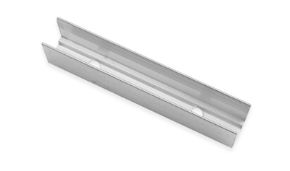
Aluminum profiles: types, selection, and installation
Profile selection guide
Power supplies, dimmers, and controls: stability and electrical safety
Dimming and control in food environments
Food and humid environments: the IP rating
Decoding the IP code: digits and meaning
Protection against solids (First Digit, 0 to 6)
Protection against liquids (Second Digit, 0 to 9K)
Practical applications: where IP65 is needed (and where higher is required)
Professional kitchens and prep areas
Refrigerated units, display fridges, and cold counters
Bars, pastry shops, and display areas with liquids
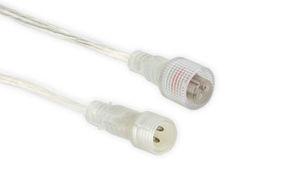
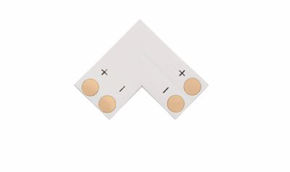
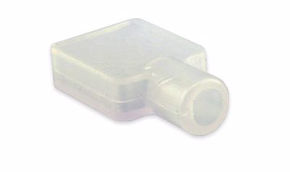
Installation and maintenance of IP65/67 systems
Cleaning and safe maintenance
Food: lighting with responsibility