











DALI: intelligent protocol for lights
The DALI (Digital Addressable Lighting Interface) protocol, in the landscape of professional and industrial lighting, represents a technological revolution that is redefining lighting control standards. This digital communication system, specifically designed for lighting applications, offers a level of flexibility, precision, and reliability that traditional analog protocols cannot guarantee. In the rapidly evolving market of LED solutions, understanding the potential of the DALI protocol for lighting is crucial for designers, installers, and end-users seeking efficient, scalable, and future-proof systems. In this in-depth technical article, we will explore every aspect of the DALI lighting control system, from theoretical foundations to practical applications with LED strips, analyzing the controllers available on Ledpoint.it and their advanced integrations.
The intelligent lighting protocol DALI is not merely a control technology, but a complete ecosystem that allows the management of complex lighting systems with millimeter precision. Born as an open and non-proprietary standard, DALI has gained global popularity thanks to its interoperability guaranteed by stringent international standards (IEC 62386). Unlike traditional control systems based on 0-10V signals or simple switches, DALI enables bidirectional communication between the controller and lighting devices, unlocking advanced functionalities such as status monitoring, proactive diagnostics, and fine adjustments of parameters like light intensity, color temperature, and directionality.
In the era of building automation and smart cities, the importance of a digital lighting management system like DALI cannot be overstated. Modern buildings require solutions that not only illuminate spaces but also actively contribute to occupant well-being, energy efficiency, and integration with other technological systems. With the explosion of LED applications, from decorative strips to professional fixtures, the need for a robust and versatile control protocol has become even more critical. This article aims to be the definitive guide for anyone wishing to deepen their knowledge of the DALI protocol, with particular attention to the solutions available for LED strip lighting, a sector in which Ledpoint.it boasts nationally and internationally recognized technical expertise.
DALI: technological fundamentals of the protocol
Before diving into practical applications, it is essential to understand the technological foundations that make DALI such a powerful and widespread standard in the world of professional lighting. This chapter explores the architectural fundamentals, operating principles, and historical evolution of the protocol, providing the necessary knowledge to fully appreciate its potential in applications with LED strips and other lighting devices.
DALI: origins and international standardization
The DALI lighting control protocol has a history dating back to the 1990s, when a consortium of lighting equipment manufacturers recognized the need for an open digital standard to overcome the limitations of the then-dominant analog systems. The result of this collaborative effort was the DALI specification, subsequently adopted as an international standard by the International Electrotechnical Commission (IEC) under the designation IEC 62386. This standardization process is fundamental to understanding the success of DALI: unlike proprietary protocols tied to specific manufacturers, DALI guarantees interoperability between devices from different brands, protecting user investments and promoting innovation through competition.
DALI: the network architecture of the system
The architecture of a DALI protocol lighting system is designed according to principles of simplicity, robustness, and scalability. At the physical level, DALI uses a two-wire bus that carries both control power (typically 16V DC) and digital signals. This solution significantly simplifies wiring compared to systems that require separate connections for power and control. The DALI network can support up to 64 individual addresses, each of which can control a single lighting device or, in the DALI-2 version, a group of devices. The network topology is bus-type, meaning all devices are connected in parallel to the control cable, without the need for complex wiring schemes or tree configurations.
The installation of a DALI lighting control system is therefore significantly simplified compared to competing technologies. DALI devices can be placed anywhere along the bus, with a maximum cable length that can reach 300 meters without the need for repeaters. Each device on the bus has a unique address assigned during the commissioning phase, allowing the controller to communicate individually with each system element. This individual addressing capability is one of the distinguishing features of DALI and represents a decisive advantage over analog systems that can only control groups of devices. The bidirectionality of communication also allows devices to send status information to the controller, enabling advanced diagnostic and monitoring functions that we will explore in detail in subsequent chapters.
DALI vs DALI-2: evolution and compatibility
The evolution of the DALI standard led to the development of DALI-2, an enhanced version that maintains compatibility with legacy devices but introduces significant improvements in terms of interoperability, functionality, and certification process. Understanding the differences between DALI and DALI-2 is crucial for designers and installers who must select the most appropriate technology for specific LED strip lighting applications.
DALI-2: innovations in lighting control
DALI-2, standardized as part of IEC 62386, introduces several important innovations compared to the original DALI protocol. First among them is the more rigorous definition of communication specifications, which guarantees a superior level of interoperability between devices from different manufacturers. While in the original DALI some functions were optional or implemented inconsistently, DALI-2 precisely defines how each type of device (LED driver, sensors, controller, interfaces) must behave on the network. This "plug-and-play" approach greatly simplifies the integration of new components into an existing system, reducing configuration time and compatibility issues.
Another significant innovation of DALI-2 is the formal inclusion of sensors and control interfaces as integral parts of the standard. In the original DALI protocol, these devices were considered accessories and often used proprietary implementations. In DALI-2, presence sensors, ambient light sensors, switches, and control panels are standardized, ensuring they can communicate effectively with any certified DALI-2 driver. This extended standardization makes DALI-2 particularly suitable for complex building automation applications, where lighting must seamlessly integrate with energy management, security, and environmental comfort systems. For LED strip applications, this evolution means greater flexibility in creating systems that automatically respond to environmental conditions, optimizing energy consumption and visual comfort.
DALI: competitive advantages of the control system
The global spread of the DALI protocol in the professional lighting sector is not accidental, but the result of tangible technical and economic advantages that significantly exceed those offered by competing technologies. In this chapter, we will analyze in detail the benefits that make DALI the preferred choice for designers, installers, and managers of lighting systems, with particular reference to applications using high-efficiency LED strips.
DALI: design flexibility and system scalability
One of the main advantages of the DALI lighting control system lies in its exceptional design flexibility. Unlike traditional control systems that require dedicated wiring for each group of lights or lighting scenario, DALI allows the complete definition and redefinition of control logic through software programming. This means that once the basic DALI bus wiring is installed, it is possible to modify device membership in specific groups, create complex scenarios involving different fixtures, and adjust dimming curves without any physical changes to the electrical system.
Reconfiguration without system interventions
The ability to completely reconfigure an intelligent DALI lighting system without wiring interventions represents an enormous economic advantage, especially in contexts where lighting needs change frequently. Consider an open-plan office that is periodically reconfigured: with a DALI system, it is sufficient to reprogram the controllers to adapt the lighting to the new workstation layout, without the need for costly electrical work. This flexibility also extends to LED strip applications, where it is possible to dynamically modify lighting zones, switching sequences, and intensity levels based on current needs. The savings on reconfiguration costs can amount to thousands of euros over the life cycle of a system, amply justifying the initial investment in DALI technology.
Advanced diagnostics and predictive maintenance with DALI
The bidirectional communication capability of the DALI protocol enables advanced diagnostic functionalities that radically transform the approach to lighting system maintenance. While traditional systems provide limited information (typically "on" or "off"), a DALI lighting management system can continuously monitor numerous operational parameters of each connected device, sending proactive alerts before a complete failure occurs.
Energy saving in DALI lighting control
Energy efficiency has become a critical parameter in the design of any lighting system, for both economic and environmental reasons. DALI lighting control systems offer sophisticated tools to optimize energy consumption without compromising visual comfort or the functionality of illuminated spaces. The ability to precisely adjust the light intensity of each individual device allows for dynamically adapting lighting to actual needs, avoiding the waste typical of conventional systems that always operate at maximum power. Independent studies have shown that an intelligent lighting system based on DALI can reduce energy consumption by 30-70% compared to traditional solutions, with return on investment often under two years.
Integration with sensors for presence and natural light further multiplies the energy benefits of the DALI protocol for lighting. In an office with large windows, for example, the system can continuously adjust the intensity of LED strips near the windows to maintain a constant light level, maximizing natural light and proportionally reducing electrical consumption. Similarly, presence sensors can automatically turn off lighting in unoccupied areas, completely eliminating waste due to forgetfulness. These energy-saving strategies become particularly significant in large-scale applications like shopping malls, hospitals, or industrial complexes, where even small percentage savings translate into thousands of euros in reduced annual operating costs. Ledpoint.it offers a complete range of DALI controllers and compatible sensors specifically designed to maximize energy efficiency in LED strip installations.
DALI controllers for LED strips
The correct implementation of a DALI lighting system requires the use of controllers specifically designed to handle the peculiarities of LED strips. In this chapter, we will examine in detail the solutions available on Ledpoint.it, analyzing technical characteristics, selection criteria, and best practices for optimal integration between DALI controllers and different types of LED strips.
Overview of available DALI controllers
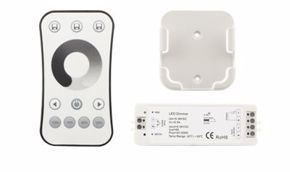
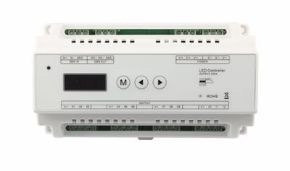
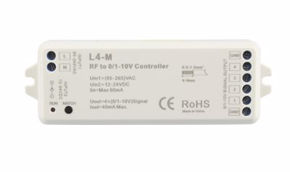
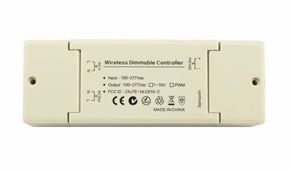
Ledpoint.it offers a complete range of DALI lighting controllers designed to meet needs ranging from high-end residential installations to large-scale commercial and industrial projects. Selecting the appropriate controller is a critical step in the design of any lighting system, as it determines not only the available functionalities but also the reliability and longevity of the entire system. Our controllers stand out for build quality, compliance with international standards, and specialized technical support, essential elements to guarantee optimal performance in real-world applications.
Technical characteristics of DALI controllers
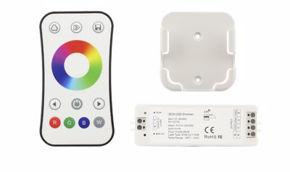
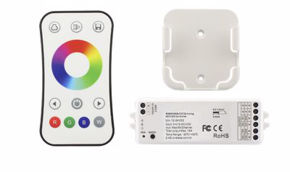
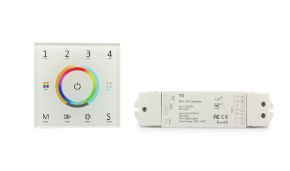
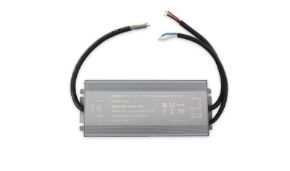
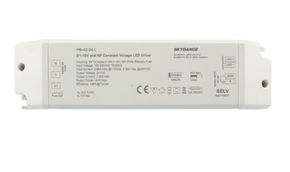
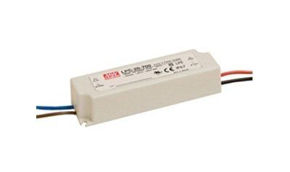
The DALI controllers available in the Ledpoint catalog feature advanced technical characteristics that make them suitable even for the most demanding applications. From a control interface perspective, all our devices support the full DALI protocol according to the IEC 62386 standard, guaranteeing maximum interoperability with LED drivers, sensors, and other system components. Compatibility with DALI-2 is available on specific models, offering extended functionalities like RGB/RGBW/CCT color control and native integration with standardized input devices.
On the output side towards the LED strips, our DALI controllers for LED strips support different control technologies to adapt to any type of light strip. For general lighting applications, we offer controllers with PWM output at high frequency (typically >1kHz) that guarantee intensity regulation without perceptible flicker, essential in environments where people spend long hours. For RGB and RGBW LED strips, our controllers implement advanced color mixing algorithms that ensure excellent color reproducibility and smooth transitions between different shades. The output power ranges from compact 50W models suitable for decorative applications, to industrial 600W units capable of managing exceptional lengths of LED strips or high power concentrations. All controllers include full protection against short circuits, overtemperatures, and voltage spikes, ensuring reliable operation even in unfavorable environmental conditions.
Selecting the optimal DALI controller for specific applications
Choosing the most appropriate DALI lighting controller for a specific application requires a careful analysis of several technical and functional parameters. In this section, we will provide practical guidelines for selecting among the different options available on Ledpoint.it, considering factors such as the type of LED strip, required power, necessary control functionalities, and integration with other automation systems.
Selection criteria for different types of LED strips
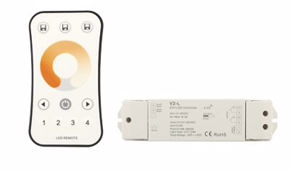
The first criterion in selecting a DALI controller for LED strips is the type of light strip to be controlled. For monochromatic LED strips in warm white, cool white, or tunable (CCT), a single-channel controller capable of handling the current required by the strip is sufficient. However, for LED strips with color temperature adjustment (Tunable White type), controllers with two independent channels are needed to separately control the warm white and cool white segments, allowing for dynamic adjustment of the color temperature from 2700K to 6500K. For decorative or accent lighting applications with RGB or RGBW LED strips, controllers must offer at least three independent channels (red, green, blue) plus possibly a dedicated white channel to maintain color fidelity in neutral tones.
A parameter often underestimated when selecting controllers for DALI systems is the electrical compatibility between the controller and the LED strips. Beyond matching the operating voltage (typically 12V, 24V, or 48V), it is essential to verify that the controller can provide the maximum current required by the total length of connected LED strips. Undersizing the controller leads to excessive voltage drops, resulting in decreased light intensity and color variations along the strip. Ledpoint.it provides online calculation tools and specialized technical support to accurately determine current requirements for each installation, ensuring the selection of properly sized controllers for optimal performance.
Installation and configuration of DALI systems with LED strips
The practical implementation of a DALI lighting system requires attention to both the physical installation phase and the software configuration phase. This chapter provides a detailed, step-by-step guide for building robust and efficient systems that fully exploit the potential of the DALI protocol in combination with high-quality LED strips.
DALI network design and component sizing
The design phase is fundamental to the success of any DALI installation. A well-planned project not only prevents problems during installation but also guarantees optimal performance, ease of maintenance, and possibilities for future expansions. The process begins with a detailed analysis of lighting needs, identifying areas, control groups, scenarios, and required lighting levels.
Load calculation and component selection
Correctly sizing components is essential for the long-term stability of a DALI lighting control system. Regarding power supply, it is necessary to accurately calculate the total system consumption, considering both DALI devices (controllers, sensors, interfaces) and connected LED strips. A fundamental rule is to maintain a safety margin of 20-30% over the calculated load, to compensate for potential future expansions and ensure the power supply does not constantly operate at its limit , a situation that would reduce its reliability and lifespan.
Specifically regarding LED strips, the total current calculation must consider not only the installed length but also the LED density and their efficiency. High-density LED strips (60-120 LEDs/meter) require controllers capable of delivering significantly higher currents compared to low-density strips. Ledpoint.it offers in its catalog DALI controllers with current capacity from 2A up to 20A, covering the entire spectrum from decorative lighting to large-scale architectural lighting. A common mistake to avoid is connecting LED strips in series beyond the maximum length recommended by the manufacturer, which causes unacceptable voltage drops; for long installations, it is preferable to use multiple power supplies with distributed power injection points along the strip, all controlled by a single master DALI controller.
Programming and commissioning of the DALI system
Once the physical installation is complete, the DALI system requires a programming and commissioning phase to activate all intelligent functionalities. Unlike traditional lighting systems that start working immediately after electrical connection, an intelligent DALI lighting system needs configuration to define addresses, groups, scenes, and automatic behaviors. This process, although requiring specific skills, offers unprecedented control over the behavior of the lighting installation.
Configuration software and diagnostic tools
Programming a DALI system is typically performed via specialized software that communicates with the system through a USB-DALI interface or Ethernet-DALI gateway. Ledpoint.it provides its customers access to user-friendly configuration tools that simplify common operations like address assignment, group creation, and definition of lighting scenes. For more complex installations involving hundreds of devices or integration with BMS (Building Management System), professional software suites are available offering advanced features like scheduling, energy management, reporting, and remote monitoring.
An often overlooked but fundamental aspect of commissioning is verifying DALI communication across the entire network. Specialized diagnostic tools allow testing signal integrity, identifying possible electromagnetic interference, and verifying that all devices respond correctly to commands. This testing phase is particularly important in extensive installations or in electrically noisy environments like industrial plants. Our DALI controllers include self-diagnostic functions that constantly monitor the communication status with connected devices, generating alerts in case of signal loss or malfunctions, thus facilitating preventive maintenance and reducing system downtime.
Advanced integration and future trends of the DALI protocol
The DALI protocol does not exist in isolation but is part of a broader ecosystem of building automation technologies and the Internet of Things. This chapter explores integration possibilities with other systems, ongoing technological evolutions, and future trends shaping the development of intelligent lighting control for the next generation of installations.
Integration with building automation systems (KNX, BACnet, Modbus)
In complex building automation contexts, the DALI lighting system rarely operates in isolation, but integrates with other control systems to create an intelligent and coordinated environment. The most common integrations involve protocols like KNX, BACnet, and Modbus, each with specific characteristics that make them suitable for different aspects of building management.
Integration gateways and communication protocols
Integration between DALI and other automation systems typically occurs through specialized gateways that translate commands and data between the different protocols. For example, a DALI-KNX gateway allows the KNX home automation system to control DALI lighting as if it were native, extending automation possibilities to complex scenarios involving blinds, climate control, and security. Similarly, DALI-BACnet gateways are essential in commercial and institutional buildings where the Building Management System (BMS) uses BACnet as the standard protocol. These gateways are not simple protocol converters but intelligent devices that map advanced functionalities like color control, scene creation, and diagnostics between the different ecosystems.
A particularly interesting aspect of advanced integrations is the possibility of using data from other systems to optimize lighting behavior. For example, integrating the DALI system with the security system's occupancy sensors makes it possible to obtain information about presence in different building areas with greater granularity and reliability than traditional motion sensors dedicated to lighting. Similarly, integration with the energy management system allows modulating lighting in response to demand response signals, actively contributing to grid stability and obtaining economic incentives for participation in demand management programs. Ledpoint.it offers specialized consulting to design and implement these advanced integrations, maximizing the value of the investment in DALI technology.
Wireless DALI and IoT: the future of lighting control
While the traditional DALI protocol is based on dedicated wiring, recent evolutions are exploring integration with wireless technologies to reduce installation costs and enable new applications. The so-called "Wireless DALI" is not a new standard, but rather the use of radio technologies like Zigbee, Bluetooth Mesh, or Wi-Fi to carry DALI commands, combining the advantages of DALI standardization with the flexibility of wireless communications.
Applications and limitations of wireless DALI
Wireless solutions for DALI lighting control are particularly interesting in retrofit contexts, where installing new cables would be particularly expensive or invasive. In these scenarios, it is possible to maintain traditional LED drivers and add radio modules that receive wireless commands and translate them into DALI signals on the existing cable. This hybrid approach allows modernizing existing systems without completely replacing the infrastructure, significantly reducing costs and intervention time.
However, it is important to understand the limitations of wireless solutions compared to traditional wired DALI. Radio communications are subject to interference, have greater latency, and require active power management for battery-powered devices. In critical applications like theaters, TV studios, or operating rooms, where the immediate and absolutely reliable response of the lighting system is non-negotiable, wired DALI remains the preferred choice. For less critical applications like offices, retail, or high-end residential, wireless solutions offer an interesting compromise between flexibility and functionality. Ledpoint.it continuously monitors the evolution of these technologies and selects for its catalog only wireless solutions that guarantee the reliability and performance expected by lighting professionals.
DALI: why choose this protocol for your LED installations
Through this in-depth analysis of the DALI protocol and its applications in LED strip lighting, we have explored the technical, economic, and functional reasons that have decreed its worldwide success. From the individual control of each device to advanced diagnostics, from integration with other automation systems to extraordinary reconfiguration flexibility, DALI today represents the most rational choice for anyone designing, installing, or managing professional lighting systems.
The choice to implement an intelligent lighting system based on DALI is not simply a technological decision, but a strategic investment that pays off over time through energy savings, reduced maintenance costs, and adaptability to future needs. In a constantly evolving market like LED lighting, the ability to update and reconfigure the system without invasive wiring interventions constitutes a significant competitive advantage, protecting the investment from technological obsolescence.
Ledpoint.it, with its multi-year experience in the LED lighting sector and the curated selection of high-quality DALI controllers, positions itself as the ideal partner for professionals wishing to fully exploit the potential of this technology. Our specialized technical support, product warranties, and design assistance distinguish us as suppliers not simply of components, but of complete solutions that solve real problems for our customers. Whether it's a small shop or an industrial complex, the DALI protocol provides the tools to create environments that are efficiently, comfortably, and intelligently lit, laying the foundation for the sustainable and connected buildings of the future.