









Architecture and lighting: trends
In the contemporary landscape of design and planning, the pairing of architecture and lighting has reached an unprecedented level of symbiosis. It is no longer just about functional systems to make a space visible after dark, but about true narrative tools, expressive structural elements, and essential components of the architectural language itself. Light, shaped by the most advanced LED technologies, molds perceptions, defines atmospheres, emphasizes volumes, and can even alter our emotional experience of a place.
This article, the result of careful observation of the latest international sector events – including our active participation in events such as Sicam 2025 and Mets Trade 2025 – aims to guide you on an in-depth journey through the most significant trends, offering you not only theory but concrete, ready-to-purchase solutions to immediately transform your design vision into reality. If you are ready to discover how LED strip lighting can revolutionize your next project, from a simple home corner to a large architectural complex, this is the definitive starting point.
Contemporary architecture: the evolution of light's role
To fully understand current trends in architecture, it is essential to trace a brief but significant historical evolution. Lighting has moved from being a purely utilitarian service – the central light bulb in a room – to a decorative design element, and finally to its current state: an immaterial building material. Today, architects and lighting designers collaborate from the earliest stages of planning, considering light as a sort of "luminous cement" capable of connecting, dividing, expanding, or compressing spaces.
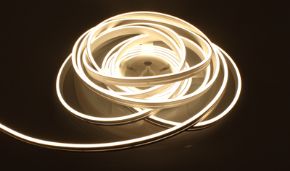
This conceptual revolution has been made possible, to a large extent, by the advent and refinement of LED technology, and particularly flexible, high-efficiency LED strips. Miniaturization, low voltage, digital control capability, and installation versatility have opened up unimaginable scenarios just a decade ago. Lighting no longer just illuminates objects; it becomes an architectural object itself, integrated into crevices, ceilings, floors, and walls in ways that challenge traditional perception. In this context, choosing the right supplier is not a secondary matter: it is the choice of building material.
Ledpoint, with its field-earned experience and participation in sector trade shows like Mets Trade 2025, positions itself as a technical partner for professionals who accept no compromise on the quality, reliability, and innovation of light sources. Imagine being able to "paint" with light, create three-dimensional effects on flat surfaces, make a building breathe with dynamic sequences: all this is already possible, and it's more accessible than you think.
From function to emotion: light as a narrator of spaces
The first major trend we observe today in architecture is the shift in focus from simple functional lighting to the creation of emotional experiences. Spaces – whether residential, commercial, hospitality, or museum – tell a story, and light is its most powerful narrator. Think of the entrance to a luxury hotel: it must not only be well-lit; it must evoke a sense of wonder, exclusivity, and welcome. A cold, uniform light would fail miserably in this intent. Conversely, a high-color-rendering RGBW LED strip system, hidden in a recessed ceiling cove or along a floor path, can create a warm, enveloping atmosphere that changes based on the time of day or event.
The ability to control not only intensity (dimming) but also color temperature (CCT tunable) and true color (RGB) allows the space to adapt to the different needs of the day: a fresh, energizing light in the morning, neutral light for work hours, a warm and relaxing light for the evening. This is no longer an optional for high-end projects; it has become the benchmark standard for those who want to stand out.
On Ledpoint.it you can find complete solutions to realize these visions, perfect for integrating with home automation systems and responding to voice commands, transforming every environment into a stage for your emotions. Purchasing these products is not just a technical purchase; it is purchasing the ability to directly influence the moods of the people who will inhabit that space. Try imagining your living room transforming from a family environment to a home cinema with a voice command, or your store attracting attention with dynamic light plays: the "wow" effect is guaranteed, and the end customer will be so impressed they become a promoter of your work themselves.
Invisible integration: when light disappears to make way for architecture
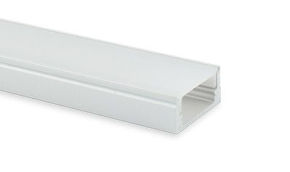
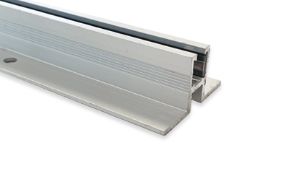
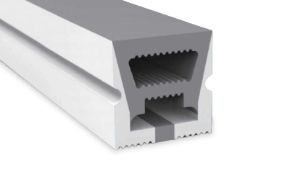
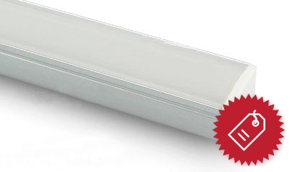
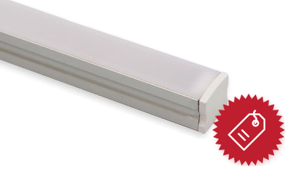
Paradoxically, one of the strongest trends is to make the light source as invisible as possible. The goal is for the observer to perceive the lighting effect – a uniform glow, an explosion of color, an accentuation of a texture – without being able to pinpoint where the light is coming from. This pursuit of extreme integration pushes architecture to incorporate specific channels, battens, and recesses to house LED strips, often equipped with opal diffusers or lenses to soften and even out the light emission. LED strip profiles thus become full-fledged architectural components.
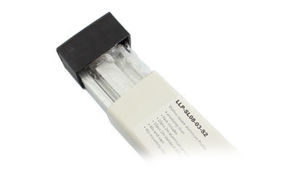
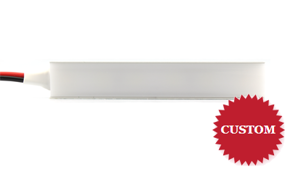
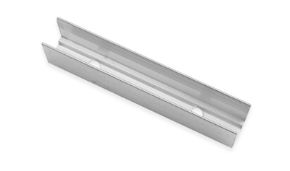
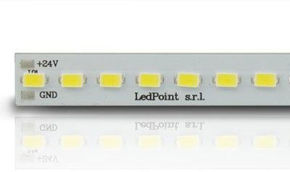
On Ledpoint.it we offer a vast range of aluminum profiles for LED strips, corner, recessed, concealed, with different types of diffusers, designed to solve every design need. Using these profiles is not only aesthetic: it is functional for maximizing light output, protecting the LED strip itself and its heat dissipation, ensuring an ultra-long product lifespan.
Choosing a cheap LED strip and sticking it directly onto a surface without a proper profile is a mistake that costs in terms of visible individual LEDs (hotspots), premature degradation, and an amateurish final result. Conversely, investing in an integrated, professional system translates into museum-quality lighting, where architecture seems to glow with its own light. It is the essence of contemporary design: visual simplicity achieved through technological complexity. Today, architecture asks for nothing less. When a client enters a space and is struck by the purity of the light without seeing a single source, they are experiencing the highest level of design sophistication. Do you want to achieve this result? Start by choosing the right components, because the details – the ones you don't see – make the difference between an ordinary job and a masterpiece.
Sustainability and efficiency: not just a trend, but an ethical and regulatory imperative
In 21st-century architecture, sustainability is no longer a mere option or a passing trend: it is a fundamental requirement, enshrined in increasingly stringent regulations and a growing environmental awareness among clients. In this scenario, LED lighting confirms itself as the reigning technology. But beware: not all LEDs are created equal. Truly sustainable lighting goes beyond simple energy savings (already enormous compared to previous technologies). It includes long lifespan (up to 30,000 hours and beyond), which drastically reduces electronic waste, the absence of toxic substances like mercury, the possibility of recycling components, and production by companies that adopt responsible industrial processes.
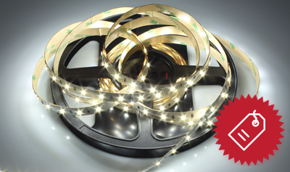
Ledpoint rigorously selects its suppliers and high-quality LED chips to guarantee not only the declared efficiency (measured in lumens/watt) but also the maintenance of light output (L70) over time. A low-quality LED strip can lose up to 50% of its brightness in a few thousand hours, negating the initial savings and forcing premature replacement. Our products, such as the high-efficiency, long-life LED strips, are designed to last and perform consistently. Investing in Ledpoint products therefore means making a long-term economically advantageous and ethically correct choice. Presenting an architectural lighting project with solid data on energy savings, lifespan, and reduced environmental impact is a powerful argument for increasingly attentive public and private clients. You are no longer just selling beautiful light: you are selling a more efficient and cleaner future.
Architecture: cutting-edge applications
After exploring the general principles, it's time to get practical and analyze how these architectural trends translate into specific applications. From accent lighting in museums to dynamic skyscraper façades, LED strips offer tailor-made solutions for architecture. Ledpoint's participation in international fairs like Sicam 2025, dedicated to furniture and components, has allowed us to witness firsthand the increasingly pressing market demand from interior design for flexible, design-oriented solutions. Similarly, our presence at Mets Trade 2025, a reference point for naval and hospitality architecture, confirmed the explosion in demand for robust products, resistant to the elements, and capable of creating unique atmospheres on yachts, hotels, and spas. In this section, we will guide you through the hottest current applications, providing direct links to Ledpoint products that can turn these ideas into real, immediately purchasable projects. Ready to discover how to amaze your clients?
Architectural lighting for interiors: beyond the ceiling
Interiors are the vastest playground for architectural lighting. The trend is to move beyond the classic lightline (line of light) in the ceiling to explore more bold and scenographic integrations. Stairs (both risers and treads), handrails, headboards, niches, bookshelves, and kitchen cabinets are being illuminated. The goal is to create layered lighting: not a single source, but a combination of light points working together to give depth and drama to the space. A perfect example is stair lighting: a 24V IP67 LED strip installed under each riser not only ensures safety but creates a suspended, futuristic effect, transforming a functional element into a luminous sculpture.
In kitchens, LED strips under cabinets (task lighting) are now standard, but the frontier is moving to lighting inside glass-front cabinets, under the hood, or even integrated into marble or wood worktops with transparent resin. For these applications, the flexibility and cuttability of LED strips are fundamental. Our products can be cut every few centimeters (at marked points) and easily connected, adapting to any measurement without waste.
Want a quick tip? Try illuminating your living room skirting board (baseboard) with a dimmable warm-white LED strip. The cost is negligible, installation is simple (if you're slightly handy), and the effect of "levitating" walls achieved is immediate and stunning. It's the kind of intervention that, once seen, you'll want in every environment. And your friends will immediately ask: "Where did you get that?" The answer will be simple: "On Ledpoint.it".
Dynamic lighting for retail and hospitality: capturing attention and creating experiences
In the world of retail and hospitality, light is not just an architectural element but a true marketing and sales tool. Trends here focus entirely on dynamism and interactivity. You no longer just turn on the light: you program scenes that change throughout the day, synchronize lights with music or presence sensors, use color effects to guide the customer's path or highlight promotional products.
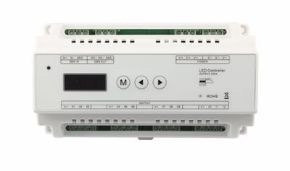
Think of a shop window that, at night, becomes a moving luminous painting, or a restaurant where the light tone warms as the evening progresses, encouraging relaxation and longer stays. To create these wonders, reliable products and powerful controllers are needed. Ledpoint offers Professional DMX and DALI LED Controllers that allow millimeter-precise control of every single light point, creating complex sequences and breathtaking effects. Purchasing such a system is not an expense; it's an investment in revenue. Static light goes unnoticed, light that dialogues with the space and with people creates a memorable experience, increases dwell time in the store, and, consequently, the probability of purchase. If you're designing a commercial space and haven't included a budget for a dynamic lighting system, you are making a serious strategic mistake.
Façade and exterior lighting: the luminous skin of buildings
Architectural lighting for exteriors is perhaps the fastest-evolving sector. The building is no longer a static object to be illuminated from the outside with projectors: it becomes an active communicative surface, a "skin" that can change appearance, color, and message in real time. This is made possible by high-brightness, high-resistance linear LED strips, installed along cornices, in the gaps of ventilated façades, or in special recessed profiles. Applications range from simple wash lighting (uniform light baths) on surfaces, to outlining the building, up to true low-resolution LED media façade screens, capable of showing animations, text, or interacting with social events. In these cases, aesthetic considerations for the architecture are not the only factor; the key here is robustness.
Products must withstand rain, snow, UV rays, thermal shocks, and wind for years. Our IP67 strip lights are sealed with silicone resin, guaranteeing maximum protection without compromising light output. Imagine being able to give a unique nocturnal identity to your apartment building, your office, your villa. It's not a dream for star architects; it's a reality within everyone's reach with the right products. A well-lit building increases its value, its recognizability, and the safety of the surrounding area. It is a powerful calling card that works for you 365 nights a year.
Technology and control: the brain of intelligent lighting
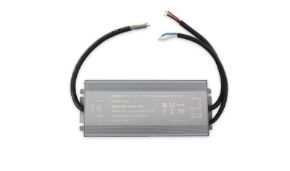
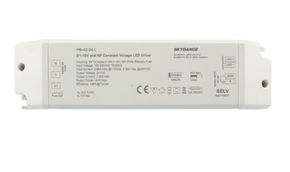
Behind every great lighting effect there is a great control system. The true revolution of LED lighting lies in its intrinsic digital nature. An LED diode can be switched on and off millions of times per second, can be dimmed without flicker, and its color can be changed instantly. Fully exploiting these potentials requires choosing state-of-the-art drivers, power supplies, and controllers. In this technical but fundamental section, we will explain how not to ruin a perfect project with poor-quality control components.
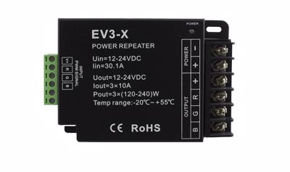
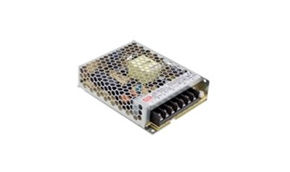
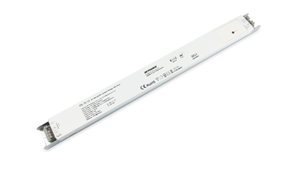
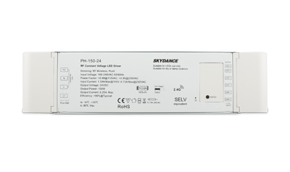
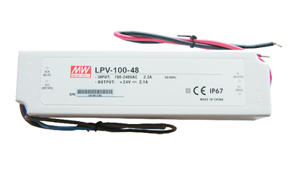
Because the best LED strip in the world, connected to a noisy and unstable power supply, will become a source of problems and disappointment. Choosing Ledpoint means having the guarantee of a compatible and high-performance ecosystem, where every component is tested to work in synergy with the others. Forget problems with interference, voltage drops, or colors not matching the settings. With our complete kits, everything works perfectly, right away. The satisfaction of professional "plug and play" is a click away.
Control protocols: DALI, DMX, 0-10V and the dominion of wireless
The world of lighting control is divided between wired protocols, synonymous with maximum reliability for large installations, and wireless solutions, increasingly high-performing and simple for residential and small commercial use. The DALI (Digital Addressable Lighting Interface) protocol is the industrial standard for professional architectural lighting. It allows addressing and controlling hundreds of devices individually or in groups, recording complex scenes, and integrating with building management systems (BMS). DMX remains the king of dynamic and theatrical effects, used for façades, showrooms, and events. In the residential sector, wireless systems like Zigbee, Z-Wave, and especially Wi-Fi and Bluetooth Mesh dominate, interfacing perfectly with voice assistants (Google Home, Amazon Alexa, Apple HomeKit) and smartphone apps.
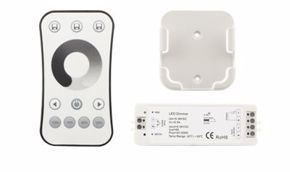
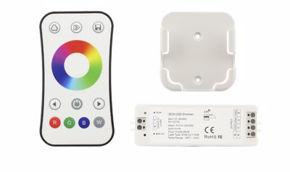
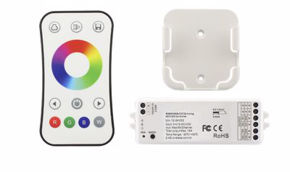
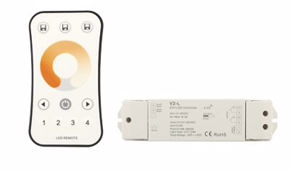
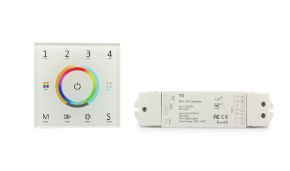
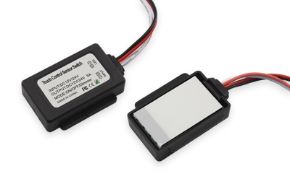
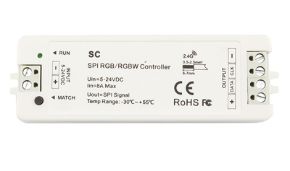
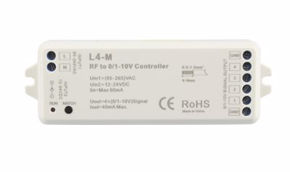
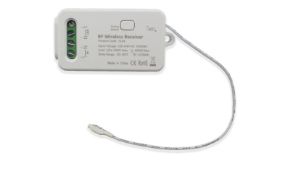
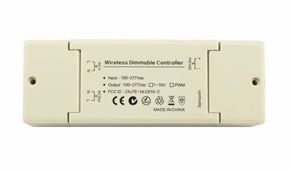
Ledpoint offers solutions for every need: from simple wireless controllers with apps to manage colors and effects from your phone, to interface modules to integrate our strips into global home automation systems. The choice of control system in architecture is not secondary: it determines the daily user experience. Do you want your client to be able to adjust the atmosphere of their home from the couch with their voice? Or the manager of a hotel to change the lighting scene of the entire lobby with a tap on a tablet? With the right products, it's very simple. Do not underestimate this aspect: an intuitive and powerful control system is the factor that transforms an installation from "technical" to "magical".
Architecture and lighting: the future of light is already here!
As we have seen, the trends in architecture and lighting all converge towards greater integration, intelligence, sustainability, and emotional impact. Light is the most versatile and powerful building material available to designers, architects, and advanced DIY enthusiasts. By actively participating in the international debate at fairs like Sicam 2025 and Mets Trade 2025, Ledpoint doesn't just observe these trends but anticipates them and makes them available through concrete products, of the highest quality and easy to purchase online. There is no longer a need for complicated supplier searches, uncertain quotes, or products of dubious origin. Everything you need to realize your dream project – from the most innovative LED strips to aluminum profiles, from silent power supplies to the most advanced controllers – is orderable in minutes on our site, with the security of an Italian warranty, fast shipping, and expert technical support.
Don't let these ideas remain just words on a screen. The difference between an ordinary environment and an extraordinary one is often just a matter of light. Browse the catalog, let yourself be inspired, and when you find the right solution for you, don't hesitate. Your space – and your clients – will thank you with wonder and admiration. The future of architectural lighting is bright, and it's already here, on Ledpoint.it. What are you waiting for to turn it on?